


Coalescer Filter Manufacturer
In the landscape of industrial separation technology, the role of a specialized coalescer filter manufacturer is critical for ensuring process purity and equipment longevity. Coalescence is a physical process where small droplets of a dispersed phase—either liquid or gas—are brought together to form larger droplets that can then be easily separated from a continuous phase based on density differences. For engineers in chemical processing, oil and gas, and hydraulic sectors, selecting the right manufacturer involves more than just purchasing a component; it requires a deep understanding of fluid dynamics, material science, and precision engineering.
Industrial filtration systems often face the challenge of removing entrained water from hydrocarbons or oil mist from compressed gas streams. These contaminants, if left unaddressed, lead to corrosion, component failure, and reduced efficiency. A professional manufacturer provides the technical expertise necessary to design filters that balance high separation efficiency with low pressure drop, ensuring that the filtration system does not become a bottleneck in the production line.
Understanding the Role of a Coalescer Filter Manufacturer in Industrial Processes
A coalescer filter manufacturer does not merely produce a commodity; they provide a solution to complex phase-separation problems. In many industrial applications, fluids exist as emulsions or aerosols. For example, in aviation fuel systems, even minute amounts of water can freeze at high altitudes or promote microbial growth, leading to catastrophic engine failure. Here, the coalescer serves as the primary line of defense.
The manufacturing process begins with the selection of media that possesses specific surface energy properties. Manufacturers must decide between hydrophilic (water-attracting) and hydrophobic (water-repelling) materials depending on whether the goal is to coalesce water out of oil or oil out of water. By visiting the Main Page of a specialist like Kaifil, engineers can explore how different stainless steel and wire mesh configurations are utilized to support these sophisticated media layers, providing the structural integrity required for high-pressure environments.
Beyond the media itself, the manufacturer is responsible for the housing design, internal seals, and the overall geometry of the filter element. These factors influence the flow velocity through the media, which is a primary determinant of coalescing performance. If the velocity is too high, the droplets may be sheared back into smaller particles; if it is too low, the coalescence process may not be fully realized.
The Engineering Principles of Coalescence and Separation
To effectively evaluate a coalescer filter manufacturer, technical professionals must understand the three-stage process that occurs within the filter element: interception, coalescence, and drainage.
1. Interception and Attachment: As the contaminated fluid passes through the depth of the filter media, tiny droplets collide with the fibers or mesh. Due to van der Waals forces and surface tension, these droplets attach to the media surface.
2. Coalescence: As more droplets are intercepted, they move along the fibers and merge with one another. This growth continues until the droplets reach a size where the aerodynamic or hydrodynamic drag forces exceed the attachment forces.
3. Separation and Drainage: The enlarged droplets are then released from the media. In a liquid-liquid coalescer, these droplets typically settle to the bottom of a collection sump (if they are denser than the continuous phase) or rise to the top (if they are less dense). In gas-liquid systems, the heavy droplets fall away from the gas stream due to gravity.
A manufacturer’s ability to manipulate the pore structure and fiber diameter within the media determines the minimum droplet size that can be effectively captured. Precision in manufacturing ensures that the "pore path" is tortuous enough to maximize collisions without creating excessive resistance to flow.
Key Technical Specifications for Coalescer Filter Selection
When engaging with a coalescer filter manufacturer, engineers should prioritize several technical parameters to ensure the product meets the specific needs of their application. These specifications go beyond simple micron ratings and delve into the performance characteristics of the fluid system.
Interfacial Tension (IFT)
Interfacial tension is perhaps the most critical factor in liquid-liquid separation. It measures the strength of the boundary between two immiscible liquids. Fluids with low IFT (below 20 dynes/cm) are much harder to separate because the droplets are more stable and less likely to merge. A capable manufacturer will ask for IFT data to determine if specialized chemical treatments or specific media densities are required.
Flow Rate and Flux
The flux, or flow rate per unit area of the filter media, must be carefully controlled. High flux rates can lead to "breakthrough," where the pressure of the fluid forces small droplets through the media before they have a chance to coalesce. Manufacturers often provide flow curves that show the relationship between flow rate and pressure drop for fluids of various viscosities.
Compatibility and Temperature Limits
Industrial processes often involve aggressive chemicals or extreme temperatures. A manufacturer specializing in stainless steel filtration components, such as Kaifil, offers an advantage here. Stainless steel 304 and 316L provide excellent resistance to corrosion and can withstand temperatures that would degrade synthetic or cellulose-based media. This durability is essential for steam-cleaned systems or those handling caustic chemicals.
Material Science: The Importance of Stainless Steel and Specialized Media
In demanding B2B environments, the material of construction for the coalescer element is as important as the media itself. While fiberglass and pleated paper are common in light-duty applications, heavy-duty industrial processes often require the robustness of metal.
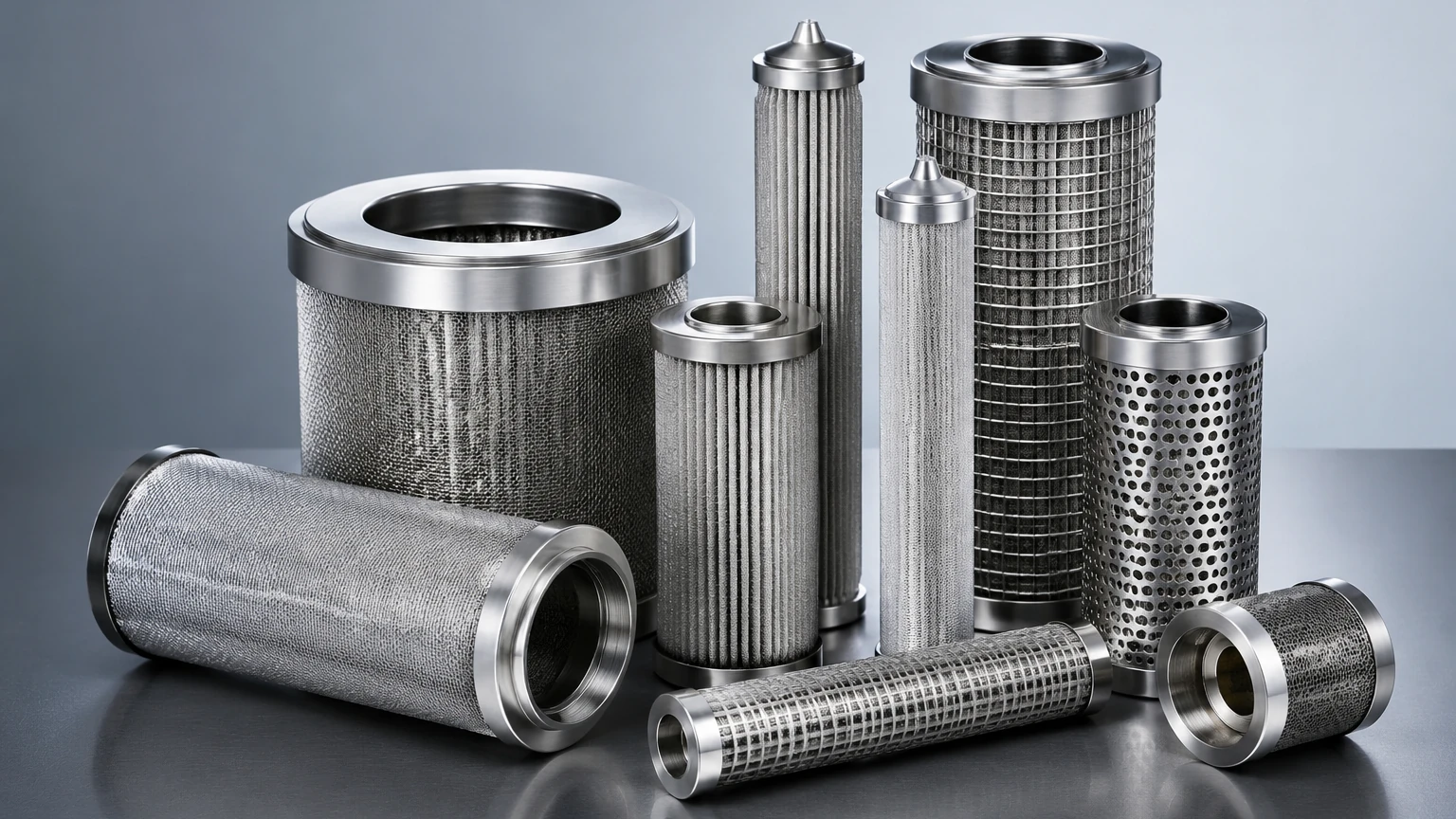
Stainless steel wire mesh serves multiple roles in a coalescer. It can act as a pre-filter to remove solid particulates that would otherwise clog the fine coalescing fibers. It also provides the necessary structural support (the inner and outer cores) to prevent the element from collapsing under high differential pressure. Furthermore, in certain high-viscosity applications, multi-layered sintered wire mesh can serve as the primary coalescing medium, offering a permanent, cleanable solution that reduces the long-term cost of replacement filters.
A reputable coalescer filter manufacturer will offer a variety of alloys to match the chemical profile of the process fluid. For instance, in marine environments or applications involving chlorides, 316L stainless steel is preferred for its superior pitting resistance. The ability to customize the weave pattern and wire diameter allows the manufacturer to fine-tune the filter's permeability and mechanical strength.
Evaluating Manufacturer Capabilities: From Customization to Quality Control
For purchasing teams and engineers, the choice of a coalescer filter manufacturer often hinges on the provider's ability to deliver custom solutions. Standard off-the-shelf filters rarely meet the exact requirements of a specialized chemical reactor or a unique hydraulic power unit.
OEM and Custom Design
A manufacturer with strong OEM (Original Equipment Manufacturer) capabilities can work from technical drawings or reverse-engineer existing components to improve performance. This includes customizing the end cap configurations (e.g., DOE, SOE, threaded), overall length, and diameter to fit existing housings. Customization also extends to the filtration accuracy, where the manufacturer can adjust the media density to target specific droplet sizes.
Quality Assurance and Testing
Reliability is non-negotiable in industrial filtration. A professional manufacturer should adhere to rigorous quality control standards. This includes bubble point testing to ensure the integrity of the filter media and the absence of bypass leaks. For coalescers, manufacturers may also conduct efficiency testing using standardized contaminants to verify that the effluent meets the required purity levels (e.g., reducing water content from 5,000 ppm to less than 10 ppm).
Total Cost of Ownership and Maintenance Strategies
While the initial purchase price is a factor, the total cost of ownership (TCO) is a more accurate measure of a filter's value. A high-quality coalescer from a reputable manufacturer may have a higher upfront cost but offers significant savings through:
* Extended Service Life: Durable materials and optimized designs reduce the frequency of filter changes.
* Protection of Downstream Equipment: By effectively removing contaminants, the coalescer prevents expensive repairs to pumps, turbines, and sensitive instruments.
* Reduced Energy Consumption: Filters designed with low initial differential pressure require less pump or compressor power to maintain flow.
Maintenance is another critical consideration. Engineers should confirm the recommended replacement cycle, which is typically determined by the differential pressure (ΔP). As the filter captures solid particulates along with liquid droplets, the ΔP will rise. A manufacturer should provide clear guidelines on the maximum allowable ΔP before the element must be cleaned or replaced. In the case of stainless steel filters, the ability to clean the media through backwashing or ultrasonic cleaning can further extend the product's life and reduce waste.
Conclusion: Selecting a Partner for Filtration Excellence
Selecting a coalescer filter manufacturer is a strategic decision that impacts the efficiency and safety of industrial operations. By focusing on technical expertise, material quality, and the ability to provide customized engineering solutions, businesses can ensure they achieve optimal separation performance. Manufacturers like Kaifil, with their focus on precision metal filtration and stainless steel components, provide the durability and reliability required for the world’s most demanding applications.
Whether the goal is to protect a high-pressure hydraulic system or to ensure the purity of a chemical product, the right manufacturer acts as a technical partner, guiding the selection process from initial specification to long-term maintenance. For more information on custom filtration solutions and technical specifications, reviewing the Main Page of a dedicated manufacturer is the recommended first step for any engineering or procurement project.
