


Engineering Guide to Thick Woven Wire Mesh in Industrial Filtration
In industrial filtration and structural separation, the mechanical integrity of the filter media is often as critical as its filtration accuracy. Thick woven wire mesh represents a specific category of industrial wire cloth characterized by larger wire diameters relative to the aperture size, or heavy-duty weaves designed to withstand high pressure, mechanical impact, and abrasive environments.
For engineers and procurement specialists, selecting the right Woven Wire Mesh involves more than just identifying a micron rating. It requires a comprehensive understanding of how wire thickness influences flow dynamics, structural stability, and the total lifecycle cost of the filtration component. This guide examines the technical parameters, material considerations, and application-specific advantages of utilizing thick-gauge woven wire mesh in demanding industrial sectors.
Understanding the Technical Parameters of Thick Woven Wire Mesh
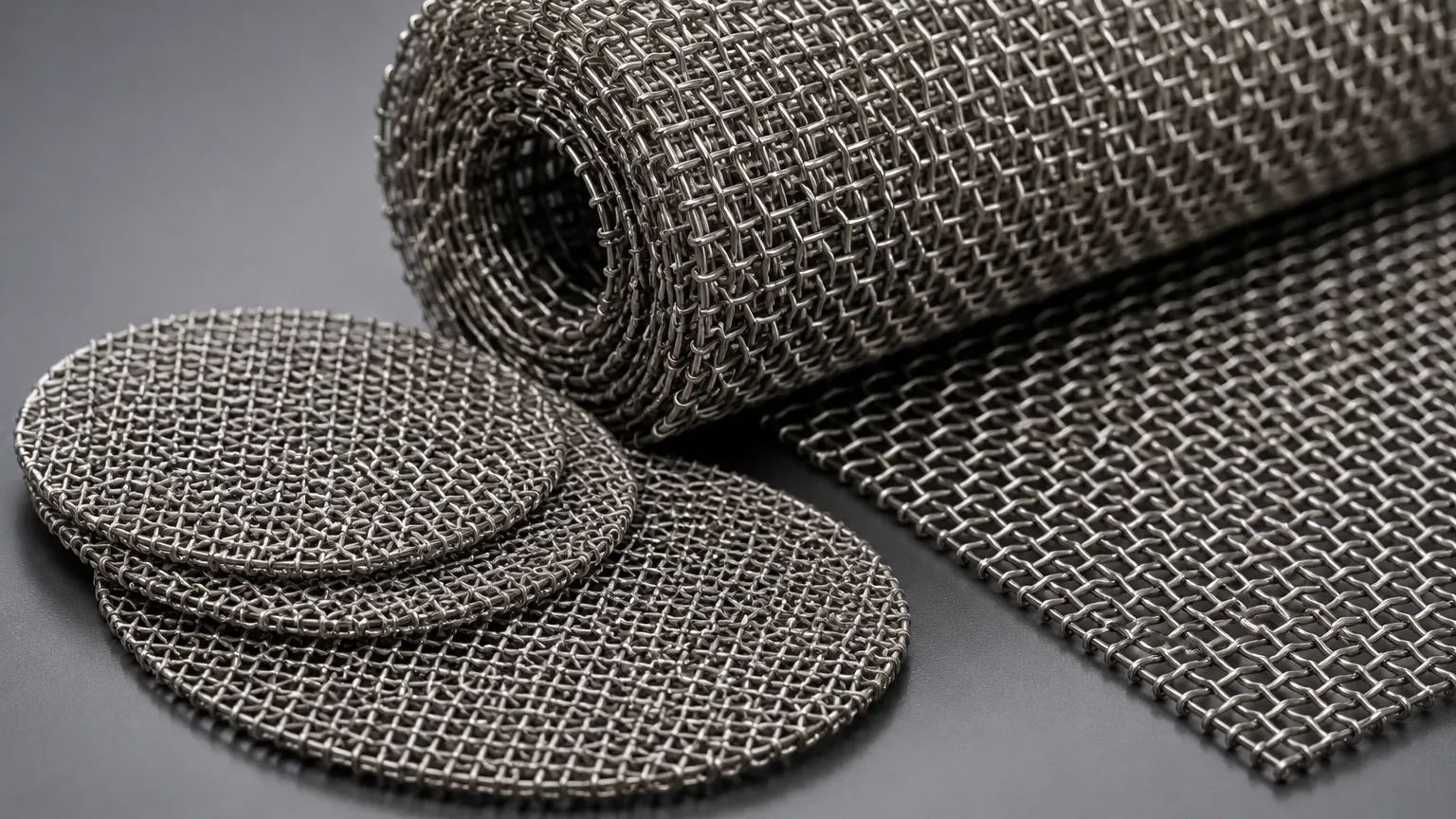
The term "thick" in the context of woven wire mesh typically refers to the wire diameter used in the weaving process. Unlike fine meshes used for laboratory sieving, thick woven wire mesh utilizes heavy-gauge wires to create a robust medium. The relationship between wire diameter, mesh count, and open area is the primary engineering concern during the selection process.
Wire Diameter and Mesh Count
In standard specifications, as the mesh count (the number of openings per linear inch) increases, the wire diameter usually decreases to maintain a viable open area. However, in heavy-duty applications, engineers often specify a "thick" wire for a relatively low mesh count. This configuration increases the mass of the mesh per square meter, providing higher tensile strength and better resistance to physical deformation under hydraulic load.
Open Area Calculations
The percentage of open area is a critical factor in determining flow rates and pressure drop. When utilizing thick woven wire mesh, the open area is often lower than that of lighter-weight meshes with the same aperture size. Engineers must balance the need for structural thickness with the required throughput of the system. A mesh that is too thick for its aperture size may lead to excessive differential pressure, increasing energy consumption and potentially causing system failure.
Material Selection for Heavy-Duty Applications
Material science plays a pivotal role in the performance of thick woven wire mesh. Since these components are often used in aggressive environments—such as chemical processing or high-temperature filtration—the alloy must be chosen based on chemical compatibility and mechanical properties.
Stainless Steel 304 vs. 316L
Stainless steel remains the industry standard for most industrial filtration tasks.
- SS304: Suitable for general industrial applications where basic corrosion resistance and high strength are required. It is a cost-effective choice for water treatment and food-grade applications that do not involve high chloride concentrations.
- SS316L: The preferred choice for marine environments, pharmaceutical manufacturing, and chemical processing. The addition of molybdenum provides superior resistance to pitting and crevice corrosion, which is essential when the mesh is exposed to corrosive fluids over long operational cycles.
Specialty Alloys
In extreme cases involving high-temperature oxidation or highly acidic environments, specialty alloys like Inconel, Monel, or Hastelloy may be utilized. Thick woven wire mesh manufactured from these materials maintains its structural integrity at temperatures where standard stainless steels would lose tensile strength or succumb to rapid oxidation.
Weave Types and Their Structural Impact
The method by which the wires are interlaced significantly affects the thickness and rigidity of the resulting mesh. For industrial applications, three primary weave types are most common:
1. Plain Weave: The simplest and most common weave where each warp wire crosses alternately over and under each shute wire. When used with heavy-gauge wire, plain weave provides a consistent aperture and is easy to clean, making it ideal for surface filtration.
2. Twill Weave: Each shute wire passes successively over and under two warp wires. This allows for the use of thicker wires than a plain weave of the same mesh count would permit, resulting in a heavier, more durable mesh that can handle higher mechanical loads.
3. Dutch Weave (Plain and Twill): These weaves utilize different wire diameters for the warp and shute. This results in a "thick" mesh with very small, tortuous paths for the fluid. Dutch weaves are excellent for high-pressure filtration where both fine particle retention and high mechanical strength are required.
Performance Advantages of Thick Woven Wire Mesh
Utilizing a thicker wire gauge offers several tangible benefits in an industrial setting, particularly where the filtration media is subjected to harsh operating conditions.
Mechanical Stability and Vibration Resistance
In systems involving high-velocity fluid flow or mechanical vibration (such as vibrating screens or high-pressure hydraulic lines), thin wire mesh can suffer from fatigue and eventual breakage. Thick woven wire mesh provides the necessary mass and rigidity to resist these forces, extending the service life of the filter element.
Resistance to Abrasion
In applications like mining, wastewater treatment, or catalyst recovery, the filtration media is often bombarded by abrasive particles. A thicker wire provides more "wear material," allowing the mesh to function effectively for a longer period before the wire diameter is reduced by erosion to the point of failure.
Improved Backwashing Efficiency
For self-cleaning filtration systems, the mesh must withstand the reverse pressure of backwashing cycles. Thick woven wire mesh is less likely to deform or "balloon" during backwashing, ensuring that the apertures remain consistent and the structural integrity of the filter cartridge is maintained over thousands of cycles.
Engineering Considerations: Customization and Integration
When specifying thick woven wire mesh for a project, the integration of the mesh into the final assembly is as important as the mesh itself. Kaifil specializes in providing customized filtration solutions that address these integration challenges.
Framing and Edge Treatments
Thick wire mesh can be difficult to manipulate due to its rigidity. Proper edge treatment—such as U-binding, welding to a solid flange, or encapsulation in a polymer—is necessary to prevent fraying and to ensure a bypass-free seal within the filter housing. Custom framing also provides additional structural support for large-span mesh panels.
Layering and Sintering
In some high-pressure scenarios, a single layer of thick woven wire mesh may be combined with finer mesh layers. This is often achieved through vacuum sintering, where multiple layers are bonded together at the molecular level. The thick mesh acts as a "support layer," providing the mechanical strength required to hold the finer "filtration layer" in place against high differential pressures.
Total Cost of Ownership (TCO) in Filter Selection
While thick woven wire mesh may have a higher initial material cost compared to lighter alternatives, the Total Cost of Ownership is often lower. Procurement teams should evaluate the following factors:
* Replacement Frequency: How often does the mesh fail due to mechanical stress or abrasion?
* Downtime Costs: What is the cost to the production line when a filter needs to be replaced prematurely?
* Cleaning Cycles: Does the rigidity of the thick mesh allow for more effective cleaning, thereby extending the time between replacements?
By choosing a robust, application-specific Woven Wire Mesh, facilities can reduce long-term maintenance expenses and improve process reliability.
Conclusion: Confirming Specifications Before Purchase
Before finalizing a purchase order for thick woven wire mesh, engineers should confirm several critical data points with the manufacturer to ensure the product meets the application's demands. These include:
1. Exact Alloy Grade: Ensure the material certification matches the chemical environment.
2. Aperture vs. Wire Diameter: Verify that the resulting open area meets the minimum flow requirements of the system.
3. Tolerances: Industrial filtration often requires tight tolerances on both the aperture size and the overall dimensions of the cut pieces or rolls.
4. Pressure Ratings: If the mesh is to be used in a high-pressure housing, confirm the maximum allowable differential pressure (PSID).
Kaifil provides professional OEM and customized filtration solutions, leveraging advanced manufacturing capabilities to deliver reliable stainless steel filter components. Whether your application requires Plain, twill and dutch woven wire mesh in SS304/316L — rolls, cut mesh and framed panels. Send mesh count or micron target for a technical quote., our engineering team is equipped to support your selection process with technical expertise and precision manufacturing.
