


Pulse Jet Baghouse
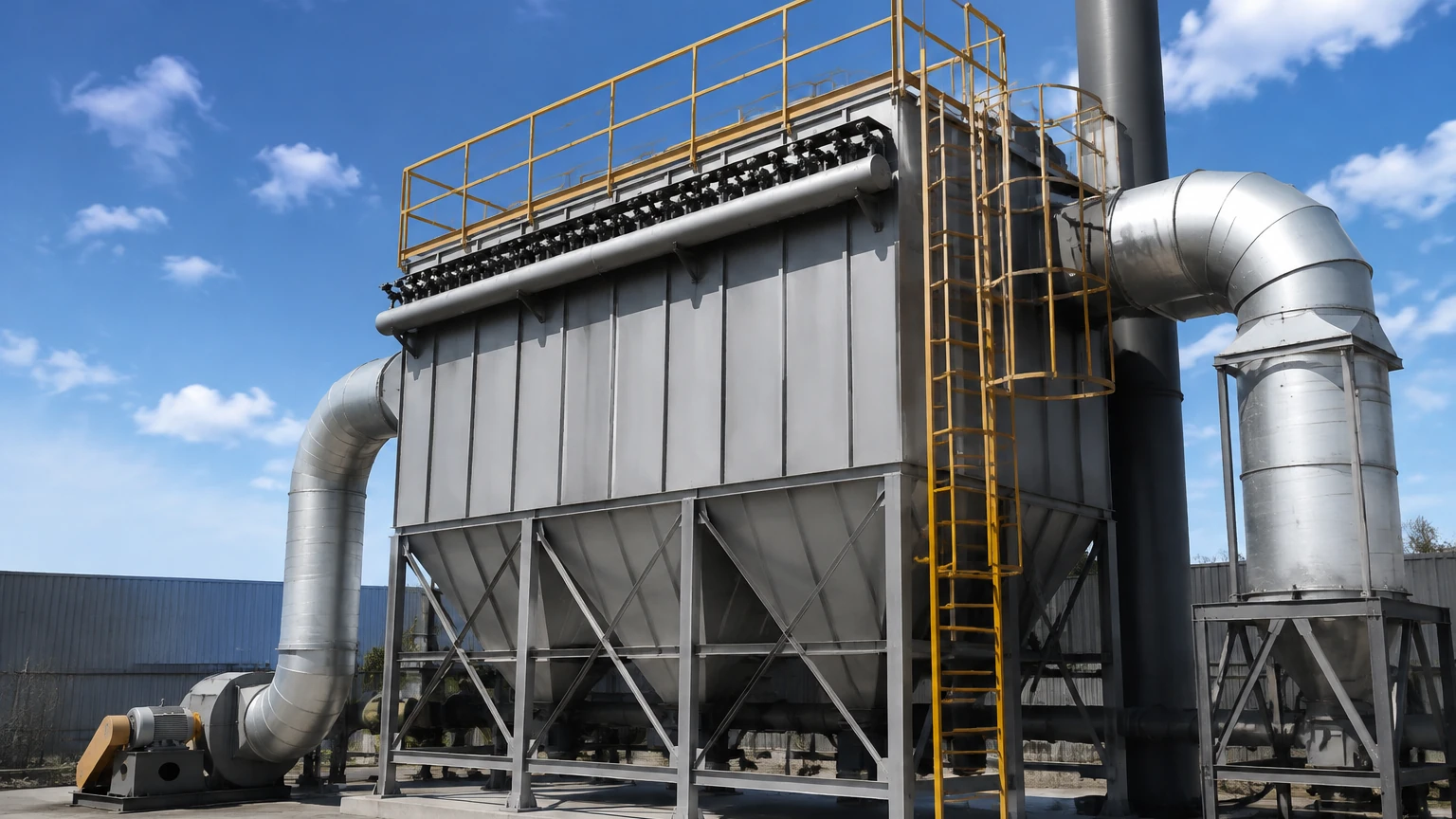
In industrial air pollution control and dust collection, the pulse jet baghouse stands as the most prevalent technology for high-efficiency particulate removal. Unlike shaker or reverse-air systems, pulse jet systems allow for continuous operation without the need to take filter compartments offline for cleaning. This capability makes them indispensable in heavy industries such as chemical processing, cement manufacturing, food production, and metal fabrication. For engineers and facility managers, understanding the mechanical nuances, material constraints, and engineering variables of a pulse jet baghouse is critical for optimizing system longevity and maintaining compliance with environmental regulations.
Fundamentals of Pulse Jet Filtration Technology
A pulse jet baghouse operates on the principle of surface filtration. Dust-laden air enters the baghouse housing, typically through a side inlet or a hopper. As the air passes through the filter media—usually cylindrical bags suspended vertically—particulate matter is trapped on the exterior surface of the bags, while clean air exits through the top plenum.
The defining characteristic of this system is its cleaning mechanism. As the dust layer (or "dust cake") builds up on the exterior of the bags, the resistance to airflow increases, measured as differential pressure. To maintain an acceptable pressure drop, the system employs a high-pressure blast of compressed air (typically 60 to 100 PSI) directed down the center of the filter bag. This pulse creates a shockwave that causes the bag to expand rapidly and then snap back against its internal support cage. This mechanical flexing dislodges the dust cake, which falls into the hopper for collection and disposal.
Because the cleaning pulse lasts only a fraction of a second (typically 0.1 seconds), it does not significantly interrupt the main airflow. This allows the pulse jet baghouse to operate at higher filtration velocities, or air-to-cloth ratios, compared to other baghouse designs.
Critical Components and Material Engineering
The performance of a pulse jet baghouse is heavily dependent on the quality and compatibility of its internal components. Selecting the right materials is not merely a matter of filtration efficiency but also of chemical resistance and thermal stability.
Filter Media Selection
While traditional felted fabrics like polyester, aramid (Nomex), or PTFE are common, demanding industrial applications often require more robust solutions. In environments involving high temperatures, corrosive chemicals, or stringent hygiene requirements—such as in pharmaceutical or specialized chemical processing—stainless steel wire mesh or sintered metal fiber media may be utilized. These materials offer superior mechanical strength and can withstand cleaning cycles that would degrade synthetic fibers.
Support Cages
Every filter bag in a pulse jet system requires an internal support cage to prevent the bag from collapsing under the pressure of the airflow. The design of the cage is vital; a poorly constructed cage with burrs or improper wire spacing can lead to premature bag failure due to abrasion. In many specialized sectors, stainless steel cages are preferred over galvanized steel to prevent corrosion and contamination. For engineers looking to optimize these components, it is beneficial to Review product options and application support from manufacturers specializing in precision metal filtration components.
Pulse Valves and Manifolds
The pulse valves control the delivery of compressed air. Their response time and flow capacity determine the effectiveness of the cleaning cycle. If a valve fails to close properly, it leads to a massive waste of compressed air; if it fails to open, the bags will blind over, leading to a system-wide spike in differential pressure.
Engineering Considerations for System Design
When specifying or auditing a pulse jet baghouse, engineers must evaluate several key performance indicators to ensure the system is appropriately sized for the application.
Air-to-Cloth (A/C) Ratio
The A/C ratio, also known as the filtration velocity, represents the volume of air passing through each square foot of filter media per minute (CFM/ft²). A pulse jet baghouse typically operates at A/C ratios between 3:1 and 6:1. If the ratio is too high, the dust is driven deep into the fabric (depth loading), making it nearly impossible to clean. If it is too low, the system is over-engineered and occupies an unnecessarily large footprint.
Interstitial Velocity
This refers to the velocity of the air moving upward between the filter bags. If the interstitial velocity is higher than the settling velocity of the dust particles, the dust dislodged during the pulse cycle will be re-entrained onto the bags instead of falling into the hopper. This leads to a "recycling" of dust that increases energy consumption and reduces bag life.
Can Velocity
Can velocity is the upward air velocity in the baghouse housing. High can velocities can cause excessive turbulence at the bottom of the bags, leading to mechanical wear and uneven dust distribution. Proper baffle design at the inlet can help mitigate these effects by distributing the air more uniformly across the filter bank.
Performance Evaluation and Troubleshooting
Maintaining a pulse jet baghouse requires consistent monitoring of the system’s "heartbeat"—the differential pressure (DP). A healthy system typically operates between 2 and 6 inches of water column (w.c.).
High Differential Pressure
If the DP exceeds the design limit, it usually indicates that the cleaning system is failing or the bags are "blinded." Blinding occurs when moisture or oils in the gas stream reach the dust cake, creating a sticky paste that compressed air cannot remove. In such cases, checking the dew point of the gas stream and the quality of the compressed air (which must be dry and oil-free) is the first step in troubleshooting.
Emissions and Leak Detection
Visible emissions from the exhaust stack are a clear sign of bag failure. In a pulse jet baghouse, a single torn bag can significantly increase particulate discharge. Modern systems often use triboelectric probe sensors or "broken bag detectors" to provide real-time alerts. To locate the specific failure, technicians may use fluorescent leak-detection powder, which is injected into the dirty side of the system and then identified on the clean side using UV light.
Customization and OEM Solutions for Demanding Environments
Standard off-the-shelf baghouse components often fall short in specialized industrial environments. For instance, in hydraulic systems or high-pressure chemical reactors where a pulse jet baghouse might be integrated as a vent filter, the mechanical stresses are significantly higher.
Customization options often include:
* High-Grade Alloys: Utilizing 316L stainless steel or Hastelloy for filter supports and housings in acidic environments.
* Precision Pleating: Increasing the surface area within the same footprint to lower the A/C ratio without increasing the size of the baghouse.
* Integrated Metal Cartridges: Replacing fabric bags with rigid stainless steel filter cartridges for applications requiring high-temperature resistance (above 500°F) or extreme durability against abrasive dusts.
Manufacturers like Kaifil provide the engineering expertise required to design these custom metal filtration components, ensuring that the interface between the filter media and the pulse jet mechanism is optimized for the specific chemical and thermal profile of the process. By focusing on precision manufacturing and material integrity, these solutions reduce the total cost of ownership by extending replacement cycles and minimizing downtime.
Information for Purchasing and Technical Teams
Before initiating a procurement process for pulse jet baghouse components or a full system upgrade, technical teams should confirm the following data points:
1. Gas Stream Chemistry: Are there corrosive elements (SOx, NOx, acids) that require specific stainless steel grades or specialized coatings?
2. Particle Characteristics: Is the dust abrasive, hygroscopic, or explosive? This dictates the need for specific filter finishes or explosion venting (ATEX compliance).
3. Compressed Air Availability: Does the facility have a stable supply of dry, oil-free air at the required CFM to support the pulse frequency?
4. Temperature Extremes: What are the normal operating temperatures and the potential for "excursion" temperatures that could melt synthetic bags?
By addressing these factors during the design phase, engineers can ensure that the pulse jet baghouse remains a reliable asset rather than a maintenance bottleneck. For those seeking specialized metal filtration solutions that integrate into these high-performance systems, consulting with an experienced manufacturer is the most effective way to achieve precise filtration goals.
In summary, the pulse jet baghouse is a robust and efficient solution for industrial dust collection, provided that the engineering parameters—such as A/C ratio and material compatibility—are strictly adhered to. The shift toward more durable, high-precision metal components reflects an industry-wide move toward reducing maintenance overhead and improving the reliability of critical environmental control systems.
