


Water Filters for Industrial Applications
In industrial manufacturing and processing, water quality is a critical variable that directly impacts equipment longevity, process efficiency, and final product integrity. Industrial water systems—whether used for cooling, boiler feed, cleaning, or as an ingredient—require robust filtration to remove suspended solids, particulates, and biological contaminants. Selecting the appropriate water filters for industrial applications involves a deep understanding of fluid dynamics, material science, and the specific mechanical requirements of the process environment.
Unlike residential or light commercial systems, industrial filtration must withstand high pressure, extreme temperatures, and often corrosive chemical environments. Stainless steel filtration components have become the industry standard for these demanding roles due to their structural integrity and the ability to be cleaned and reused, providing a more sustainable and cost-effective solution than disposable alternatives.
The Role of Filtration in Industrial Water Systems
Industrial water systems are generally categorized into three main areas: intake water, process water, and wastewater. Each stage presents unique challenges for filtration systems.
1. Intake and Pre-filtration: Raw water from municipal supplies, wells, or surface sources often contains sand, silt, and organic debris. Effective pre-filtration protects downstream equipment, such as reverse osmosis (RO) membranes and high-pressure pumps, from abrasion and fouling.
2. Process Water: This is water used directly in manufacturing. In the food and beverage or pharmaceutical sectors, this water must meet stringent purity standards. Precision metal filters are employed here to ensure that no particulates contaminate the batch.
3. Cooling and Boiler Feed: Recirculating cooling water systems are prone to scale and sediment buildup. Filtration helps maintain heat transfer efficiency by preventing the accumulation of solids in heat exchangers.
4. Wastewater Treatment: Before discharge or reuse, industrial effluent must be filtered to remove heavy metals, oils, or suspended solids to comply with environmental regulations.
Key Types of Water Filters for Industrial Applications
To achieve specific purity levels, engineers must choose between various filter designs. For those looking to explore comprehensive technical specifications, visiting the Main Page of a specialized manufacturer like Kaifil provides a detailed overview of available configurations.
Stainless Steel Wire Mesh Filters
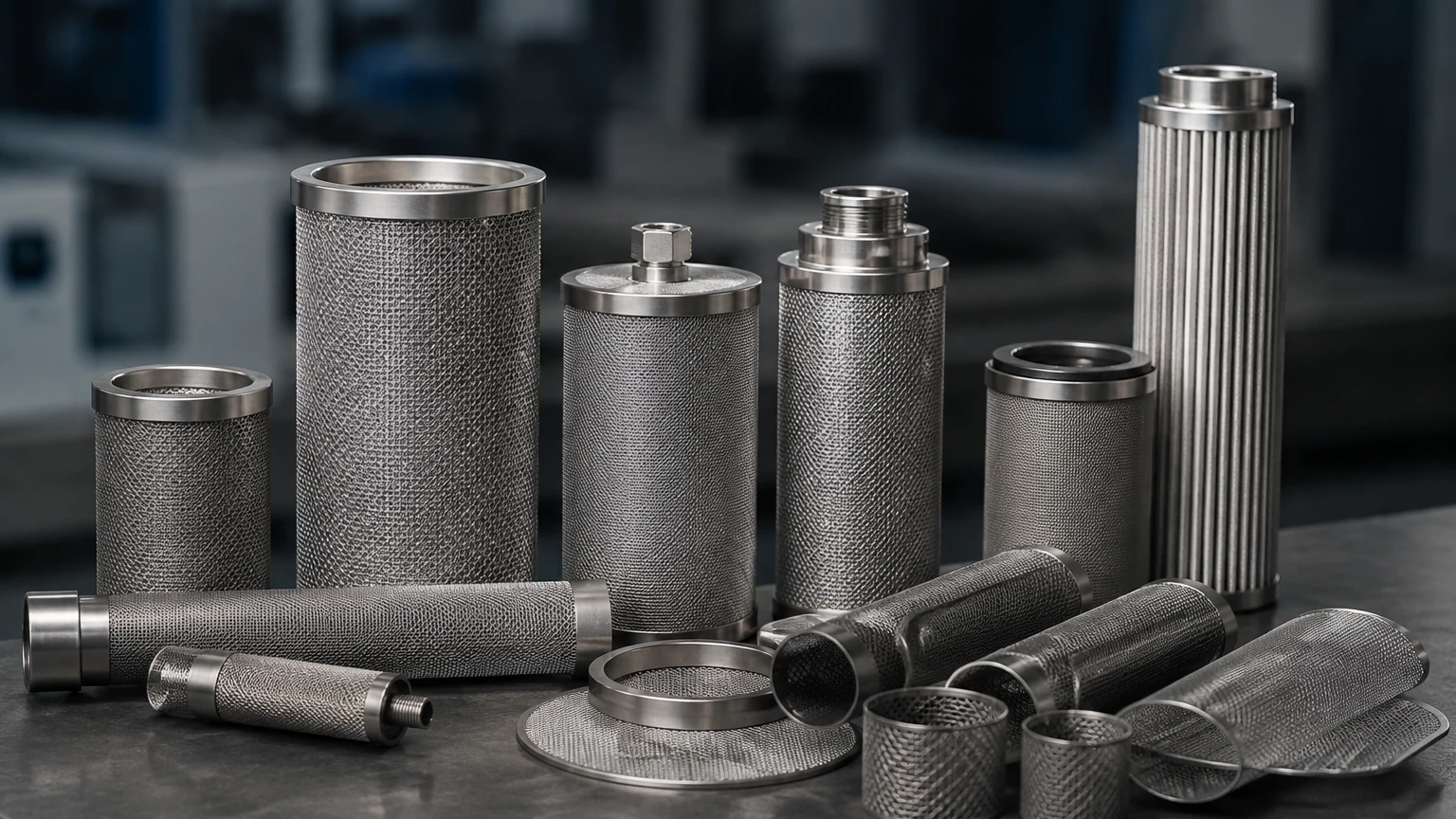
Wire mesh filters are among the most versatile components in industrial water treatment. They are constructed by weaving stainless steel wires into specific patterns, such as plain, twill, or dutch weaves. The choice of weave determines the filtration accuracy and the mechanical strength of the mesh. These filters are ideal for high-flow applications where low pressure drop is essential.
Sintered Metal Filter Cartridges
Sintering involves bonding multiple layers of metal mesh or metal powder through a high-temperature thermal process without melting the material. This creates a porous, rigid structure with high mechanical strength. Sintered cartridges are preferred for applications involving high pressure or backpulsing cleaning methods, as they do not deform under stress.
Pleated Metal Filters
Pleated designs increase the effective surface area of the filter within the same footprint. This allows for higher dirt-holding capacity and longer intervals between cleaning cycles. In water systems with high particulate loads, pleated stainless steel elements provide a compact solution for high-efficiency filtration.
Engineering Parameters for Filter Selection
When specifying water filters for industrial applications, engineers must look beyond simple micron ratings. Several technical factors dictate the performance and lifespan of the filter element.
Micron Rating: Absolute vs. Nominal
A nominal micron rating refers to the ability of a filter to retain a majority of particles of a certain size (typically 60% to 90%). In contrast, an absolute rating indicates that 99.9% of particles above the specified size will be captured. For critical industrial processes, absolute-rated stainless steel filters are necessary to ensure consistent water quality.
Differential Pressure (ΔP)
Differential pressure is the difference in pressure between the upstream and downstream sides of the filter. As the filter captures contaminants, ΔP increases. It is vital to select a filter that offers a low initial ΔP to minimize energy consumption by the pumps. Furthermore, the filter housing and element must be rated to withstand the maximum expected ΔP before cleaning or replacement is required.
Material Compatibility and Corrosion
While water itself may not always be highly corrosive, the chemicals used for cleaning (CIP – Clean-in-Place) or the minerals present in the water (such as chlorides) can lead to pitting or stress corrosion cracking. 304 stainless steel is suitable for many general water applications, but 316L is typically recommended for environments with higher salt content or more aggressive chemical exposures due to its superior corrosion resistance.
Stainless Steel vs. Polymer Filter Media
While polymer or fiber-based filters are common in low-demand environments, they often fail to meet the rigors of heavy industrial use. The transition to stainless steel media is usually driven by several factors:
* Temperature Resistance: Many industrial water processes operate at elevated temperatures that would degrade or melt plastic filters. Stainless steel remains stable at temperatures exceeding several hundred degrees Celsius.
* Mechanical Strength: High-pressure water systems can cause polymer filters to bypass or collapse. Metal filters maintain their pore structure and integrity even under significant hydraulic shock.
* Cleanability: Perhaps the most significant advantage of stainless steel is that it is not a "consumable" in the traditional sense. These filters can be cleaned via backwashing, ultrasonic baths, or chemical cleaning, significantly reducing the total cost of ownership over the life of the system.
Maintenance and Cleaning Protocols
The longevity of industrial water filters is heavily dependent on the maintenance regime. Unlike disposable cartridges that are discarded when fouled, stainless steel elements are designed for regeneration.
Backwashing and Backpulsing
Automated systems often use backwashing, where the flow of water is reversed through the filter to dislodge accumulated solids. This is highly effective for surface-loading filters like wire mesh. For depth-loading or sintered media, backpulsing with high-pressure air or water can be used to clear the internal pore structure.
Ultrasonic Cleaning
For fine filtration elements that have become blinded by microscopic particles or oils, ultrasonic cleaning is the preferred method. High-frequency sound waves create cavitation bubbles in a cleaning solution, which implode and strip contaminants from the metal surface without damaging the delicate mesh or sintered structure.
Chemical Cleaning
In some applications, organic fouling or mineral scaling requires chemical intervention. Because stainless steel is resistant to a wide range of solvents, acids, and bases, it can be treated with specialized cleaning agents to restore its original flow characteristics.
Custom OEM Solutions and Integration
Standard off-the-shelf filters often fall short in specialized industrial environments. Customization is frequently required to fit existing piping architectures or to handle unique flow rates. Manufacturers like Kaifil specialize in providing OEM filtration solutions that are tailored to specific engineering drawings and performance requirements.
Customization options include:
* End Fittings: NPT, BSP, flange, or specialized quick-connect fittings to ensure a leak-proof seal within the housing.
* Reinforcement: Internal cores or external cages can be added to filters that must withstand extreme pressure differentials.
* Specific Alloys: Beyond 304 and 316L, other alloys can be used for highly specialized chemical water treatments.
Evaluating Total Cost of Ownership (TCO)
For procurement teams, the initial price of a stainless steel filter may be higher than that of a polypropylene or paper alternative. However, a TCO analysis usually favors metal filtration for industrial applications. When calculating costs, one must consider:
1. Replacement Frequency: Disposable filters may need replacement weekly or even daily in high-load systems. Stainless steel filters can last for years.
2. Disposal Costs: Spent polymer filters are often classified as industrial waste, incurring disposal fees. Metal filters eliminate this waste stream.
3. Downtime: Every time a filter is changed, the process must be stopped. The durability and cleanability of metal filters mean fewer interventions and higher plant uptime.
4. Energy Efficiency: Precision-engineered metal filters often maintain a more stable pressure drop over time, reducing the load on pumps and lowering electricity costs.
Conclusion
Selecting the right water filters for industrial applications is a multifaceted engineering decision that impacts the entire production chain. By prioritizing durable materials like stainless steel and understanding the technical requirements of flow, pressure, and micron retention, industrial operators can ensure reliable performance and lower long-term costs. For technical teams seeking to optimize their filtration processes, consulting with a manufacturer that offers customized engineering and high-quality metal components is the most effective path forward. Detailed product information and application support can be found at the Main Page, which serves as a resource for professional-grade filtration solutions.
