


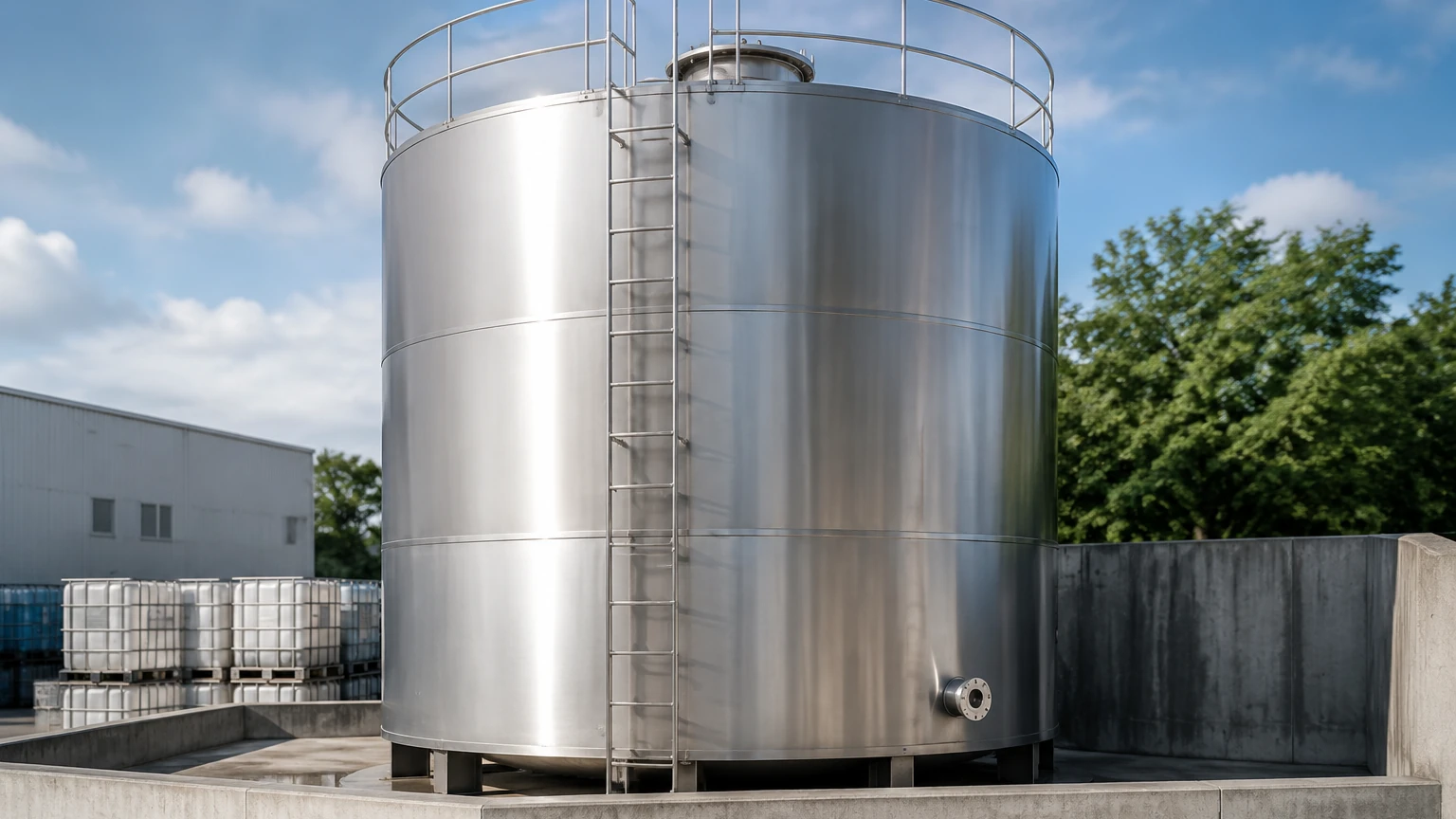
Chemical Holding Tank
In industrial processing, a chemical holding tank serves as a critical node for the storage, stabilization, and distribution of raw materials, intermediates, and finished products. Whether utilized in chemical processing, pharmaceuticals, or food and beverage production, these tanks must maintain the integrity of the stored substance while ensuring operational safety. However, the performance of a chemical holding tank is not solely dependent on the vessel's shell; it relies heavily on the integration of precision filtration and venting systems that prevent contamination and manage pressure dynamics.
For engineers and procurement teams, selecting the right filtration components for these tanks requires a deep understanding of material compatibility, filtration accuracy, and the specific environmental demands of the application. High-performance stainless steel filtration solutions, such as those detailed on the Main Page, are essential for maintaining the purity of chemicals and protecting downstream equipment from particulate matter.
Understanding the Role of Chemical Holding Tanks in Industrial Systems
Chemical holding tanks are designed to store fluids under specific conditions for varying durations. Unlike process vessels where active reactions occur, holding tanks are primarily focused on containment and flow management. Despite their seemingly passive role, they are active participants in the quality control chain.
A chemical holding tank must facilitate several key functions:
1. Buffer Storage: Balancing the flow between continuous production stages and batch-based shipping or packaging.
2. Product Stabilization: Allowing for temperature equalization or the settling of non-soluble particulates before further processing.
3. Contamination Control: Acting as a sealed environment that prevents the ingress of moisture, dust, or microbial contaminants from the surrounding atmosphere.
In many industrial setups, the holding tank is the final point of contact before a chemical is introduced into a high-precision system, such as a hydraulic circuit or a pharmaceutical fill-line. Consequently, any degradation of the tank’s interior or the introduction of contaminants during the filling or venting process can lead to significant downstream failures.
Engineering Specifications and Material Integrity
When specifying a chemical holding tank and its associated filtration hardware, material selection is the most critical engineering decision. Stainless steel, particularly grades 304 and 316L, remains the industry standard due to its exceptional mechanical strength and resistance to a wide spectrum of corrosive agents.
Stainless Steel Grade 304 vs. 316L
Grade 304 is often suitable for mild chemicals and organic solvents. However, for tanks storing aggressive acids, chlorides, or high-purity pharmaceutical ingredients, Grade 316L is preferred. The addition of molybdenum in 316L provides superior resistance to pitting and crevice corrosion, which is vital for long-term storage where chemicals may sit stagnant against the tank walls and filter surfaces.
Surface Finish and Passivation
In industries like food processing and pharmaceuticals, the internal surface of the tank and the filtration components must meet specific Ra (Roughness Average) standards. Electropolishing and passivation treatments ensure that the stainless steel surfaces are chemically inert and free of microscopic pits where bacteria or chemical residues could accumulate. This level of precision is equally important for the wire mesh filters and cartridges used within the tank system to ensure they do not become a source of contamination themselves.
Integrating Filtration Solutions for Chemical Integrity
A chemical holding tank requires a multi-faceted approach to filtration. Particles can enter the system during the initial filling, through the air displaced during emptying, or even from the wear of internal mechanical seals and pumps.
Inlet and Outlet Filtration
Before a chemical enters the holding tank, it should pass through a high-precision stainless steel filter cartridge. This ensures that any particulates picked up during transport or from previous processing stages are removed. Similarly, outlet filtration protects downstream pumps and sensitive instrumentation. Stainless steel wire mesh filters are ideal here because they offer high flow rates with minimal pressure drop, and they can be cleaned and reused, reducing the total cost of ownership compared to disposable plastic filters.
Vent Filtration (Breather Filters)
As a chemical holding tank is filled or emptied, air must enter or exit the vessel to prevent vacuum collapse or over-pressurization. This air is a major source of potential contamination. Vent filters, often utilizing fine stainless steel mesh or sintered metal media, act as a barrier against airborne dust, pollen, and microbes. In applications involving hygroscopic chemicals (which absorb moisture from the air), these vent systems may also incorporate desiccant stages or specialized hydrophobic membranes.
Key Evaluation Criteria for Industrial Filtration Components
When engineers evaluate filtration components for a chemical holding tank, they must move beyond basic dimensions and focus on performance metrics that impact long-term reliability.
Filtration Precision (Micron Rating)
The micron rating determines the size of particles the filter will capture. For chemical storage, engineers must balance the need for high purity with the practicalities of flow rate. A filter that is too fine may clog prematurely, leading to maintenance downtime, while a filter that is too coarse may allow damaging particulates to pass through. Custom wire mesh solutions allow for precise control over the aperture size, ensuring the filter is optimized for the specific chemical viscosity and particle distribution profile.
Chemical Compatibility
Beyond the primary alloy, engineers must confirm the compatibility of all seals, gaskets, and bonding agents used in the filter construction. For instance, a stainless steel filter cartridge might use Viton, EPDM, or PTFE gaskets. If the chemical in the holding tank is a strong solvent, an incompatible gasket could swell or degrade, leading to leaks or chemical contamination.
Pressure and Temperature Ratings
Chemical holding tanks may operate under blanketed pressure (using nitrogen or argon) or at elevated temperatures to maintain fluid viscosity. All filtration components must be rated for the maximum operating pressure and temperature of the system to prevent structural failure or bypass.
Common Risks in Chemical Storage and Filtration Management
Failure to properly manage the filtration and environmental controls of a chemical holding tank can result in several operational risks:
* Clogging and Differential Pressure: If filters are not monitored, particulate buildup increases differential pressure. In high-pressure systems, this can lead to filter element collapse or the activation of bypass valves, allowing unfiltered chemicals into the process stream.
* Corrosion and Leaching: If the material of the tank or filter is not perfectly matched to the chemical, localized corrosion can occur. This not only weakens the structure but also introduces metal ions into the chemical, which can be catastrophic in pharmaceutical or semiconductor applications.
* Biofilm Formation: In tanks storing water-based chemicals or nutrients, stagnant zones can foster microbial growth. Using high-quality stainless steel filters that support Clean-in-Place (CIP) or Steam-in-Place (SIP) protocols is essential for mitigating this risk.
Technical Checklist Before Procurement
Before finalizing the design or purchase of components for a chemical holding tank system, technical teams should confirm the following data points with their manufacturer:
1. Fluid Characteristics: Confirm the pH, viscosity, and temperature range of the chemical to ensure material and seal compatibility.
2. Flow Requirements: Define the maximum required flow rate (GPM or L/min) during both filling and discharge cycles to size the filters correctly.
3. Maintenance Access: Ensure that the filter housing and tank internals are accessible for inspection and that the filter elements can be easily replaced or cleaned.
4. Regulatory Compliance: Verify if the components need to meet specific industry standards, such as FDA, 3A, or ASME BPE for sanitary applications.
5. Customization Needs: Determine if standard off-the-shelf components meet the requirements or if custom-engineered wire mesh configurations are necessary to fit specific housing geometries or filtration targets.
By addressing these factors, engineers can ensure that their chemical holding tank operates as a reliable asset within the production chain. For those seeking detailed specifications on custom metal filtration components and industrial-grade stainless steel solutions, the resources available on the Main Page provide a comprehensive foundation for informed decision-making.
In conclusion, the efficacy of a chemical holding tank is inextricably linked to the quality of its filtration system. By prioritizing stainless steel's durability and the precision of custom-engineered wire mesh, industrial facilities can achieve superior chemical purity, protect their infrastructure, and optimize their long-term operational costs.
