


Chemical Reactors
Chemical reactors serve as the heart of industrial chemical processing, providing the controlled environment necessary for chemical transformations to occur. Whether in batch, continuous stir-tank (CSTR), or plug flow configurations, the efficiency of these systems depends heavily on the precision of the peripheral components that manage feedstocks, catalysts, and final products. Among these components, industrial filtration systems play a vital role in ensuring process stability, protecting expensive downstream equipment, and maintaining the purity of the chemical output.
For engineers and procurement professionals, selecting the appropriate filtration media for chemical reactors involves a deep understanding of fluid dynamics, material science, and thermal stability. High-performance stainless steel filtration solutions are often the preferred choice in these demanding environments due to their ability to withstand the corrosive nature and extreme temperatures often found in chemical synthesis.
The Critical Role of Filtration in Chemical Reactor Systems
Filtration within a chemical reactor system is rarely a standalone process; it is integrated into the reaction cycle to achieve specific engineering objectives. These objectives generally fall into three categories: catalyst recovery, impurity removal, and equipment protection.
Catalyst Recovery and Retention
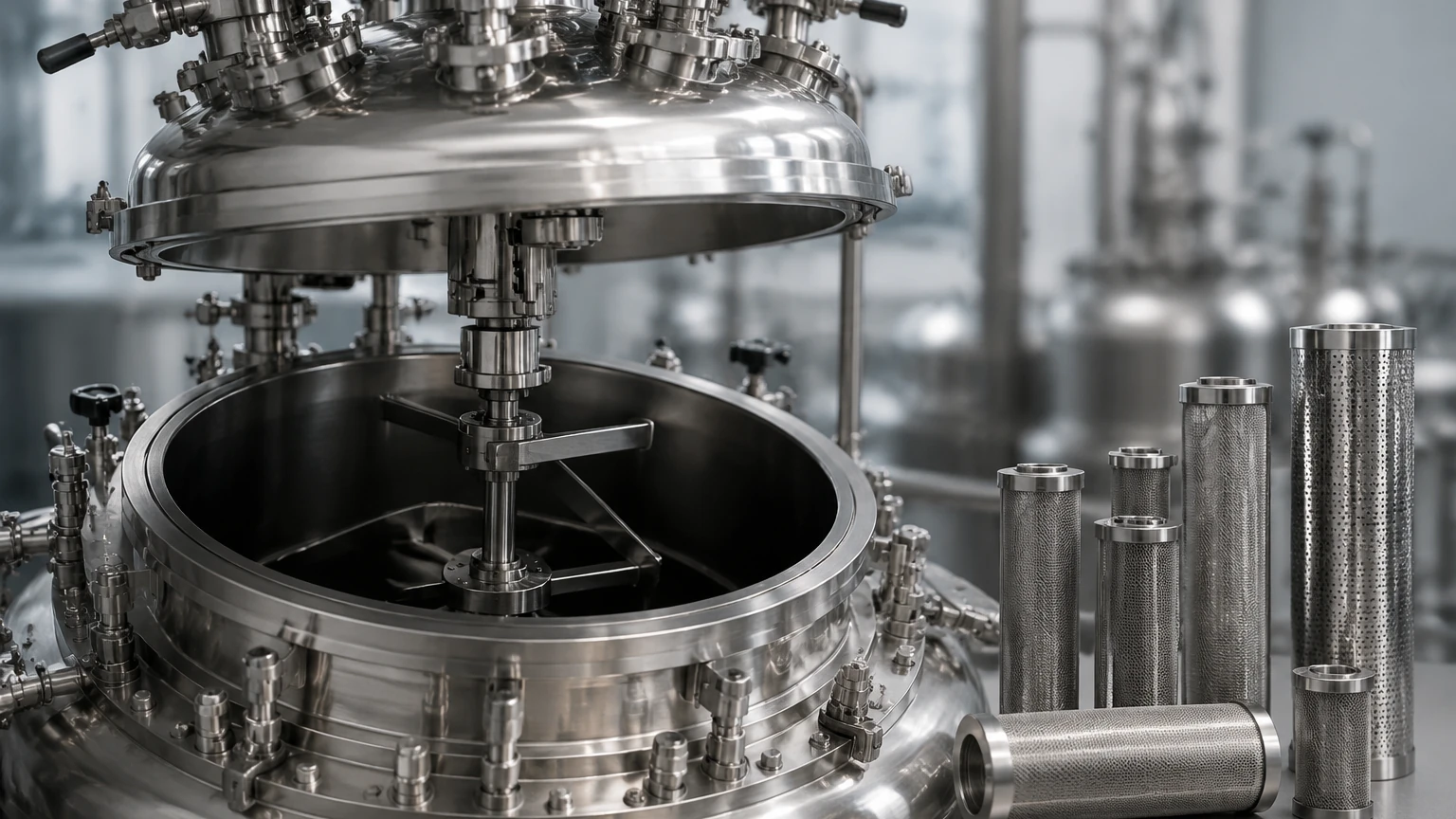
In many industrial chemical reactions, catalysts are employed to increase reaction rates. These catalysts—often precious metals or specialized synthetic compounds—represent a significant portion of the operational cost. If a reactor uses a heterogeneous catalyst (solid catalyst in a liquid or gas phase), a high-precision filter is required to keep the catalyst within the reaction zone or to recover it from the product stream. Stainless steel wire mesh filters and sintered metal cartridges are engineered to provide the exact micron ratings needed to capture catalyst particles without significantly impeding the flow of the reactants.
Removal of By-products and Impurities
Chemical reactions often produce unwanted by-products or precipitates. If these solids are not removed early in the process, they can contaminate the final product or cause fouling in heat exchangers and piping. Filtration components integrated into the reactor’s discharge line ensure that only the desired liquid or gas phase moves forward to the next stage of production.
Downstream Equipment Protection
Chemical reactors are typically part of a larger production train that includes pumps, compressors, and sensitive analytical instruments. Even microscopic particulate matter can cause abrasive wear on pump impellers or clog the fine orifices of control valves. Implementing robust filtration at the reactor stage is a proactive measure to extend the service life of the entire plant infrastructure.
Engineering Considerations for Reactor Filtration Components
Designing filtration for chemical reactors requires a rigorous evaluation of the operating environment. Standard filtration solutions often fail in these applications because they cannot handle the combined stresses of pressure, temperature, and chemical attack.
Thermal Stability
Many chemical reactions are exothermic or require high-temperature inputs to overcome activation energy barriers. Polymer-based filters often degrade or lose structural integrity at temperatures exceeding 100°C. In contrast, stainless steel and specialized alloys like Hastelloy can maintain their mechanical properties at temperatures ranging from cryogenic levels up to 600°C or higher, depending on the specific alloy and filter structure.
Pressure Differentials (Delta P)
As a filter captures particles, the resistance to flow increases, leading to a rise in differential pressure. In a pressurized reactor, the filter media must be strong enough to resist collapsing or deforming under this pressure. Sintered metal filters, where multiple layers of wire mesh are thermally bonded, provide the structural rigidity necessary to handle high-pressure environments without bypassing or media migration.
Chemical Compatibility
The diversity of chemicals processed in industrial reactors—ranging from high-pH caustic solutions to low-pH mineral acids—demands careful material selection. While 304 stainless steel is suitable for mild environments, 316L is the industry standard for its superior resistance to pitting and crevice corrosion. For highly aggressive environments involving chlorides or high-strength acids, advanced alloys are utilized to prevent premature failure of the filter element.
Selecting the Right Filter Media for Chemical Applications
Not all metal filters are created equal. The choice between different structures—such as plain square weave, Dutch weave, or sintered metal—depends on the specific requirements of the chemical reactor process.
Sintered Wire Mesh
Sintered wire mesh is a preferred material for high-stakes chemical processing. By vacuum-sintering multiple layers of stainless steel wire cloth together, engineers create a medium that combines the high porosity of mesh with the mechanical strength of a solid plate. This structure allows for precise depth filtration and excellent backwashing capabilities, which is essential for continuous reactor operations.
Wedge Wire Screens
For reactors involving heavy slurries or large-scale catalyst beds, wedge wire (V-wire) screens offer a non-clogging surface. The V-shaped profile of the wire ensures that only two-point contact is made with particles, allowing them to pass through or be easily washed away during cleaning cycles. This is particularly useful in fixed-bed reactors where the screen serves as a support medium for the catalyst.
Precision Metal Cartridges
In applications requiring fine filtration (down to 0.5 microns), pleated metal filter cartridges provide a large surface area within a compact footprint. This design minimizes the frequency of filter changes, which is a critical consideration for reactors handling toxic or hazardous substances where opening the system poses a safety risk to personnel.
To explore the full range of technical specifications and available configurations for these components, engineers can Review product options and application support on the Kaifil website, which provides detailed data on material grades and filtration efficiencies.
Customization and OEM Solutions for Specialized Reactors
Industrial chemical reactors are rarely "off-the-shelf" systems. Most are custom-engineered for specific throughputs, residence times, and chemical pathways. Consequently, the filtration components must also be customized to fit the unique geometry and functional requirements of the vessel.
Bespoke Fitting and Interfaces
Whether a reactor uses NPT threads, flange connections, or specialized sanitary fittings (Tri-Clamp), the filter must integrate seamlessly to prevent leaks. Custom manufacturing allows for the creation of filter elements that match the exact dimensions of internal dip tubes, outlet nozzles, or catalyst baskets.
Tailored Micron Ratings
In catalyst recovery, the micron rating must be precisely matched to the particle size distribution of the catalyst. A filter that is too coarse will allow expensive catalyst to escape, while a filter that is too fine will clog prematurely and restrict flow. OEM providers like Kaifil work with chemical engineers to determine the optimal balance between filtration fineness and flow permeability.
Structural Reinforcement
In high-agitation reactors, the internal components are subject to significant mechanical vibration and hydraulic shock. Custom-designed filters can be reinforced with internal perforated cores or external shrouds to ensure they do not fatigue or fail mechanically during the reaction cycle.
Maintenance, Cleaning, and Lifecycle Management
One of the primary advantages of stainless steel filtration in chemical reactors is its cleanability. Unlike disposable filters that contribute to the plant’s waste stream and require frequent replacement, metal filters are designed for long-term reuse.
Backwashing and In-Situ Cleaning
Many modern reactor systems are designed with Clean-in-Place (CIP) or backwashing capabilities. By reversing the flow of a clean fluid through the filter, captured solids are dislodged and flushed out. This allows the reactor to continue operating without the need for manual disassembly, significantly reducing downtime.
Ultrasonic and Chemical Cleaning
For stubborn contaminants or polymer buildup, stainless steel filter elements can be removed and cleaned using ultrasonic baths or specialized chemical solvents. Because the filters are made of robust alloys, they can withstand aggressive cleaning agents that would destroy other types of media. This ability to restore the filter to near-original pressure drop levels is a key factor in the sustainability of the process.
Monitoring Performance
Engineers should confirm the expected replacement cycles based on the specific chemistry of their process. While metal filters are durable, they are not infinite. Regular monitoring of the pressure differential across the filter provides a clear indication of when a cleaning cycle is required or when the media has reached the end of its functional life due to irreversible fouling or mechanical wear.
Total Cost of Ownership and Performance Optimization
When evaluating filtration for chemical reactors, it is important to look beyond the initial purchase price. The Total Cost of Ownership (TCO) includes the cost of the filter, the labor required for maintenance, the cost of downtime, and the potential loss of expensive reactants or catalysts.
Investing in high-quality stainless steel filtration typically results in a lower TCO compared to cheaper, disposable alternatives. The durability of the material reduces the frequency of purchases, while the precision of the filtration prevents costly downstream failures and ensures consistent product quality. Furthermore, the ability to customize the filter to the specific needs of the reactor ensures that the system operates at peak efficiency, maximizing the yield of the chemical process.
Conclusion
The integration of high-precision filtration into chemical reactors is a fundamental requirement for modern industrial processing. By selecting materials and designs that are specifically engineered for the rigors of chemical synthesis, manufacturers can achieve greater process control, protect their infrastructure, and optimize their production costs. From catalyst retention to final product purification, the role of the filter is inseparable from the performance of the reactor itself. As chemical processes become more complex and demanding, the reliance on advanced metal filtration solutions will only continue to grow, providing the reliability and precision that engineers require to maintain a competitive edge in the global market.
