


Strainer Mesh Size
In industrial filtration and fluid handling, the selection of the correct strainer mesh size is a critical engineering decision that directly impacts system efficiency, equipment longevity, and product purity. A strainer’s primary function is to remove unwanted solids from a liquid or gas stream, protecting downstream components such as pumps, valves, and heat exchangers. However, selecting an inappropriate mesh size can lead to excessive pressure drops, frequent maintenance shutdowns, or the failure to capture harmful contaminants.
As a professional manufacturer of custom stainless steel filtration solutions, Kaifil provides high-precision components designed to meet the rigorous demands of chemical processing, food and beverage production, and hydraulic systems. Understanding the technical nuances of strainer mesh size is the first step in optimizing these industrial processes.
Understanding the Relationship Between Mesh, Microns, and Inches
The term "mesh" is the most common unit of measure used to describe the density of a wire cloth or strainer screen. It refers to the number of openings per linear inch, measured from the center of one wire to the center of the next. For example, a 20-mesh screen has 20 openings per linear inch in both directions.
The Inverse Relationship
There is an inverse relationship between the mesh count and the size of the particles that can pass through the screen. As the mesh number increases, the size of the openings decreases. A 100-mesh screen has much smaller openings than a 10-mesh screen.
Conversion to Microns
While mesh counts are standard in North America and parts of Europe, many engineers prefer to work with microns (micrometers) for absolute precision. A micron is one-millionth of a meter. For instance, a 40-mesh strainer typically has an opening size of approximately 400 microns, whereas a 200-mesh strainer narrows down to about 74 microns.
Wire Diameter and Open Area
It is important to note that the strainer mesh size is not determined solely by the mesh count. The diameter of the wire used in the weave also plays a significant role. Two different 40-mesh screens can have different opening sizes if they use different wire gauges. Heavier wires provide greater structural integrity but reduce the "percent open area," which can restrict flow. Engineers must balance the need for durability with the required flow rate when specifying mesh components from the Main Page.
Engineering Considerations for Selecting Strainer Mesh Size
Selecting the right strainer mesh size requires a comprehensive analysis of the fluid properties and the mechanical requirements of the system. Engineers should evaluate the following factors before finalizing a specification:
1. Particle Size Distribution
To protect downstream equipment, the strainer must be sized to capture the smallest particle that could cause damage. If a pump manufacturer specifies that the equipment can handle particles up to 200 microns, the strainer should ideally have a mesh size slightly smaller than that (e.g., 80 mesh or 180 microns) to provide a safety margin.
2. Allowable Pressure Drop (Delta P)
Every strainer introduces a restriction to the flow, resulting in a pressure drop. As the mesh size becomes finer, the resistance increases. If the mesh is too fine for the application, the pressure drop may exceed the system's limits even when the strainer is clean. This can lead to cavitation in pumps or reduced throughput in processing lines.
3. Fluid Viscosity
Viscosity significantly affects how a fluid passes through a mesh. Highly viscous fluids, such as heavy oils or syrups, require larger openings or a greater total surface area to maintain an acceptable flow rate. For these applications, a coarse mesh is often used as a primary filter, followed by finer filtration stages if necessary.
4. Percent Open Area
The ratio of the area of the openings to the total area of the screen is known as the percent open area. A higher percentage allows for higher flow rates and longer intervals between cleanings. When selecting a strainer mesh size, engineers often look for a balance where the open area is at least two to four times the cross-sectional area of the inlet pipe to ensure minimal flow restriction.
Common Risks of Incorrect Mesh Sizing
Choosing the wrong strainer mesh size can result in significant operational challenges and financial losses. These risks are generally categorized into two types: undersizing (mesh too fine) and oversizing (mesh too coarse).
Risks of Undersizing (Too Fine)
* Frequent Clogging: A mesh that is unnecessarily fine will capture more debris than required, leading to rapid buildup and the need for frequent cleaning or replacement. This increases labor costs and system downtime.
* Structural Failure: If a fine mesh becomes heavily clogged, the differential pressure across the screen can rise rapidly. If the pressure exceeds the structural limits of the wire mesh, the screen may collapse or burst, sending both the debris and fragments of the mesh downstream.
* Pump Starvation: High resistance from an undersized or clogged mesh can starve a pump of fluid, causing cavitation, overheating, and eventual mechanical failure.
Risks of Oversizing (Too Coarse)
* Downstream Damage: The primary risk of a mesh that is too coarse is that it allows harmful particles to pass through. This can lead to the erosion of valve seats, clogging of spray nozzles, or damage to precision instruments.
* Product Contamination: In industries like food and beverage or pharmaceuticals, an oversized mesh may fail to remove contaminants that affect the quality or safety of the final product.
Material Selection and Durability in Mesh Design
The performance of a strainer mesh size is also dependent on the material from which it is manufactured. Stainless steel is the industry standard due to its corrosion resistance, thermal stability, and mechanical strength. Kaifil specializes in utilizing various grades of stainless steel to suit specific industrial environments.
Stainless Steel 304 vs. 316
* Type 304: This is the most common grade, offering excellent durability and resistance to oxidation. it is suitable for water treatment and general industrial applications.
* Type 316: Containing molybdenum, Type 316 provides superior resistance to chlorides and acids. This is the preferred choice for chemical processing and marine environments where the strainer mesh size must remain consistent despite exposure to corrosive agents.
Weave Types
The way the wires are woven also impacts the performance of the strainer.
* Plain Weave: The most common and economical, where each warp wire crosses alternately over and under each shute wire. It provides high flow rates and is easy to clean.
* Dutch Weave: This weave uses different diameters for warp and shute wires, resulting in a much denser and stronger mesh. It is often used for high-pressure applications where a fine strainer mesh size is required without sacrificing structural integrity.
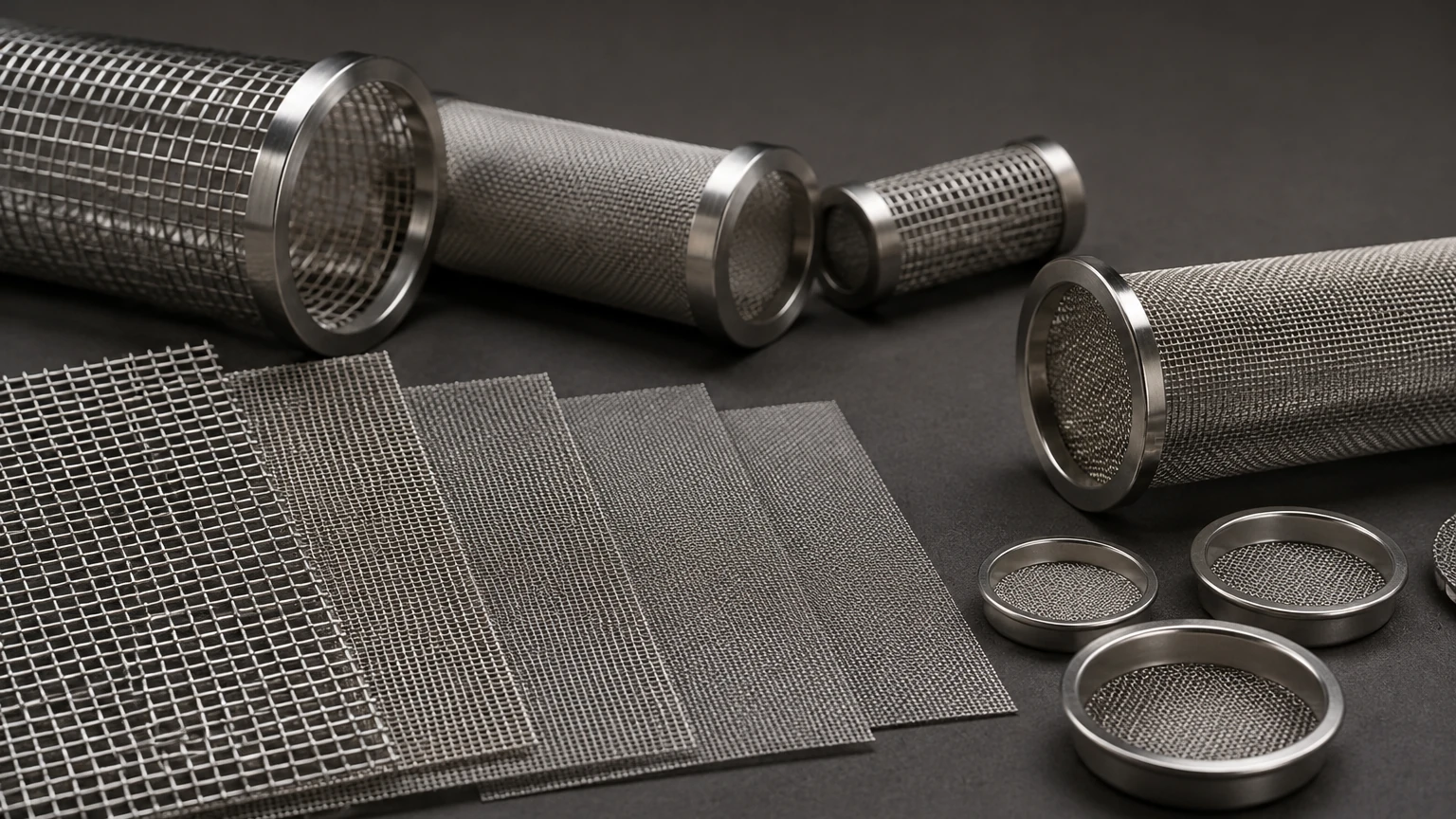
Customization and OEM Solutions for Industrial Filtration
In many complex industrial systems, off-the-shelf strainer components may not meet the specific requirements for flow, pressure, or filtration accuracy. This is where customized manufacturing becomes essential.
Kaifil works closely with engineering teams to develop bespoke filtration components. Customization options include:
* Reinforced Structures: For high-pressure hydraulic systems, a fine mesh can be pleated or backed by a coarser, heavier perforated metal support to prevent deformation.
* Specific Geometry: Strainers can be manufactured in various shapes, including cylinders, cones (witches' hat strainers), and flat discs, to fit unique housing designs.
* Multi-Layer Sintering: To combine high filtration accuracy with extreme durability, multiple layers of wire mesh can be sintered together. This process fuses the wires at their contact points, creating a robust filter medium that maintains its strainer mesh size even under intense mechanical stress.
By consulting with a manufacturer during the design phase, purchasing teams can ensure that the selected filtration solution provides the lowest total cost of ownership by balancing initial cost, maintenance requirements, and component lifespan.
Maintenance and Replacement Cycles
Even the most precisely selected strainer mesh size will eventually require maintenance. Establishing a proactive replacement or cleaning cycle is vital for maintaining system performance.
Monitoring Differential Pressure
The most effective way to determine when a strainer needs attention is by monitoring the differential pressure across the unit. Many industrial systems are equipped with gauges that trigger an alarm when the pressure drop reaches a predetermined level. Cleaning the mesh before it reaches a critical pressure state prevents damage to the mesh itself and ensures consistent flow.
Cleaning Methods
Depending on the application and the nature of the contaminants, stainless steel mesh can often be cleaned and reused. Common methods include:
* Backwashing: Reversing the flow of fluid to flush particles away from the mesh surface.
* Ultrasonic Cleaning: Using high-frequency sound waves in a cleaning solution to dislodge fine particles trapped within the weave.
* Chemical Cleaning: Using specialized solvents to dissolve organic or mineral deposits without damaging the stainless steel.
However, in high-purity applications or where the mesh has suffered mechanical wear, replacement is often more cost-effective than cleaning to ensure the integrity of the filtration process.
Conclusion: Selecting the Right Partner for Filtration
Determining the ideal strainer mesh size is a technical process that requires an understanding of fluid dynamics, material science, and the specific needs of the application. Whether you are protecting a high-pressure hydraulic pump or ensuring the purity of a pharmaceutical batch, the precision of your filtration components is paramount.
Kaifil provides the technical expertise and manufacturing capabilities necessary to produce high-quality stainless steel filter cartridges and wire mesh components tailored to your specifications. By focusing on durability and precise filtration performance, we help industrial operators achieve efficient and reliable results. To explore our full range of capabilities and technical specifications, please visit our Main Page. Selecting the right mesh size today ensures the safety and efficiency of your industrial operations tomorrow.
