


Filter Pipette
In the precision-driven sectors of pharmaceutical manufacturing, chemical processing, and clinical diagnostics, the integrity of liquid handling is paramount. A filter pipette system—specifically the filtration component integrated into the pipette tip or the handling probe—acts as the primary defense against cross-contamination and equipment degradation. While often viewed as a simple consumable in laboratory settings, the engineering behind high-performance filtration media is complex, requiring a deep understanding of fluid dynamics, material science, and aerosol physics.
For engineers and procurement specialists sourcing filtration solutions for industrial-scale liquid handling or specialized OEM instrumentation, selecting the right filter media is not merely a matter of fit. It involves evaluating pore size distribution, air permeability, and chemical resistance to ensure that the filtration barrier does not compromise the accuracy of the volume dispensed or the purity of the sample. As a leader in custom stainless steel filtration, Kaifil provides the technical expertise necessary to develop high-performance filtration components that meet these rigorous industrial standards. You can explore our full range of capabilities on our Main Page.
The Mechanics of Aerosol Prevention in Liquid Handling
The primary function of a filter pipette insert is to prevent the formation and passage of aerosols. When liquids are aspirated or dispensed at high speeds, minute droplets—aerosols—can be generated. Without an effective barrier, these aerosols can migrate into the shaft of the pipette or the internal components of an automated liquid handling robot.
In industrial environments, this contamination poses two significant risks. First, it leads to sample-to-sample carryover, which can invalidate chemical assays or contaminate pharmaceutical batches. Second, corrosive or reactive aerosols can damage the internal pistons and seals of expensive liquid handling systems, leading to increased maintenance costs and downtime.
High-quality filter inserts utilize a tortuous path design. Rather than a simple screen, the filter is often a porous matrix where the air must navigate a complex network of channels. This design ensures that while air can pass freely to allow for accurate aspiration, liquid droplets and aerosols are trapped through a combination of inertial impaction, interception, and diffusion. For specialized industrial applications where standard plastic filters are insufficient, sintered metal or advanced stainless steel mesh components offer superior structural integrity and chemical inertness.
Material Science: From Polymers to Sintered Metals
Selecting the material for a filter pipette component depends heavily on the chemical nature of the fluids being handled and the environmental conditions of the process.
Polyethylene (PE) Filters
Most standard laboratory filter tips utilize high-density polyethylene (HDPE). These are typically manufactured through a sintering process that creates a porous structure. PE is chosen for its hydrophobicity and general chemical resistance to aqueous solutions. However, in industrial chemical processing, PE may lack the thermal stability or solvent resistance required for aggressive reagents.
Sintered Stainless Steel and Precision Mesh
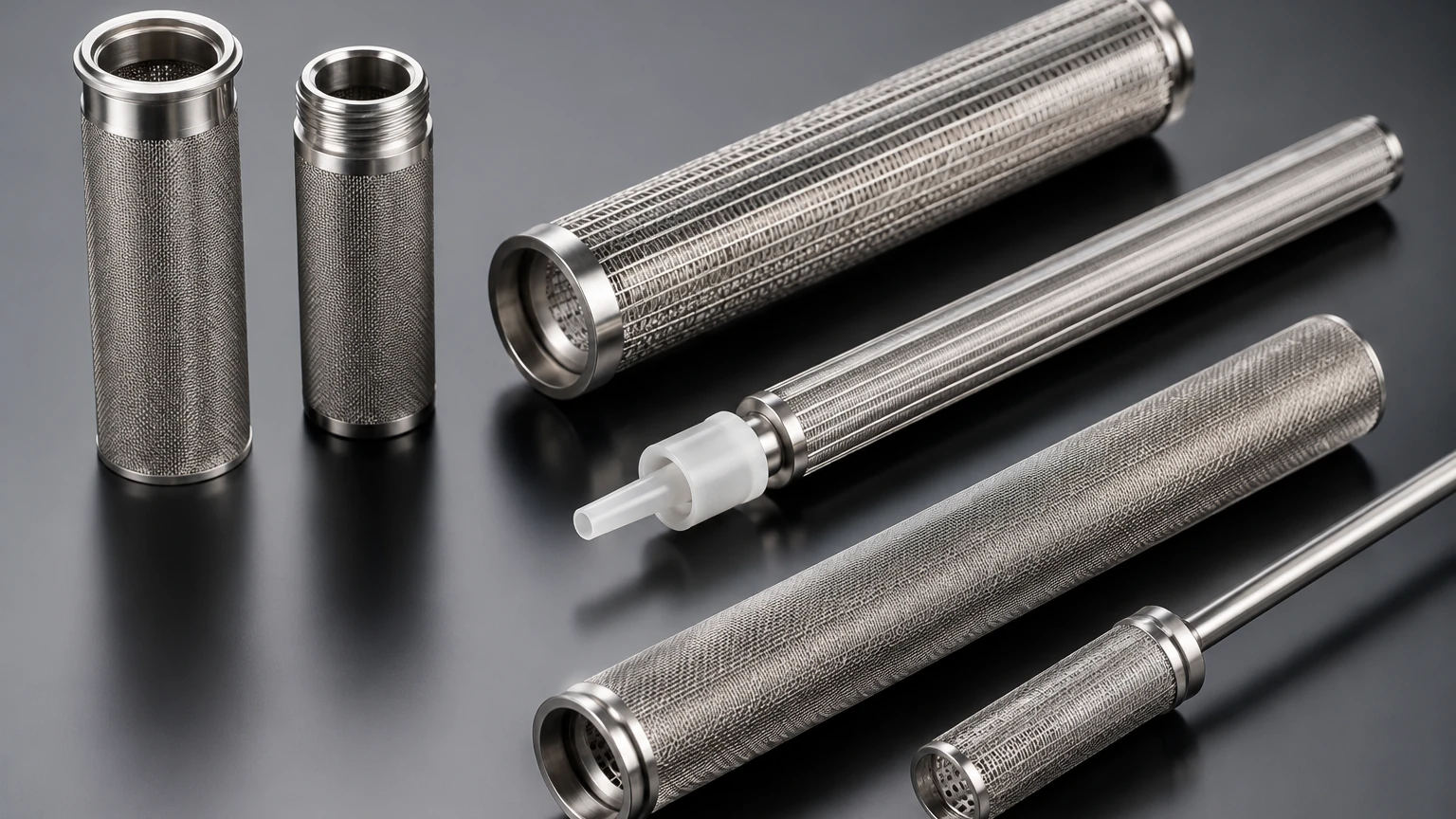
In high-performance OEM applications, such as automated sampling systems in chemical plants or high-pressure liquid chromatography (HPLC) prep stations, stainless steel is the material of choice. Sintered stainless steel filters provide a rigid, non-deformable structure that can withstand high pressures and extreme temperatures. These components are essential when the "pipetting" action is part of a permanent or semi-permanent industrial probe system.
Kaifil specializes in these precision metal filtration components, offering customized solutions that integrate seamlessly into complex liquid handling hardware. By utilizing stainless steel, engineers can achieve a level of durability and sterilization compatibility (including autoclaving and chemical CIP processes) that polymer-based filters cannot match.
Engineering Considerations for Filter Selection
When specifying a filter pipette component for an industrial application, engineers must look beyond basic dimensions. Several technical parameters dictate the performance of the filtration barrier:
1. Pore Size and Distribution: The nominal pore size (often ranging from 10 to 100 microns for standard tips, and much finer for precision metal filters) determines the efficiency of aerosol capture. However, the distribution of these pores is equally important. A narrow pore size distribution ensures consistent airflow resistance across all units, which is critical for the volumetric accuracy of the pipette.
2. Air Permeability (Gurley Value): This measures the resistance the filter offers to airflow. If the resistance is too high, the pipette will feel "sluggish," and the actual volume aspirated may be less than the set volume. In automated systems, high resistance can lead to vacuum errors.
3. Hydrophobicity: To prevent the liquid from soaking into the filter (which would cause sample loss and contamination), the filter media must be inherently hydrophobic or treated with a hydrophobic coating. Stainless steel filters can be passivated or coated to achieve specific surface energies required for specialized liquids.
4. Structural Integrity: In high-speed automated liquid handling, the filter must stay securely in place despite rapid pressure changes. For metal components, this involves precision machining and interference fits to ensure the filter does not dislodge during operation.
Customization and OEM Solutions in Filtration
Many industrial applications require filtration solutions that do not fit the standard "off-the-shelf" mold. This is where custom manufacturing becomes vital. Whether it is a unique geometry for a diagnostic instrument or a specific material requirement for a pharmaceutical cleanroom, customization allows for optimized performance.
At Kaifil, we understand that a filter pipette component is often part of a larger, more complex system. Our approach to OEM filtration involves working closely with engineering teams to define the exact filtration requirements of their application. This includes:
* Custom Geometry: Designing filters that fit into non-standard probe shapes or manifold systems.
* Material Optimization: Selecting the specific grade of stainless steel (e.g., 316L for superior corrosion resistance) or other alloys to match the chemical profile of the process.
* Filtration Accuracy: Tailoring the sintered structure to provide the exact balance between particle retention and flow rate.
By focusing on these technical details, Kaifil helps manufacturers reduce the total cost of ownership. While a custom metal filter may have a higher initial cost than a plastic consumable, its longevity, cleanability, and reliability in critical processes provide significant long-term value. For more information on our custom engineering services, visit our Main Page.
Evaluating Risks: The Cost of Poor Filtration
Inadequate filtration in a pipette system leads to more than just a failed experiment; it can result in systemic failures in an industrial setting. Common risks associated with low-quality or improperly specified filters include:
* Cross-Contamination: In PCR (Polymerase Chain Reaction) applications or sensitive chemical synthesis, even a few picoliters of aerosol carryover can lead to false positives or contaminated products.
* Piston Corrosion: Many industrial reagents are volatile. Without a robust filter, vapors can condense on the internal metal parts of the liquid handler, leading to pitting and mechanical failure.
* Volume Inaccuracy: If a filter becomes partially clogged or has inconsistent permeability, the pressure differential changes, leading to inaccurate dispensing. In pharmaceutical dosing, this can result in batches that fail quality control standards.
To mitigate these risks, it is essential to source filtration components from manufacturers who adhere to strict quality control protocols and provide documented performance data for their media.
Performance Evaluation and Replacement Cycles
For industrial liquid handling systems utilizing integrated filtration, establishing a clear maintenance and replacement schedule is critical. Unlike disposable plastic tips, industrial metal filter components are often designed for extended use, but they are not infinite.
Performance should be evaluated based on:
* Flow Rate Testing: Regularly measuring the pressure drop across the filter to detect gradual clogging.
* Visual Inspection: Checking for signs of physical deformation or surface contamination that cannot be removed through standard cleaning protocols.
* Accuracy Audits: Periodic calibration of the liquid handling system to ensure that the filtration component is not interfering with volumetric precision.
In many high-purity applications, the filter is replaced as part of a preventative maintenance cycle, ensuring that the system always operates at peak efficiency. Kaifil provides the durable, high-precision components necessary to make these systems reliable over thousands of cycles.
Conclusion: Selecting a Partner in Precision Filtration
The filter pipette component is a small but vital link in the chain of industrial liquid handling. Whether you are designing a new diagnostic instrument or optimizing a chemical production line, the choice of filtration media impacts everything from sample purity to equipment longevity.
By understanding the technical requirements of your application—ranging from aerosol capture mechanics to material compatibility—you can make informed decisions that enhance the reliability of your processes. Kaifil’s commitment to quality and custom engineering ensures that our stainless steel and precision metal filtration solutions meet the most demanding industrial standards.
For engineers and purchasing professionals looking to optimize their filtration performance, we invite you to review our product options and application support on our Main Page. From initial design to final production, Kaifil is your partner in achieving precise, durable, and cost-effective filtration solutions.
