


Woven Wire Fence vs Chain Link: An Industrial Engineering Perspective
In industrial facility management and infrastructure design, selecting the appropriate barrier or enclosure material is a critical decision that impacts security, longevity, and operational efficiency. While chain link is a ubiquitous choice for general perimeter fencing, technical applications often require the superior structural integrity and material properties of woven wire mesh.
When evaluating woven wire fence vs chain link, engineers must look beyond the initial purchase price and consider factors such as tensile strength, corrosion resistance, and the specific requirements of the environment—whether it is a chemical processing plant, a food production facility, or a high-security industrial zone. This guide examines the technical differences between these two systems to help procurement teams and engineers make an informed selection.
Understanding the Structural Differences
The fundamental difference between woven wire and chain link lies in their manufacturing process and the resulting physical properties of the finished product.
The Mechanics of Chain Link
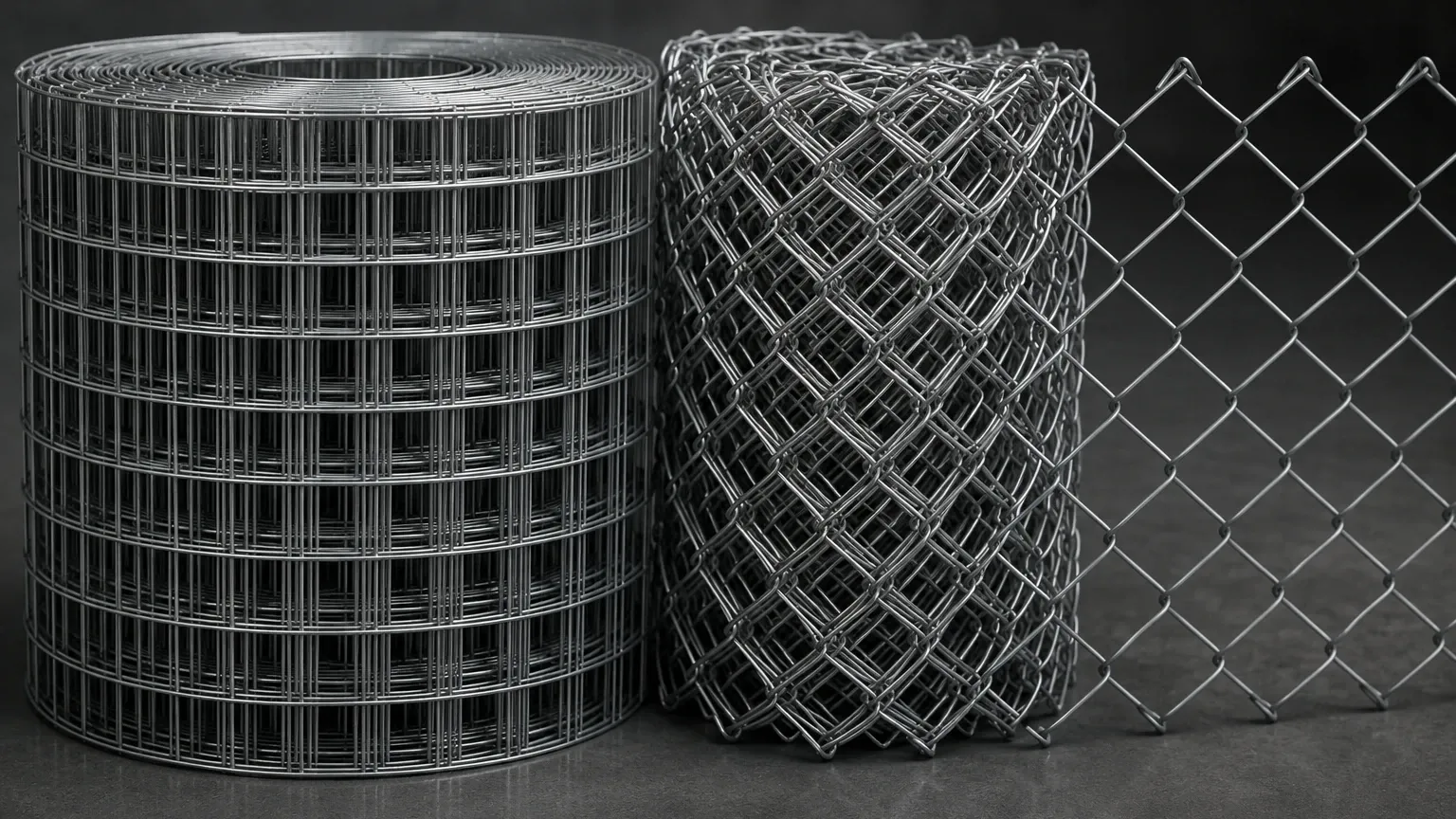
Chain link is technically a "knitted" or "linked" product. It is formed by rotating a series of zig-zag wires together so that they hook into one another. Because the wires are not physically bonded or tightly interlaced at every intersection, the structure remains flexible. This flexibility is an advantage for installation on uneven terrain, but it becomes a disadvantage in high-impact or high-security industrial environments where structural rigidity is required.
The Mechanics of Woven Wire Mesh
In contrast, Woven Wire Mesh is manufactured using a loom process similar to weaving textiles. Wires are passed over and under one another in a precise pattern—typically plain weave, twill weave, or dutch weave. This creates a stable, rigid structure where each wire is held firmly in place by the surrounding wires. For industrial enclosures or "fencing" in a technical context, this results in a material that does not unravel if a single wire is cut and maintains its dimensional stability under significant mechanical stress.
Material Integrity: Stainless Steel vs. Galvanized Steel
One of the most significant factors in the woven wire fence vs chain link debate is the material composition. Chain link is most commonly produced from galvanized carbon steel. While effective for basic outdoor use, it is prone to corrosion once the zinc coating is breached.
In demanding B2B environments, Kaifil specializes in the production of stainless steel filtration and enclosure components. Utilizing SS304 or SS316L provides several technical advantages:
1. Corrosion Resistance: Stainless steel forms a self-healing passive layer of chromium oxide. In chemical processing or marine environments, standard galvanized chain link will fail prematurely, whereas SS316L woven mesh can withstand acidic or saline conditions for decades.
2. Hygienic Properties: For food and beverage or pharmaceutical applications, woven wire mesh made of stainless steel is non-porous and easy to sanitize. Chain link, with its loose intersections and rough galvanized surface, can trap contaminants and bacteria.
3. Temperature Stability: Stainless steel maintains its mechanical properties at much higher temperatures than the coatings used on chain link, making it suitable for enclosures near industrial furnaces or high-heat exhaust systems.
Performance Evaluation: Security and Durability
When comparing these two options for industrial barriers, security and durability are the primary performance metrics.
Cut Resistance and Structural Integrity
Chain link is relatively easy to breach with standard bolt cutters. Because the wires are merely linked, cutting a single strand can allow the fence to be unraveled or peeled back. Woven wire mesh, particularly in higher mesh counts or heavier wire diameters, is significantly more difficult to cut. The tight weave distributes the force of an impact or a cutting tool across multiple wires, providing a much higher level of security for sensitive industrial equipment or restricted areas.
Dimensional Stability
Over time, chain link has a tendency to sag or "belly" due to gravity and environmental stress. This necessitates regular tensioning and maintenance. Woven mesh, when properly framed or tensioned, retains its shape. For engineers designing machine guards or internal partitions, this dimensional stability ensures that safety clearances are maintained throughout the lifecycle of the equipment.
Application-Specific Selection Criteria
The choice between woven wire fence vs chain link often depends on the specific industrial application. Below are common scenarios where one may be preferred over the other.
High-Security Industrial Enclosures
For high-value asset protection, woven wire mesh is the superior choice. Its rigid structure allows for smaller apertures (openings) that prevent climbing or the passage of small objects, which is often a requirement in data centers or pharmaceutical storage.
Chemical and Petrochemical Facilities
In environments where corrosive vapors are present, the longevity of stainless steel woven mesh outweighs the lower initial cost of chain link. The ability to specify precise alloys like SS316L ensures that the barrier does not become a maintenance liability due to rust and structural failure.
Food and Beverage Processing
Inside a production facility, barriers are often used to separate clean zones or protect conveyor lines. Plain, twill and dutch woven wire mesh in SS304/316L — rolls, cut mesh and framed panels provide the necessary airflow and visibility while meeting strict FDA or local health department standards for material safety and cleanability. Chain link is rarely used in these environments due to the risk of zinc flaking and the difficulty of cleaning the linked joints.
Engineering Considerations: Mesh Count and Aperture
One of the primary advantages of opting for woven wire mesh over chain link is the level of customization available. Engineers can specify exact parameters to meet their needs:
* Mesh Count: The number of openings per linear inch. This allows for precise control over visibility and airflow.
* Wire Diameter: Increasing the wire diameter enhances the physical strength of the barrier without necessarily changing the aperture size.
* Aperture (Opening Size): In filtration or safety applications, the aperture size is critical. Woven mesh provides a level of precision (down to micron levels if necessary) that chain link, with its large diamond patterns, cannot achieve.
When requesting a quote, providing the mesh count or a specific micron target allows manufacturers like Kaifil to recommend the optimal weave type—whether it be a standard plain weave for maximum visibility or a twill weave for increased thickness and strength.
Total Cost of Ownership (TCO)
While the upfront cost of chain link is lower, the Total Cost of Ownership (TCO) often favors woven wire mesh in industrial settings.
1. Replacement Cycles: A galvanized chain link fence in a coastal or industrial environment may require replacement every 5 to 10 years. A high-quality stainless steel woven mesh system can last 25 years or more with minimal intervention.
2. Maintenance Costs: Chain link requires periodic tensioning and, if coated, repair of the PVC or galvanized layer to prevent rust. Woven stainless steel is virtually maintenance-free.
3. Operational Downtime: In a manufacturing environment, replacing a failed barrier or machine guard causes downtime. The reliability of woven wire mesh reduces the frequency of these interruptions.
Customization and OEM Capabilities
For many B2B projects, standard off-the-shelf fencing is insufficient. Customization is where woven wire mesh truly excels. Industrial applications often require specific dimensions, framed panels, or unique material grades.
Kaifil provides comprehensive OEM services, allowing engineers to integrate woven wire mesh directly into their equipment designs. Whether you need cut-to-size mesh for a specialized filtration housing or framed panels for a modular cleanroom partition, the flexibility of the weaving process allows for a tailored solution that chain link cannot provide.
Conclusion: Making the Right Choice
In the comparison of woven wire fence vs chain link, the decision ultimately rests on the demands of the application. For simple, low-security perimeter fencing on a budget, chain link may suffice. However, for industrial applications where durability, corrosion resistance, precision, and security are paramount, woven wire mesh is the technically superior option.
Engineers and purchasing teams should evaluate the environment, the required lifespan, and the specific functional needs of the barrier. By choosing a high-quality woven product, facilities can ensure long-term performance and reduce the hidden costs associated with maintenance and early replacement.
For technical assistance in selecting the right mesh specifications for your industrial project, Review product options and application support to ensure your filtration or enclosure system meets the highest standards of engineering excellence.
