


Woven Wire Fence with Top Board: Engineering and Material Selection for Industrial Enclosures
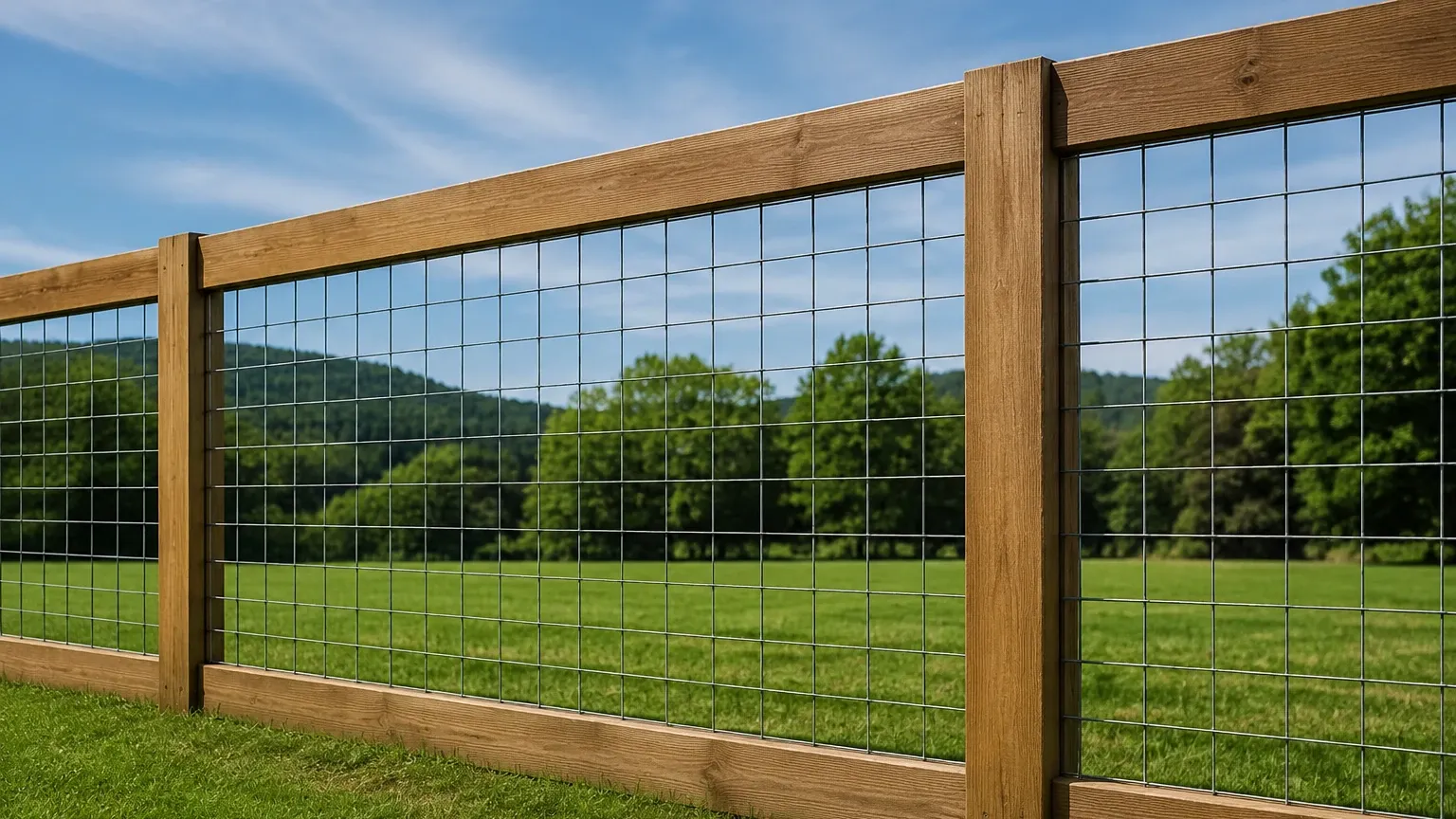
In industrial environments, the requirement for physical barriers extends beyond simple perimeter security. Engineers and facility managers often require robust solutions for machine guarding, hazardous area isolation, and structural partitions. One common configuration used for both stability and safety is the woven wire fence with top board (or top rail). While the term "top board" is frequently used in agricultural or residential contexts, in a B2B industrial setting, it refers to the structural framing or horizontal reinforcement that caps a woven wire mesh panel to ensure mechanical integrity and operator safety.
Selecting the right combination of mesh specifications and structural framing is critical for ensuring long-term performance in demanding environments. This guide explores the technical considerations of utilizing high-grade Woven Wire Mesh in fenced configurations, focusing on material selection, structural design, and industrial applications.
The Role of Woven Wire Mesh in Industrial Barriers
Unlike welded wire or expanded metal, woven wire mesh is manufactured by interlacing individual wires over and under one another in a precise pattern. This process creates a stable, consistent aperture that is essential for applications requiring specific airflow, visibility, or particle containment.
When specifying materials for these barriers, engineers typically prioritize Plain, twill and dutch woven wire mesh in SS304/316L — rolls, cut mesh and framed panels. Send mesh count or micron target for a technical quote. to ensure the mesh can withstand environmental stressors. Stainless steel is the preferred material for industrial fencing due to its high tensile strength and resistance to oxidation, particularly in chemical processing or food production facilities where wash-down procedures are frequent.
Mechanical Advantages of the Woven Structure
1. Flexibility and Resilience: The woven structure allows for slight movement under impact, absorbing energy without permanent deformation as easily as rigid welded panels might.
2. Uniformity: Precision weaving ensures that every opening is identical, which is vital for safety barriers designed to prevent finger ingress or to maintain specific ventilation rates.
3. Surface Smoothness: High-quality weaving processes minimize burrs and sharp edges, which is a critical safety consideration for personnel working in proximity to the fence.
Understanding the "Top Board" in an Industrial Context
In a standard woven wire fence with top board, the "top board" serves as the primary horizontal support member. In industrial engineering, this is usually a stainless steel tube, angle iron, or a specialized U-channel. This component serves several technical purposes:
Structural Rigidity
Woven wire mesh, especially in finer gauges, can be prone to sagging over long spans. The top board or rail provides a tensioning point, allowing the mesh to be pulled taut during installation. This prevents the mesh from bowing outward or losing its shape over time, ensuring that the barrier remains effective and aesthetically professional.
Safety and Edge Protection
The top edge of a woven wire mesh panel consists of cut wire ends. Without a top board or framing member, these edges pose a significant laceration risk to personnel. By encasing the mesh within a top rail or board, the sharp edges are completely shielded. This is particularly important in machine guarding applications where operators may frequently reach over or lean against the barrier.
Mounting and Integration
A top board provides a solid substrate for mounting additional hardware, such as safety sensors, light curtains, or signage. In modular fencing systems, the top rail often features integrated fasteners that allow for quick assembly and disassembly during equipment maintenance cycles.
Material Selection: SS304 vs. SS316L
The choice of alloy for a woven wire fence with top board depends largely on the operating environment. While both SS304 and SS316L offer excellent mechanical properties, their corrosion resistance profiles differ significantly.
* Grade 304 Stainless Steel: This is the industry standard for most general-purpose industrial fencing. It provides excellent durability and resistance to most oxidizing acids. It is suitable for dry indoor environments, warehouse partitioning, and standard machine guarding.
* Grade 316L Stainless Steel: For facilities involving salt spray, high humidity, or aggressive chemical exposure (such as pharmaceutical or marine applications), SS316L is required. The addition of molybdenum enhances resistance to pitting and crevice corrosion. The "L" denotes low carbon content, which improves weldability and prevents sensitization during the framing process.
Engineering Specifications for Mesh Panels
When designing an industrial fence, the mesh count and wire diameter must be balanced against the required level of protection and visibility.
Mesh Count and Aperture
The mesh count refers to the number of openings per linear inch. For a woven wire fence with top board used in machine guarding, a larger mesh (e.g., 2×2 or 4×4 mesh) is often preferred to allow for high visibility of the machinery behind the barrier. However, if the fence is intended to contain small debris or provide finger-safe protection, a higher mesh count with smaller apertures is necessary.
Wire Diameter (Gauge)
The wire diameter directly impacts the weight and strength of the fence. Heavier gauges (e.g., 0.063" to 0.120") are used for high-impact areas, while lighter gauges are sufficient for simple area separation. It is important to note that as the wire diameter increases, the percentage of open area decreases, which may affect airflow and lighting within the facility.
Installation and Maintenance Considerations
A properly engineered woven wire fence with top board requires careful installation to maintain its structural integrity.
Tensioning and Fastening
The mesh should be securely fastened to the top board and vertical posts using mechanical fasteners or spot welding. In high-vibration environments, mechanical fasteners with locking washers are often preferred to prevent loosening. If welding is used, it must be performed by qualified personnel to ensure that the heat-affected zone (HAZ) does not compromise the corrosion resistance of the stainless steel.
Cleaning and Inspection
One of the primary benefits of using stainless steel woven wire mesh is its low maintenance requirement. However, in food and beverage or pharmaceutical applications, regular cleaning is necessary to prevent the buildup of contaminants. The top board should be designed with a sloped or rounded profile to prevent the accumulation of dust and liquids, facilitating easier "clean-in-place" (CIP) procedures.
Common Risks and Evaluation Criteria
When procuring a woven wire fence with top board, purchasing teams should evaluate potential suppliers based on several technical criteria to avoid common pitfalls such as mesh slippage or premature corrosion.
1. Weave Tightness: Ensure the mesh is woven tightly enough that the wires do not shift under moderate pressure. Loose weaving can lead to inconsistent apertures and reduced structural strength.
2. Framing Integration: Confirm how the mesh is joined to the top board. A recessed U-channel is generally superior to surface-mounting, as it provides better edge protection and a cleaner finish.
3. Material Certification: Always request Mill Test Reports (MTRs) to verify that the stainless steel meets the specified grade (SS304 or SS316L). Inferior alloys may look identical but will fail prematurely in corrosive environments.
Conclusion: Selecting the Right Solution
The implementation of a woven wire fence with top board is a strategic decision that impacts both facility safety and operational efficiency. By selecting high-quality Woven Wire Mesh and pairing it with robust structural framing, engineers can create barriers that are not only durable but also tailored to the specific needs of their industrial application.
Whether the goal is to protect personnel from moving machinery or to create secure partitions within a chemical processing plant, the technical details—from alloy selection to mesh count—must be carefully considered. Working with a manufacturer that understands the nuances of industrial filtration and precision metal components ensures that the final product will meet the rigorous demands of the modern industrial landscape.
