


Stainless Steel Woven Wire 200 Mesh: A Technical Guide for Industrial Filtration
In the landscape of industrial separation and filtration, the selection of the correct mesh count is a critical engineering decision that dictates the efficiency, throughput, and longevity of a system. Stainless steel woven wire 200 mesh represents a pivotal specification in the "fine" category of metal cloth. It provides a balance between high-resolution particle retention and sufficient mechanical strength, making it a staple in pharmaceutical, chemical, and high-precision manufacturing sectors.
For engineers and procurement professionals, understanding the technical nuances of 200 mesh—ranging from its geometric properties to its behavior under hydraulic stress—is essential for optimizing filtration performance. This guide examines the specifications, material considerations, and application-specific logic required to integrate this mesh into industrial systems.
Understanding the Specifications of 200 Mesh
The term "mesh" refers to the number of openings per linear inch, measured from the center of one wire to the center of the wire one inch away. Consequently, stainless steel woven wire 200 mesh features 200 openings in every linear inch, or 40,000 openings per square inch.
Geometric Properties
To evaluate whether 200 mesh is appropriate for a specific process, engineers must look beyond the mesh count and focus on the aperture size and open area. While specifications can vary slightly based on the wire diameter used, the standard parameters for 200 mesh are typically:
* Mesh Count: 200 x 200
* Wire Diameter: 0.053 mm (0.0021 inches)
* Aperture (Opening Size): 0.074 mm (74 microns / 0.0029 inches)
* Open Area: Approximately 33.6% to 36%
The aperture size of 74 microns defines the nominal filtration rating. This means the mesh will reliably retain particles larger than 74 microns. However, the relatively low open area (compared to coarser meshes like 40 or 60 mesh) implies a higher resistance to flow, which must be accounted for in pump sizing and system pressure calculations.
Material Selection: SS 304 vs. SS 316L for Fine Filtration
The performance of Woven Wire Mesh is heavily influenced by the alloy selected. For 200 mesh, the most common materials are T-304 and T-316L stainless steel. The choice between these two is usually driven by the chemical environment of the application.
Type 304 Stainless Steel
Type 304 is the industry standard for general-purpose applications. It offers excellent mechanical properties and good resistance to atmospheric corrosion. In environments where the mesh is exposed to fresh water, food products, or mild chemicals, 304 provides a cost-effective solution. However, it is susceptible to pitting and crevice corrosion in the presence of chlorides.
Type 316L Stainless Steel
For more demanding industrial environments, Type 316L is preferred. The addition of molybdenum (2-3%) significantly enhances its resistance to chlorides and acids. The "L" designation stands for low carbon, which is crucial if the mesh is to be welded into a filter cartridge or frame, as it prevents carbide precipitation and maintains corrosion resistance at the weld points. In pharmaceutical and marine applications, 316L is almost universally specified for 200 mesh components.
Weave Patterns and Their Impact on Mesh Performance
While coarser meshes are almost always produced in a plain weave, 200 mesh can be manufactured using different weave styles depending on the required stability and wire thickness.
Plain Weave
In a plain weave, each warp wire crosses alternately over and under each shute (weft) wire. This is the most common weave for 200 mesh. It provides a consistent aperture size and is relatively easy to clean. For most liquid filtration and sieving applications, a plain weave 200 mesh is the standard choice.
Twill Weave
In instances where a heavier wire diameter is required for increased durability, a twill weave may be employed. In this pattern, each shute wire passes over and under two warp wires. This allows for a sturdier mesh structure without distorting the aperture. While less common for 200 mesh than plain weave, twill is an option for high-pressure applications where the mesh might otherwise suffer from wire displacement.
Dutch Weave Variations
It is important to distinguish between square mesh (like 200×200) and Dutch woven mesh. A "200 mesh" in Dutch weave (e.g., 20×200) would have a completely different filtration characteristic, focusing on depth filtration rather than surface sieving. When requesting a quote, engineers should clarify if they require a square weave or a specific Dutch weave for higher pressure differentials.
To explore the full range of available configurations, you can Plain, twill and dutch woven wire mesh in SS304/316L — rolls, cut mesh and framed panels. Send mesh count or micron target for a technical quote.
Engineering Considerations: Flow Dynamics and Pressure Drop
When integrating 200 mesh into a filtration system, the primary engineering challenge is the pressure drop ($ΔP$). Because the wires in 200 mesh are quite fine (0.053mm) and the openings are small (74 microns), the mesh presents significant surface friction to moving fluids.
Effective Filtration Area (EFA)
To maintain a manageable pressure drop, engineers must maximize the Effective Filtration Area. If the EFA is too small, the velocity of the fluid through each 74-micron opening increases, which can lead to:
1. Particle Breakthrough: High velocity can force deformable particles through the mesh.
2. Premature Blinding: Particles become wedged in the openings more tightly, making backwashing or cleaning difficult.
3. Structural Fatigue: Excessive differential pressure can cause the fine 200 mesh wires to stretch or tear.
In many designs, this is addressed by pleating the mesh. Pleating increases the surface area within the same footprint of a filter housing, thereby reducing the flux (flow per unit area) and extending the service life between cleaning cycles.
Enhancing Durability: Support Layers and Sintered Mesh
One of the inherent limitations of 200 mesh is its fragility. A single layer of 200 mesh is easily damaged by mechanical impact or high-pressure surges. To overcome this, Kaifil often recommends multi-layer constructions.
Support Grids
In a typical filter cartridge, the 200 mesh "control layer" is sandwiched between coarser mesh layers (such as 20 or 40 mesh). These coarser layers act as a drainage medium and provide the mechanical rigidity necessary to withstand pressure differentials that would otherwise collapse the fine mesh.
Sintered Wire Mesh
For the most demanding applications, 200 mesh can be sintered. Sintering is a process where multiple layers of mesh are bonded together using heat and pressure without melting the wires. Sintering a layer of 200 mesh to a perforated metal plate or several layers of coarser mesh creates a monolithic structure. This allows the 74-micron filtration accuracy to be used in high-pressure hydraulic systems or backwash filters where mechanical integrity is paramount.
Key Industrial Applications for 200 Mesh Stainless Steel
The 74-micron rating of 200 mesh makes it a versatile tool across several specialized industries:
* Pharmaceutical API Production: Used in the recovery of Active Pharmaceutical Ingredients (APIs) from solvents. The corrosion resistance of 316L ensures no metallic contamination of the product.
* Electronics Manufacturing: 200 mesh is frequently used in the screening of solder pastes and the filtration of high-purity deionized water used in wafer fabrication.
* Food and Beverage: It serves as a final safety screen for syrups, oils, and liquid flavorings to ensure that no micro-particulates from the processing equipment enter the final product.
* Chemical Processing: Used in catalyst recovery and the filtration of resins where precise particle size distribution is required.
* Aerospace and Hydraulics: Acting as a "last chance" filter in hydraulic lines to protect sensitive valves from fine wear particles.
Quality Control and Procurement Best Practices
When sourcing 200 mesh, particularly for regulated industries like food or pharma, the quality of the weave is non-negotiable. Variations in wire diameter or inconsistent weaving tension can lead to "large openings" that compromise the 74-micron rating.
Verification Checkpoints
Before finalizing a purchase, engineers should confirm the following with the manufacturer:
1. Material Certification: Ensure MTRs (Material Test Reports) are available to verify the alloy composition (especially the Molybdenum content in 316L).
2. Mesh Tolerance: Verify that the mesh adheres to international standards such as ASTM E2013 or ISO 9044, which define the allowable tolerances for aperture size.
3. Cleaning Standards: For pharmaceutical or electronics applications, ask about ultrasonic cleaning options to ensure the mesh is free from weaving oils and lubricants.
Customization Options
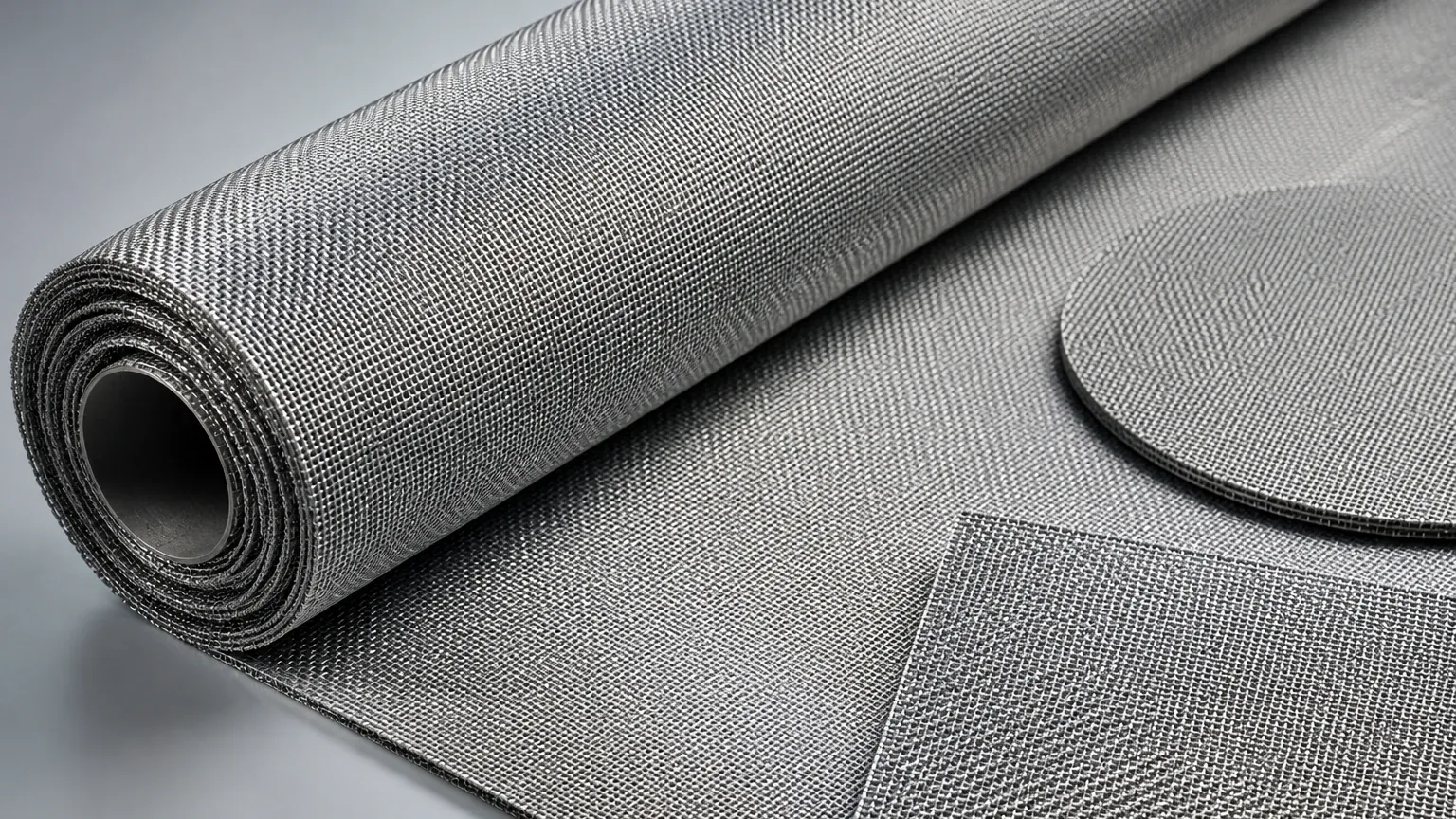
As an OEM-focused manufacturer, Kaifil provides 200 mesh in various formats to suit specific assembly needs. Whether the project requires bulk rolls for local fabrication, precision-cut discs for laboratory sieves, or fully welded cylindrical filter elements, defining the edge treatment (e.g., hemmed, framed, or ultrasonic cut) is vital to prevent fraying of the fine wires during installation.
Conclusion
Stainless steel woven wire 200 mesh is a high-performance material that requires careful engineering integration. By balancing the 74-micron aperture size with appropriate material selection (304 vs. 316L) and structural support (pleating or sintering), technical teams can achieve reliable, long-term filtration results. When selecting a partner for these components, prioritizing technical expertise and manufacturing precision ensures that the mesh performs as expected in even the most rigorous industrial environments.
