


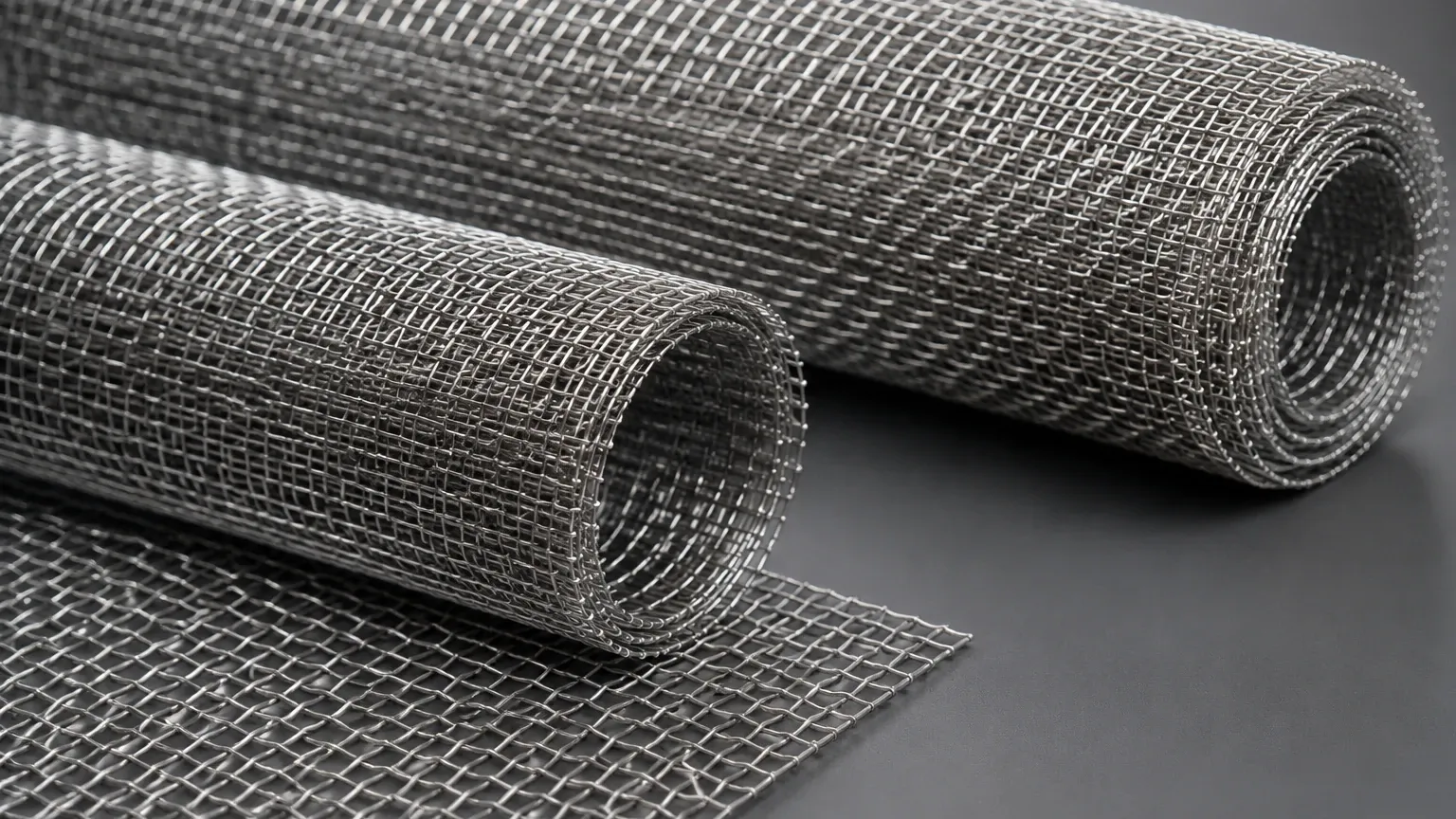
2×4 Woven Wire Mesh
In industrial filtration and separation processes, the geometry of the mesh opening is a critical engineering variable that dictates flow dynamics, particle retention, and structural integrity. While square meshes are the industry standard for general-purpose screening, rectangular configurations—specifically 2×4 woven wire mesh—offer unique advantages for specialized applications. This guide provides a technical overview of 2×4 woven wire mesh, focusing on its specifications, material considerations, and the engineering logic behind its selection in B2B industrial environments.
Understanding 2×4 Woven Wire Mesh Specifications
The term "2×4" in the context of woven wire mesh typically refers to the mesh count per linear inch in the warp and shute directions, respectively. A 2×4 mesh indicates two openings per inch in one direction and four openings per inch in the perpendicular direction. This results in rectangular apertures rather than the traditional square openings found in standard Woven Wire Mesh.
Geometric Characteristics
Rectangular mesh is often selected when a specific aspect ratio is required for the material being processed. In a 2×4 configuration, the openings are elongated. This geometry is particularly effective in preventing "blinding" or "pegging," where near-sized particles become trapped within a square opening. The elongated slot allows for slightly oversized or irregular particles to pass through or be vibrated loose more easily than they would in a fixed square aperture.
Wire Diameter and Aperture Size
The actual aperture size (the clear space between wires) is determined by both the mesh count and the wire diameter. For a 2×4 mesh, engineers must specify the wire gauge—often measured in inches or millimeters—to calculate the open area percentage.
* Warp Wire: The wires running lengthwise in the roll.
* Shute Wire (Weft): The wires running across the width.
In a 2×4 configuration, the wire diameters may be identical or varied depending on the required mechanical strength. A larger wire diameter increases the mesh's durability and resistance to abrasion but reduces the total open area, thereby increasing the pressure drop across the filter element.
Material Selection: SS304 vs. SS316L for Industrial Filtration
Material science is at the core of filtration performance. For most industrial applications, stainless steel is the preferred medium due to its mechanical strength and thermal stability. Kaifil specializes in providing Plain, twill and dutch woven wire mesh in SS304/316L — rolls, cut mesh and framed panels. Send mesh count or micron target for a technical quote. to meet these demanding requirements.
Stainless Steel 304
SS304 is the most common grade used in industrial screening. It offers excellent resistance to atmospheric corrosion and is suitable for many food-grade applications and general chemical processing. It is cost-effective and provides sufficient tensile strength for most secondary filtration stages.
Stainless Steel 316L
In environments involving high chloride concentrations, organic acids, or extreme temperatures, SS316L is the standard. The addition of molybdenum enhances its pitting and crevice corrosion resistance. The "L" denotes low carbon content, which is vital for components that require welding, as it prevents carbide precipitation that can lead to intergranular corrosion. For pharmaceutical and high-end chemical processing, SS316L is often the non-negotiable choice for 2×4 woven wire mesh.
Performance Metrics: Flow Rate and Filtration Efficiency
When evaluating 2×4 woven wire mesh for a project, engineers must balance three competing factors: filtration accuracy, flow rate (throughput), and structural longevity.
Effective Open Area
The open area percentage is the ratio of the total area of the openings to the total area of the mesh. Rectangular meshes like the 2×4 configuration often provide a higher open area compared to square meshes of similar strength. This leads to a lower initial pressure drop ($ΔP$), allowing pumps to operate more efficiently and reducing energy consumption within the system.
Particle Retention Characteristics
Because the openings are rectangular, the "cut point" of the filter is not as straightforward as a square mesh. A 2×4 mesh will allow elongated particles to pass through if they are oriented vertically but will catch them if they are oriented horizontally. This directional filtration is often utilized in the timber, pulp, and recycled plastic industries where fiber-like particles need to be separated from more granular media.
Engineering Considerations for Rectangular Mesh Geometries
Designing a system around 2×4 woven wire mesh requires an understanding of how the rectangular slots interact with the fluid or gas stream.
Mechanical Orientation
In vibratory screening applications, the orientation of the 2×4 slots relative to the material flow is crucial. If the long axis of the rectangle is parallel to the flow, the throughput is maximized. If the long axis is perpendicular, the screening accuracy for elongated particles increases. Engineers must specify the orientation during the fabrication of framed panels or custom filter cartridges.
Structural Integrity and Support
Due to the asymmetric mesh count, 2×4 woven wire mesh may have different tensile strengths in the warp and shute directions. In high-pressure hydraulic or liquid filtration systems, the mesh is often pleated or supported by a coarser perforated metal core to prevent deformation. At Kaifil, we evaluate the operating pressure and flow surges to determine if a single layer of 2×4 mesh is sufficient or if a multi-layer sintered structure is required for the application.
Industrial Applications and Use Cases
While square mesh is ubiquitous, the 2×4 configuration serves specific niches where standard apertures fail to meet performance targets.
1. Dehydration and Dewatering: In the food and beverage industry, rectangular meshes are used in belt filters to allow water to drain rapidly while retaining solid organic matter. The elongated openings reduce surface tension effects that can trap water in smaller square pores.
2. Architectural and Protective Guards: Beyond filtration, the aesthetic and functional properties of 2×4 mesh make it ideal for machinery guards. It provides high visibility and ventilation while maintaining a barrier against larger debris.
3. Petrochemical Catalyst Support: In reactor vessels, rectangular meshes can support catalyst beds while providing a high-volume flow path for gases, minimizing the pressure drop across the reactor.
4. Sifting and Scalping: In mining and aggregate processing, 2×4 mesh is used to "scalp" or remove oversized flat rocks that might otherwise clog a square-mesh secondary crusher.
Customization and OEM Solutions for Precision Filtration
Standard off-the-shelf mesh rarely meets the exact needs of complex industrial systems. Customization is often necessary to ensure the filter component integrates seamlessly with existing hardware.
Fabrication Options
* Cut-to-Size Pieces: Precision laser or plasma cutting ensures that the edges of the 2×4 mesh do not fray, which is essential for maintaining the integrity of the seal in a filter housing.
* Framed Panels: For use in vibratory shakers or intake screens, mesh can be tensioned and welded into stainless steel frames.
* Cylindrical Filter Cartridges: 2×4 mesh can be rolled and seam-welded to create custom cartridges. This requires expertise in welding thin-wire mesh without compromising the aperture geometry at the seam.
Technical Consultation
Engineers should confirm the following data points with their manufacturer before procurement:
* Minimum and Maximum Operating Temperature: To ensure material stability.
* Chemical Compatibility: Verifying the concentration of corrosive agents.
* Mechanical Load: Calculating the weight of the filter cake or the force of the fluid flow.
Installation and Maintenance Best Practices
The longevity of a 2×4 woven wire mesh component depends heavily on proper installation and a disciplined maintenance cycle.
Proper Tensioning
In screening applications, improper tensioning is the leading cause of premature mesh failure. If the mesh is too loose, it will "whip" under vibration, leading to metal fatigue and cracking. If it is too tight, the wires may exceed their yield strength. Specialized tensioning tools should be used to reach the manufacturer-recommended Newton-meters (N/m).
Cleaning Protocols
Stainless steel filters are valued for their cleanability. Depending on the contaminant, 2×4 mesh can be cleaned via:
* Backwashing: Reversing the flow to dislodge particles.
* Ultrasonic Cleaning: Using high-frequency sound waves in a solvent bath to remove sub-micron particles from the wire intersections.
* Chemical Cleaning: Using passivating acids to remove organic buildup without etching the stainless steel surface.
Inspection for Wear
Regular inspections should focus on the wire intersections. In high-abrasion environments, the wires will eventually thin at the knuckle (the point where one wire crosses another). Once the wire diameter is reduced by more than 25-30%, the structural integrity of the mesh is compromised, and replacement should be scheduled to avoid catastrophic failure and downstream contamination.
Conclusion
Selecting the right filtration medium involves more than just picking a mesh count; it requires a deep dive into the physics of the application. The 2×4 woven wire mesh configuration offers a specialized solution for industries facing challenges with blinding, flow restriction, or specific particle geometries. By choosing the correct grade of stainless steel and ensuring precise manufacturing standards, B2B buyers can optimize their filtration processes for both performance and total cost of ownership.
For engineers and purchasing teams looking to integrate high-performance metal cloth into their systems, working with a manufacturer that understands the nuances of wire mesh geometry is essential. Whether you require bulk rolls or custom-engineered components, focusing on technical specifications and material quality will ensure long-term operational success.
