


Woven Wire Mesh 316
In the demanding landscape of industrial filtration, the selection of material and structure is a critical engineering decision that directly impacts process efficiency, equipment longevity, and product purity. For applications involving corrosive chemicals, high-temperature fluids, or stringent hygiene standards, woven wire mesh 316 has emerged as the industry standard. This alloy provides a necessary balance of mechanical strength and chemical resistance that exceeds the capabilities of standard 304 stainless steel.
Selecting the right mesh involves more than just identifying a material; it requires a deep understanding of weave patterns, wire diameters, and the specific environmental stressors of the application. This guide provides a technical overview of woven wire mesh 316 to assist engineers and purchasing teams in making informed procurement decisions.
1. Material Science: Why Specify Type 316 Stainless Steel?
While Type 304 stainless steel is suitable for many general-purpose applications, industrial environments often present challenges that lead to pitting and crevice corrosion in lower-grade alloys. The primary distinction of Type 316 is the addition of 2% to 3% molybdenum.
Corrosion Resistance and Pitting Protection
The inclusion of molybdenum significantly enhances the material's resistance to chloride-induced pitting. This is vital in industries such as marine processing, wastewater treatment, and chemical manufacturing, where exposure to salts and acids is frequent. In the context of Woven Wire Mesh, using 316 grade ensures that the fine wires—which have a high surface-area-to-volume ratio—do not degrade prematurely when exposed to aggressive cleaning agents or process fluids.
Temperature and Mechanical Stability
Type 316 stainless steel maintains its mechanical properties across a wide temperature range. It offers better creep resistance and higher tensile strength at elevated temperatures compared to 304. For filtration systems operating in heat exchangers or steam-sterilized pharmaceutical lines, woven wire mesh 316 provides the dimensional stability required to maintain accurate micron ratings under thermal stress.
2. Technical Specifications: Mesh Count and Micron Ratings
To specify the correct mesh for a project, engineers must navigate the relationship between mesh count, wire diameter, and the resulting aperture size (opening).
* Mesh Count: This refers to the number of openings per linear inch. A higher mesh count indicates a finer filter, but it also usually involves thinner wires.
* Wire Diameter: The thickness of the wire before weaving. This determines the mechanical strength and the "open area" of the mesh.
* Aperture (Opening Size): The clear distance between two adjacent wires. This is the most critical factor for particle retention.
* Open Area Percentage: Calculated as `(Aperture / (Aperture + Wire Diameter))^2 x 100`. A higher open area allows for lower pressure drops and higher flow rates, but may compromise the structural integrity of the mesh under high pressure.
When evaluating woven wire mesh 316, it is essential to confirm that the manufacturer’s tolerances align with your filtration targets. Even minor deviations in wire diameter can significantly shift the micron rating and flow characteristics of the final filter component.
3. Evaluating Weave Patterns for Specific Requirements
The method by which the wires are interlaced—the weave pattern—determines the mesh's filtration characteristics and physical durability. There are three primary patterns used in industrial 316 mesh:
Plain Weave
This is the most common pattern, where each warp wire crosses alternately over and under each shute (weft) wire. It provides the most straightforward path for fluid and is ideal for high-flow applications. However, because the wires must bend significantly at every junction, there is a limit to how fine a plain weave can be while maintaining structural stability.
Twill Weave
In a twill weave, each shute wire passes alternately over and under two warp wires. This reduces the stress on the wires during the weaving process, allowing for the use of heavier wires for a given mesh count. Twill weave is often selected when the mesh needs to withstand higher mechanical loads or when a higher mesh count is required than what plain weave can accommodate.
Dutch Weave (Plain and Twill)
Dutch weaves use different diameters for the warp and shute wires. Typically, the shute wires are driven closely together to create a dense, "zero-aperture" mesh. This pattern does not have straight-through openings; instead, the fluid must follow a tortuous path. This makes Dutch woven wire mesh 316 excellent for fine filtration (down to 5-10 microns) and high-pressure applications like hydraulic filtration and polymer melt processing.
4. Engineering Considerations: Pressure Drop and Flow Rates
One of the most common challenges in filter design is balancing filtration efficiency with the system's pressure drop. A mesh that is too fine will clog rapidly, leading to frequent maintenance cycles and potential pump strain. Conversely, a mesh that is too coarse will fail to protect downstream equipment.
When specifying woven wire mesh 316, engineers should calculate the clean pressure drop based on the fluid viscosity, velocity, and the mesh's open area. In high-viscosity applications, such as oil filtration or food processing (syrups/pastes), the choice of weave becomes paramount. A Dutch weave might offer the necessary micron rating, but a plain weave with a larger open area might be required to keep the system within operational pressure limits.
5. Common Risks and Quality Assurance in Procurement
Procuring industrial filtration components involves navigating risks that can impact the total cost of ownership. When sourcing woven wire mesh 316, the following factors should be verified:
Material Substitution
One of the greatest risks in the supply chain is the substitution of 304 stainless steel for 316. While they look identical, the lack of molybdenum in 304 will lead to rapid failure in chloride-rich environments. Reliable manufacturers provide Material Test Reports (MTRs) and often perform Positive Material Identification (PMI) testing to ensure the alloy composition is correct.
Weave Defects and Uniformity
Inconsistent wire tension during the weaving process can lead to "irregular apertures," where some openings are larger than the specified micron rating. In precision filtration, a single oversized opening can allow bypass, contaminating the entire batch. Inspecting for wire shifts, broken wires, and weave uniformity is a standard part of quality control for high-end filtration solutions.
Edge Treatment and Fabrication
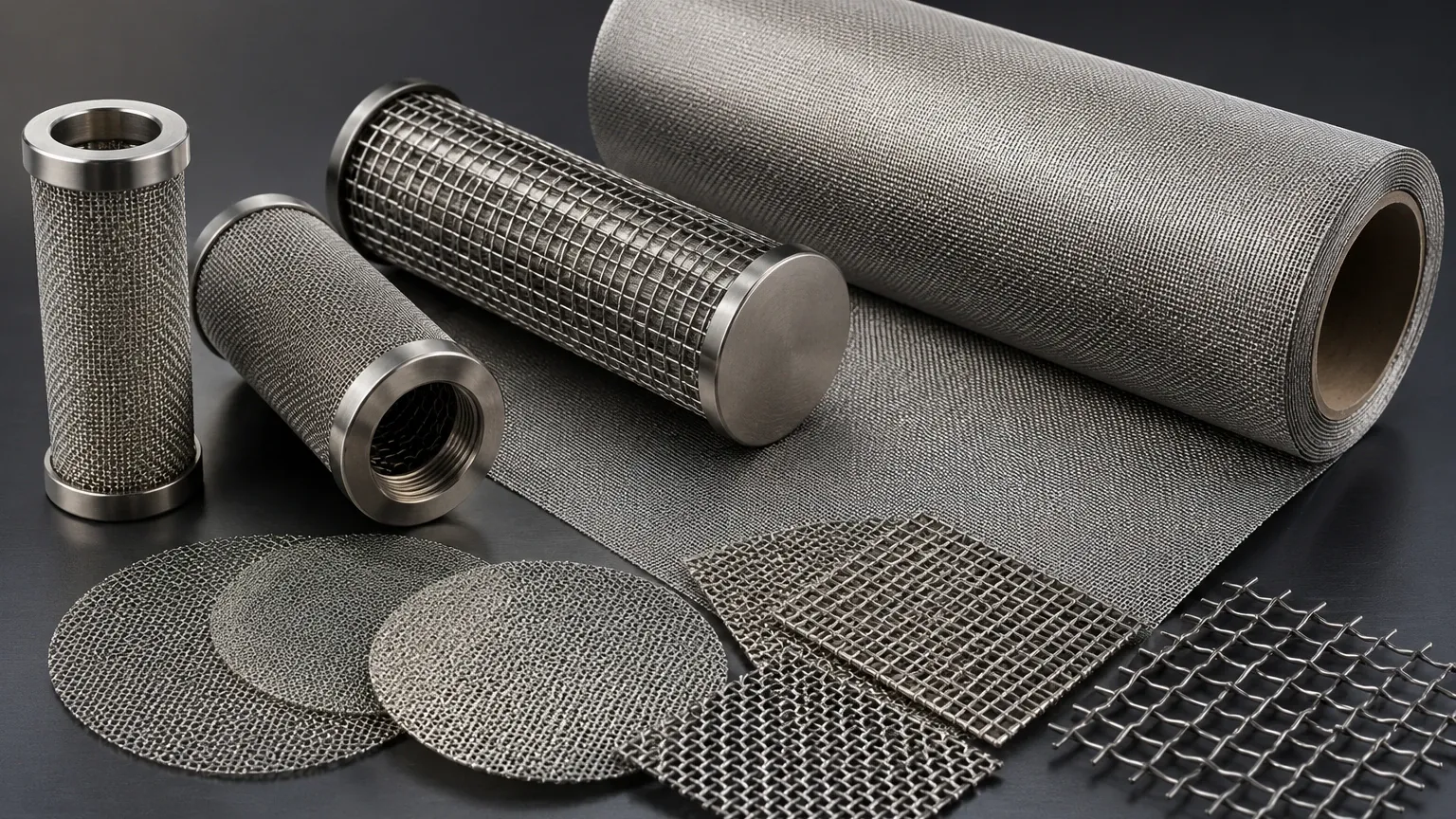
For many B2B applications, the mesh is not used as a raw roll but is fabricated into cartridges, discs, or cylinders. The method of cutting and joining—such as plasma cutting, ultrasonic welding, or resistance welding—must be compatible with 316 stainless steel to prevent carbon precipitation and subsequent intergranular corrosion at the weld sites.
6. Maintenance, Cleaning, and Replacement Cycles
Unlike disposable synthetic filters, woven wire mesh 316 components are designed for longevity and reusability. However, their service life depends on proper maintenance.
* Cleaning Methods: Depending on the contaminant, 316 mesh can be cleaned using ultrasonic baths, backwashing, chemical solvents, or high-pressure steam. The chemical resilience of 316 allows for aggressive CIP (Clean-In-Place) protocols common in the pharmaceutical and food industries.
* Signs of Wear: Engineers should monitor for "blinding" (permanent plugging of the mesh) and mechanical fatigue. In vibrating screens or high-pulsation hydraulic lines, the wires may eventually suffer from work hardening and brittle fracture.
* Total Cost of Ownership: While the initial cost of 316 stainless steel mesh is higher than 304 or synthetic media, the ability to clean and reuse the filter, combined with its resistance to downtime caused by corrosion, typically results in a lower total cost over the equipment's lifecycle.
7. Customization and OEM Solutions
Every industrial process has unique requirements that standard off-the-shelf mesh may not meet. Customization options for woven wire mesh 316 include:
* Specific Alloy Variations: For high-temperature welding applications, 316L (low carbon) may be specified to prevent sensitization.
* Layer Sintering: Multiple layers of mesh can be sintered together to create a composite material that combines fine filtration with extreme mechanical rigidity.
* Custom Geometric Shapes: Beyond rolls, mesh can be fabricated into pleated cartridges to increase surface area or framed panels for easy installation in industrial housings.
Kaifil specializes in these custom configurations, providing professional Plain, twill and dutch woven wire mesh in SS304/316L — rolls, cut mesh and framed panels. Send mesh count or micron target for a technical quote. to support demanding industrial sectors. By working closely with an experienced manufacturer, engineering teams can ensure that the material selection, weave pattern, and fabrication techniques are perfectly aligned with their operational goals.
Conclusion
Selecting woven wire mesh 316 is a strategic choice for any B2B operation requiring reliable, long-term filtration performance. By understanding the technical nuances of the material—from the chemical benefits of molybdenum to the structural implications of different weave patterns—engineers can optimize their processes for both efficiency and durability. Whether you are designing a new chemical processing line or upgrading a water treatment facility, confirming the technical specifications and quality standards of your mesh is the first step toward a successful filtration outcome.
