


Woven Wire Fence 330
In industrial environments, the selection of perimeter protection and separation barriers requires a rigorous evaluation of material science, structural engineering, and long-term durability. The term "woven wire fence 330" typically refers to a standardized 330-foot roll of woven wire mesh, a format widely adopted in large-scale industrial, agricultural, and security applications. For engineers and procurement professionals, understanding the technical nuances of this specification is critical to ensuring that the chosen mesh can withstand mechanical stress, environmental corrosion, and specific containment requirements.
Industrial woven wire mesh is distinct from lighter commercial alternatives. It is engineered to provide a high strength-to-weight ratio while maintaining specific aperture sizes for visibility, ventilation, or secondary filtration. This guide examines the technical parameters of woven wire mesh systems, focusing on material selection, weave geometry, and the engineering considerations necessary for successful deployment in demanding sectors.
Understanding the Technical Profile of Woven Wire Mesh
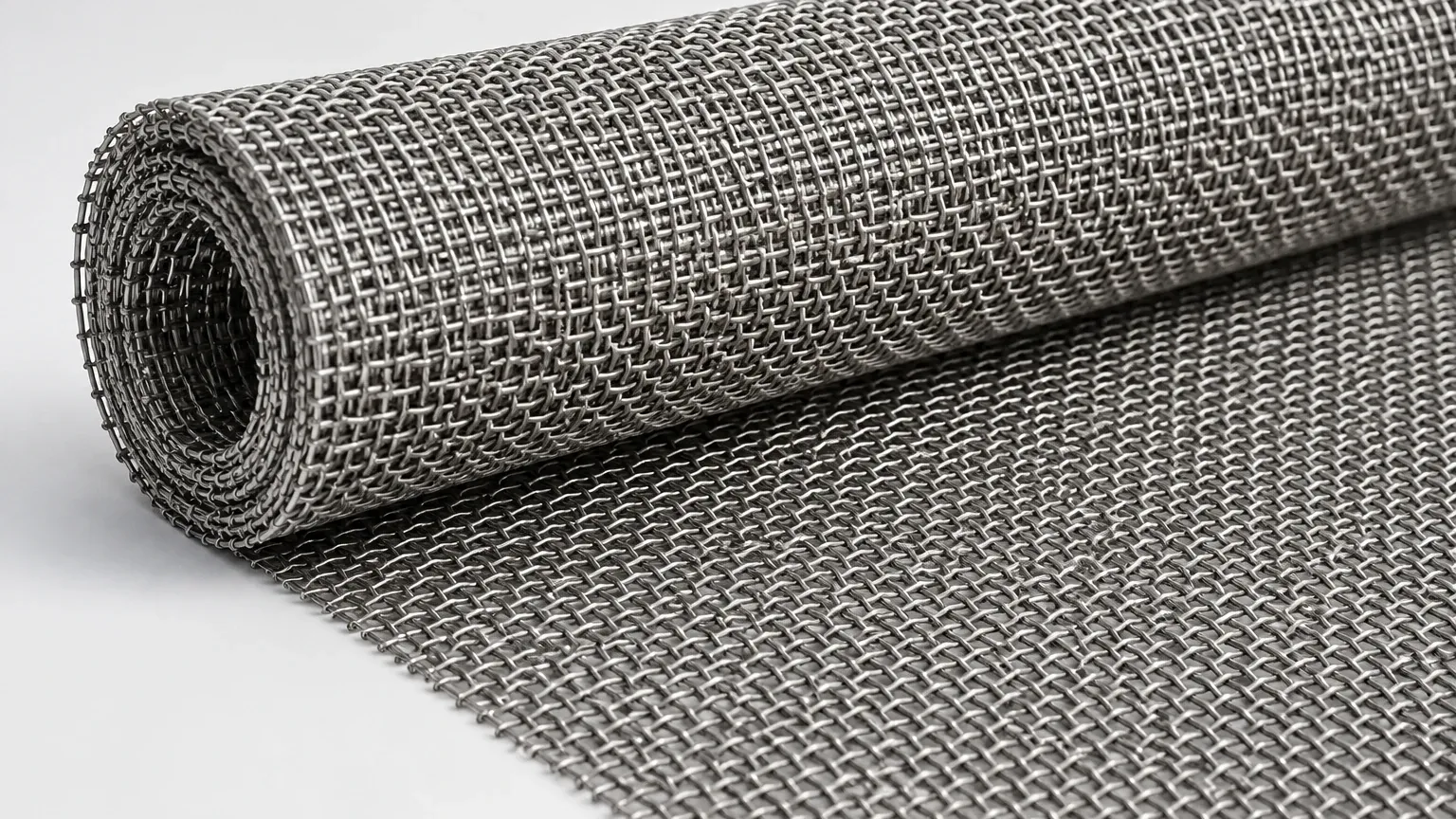
Woven wire mesh is manufactured by interlacing metallic wires in a predetermined pattern. Unlike welded wire mesh, where wires are joined at intersections via resistance welding, woven mesh relies on the mechanical tension and the physical "crimp" of the wires to maintain its structure. This allows for a degree of flexibility and impact resistance that is often superior in high-vibration or high-load environments.
The "330" designation in a woven wire fence context most frequently denotes the roll length—330 feet (approximately 100 meters). This length is an industry standard because it balances the efficiency of installation (fewer joins and tensioning points) with the logistics of transport and manual handling on-site. When specifying these rolls for industrial use, engineers must look beyond the length and evaluate the wire gauge, the alloy composition, and the specific weave type.
For high-performance applications, Plain, twill and dutch woven wire mesh in SS304/316L — rolls, cut mesh and framed panels. Send mesh count or micron target for a technical quote. provides the necessary precision and corrosion resistance required for chemical processing plants, offshore facilities, and food-grade environments.
Material Selection: Metallurgy and Corrosion Resistance
The longevity of a woven wire fence 330 installation is primarily dictated by its metallurgy. Industrial environments often expose mesh to corrosive agents, including salt spray, industrial chemicals, and extreme temperature fluctuations. Selecting the correct alloy is the first step in avoiding premature failure.
Stainless Steel 304 vs. 316L
Stainless steel is the gold standard for industrial woven wire due to its inherent oxidation resistance.
* Grade 304: This is the most common stainless steel used for industrial fencing and mesh. It offers excellent durability and good corrosion resistance in standard outdoor or indoor industrial settings. It is cost-effective for large-scale projects where high-intensity chemical exposure is not a daily factor.
* Grade 316L: For marine environments or chemical processing zones, 316L is required. The addition of molybdenum provides superior resistance to chlorides (pitting corrosion). The "L" denotes low carbon content, which improves weldability and prevents sensitization during any secondary fabrication processes, such as attaching the mesh to frames.
Galvanized Steel Options
While stainless steel is preferred for high-end industrial applications, galvanized steel remains a common choice for general perimeter security. However, engineers must distinguish between "Galvanized Before Weave" (GBW) and "Galvanized After Weave" (GAW). GAW is significantly more durable because the zinc coating seals the intersections where the wires cross, preventing moisture from becoming trapped in the crimps and initiating sub-surface rust.
Weave Patterns and Engineering Geometry
The geometry of the weave determines both the physical strength of the woven wire fence 330 and its functional characteristics, such as airflow and visibility. In an industrial context, three primary weave types are most relevant:
1. Plain Weave
This is the most straightforward pattern, where each warp wire crosses alternately over and under each shute wire. It provides the most consistent aperture size and is ideal for general-purpose fencing where visibility and standard security are the primary goals. Plain weave mesh is easy to tension evenly across long distances.
2. Twill Weave
In a twill weave, each shute wire passes over and under two warp wires. This allows for the use of heavier wire diameters than a plain weave could accommodate for a given mesh count. Twill weave is often specified when the fence must act as a high-strength barrier against heavy impacts or where a denser mesh is required without sacrificing structural integrity.
3. Dutch Weave
While more common in high-precision filtration, Dutch weave patterns (Plain Dutch or Twill Dutch) are used in specialized industrial barriers where airflow must be strictly controlled or where the mesh needs to serve a dual purpose as a debris filter. These weaves feature a higher density of wires in one direction, resulting in a very strong, opaque mesh.
Engineering Considerations for Installation
Installing a 330-foot roll of woven wire requires careful planning to maintain the structural integrity of the mesh over its entire span. Improper tensioning or poor post-spacing can lead to sagging, which compromises the security and aesthetic of the installation.
Tensioning and Post Spacing
For a woven wire fence 330, the tension must be applied uniformly across the height of the roll. In industrial settings, mechanical tensioning tools are used to pull the mesh to a specific PSI (pounds per square inch) rating. If the mesh is under-tensioned, it will flex excessively under wind load; if over-tensioned, the wires may reach their yield point, leading to permanent deformation or snapping at the attachment points.
Standard post spacing for industrial woven wire usually ranges from 8 to 12 feet, depending on the wire gauge and the environmental load (such as snow or high winds). Terminal posts—corners, ends, and gates—must be braced more heavily than line posts to withstand the continuous pull of the tensioned mesh.
The Role of Stay Wires
In many woven wire fence 330 configurations, "stay wires" (the vertical wires) are spaced at 6 or 12 inches. For industrial security, a 6-inch stay spacing is preferred as it provides more rigid vertical support and prevents the mesh from being easily pulled apart by intruders or large equipment impacts.
Applications in Industrial and Hazardous Environments
Beyond simple perimeter fencing, woven wire mesh in 330-foot rolls is utilized in several specialized industrial scenarios:
* Machine Guarding: Large-scale manufacturing plants use woven wire to create safety zones around automated machinery. The mesh allows for visual inspection while protecting personnel from moving parts or ejected debris.
* Intake Screen Protection: In water treatment or power plant cooling systems, woven wire mesh acts as a primary barrier to prevent large debris from entering the system. Stainless steel 316L is typically required here due to constant immersion.
* Warehouse Partitioning: Woven wire is an efficient material for creating secure storage "cages" within a warehouse. The 330-foot roll length allows for continuous runs along long aisles, reducing the number of vertical seams.
* High-Security Perimeters: When combined with barbed wire or electronic sensors, heavy-gauge woven wire provides a formidable physical barrier for sensitive infrastructure like electrical substations or chemical storage yards.
Evaluating Quality and Compliance
When procuring woven wire fence 330, engineering teams must confirm several key metrics to ensure the product meets project specifications. Failure to verify these can lead to increased maintenance costs and shortened replacement cycles.
1. Wire Diameter Tolerance
Industrial mesh should adhere to strict tolerances (e.g., +/- 0.001 inches). Even small deviations in wire diameter can significantly impact the overall tensile strength of the roll and the consistency of the aperture sizes.
2. Mesh Count and Aperture Precision
The number of openings per linear inch (mesh count) must be consistent. In applications where the fence also acts as a safety barrier for small objects, any irregularity in the weave can create a safety hazard.
3. Tensile Strength of the Wire
The base wire used in the weaving process should have a certified tensile strength. High-tensile wire allows for a tighter stretch and greater resistance to impact without the need for excessively thick (and heavy) wire gauges.
4. Edge Treatment
For industrial rolls, the edge (selvage) treatment is vital. A "knuckled" edge (where the wires are bent back on themselves) is safer for handling and prevents snagging, whereas a "twisted" or "barbed" edge provides additional security at the top and bottom of the fence line.
Total Cost of Ownership (TCO) in Mesh Selection
While the initial purchase price of a woven wire fence 330 is a factor, B2B buyers must prioritize the Total Cost of Ownership. A lower-cost galvanized mesh may require replacement in 5 to 7 years in a coastal industrial zone, whereas a high-quality stainless steel mesh could last 25 years or more with minimal maintenance.
Maintenance requirements for stainless steel woven wire are generally limited to periodic cleaning to remove surface contaminants that could lead to staining. In contrast, galvanized systems may require inspections for zinc depletion and localized rust treatment. When factoring in the labor costs of installation and the potential downtime associated with fence repairs in a high-security area, the long-term value of premium materials becomes clear.
Conclusion
The woven wire fence 330 is more than a simple barrier; it is a versatile engineering component that provides security, safety, and separation in complex industrial landscapes. By focusing on the technical specifications—such as the difference between SS304 and SS316L, the mechanical advantages of various weave patterns, and the rigors of proper tensioning—engineers can select a filtration or fencing solution that offers both performance and longevity.
Whether the application involves protecting a chemical plant's perimeter or serving as a heavy-duty intake screen, the quality of the woven wire mesh is the determining factor in the system's success. Confirming material certifications, wire tolerances, and weave consistency before procurement ensures that the final installation will meet the demanding standards of modern industrial operations.
