


Engineering Guide to Industrial Woven Wire Mesh: Specification and Application for 500 Ft Installations
In industrial environments, the selection of perimeter barriers, safety enclosures, and filtration supports requires a rigorous evaluation of material science and mechanical properties. While a woven wire fence 500 ft roll is a common unit of measure in commercial and agricultural sectors, the requirements for industrial-grade applications—particularly those involving chemical processing, food production, or high-pressure hydraulic systems—demand a much higher level of precision.
For engineers and procurement teams, the transition from standard fencing to high-performance Woven Wire Mesh involves understanding how wire diameter, weave type, and alloy composition impact the longevity and efficiency of the installation. This guide explores the technical parameters of specifying woven wire solutions in bulk lengths, focusing on the durability and precision required for demanding industrial sectors.
Understanding the Technical Foundation of Woven Wire Mesh
At its core, woven wire mesh is a structural material produced by weaving metallic wires on industrial looms. Unlike welded wire, which relies on spot welds at intersections, woven mesh maintains its integrity through the mechanical tension of the over-and-under pattern. This provides a degree of flexibility and resistance to vibration that is essential in industrial environments.
When specifying a woven wire fence 500 ft configuration for an industrial site, the primary technical considerations include:
1. Mesh Count: The number of openings per linear inch. In filtration and precision screening, this determines the particle retention size.
2. Wire Diameter: The thickness of the wire before weaving. This directly influences the mesh's strength, weight, and "open area" percentage.
3. Aperture (Opening Size): The clear distance between two adjacent wires. This is the most critical factor for filtration and separation tasks.
For industrial applications, Plain, twill and dutch woven wire mesh in SS304/316L — rolls, cut mesh and framed panels. Send mesh count or micron target for a technical quote. allows for a tailored approach where the physical properties of the mesh are matched to the specific stressors of the environment.
Material Selection: Beyond Standard Galvanization
While many 500 ft fencing products utilize galvanized steel, industrial applications often require the superior corrosion resistance of stainless steel. Kaifil specializes in high-grade alloys that ensure the structural integrity of the mesh even when exposed to caustic chemicals or extreme temperatures.
SS304 vs. SS316L
* Stainless Steel 304: The industry standard for general industrial use. It offers excellent durability and resistance to oxidation. It is suitable for most indoor safety guards and outdoor enclosures in non-marine environments.
* Stainless Steel 316L: Contains molybdenum, which provides enhanced resistance to chlorides and pitting. This is the mandatory choice for pharmaceutical processing, food and beverage production, and coastal industrial facilities where salt spray is a factor.
Choosing the correct alloy for a 500 ft run is a critical cost-benefit decision. While SS316L has a higher initial procurement cost, its ability to withstand corrosive cleaning agents and harsh weather without degrading significantly reduces the total cost of ownership (TCO) by extending the replacement cycle.
Weave Patterns and Their Functional Implications
The method by which the wires are interlaced determines the mesh's behavior under load and its filtration efficiency. When planning a large-scale installation of Woven Wire Mesh, engineers must select a weave that aligns with the project's mechanical requirements.
Plain Weave
This is the most common pattern, where each warp wire crosses alternately over and under each shute wire. It provides the highest level of transparency and open area, making it ideal for protective screens where airflow or visibility is required.
Twill Weave
In a twill weave, each shute wire passes over and under two warp wires. This allows for the use of heavier wire diameters in a given mesh count, resulting in a stronger, more robust fabric. This is often preferred for heavy-duty industrial enclosures or high-pressure filtration supports.
Dutch Weave (Plain and Twill)
Dutch weaves utilize different diameters for warp and shute wires, creating a dense, dimensionally stable mesh with small, curved openings. While less common for a standard "fence," this weave is essential for precision filtration components within industrial systems. For projects requiring a woven wire fence 500 ft length to act as a secondary containment or fine-particle barrier, Dutch weaves offer unparalleled precision.
Engineering Considerations for 500 Ft Installations
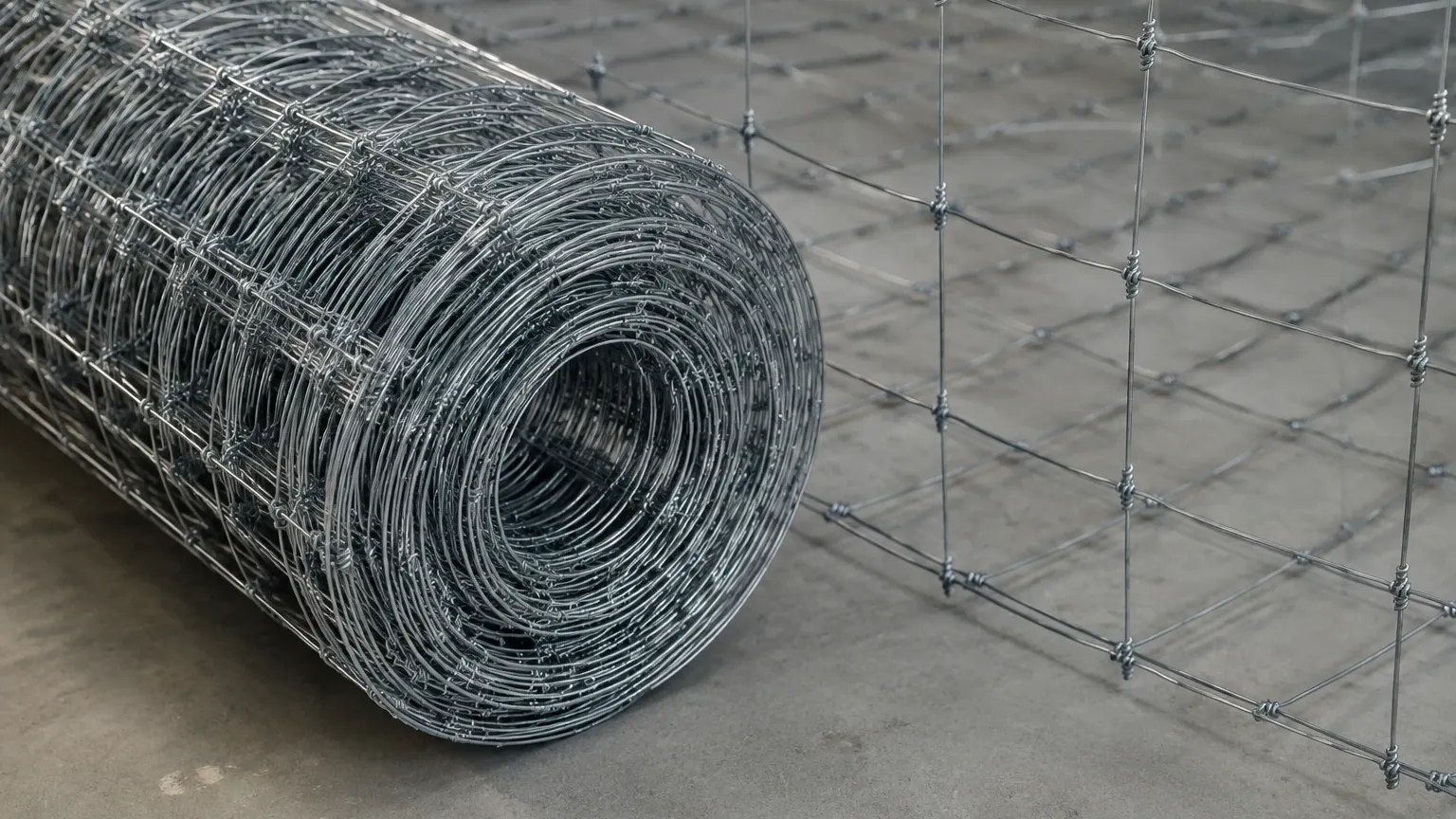
Deploying 500 feet of industrial woven wire mesh requires careful planning regarding structural support and tensioning. Unlike lighter materials, industrial stainless steel mesh can be significantly heavy, placing high demands on the supporting framework.
Weight and Handling
The weight of a 500 ft roll depends on the wire diameter and mesh count. For example, a heavy-duty mesh intended for security or coarse filtration may weigh several hundred pounds. Logistics teams must ensure that the site has the appropriate lifting equipment to manage these rolls without deforming the mesh.
Tensioning and Sag Prevention
To maintain the integrity of a long-run installation, the mesh must be properly tensioned. Stainless steel has a specific modulus of elasticity; if under-tensioned, the mesh will sag, leading to mechanical fatigue at the attachment points. Conversely, over-tensioning can lead to "necking" of the wires or failure of the support posts. Engineers should calculate the thermal expansion coefficients if the installation is subject to significant temperature fluctuations.
Seaming and Joining
A 500 ft continuous roll minimizes the number of seams required, which is a major advantage for both structural strength and aesthetic uniformity. Where joins are necessary, mechanical fastening or specialized welding (such as TIG welding for stainless steel) should be used to ensure the joint strength matches the base material.
Industrial Applications of Bulk Woven Wire Mesh
While the term "fence" often implies a simple perimeter, in the B2B industrial context, a woven wire fence 500 ft specification often serves more complex roles:
* Machinery Safety Enclosures: High-tensile Woven Wire Mesh is used to create safety zones around automated manufacturing lines, providing a physical barrier that allows for visual inspection and ventilation.
* Chemical Tank Secondary Containment: In processing plants, mesh screens are used to surround tanks to catch debris or provide a substrate for specialized coatings.
* Water Intake Screens: Large-scale water treatment facilities use bulk rolls of stainless mesh to create intake screens that prevent organic matter from entering the filtration system.
* Acoustic and Thermal Shielding: In power generation, specifically configured mesh can be used as a component in multi-layer shielding systems.
Evaluating Total Cost of Ownership (TCO)
When purchasing a woven wire fence 500 ft roll, the initial price per foot is only one part of the equation. Industrial purchasers must look at the long-term value, which is driven by:
1. Maintenance Requirements: Stainless steel mesh requires minimal maintenance compared to plastic-coated or galvanized alternatives, which may peel or rust.
2. Service Life: A high-quality SS316L mesh can last decades in environments where other materials fail in months.
3. Operational Efficiency: In filtration applications, the precision of the weave ensures consistent flow rates and pressure drops, preventing costly system downtime.
4. Customization: Working with a manufacturer like Kaifil allows for custom widths and edge treatments (such as hemmed or welded edges), which can significantly reduce on-site labor costs during installation.
Key Questions for Engineers Before Procurement
Before finalizing a specification for industrial Woven Wire Mesh, technical teams should confirm the following details with their supplier:
* What is the precise micron rating or aperture required? (Crucial for filtration or separation tasks).
* What environmental factors are present? (Temperature, chemical exposure, and mechanical impact).
* Is a specific edge treatment needed? (To prevent fraying and ensure safe handling during installation).
* What are the tolerances for the mesh count and wire diameter? (Industrial applications often require tighter tolerances than commercial grades).
By addressing these factors, procurement teams can ensure that their 500 ft installation provides the reliability and performance demanded by modern industrial standards. Whether used for specialized filtration or as a high-strength protective barrier, the quality of the weave and the integrity of the material remain the most critical factors in project success.
