


Woven Wire Fence 660 Ft: Engineering and Selection Guide for Industrial Applications
In industrial procurement and facility engineering, the specification of "woven wire fence 660 ft" typically refers to the acquisition of bulk-length rolls of high-durability mesh intended for perimeter security, internal partitions, or large-scale filtration support structures. While 660 feet (approximately 200 meters) is a standard length in agricultural fencing, industrial-grade woven wire mesh requires a significantly higher degree of technical scrutiny regarding material composition, weave precision, and environmental resistance.
For engineers and purchasing teams, selecting the right woven wire mesh involves balancing mechanical strength with the specific requirements of the operating environment. Whether the application is a security barrier in a chemical processing plant or a protective screen in a food production facility, understanding the technical nuances of the material is critical to ensuring long-term performance and a lower total cost of ownership.
Understanding Woven Wire Mesh in Industrial Bulk Formats
Industrial woven wire mesh is manufactured by weaving individual metallic wires over and under one another to create a stable, consistent grid. When ordered in 660 ft rolls, the focus shifts from individual panels to continuous material integrity. This length is often preferred for large-scale installations because it minimizes the number of seams and joints, which are traditionally the weakest points in any fencing or filtration system.
Unlike standard commercial fencing, industrial-grade Woven Wire Mesh is defined by its precision. In a B2B context, the term "fence" may describe a physical barrier, but the engineering requirements often align more closely with filtration standards. This includes strict tolerances for aperture size (the clear distance between wires) and wire diameter, ensuring that the mesh provides not only a physical deterrent but also the necessary airflow or fluid passage required by the facility's design.
Material Selection for Demanding Environments
The most critical decision in specifying a 660 ft roll of woven wire is the choice of alloy. In industrial settings, environmental factors such as humidity, chemical exposure, and temperature fluctuations dictate the material requirements.
Stainless Steel 304
As the most common industrial grade, SS304 offers excellent value for general-purpose applications. It provides sufficient corrosion resistance for most indoor industrial environments and moderate outdoor exposure. It is frequently used for machine guarding and internal partitions where the mesh will not be in direct contact with highly corrosive cleaning agents or process chemicals.
Stainless Steel 316L
For facilities involving chemical processing, marine environments, or high-salinity conditions, SS316L is the industry standard. The addition of molybdenum enhances its resistance to pitting and crevice corrosion. When a 660 ft fence is installed in a coastal facility or a wastewater treatment plant, 316L ensures that the structural integrity of the mesh remains intact for decades, significantly reducing replacement cycles.
Engineering Specifications: Beyond the Roll Length
When evaluating a quote for a 660 ft woven wire product, engineers must look beyond the linear footage. The performance of the mesh is governed by three primary variables:
1. Mesh Count: This refers to the number of openings per linear inch. In fencing and barrier applications, a lower mesh count with thicker wires is typically used to maximize impact resistance. In contrast, higher mesh counts are used for fine filtration and separation.
2. Wire Diameter: The thickness of the wire directly impacts the weight, strength, and "open area" of the mesh. For a 660 ft roll, wire diameter must be consistent throughout the entire length to prevent sagging or uneven tensioning during installation.
3. Aperture (Opening Size): This is the clear space between wires. For security fencing, the aperture must be small enough to prevent climbing or the passage of unauthorized objects, while still allowing for visibility and ventilation.
Weave Types and Their Functional Impact
The method by which the wires are interlaced determines the mesh's stability and surface texture. While several weave types exist, two are most common for bulk industrial rolls:
Plain Weave
This is the most straightforward construction, where each warp wire crosses alternately over and under each shute wire. It provides the most consistent aperture size and is the easiest to clean. For a 660 ft industrial fence, plain weave offers the best balance of visibility and structural rigidity.
Twill Weave
In a twill weave, each warp wire passes over and under two shute wires. This allows for the use of heavier wire diameters than would be possible in a plain weave of the same mesh count. Twill weaves are often specified when the mesh must withstand significant mechanical stress or high-pressure filtration loads.
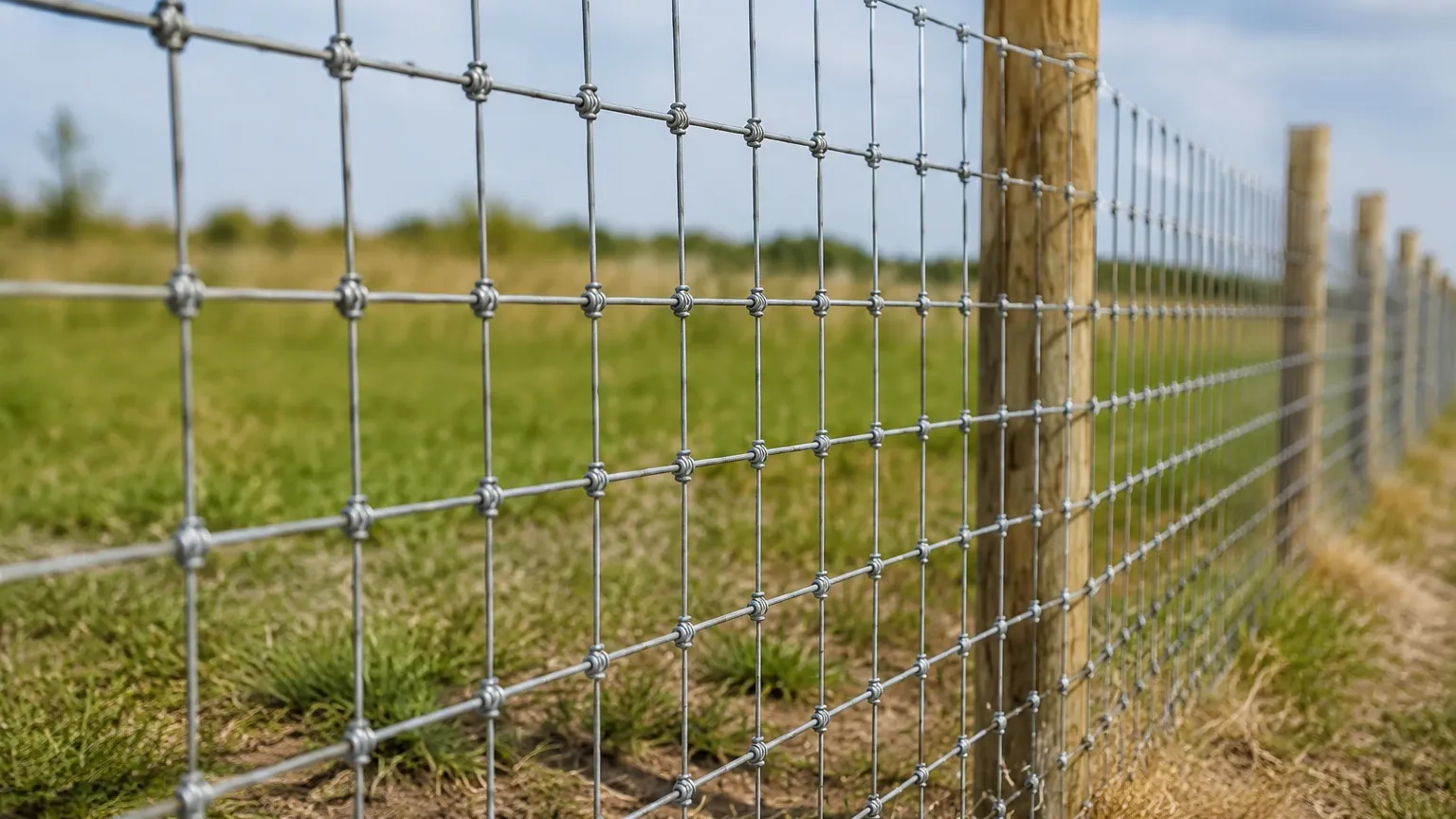
Applications of 660 Ft Woven Wire Mesh Rolls
In the B2B sector, the applications for bulk woven wire extend far beyond simple perimeter security. Large-scale rolls are essential components in various industrial processes:
* Industrial Partitions and Safety Enclosures: In automated manufacturing plants, 660 ft rolls are used to create continuous safety barriers around robotic cells. The use of stainless steel ensures these barriers can withstand the rigorous wash-down procedures required in pharmaceutical or food-grade environments.
* Large-Scale Filtration Support: In water treatment and chemical processing, woven wire mesh serves as a support layer for finer filter media. The 660 ft length allows for the fabrication of large-diameter filter drums or long-bed gravity filters without the need for multiple welds.
* Architectural and Security Screening: For high-security facilities, woven wire mesh provides a tamper-resistant barrier that is significantly more difficult to cut than standard chain-link fencing. Its aesthetic appeal also makes it a popular choice for architectural facades that require both security and airflow.
Procurement and Cost Considerations
Purchasing 660 ft of woven wire mesh is a significant capital investment. To optimize the total cost of ownership, procurement teams should consider the following:
Customization vs. Standard Rolls
While 660 ft is a standard bulk unit, the width of the roll can often be customized. Specifying the exact width required for the project (e.g., 48 inches, 60 inches, or custom widths) can drastically reduce material waste and labor costs during installation.
Edge Treatment
For long-run fencing or partitions, the treatment of the mesh edges is vital. Options include raw edges (cut), tucked-in edges, or welded edges. For safety and ease of handling in 660 ft lengths, finished or welded edges are generally recommended to prevent fraying and injury during the tensioning process.
Quality Certification
In regulated industries such as food and beverage or pharmaceuticals, it is essential to confirm that the mesh meets specific material standards (ASTM) and that the manufacturer can provide mill test reports (MTRs). This ensures that the "stainless steel" purchased is indeed the grade specified and will not fail prematurely due to impurities.
Installation and Tensioning Requirements
Installing a 660 ft run of woven wire mesh requires specialized equipment and engineering oversight. Unlike shorter panels, a continuous roll of this length exerts significant force on terminal posts and support structures.
1. Tensioning: Proper tensioning is required to prevent the mesh from sagging over time. This is especially important in environments with high temperature fluctuations, where thermal expansion and contraction can affect the tautness of the metal.
2. Support Intervals: Engineers must calculate the optimal distance between support posts based on the weight of the mesh and the expected wind or impact loads. For heavy-gauge woven wire, support intervals are typically closer than those for standard fencing.
3. Joining Techniques: When the 660 ft run ends and a new roll begins, the joint must be secured using mechanical fasteners or specialized welding techniques that match the strength and corrosion resistance of the mesh itself.
Conclusion: Selecting a Reliable Partner
When the project requirements call for a woven wire fence of 660 ft or similar bulk dimensions, the technical expertise of the manufacturer is as important as the material itself. A professional manufacturer like Kaifil provides the engineering support necessary to navigate complex specifications, from micron-rated filtration accuracy to high-impact structural mesh.
By focusing on material purity, weave precision, and customized roll dimensions, industrial facilities can ensure that their investment in woven wire mesh provides reliable service for its intended lifespan. Whether the goal is to secure a facility, protect machinery, or facilitate a complex chemical separation process, the right woven wire solution starts with a clear understanding of the technical demands of the application.
