


Industrial Guide to 60-Inch Woven Wire Mesh: Engineering and Selection Criteria
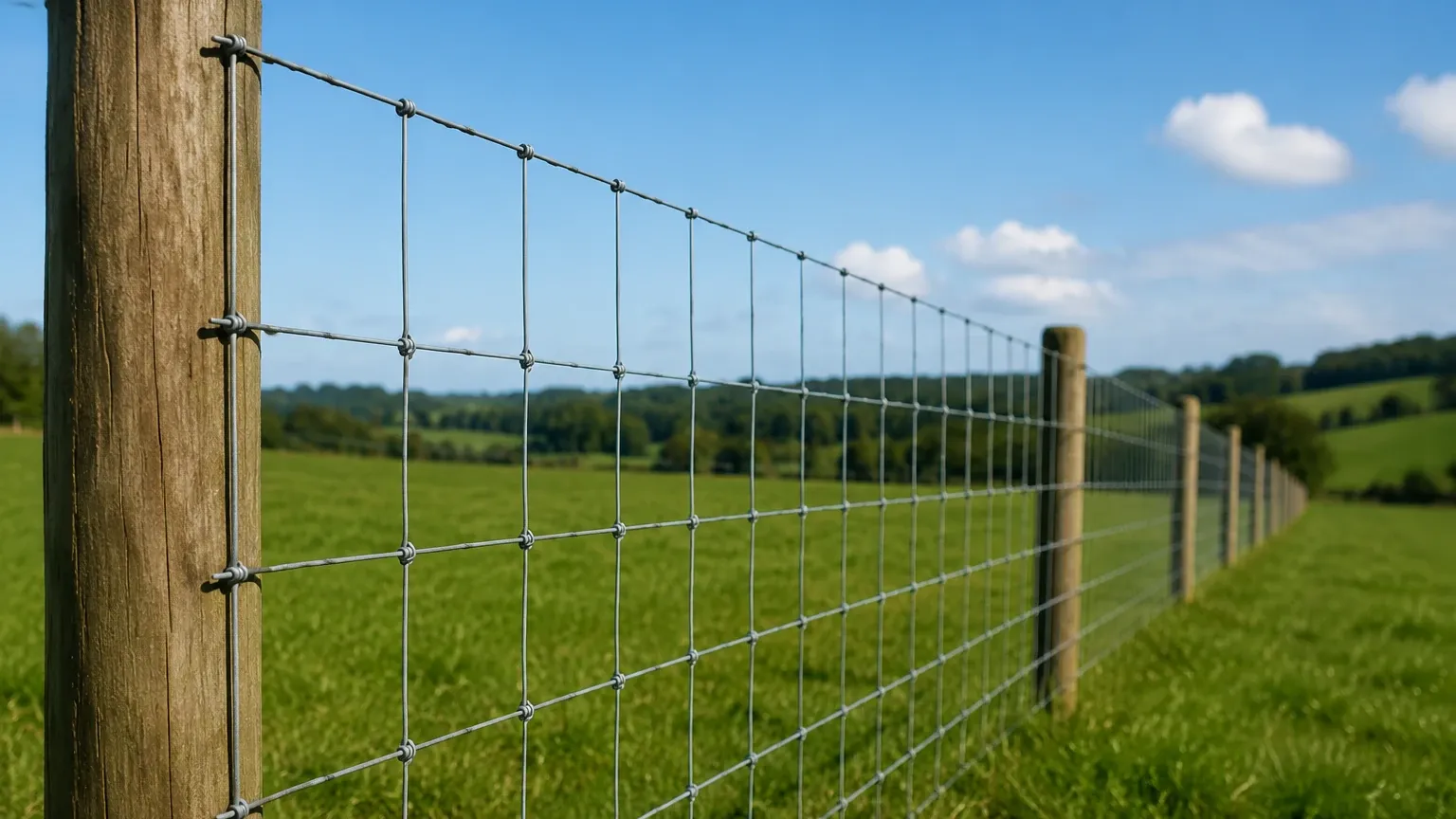
In industrial environments, the requirement for large-format barriers and filtration media often leads procurement teams to search for a "woven wire fence 60 inch" solution. While the term "fence" is frequently associated with agricultural or perimeter security, in a B2B and engineering context, this typically refers to high-specification Woven Wire Mesh produced in 60-inch widths. These wide-format mesh products are essential for large-scale industrial applications, including water intake screening, chemical processing guards, and heavy-duty architectural filtration.
Selecting the right 60-inch woven wire component requires a deep understanding of material science, weave patterns, and mechanical loads. Unlike standard commercial fencing, industrial-grade woven wire mesh must meet precise tolerances for aperture size, wire diameter, and alloy purity to ensure long-term performance in demanding environments.
Understanding the Role of 60-Inch Woven Wire Mesh in Industrial Barriers
When an engineer specifies a 60-inch height or width for a woven wire application, they are usually looking for a seamless solution for large surface areas. In industrial settings, these "fences" serve as more than just physical boundaries; they act as critical components in safety systems and process flows.
Industrial vs. Commercial Grade
Standard consumer-grade fencing often utilizes galvanized steel with wide tolerances. In contrast, industrial woven wire mesh is manufactured to strict standards (such as ASTM or ISO equivalents). For a 60-inch application, the uniformity of the weave across the entire width is paramount. Any deviation in wire tension or spacing can lead to structural weaknesses, especially when the mesh is subjected to high-pressure fluid flows or mechanical impact.
Common Industrial Applications
* Water Treatment Intake Screens: Large-scale mesh panels used to prevent debris from entering pump systems.
* Machine Guarding: High-tensile stainless steel mesh used to protect personnel from moving parts while maintaining visibility and airflow.
* Chemical Containment: Barriers designed to resist corrosive splashes or to act as a primary stage in large-volume filtration.
* Architectural Industrial Mesh: Used in facility design to provide ventilation and security simultaneously.
Technical Specifications: Material Selection and Durability
The performance of a 60-inch woven wire product is primarily dictated by the alloy used in its construction. At Kaifil, we focus on stainless steel solutions due to their superior longevity compared to carbon steel or galvanized alternatives.
Stainless Steel 304 vs. 316L
* SS304: This is the industry standard for general-purpose applications. It provides excellent strength and good corrosion resistance for indoor or mildly exposed environments. For a 60-inch industrial guard or screen, SS304 offers a cost-effective balance of durability and workability.
* SS316L: For applications involving marine environments, chemical processing, or pharmaceutical production, SS316L is the preferred choice. The addition of molybdenum enhances resistance to pitting and crevice corrosion, particularly in chloride-rich environments. When specifying a woven wire fence 60 inch solution for a coastal facility or a chemical plant, the higher initial cost of 316L is offset by the significantly longer replacement cycle.
Wire Diameter and Mesh Count
The relationship between wire diameter and mesh count determines the "open area" percentage. For large 60-inch panels, engineers must calculate the required tensile strength against the necessary flow rate or visibility. A thicker wire increases the physical strength of the "fence" but reduces the open area, which can increase wind load or pressure drop in filtration scenarios.
Engineering Considerations for Large-Format Mesh Panels
Installing and maintaining a 60-inch wide mesh requires specific engineering considerations that are often overlooked in smaller applications. The physical weight and the tensioning requirements of a 5-foot wide roll demand robust structural support.
Tensioning and Sagging
Over a 60-inch span, gravity and environmental factors can cause mesh to sag if not properly tensioned. In industrial filtration or screening, sagging can lead to uneven wear and bypass of particles. Engineers should specify reinforced frames or intermediate support bars for any panel exceeding 48 inches in width to maintain the integrity of the aperture sizes.
Edge Treatment and Framing
For a 60-inch industrial barrier, the edges of the woven wire mesh must be secured to prevent fraying and to ensure safety. Common edge treatments include:
* U-Binding: A metal channel welded around the perimeter.
* Hemmed Edges: Folding the mesh back on itself for a smooth, reinforced border.
* Welded Frames: Integrating the mesh into a structural angle or flat bar frame for easy installation into larger systems.
Weave Patterns and Their Functional Impact
The method by which the wires are interlaced significantly affects the performance of the mesh. While many "fencing" applications use a simple plain weave, technical industrial requirements may call for more complex structures.
Plain Weave
This is the most common weave where each warp wire crosses alternately over and under each weft wire. It provides the highest level of transparency and is ideal for 60-inch safety guards where visibility is required.
Twill Weave
In a twill weave, each warp wire passes over and under two successive weft wires. This allows for the use of heavier wires in a given mesh count, increasing the overall strength of the 60-inch panel without significantly reducing the mesh count. This is often used in heavy-duty screening where mechanical impact is a concern.
Dutch Weave (Plain and Twill)
Dutch weaves utilize different diameters for warp and weft wires. This results in a much tighter, more robust mesh often used for high-pressure filtration. While less common for simple "fencing," it is the standard for large-scale industrial filtration panels that require 60-inch widths to accommodate high flow volumes.
Total Cost of Ownership: Beyond the Initial Purchase
When evaluating a woven wire fence 60 inch solution, B2B buyers must look past the price per square foot. The total cost of ownership (TCO) includes installation, maintenance, and the cost of downtime during replacement.
Maintenance Cycles
Stainless steel woven mesh requires minimal maintenance compared to coated or galvanized steel. In food and beverage or pharmaceutical applications, the ability to withstand CIP (Clean-in-Place) procedures without degrading the material is a critical factor in reducing TCO.
Durability and Replacement
An industrial-grade 316L stainless steel mesh can last decades in environments where cheaper materials would fail in months. By selecting the correct specification—Plain, twill and dutch woven wire mesh in SS304/316L — rolls, cut mesh and framed panels. Send mesh count or micron target for a technical quote.—engineers ensure that the 60-inch barrier remains functional throughout the intended lifespan of the equipment or facility.
Customization Options for Industrial Projects
Every industrial application has unique requirements. At Kaifil, we understand that a standard "off-the-shelf" 60-inch roll may not meet the specific needs of a complex filtration or containment system.
Custom Slitting and Cutting
While 60 inches is a standard wide-format width, many projects require precise sub-dimensions. Utilizing advanced cutting technology ensures that the mesh remains square and the edges are clean, which is vital for automated assembly or precision framing.
Material Certification
For industries such as aerospace, medical, or food processing, material traceability is non-negotiable. Providing full MTRs (Material Test Reports) ensures that the "60-inch woven wire" delivered meets the exact chemical and mechanical properties specified in the design phase.
Conclusion: Making an Informed Decision
Choosing a 60-inch woven wire solution is a critical decision that impacts the safety, efficiency, and longevity of industrial operations. By focusing on high-quality stainless steel alloys, precise weave patterns, and proper engineering support, purchasing teams can move beyond generic fencing options and implement professional-grade filtration and barrier solutions.
Before finalizing a purchase, engineers should confirm:
1. Environmental Exposure: Is SS304 sufficient, or is the corrosion resistance of SS316L required?
2. Mechanical Load: Does the wire diameter support the anticipated pressure or impact over a 60-inch span?
3. Aperture Precision: Is the mesh count consistent enough for the specific filtration or safety requirement?
4. Integration: How will the 60-inch mesh be framed or tensioned within the existing structure?
For technical assistance in selecting the optimal mesh specification for your project, consult with a manufacturer that specializes in custom stainless steel filtration and industrial wire components. This ensures that your 60-inch woven wire application performs reliably in even the most demanding industrial environments.
