


8 Woven Wire
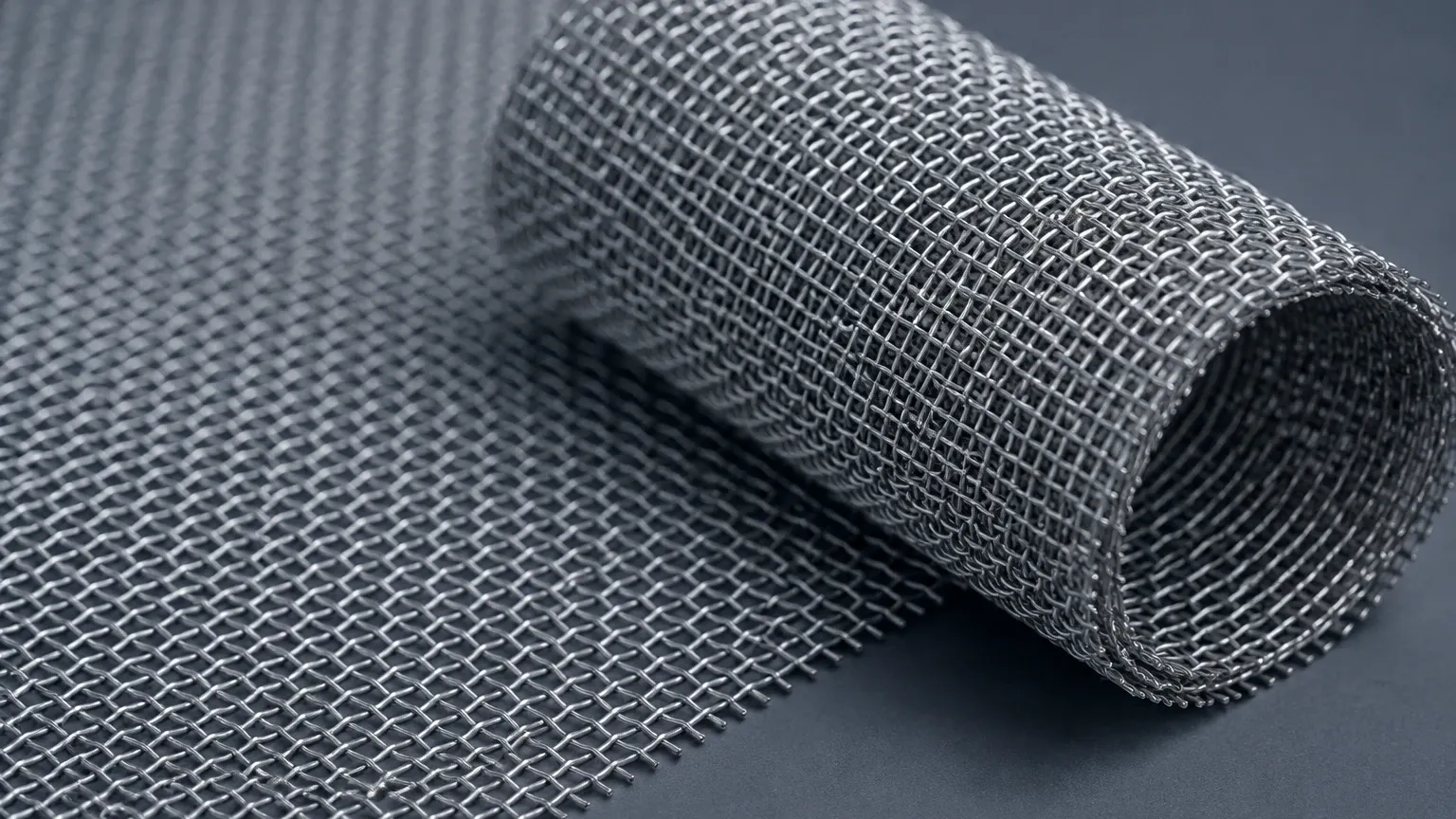
In the landscape of industrial filtration and material separation, selecting the correct mesh specification is critical to operational efficiency and equipment longevity. Among the various configurations available, 8 woven wire (commonly referred to as 8-mesh) serves as a versatile standard for medium-to-coarse filtration, structural support, and protective screening. As a professional manufacturer, Kaifil specializes in engineering Woven Wire Mesh solutions that meet the rigorous demands of chemical processing, food production, and hydraulic systems.
Understanding the technical nuances of 8-mesh—from its aperture dimensions to its structural load-bearing capacity—is essential for engineers and procurement teams. This guide provides a technical overview of 8-mesh woven wire, focusing on material selection, engineering considerations, and industrial applications.
Technical Specifications of 8-Mesh Woven Wire
The term "8-mesh" refers to the number of openings per linear inch, measured from the center of one wire to the center of the wire one inch away. For an 8 woven wire specification, this results in a relatively coarse grid that balances flow capacity with mechanical strength.
Aperture and Wire Diameter
The performance of a mesh is defined by the relationship between the wire diameter and the resulting aperture (the clear opening). In a standard 8-mesh configuration, common wire diameters range from 0.025 inches (0.63 mm) to 0.047 inches (1.20 mm).
* Standard Industrial Spec: Using a 0.028-inch wire diameter results in an aperture of approximately 0.097 inches (2.46 mm).
* Heavy-Duty Spec: Using a thicker 0.047-inch wire reduces the aperture to 0.078 inches (1.98 mm) but significantly increases the mesh's resistance to abrasion and mechanical impact.
Percentage of Open Area
The open area percentage is a critical metric for calculating flow rates and pressure drops. A standard 8-mesh with 0.028-inch wire provides an open area of approximately 60.2%. This high transparency makes it an excellent candidate for high-flow liquid filtration and air intake screening where minimal resistance is required.
Material Selection: SS304 vs. SS316L
Material science is the foundation of durable filtration. At Kaifil, we primarily utilize stainless steel alloys to ensure our 8 woven wire products withstand corrosive environments and thermal fluctuations.
Stainless Steel 304
SS304 is the industry standard for general-purpose applications. It offers excellent corrosion resistance to most oxidizing acids and is widely used in food and beverage processing due to its ease of cleaning and sanitization. It is a cost-effective choice for environments where extreme chemical exposure or high saline concentrations are not present.
Stainless Steel 316L
For more demanding environments, such as marine applications or chemical processing involving chlorides, SS316L is recommended. The addition of molybdenum enhances its resistance to pitting and crevice corrosion. The "L" denotes low carbon content, which improves weldability and prevents sensitization during fabrication—a crucial factor when the mesh is being integrated into custom filter cartridges or framed panels.
High-Temperature Alloys
In specialized industrial furnaces or petrochemical reactors, standard stainless steels may fail. In these instances, we provide mesh in alloys like Inconel or Monel, which maintain structural integrity at temperatures exceeding 800°C.
Engineering Considerations for 8 Woven Wire
When specifying 8-mesh for an industrial system, engineers must look beyond simple dimensions. The mechanical behavior of the mesh under load determines the reliability of the entire filtration assembly.
Weave Styles and Stability
While plain weave is the most common for 8-mesh, where each shute wire passes alternately over and under each warp wire, other styles may be employed for specific needs. However, at 8-mesh, the wire is typically thick enough that a plain weave provides exceptional stability and precise aperture control. For applications requiring a flatter surface, crimped weaves can be utilized to lock the wires in place, preventing shifting under high-pressure pulses.
Structural Support Role
One of the most frequent uses of 8 woven wire is as a support medium. In multi-layer sintered mesh or pleated filter cartridges, the 8-mesh acts as a "drainage layer" or a structural skeleton. It provides the necessary rigidity to support finer mesh layers (such as 200 or 400 mesh) that would otherwise collapse under the pressure of the process fluid. This configuration ensures that the fine filtration media remains functional throughout the service cycle.
Pressure Drop and Flow Dynamics
Engineers must calculate the pressure drop ($ΔP$) across the mesh to ensure pump efficiency. Because 8-mesh has a high open area, the initial pressure drop is usually negligible. However, as particles begin to accumulate (cake formation), the effective open area decreases. Choosing the right wire diameter is a trade-off: thinner wires maximize flow but may fail under the weight of the accumulated solids.
Industrial Applications of 8-Mesh Solutions
The versatility of 8 woven wire makes it a staple across diverse sectors. Its primary function is to remove large particulates or provide a robust barrier in high-velocity streams.
Chemical and Petrochemical Processing
In chemical reactors, 8-mesh is used as catalyst support grids or as primary strainers to remove scale and debris from process lines. Its resistance to chemical degradation ensures that the process remains free of metallic contamination.
Food and Beverage Industry
During the initial stages of processing, 8-mesh screens are used to filter out large organic solids from juices, syrups, or oils. The smooth surface of Plain, twill and dutch woven wire mesh in SS304/316L — rolls, cut mesh and framed panels. Send mesh count or micron target for a technical quote. allows for easy mechanical cleaning or backwashing, which is essential for maintaining hygiene standards.
Hydraulic and Lubrication Systems
In heavy machinery, 8-mesh serves as a suction strainer within hydraulic reservoirs. It prevents large contaminants from entering the pump, which could cause catastrophic mechanical failure. In these roles, the mesh is often fabricated into cylindrical strainers with reinforced end caps.
Architectural and Protective Screening
Beyond filtration, the aesthetic and structural properties of 8-mesh make it suitable for architectural infill panels, machine guards, and spark arrestors. The 2.5mm aperture is small enough to provide protection while allowing for maximum visibility and airflow.
Customization and OEM Capabilities at Kaifil
Standard off-the-shelf mesh rarely meets the specific requirements of complex industrial equipment. Kaifil provides comprehensive OEM services to transform bulk 8 woven wire into precision-engineered components.
* Precision Cutting and Slitting: We provide mesh in custom widths or die-cut shapes (discs, rectangles, or complex geometries) with tolerances as tight as +/- 0.1mm.
* Edge Treatments: To prevent fraying and ensure safety during handling, we offer various edge finishing options, including hemmed edges, welded borders, or integration into stainless steel frames.
* Cylindrical and Conical Fabrication: Our advanced welding capabilities allow us to form 8-mesh into durable filter elements, including multi-layer structures where the 8-mesh serves as the outer protective wrap or inner core.
* Surface Finishes: Depending on the application, we can provide passivated, electro-polished, or coated mesh to further enhance corrosion resistance or reduce friction.
Selection Guide: Questions for Procurement and Engineering
Before finalizing a purchase order for 8 woven wire, technical teams should confirm the following parameters to ensure the product is fit for purpose:
1. What is the specific fluid chemistry? This determines whether SS304 is sufficient or if SS316L/Exotic alloys are required to prevent premature failure.
2. What is the maximum operating pressure? This influences the choice of wire diameter and whether additional structural reinforcement is needed.
3. Is the application for filtration or support? If used for support, the compatibility with the finer mesh layers (in terms of welding and thermal expansion) must be verified.
4. What are the cleaning requirements? If the mesh will be subjected to high-pressure cleaning or chemical CIP (Clean-in-Place) cycles, the weave stability and material grade must be robust enough to withstand these stresses.
Conclusion
8 woven wire is a foundational component in industrial filtration, offering a balanced combination of high flow capacity and mechanical durability. Whether used as a standalone strainer in a food processing line or as a critical support layer in a high-pressure hydraulic filter, its performance depends on precise manufacturing and correct material specification.
Kaifil's commitment to quality and engineering expertise ensures that our Woven Wire Mesh products meet the exact needs of our global partners. By focusing on technical accuracy and customized fabrication, we help engineers optimize their filtration processes and reduce the total cost of ownership through extended component lifespans. For technical assistance or to request a quote based on your specific micron or mesh count requirements, our engineering team is available to provide detailed consultations and material recommendations.
