


Woven Wire 8 Mesh
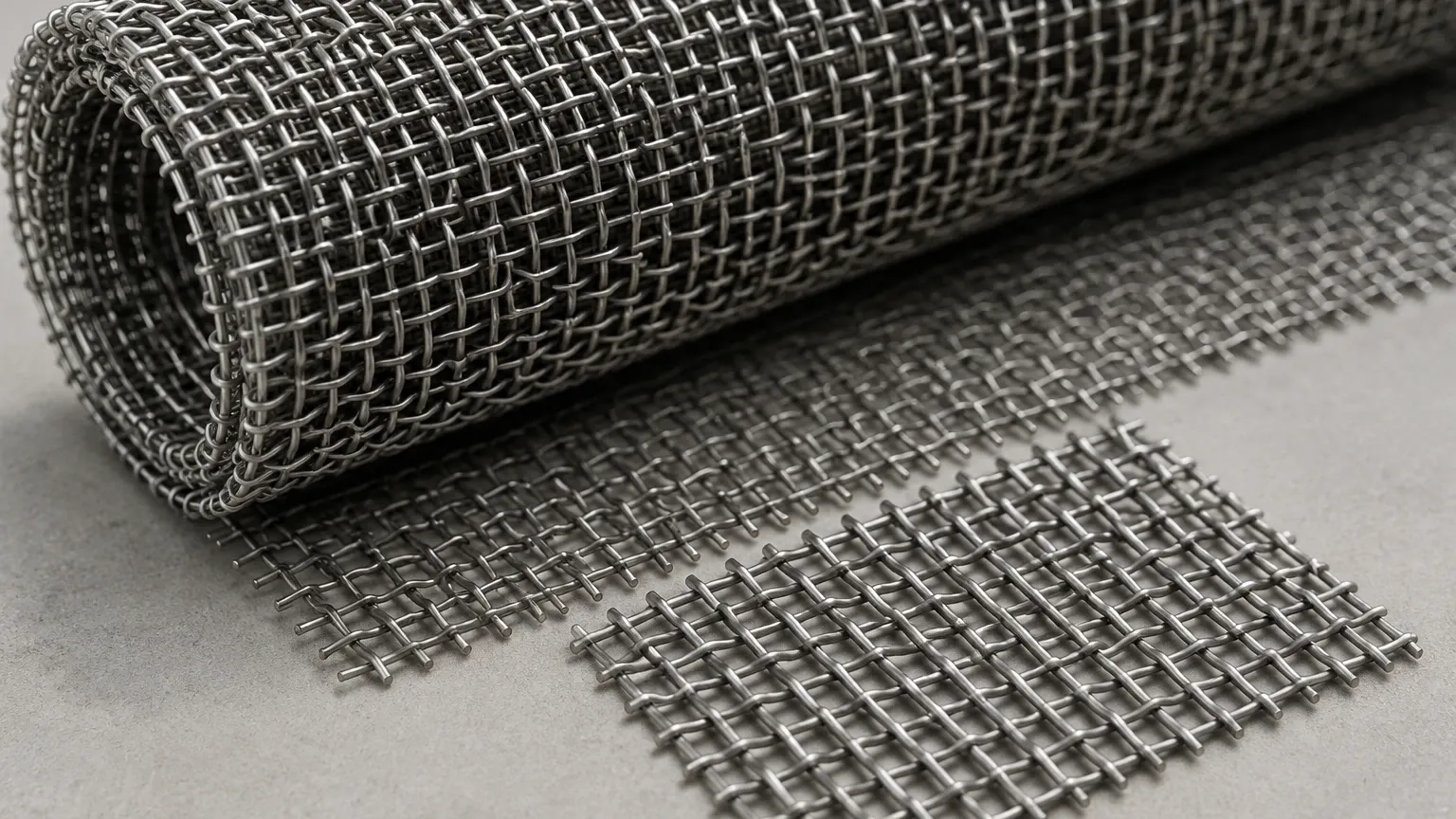
In the landscape of industrial filtration and material separation, selecting the correct mesh count is a critical engineering decision that impacts flow rates, structural integrity, and filtration efficiency. Among the various specifications available, woven wire 8 mesh stands as a versatile, coarse-grade solution frequently utilized in heavy-duty industrial environments. This guide examines the technical parameters, material considerations, and engineering criteria necessary for selecting and implementing 8 mesh components in professional settings.
As a fundamental category of Woven Wire Mesh, the 8-mesh specification offers a specific balance of open area and mechanical strength. Understanding how these variables interact is essential for engineers and procurement teams tasked with optimizing filtration systems or protective enclosures.
1. Defining Woven Wire 8 Mesh: Technical Specifications
The term "8 mesh" refers to the number of openings per linear inch, measured from the center of one wire to the center of a wire one inch away. In a square weave pattern, this results in 64 openings per square inch. However, the mesh count alone does not fully define the performance of the material; the wire diameter is the secondary, equally important variable.
The Relationship Between Mesh Count and Aperture
To calculate the clear opening (aperture) of woven wire 8 mesh, engineers use the following formula:
* Aperture (A) = (1 / Mesh Count) – Wire Diameter (d)
For example, if an 8-mesh screen uses a wire diameter of 0.028 inches (0.71 mm), the calculation would be:
(1 / 8) – 0.028 = 0.125 – 0.028 = 0.097 inches (approx. 2.46 mm).
Open Area Percentage
The open area percentage determines the flow capacity and pressure drop across the mesh. It is calculated as:
* Open Area % = (Aperture / (Aperture + Wire Diameter))² x 100
For standard 8-mesh configurations, the open area typically ranges between 60% and 80%. A higher open area reduces resistance to fluid or gas flow but may compromise the structural rigidity of the mesh if the wire diameter is too thin for the application's mechanical load.
2. Material Selection: SS304 vs. SS316L
For industrial filtration, material durability is non-negotiable. Kaifil specializes in stainless steel alloys, which are the industry standard for woven wire mesh due to their corrosion resistance and thermal stability.
Stainless Steel 304 (SS304)
SS304 is the most common grade used for woven wire 8 mesh. It provides excellent resistance to atmospheric corrosion and is suitable for most food-grade applications, architectural guards, and general industrial sieving. It is cost-effective but may struggle in environments with high chloride concentrations or extreme chemical exposure.
Stainless Steel 316L (SS316L)
For more demanding environments, such as chemical processing, marine applications, or pharmaceutical production, SS316L is preferred. The addition of molybdenum enhances resistance to pitting and crevice corrosion, particularly in saline or acidic conditions. The "L" denotes low carbon content, which improves weldability and prevents intergranular corrosion in heat-affected zones—a critical factor when the mesh is integrated into custom-fabricated filter cartridges or framed panels.
3. Engineering Considerations for 8 Mesh Integration
When specifying woven wire 8 mesh for a project, engineers must look beyond the basic dimensions and consider the operational stresses the mesh will encounter.
Mechanical Strength and Support
Because 8 mesh is a coarse weave, it is often used as a support layer (backing mesh) for finer filtration media. In high-pressure hydraulic or liquid filtration systems, a fine 100-mesh or 200-mesh screen lacks the structural integrity to withstand differential pressure. Layering the fine mesh over a robust 8-mesh support allows the system to maintain its shape and prevent media migration or rupture.
Flow Velocity and Pressure Drop
In air intake systems or coarse liquid strainers, the 8-mesh specification is chosen to minimize pressure drop. Engineers must calculate the maximum allowable velocity through the mesh to ensure that the open area can accommodate the required throughput without causing excessive turbulence or energy loss in the pumping system.
Edge Treatment and Fabrication
How the mesh is finished is vital for both safety and performance. Options include:
* Raw Edges: Suitable if the mesh is being further processed or clamped into a housing.
* Hemmed or Bound Edges: Necessary for removable filters to prevent fraying and wire shedding.
* Welded Frames: For architectural panels or heavy-duty vibratory sieves, welding the mesh into a rigid frame ensures long-term tension and prevents distortion under load.
4. Common Industrial Applications of 8 Mesh
The versatility of woven wire 8 mesh allows it to serve multiple functions across various sectors. Its relatively large openings make it ideal for tasks that require high visibility or high flow rates while blocking larger debris.
Pre-Filtration and Coarse Strainers
In water treatment and chemical processing, 8-mesh strainers act as the first line of defense. They remove large particulates, scale, and debris that could damage sensitive downstream equipment like pumps, valves, and fine filter cartridges.
Particle Separation and Scalping
In the food and beverage industry, 8-mesh screens are used for "scalping"—the removal of oversized lumps or foreign objects from bulk dry ingredients like grain, sugar, or plastic pellets. The precise aperture of a high-quality woven wire screen ensures consistent quality control.
Protective Guards and Enclosures
Due to its strength-to-weight ratio, 8 mesh is frequently used for machinery guards, vent covers, and spark arrestors. It provides a physical barrier that prevents contact with moving parts or keeps pests out of ventilation systems while allowing for unobstructed airflow and visual inspection.
5. Evaluation Criteria and Quality Risks
Not all woven wire 8 mesh is manufactured to the same standard. When evaluating suppliers, technical teams should confirm several key quality benchmarks to avoid premature failure in the field.
Wire Diameter Consistency
Inconsistent wire diameters lead to irregular aperture sizes. In a filtration context, this means the "cut point" of the filter is unreliable. Precision manufacturing ensures that every opening in the 8-mesh grid is uniform, maintaining the integrity of the separation process.
Weave Tightness and Stability
A loose weave can lead to "wire shifting," where the wires move out of alignment during operation. This is particularly problematic in vibrating screens or high-flow environments. High-quality woven mesh features tight intersections that maintain the squareness of the openings throughout the product's lifecycle.
Surface Contamination
For pharmaceutical and food-grade applications, the mesh must be free of lubricants, oils, and metallic dust from the weaving process. Passivation or ultrasonic cleaning may be required to ensure the stainless steel meets hygiene standards and maintains its maximum corrosion resistance.
6. Procurement Checklist: Confirming Your Project Requirements
Before initiating a purchase or requesting a custom OEM quote for woven wire 8 mesh, the following technical details should be confirmed to ensure the product meets the application's demands:
1. Material Grade: Is SS304 sufficient, or does the chemical environment require SS316L?
2. Wire Diameter: Have you specified the wire diameter required to achieve the necessary aperture and mechanical strength?
3. Dimensions: Do you require standard rolls (typically 36" or 48" wide), cut-to-size sheets, or fully fabricated components?
4. Quantity and Tolerance: What are the allowable tolerances for the mesh count and overall dimensions?
5. Certification: Is material mill certification or FDA compliance documentation required for your quality management system?
6. Secondary Processing: Does the mesh need to be formed into a cylinder, pleated, or framed?
Conclusion
Woven wire 8 mesh is a foundational component in industrial filtration and protection. Its ability to provide high flow rates while maintaining significant structural durability makes it indispensable for pre-filtration, support structures, and coarse separation tasks. By focusing on precise technical specifications—specifically the interplay between wire diameter and aperture—and selecting the appropriate stainless steel alloy, engineers can ensure long-term performance and lower total cost of ownership.
For organizations requiring specialized designs, Kaifil provides comprehensive OEM support, moving from material selection to the production of precision metal filter components. Whether you need standard rolls or customized framed panels, ensuring the technical accuracy of your mesh selection is the first step toward optimized filtration performance.
To explore specific configurations or request technical assistance for your filtration project, you can Review product options and application support to find the ideal mesh solution for your industrial requirements.
