


9 Gauge Woven Wire
In heavy-duty industrial environments, the selection of filtration and screening materials is dictated by the need for structural integrity, corrosion resistance, and specific permeability. Among the various specifications available to engineers, 9 gauge woven wire mesh represents a significant threshold where material thickness meets high-performance durability. This guide examines the technical characteristics, engineering considerations, and industrial applications of 9 gauge woven wire to assist procurement and engineering teams in making informed decisions for demanding projects.
The Technical Profile of 9 Gauge Woven Wire
To understand the utility of 9 gauge woven wire, one must first define the physical dimensions associated with the gauge. In the United States Steel Wire Gauge (USSWG) system, 9 gauge wire has a nominal diameter of 0.1483 inches (approximately 3.77 mm). This thickness places it firmly in the category of heavy-duty industrial wire.
When this wire is integrated into Woven Wire Mesh, the resulting product is characterized by extreme rigidity and impact resistance. Unlike finer meshes used for delicate laboratory filtration, 9 gauge mesh is designed to withstand mechanical stress, high-pressure flow, and abrasive materials.
Key Physical Properties:
* Wire Diameter: 0.1483" (3.77 mm).
* Weight: Due to the wire thickness, the weight per square foot is substantially higher than standard industrial meshes, requiring robust support structures.
* Tensile Strength: High, depending on the alloy selected, making it suitable for security and structural reinforcement.
Material Science: Stainless Steel 304 vs. 316L
While 9 gauge wire can be manufactured from various metals, stainless steel remains the gold standard for industrial filtration and screening due to its longevity and resistance to environmental degradation. At Kaifil, the focus is often on two primary grades: SS304 and SS316L.
Stainless Steel 304
SS304 is the most common stainless steel used in woven wire applications. It offers excellent value for applications where moisture or mild chemicals are present. In 9 gauge specifications, SS304 provides the necessary hardness to resist deformation under load. It is widely used in food processing, architectural partitions, and general industrial screening.
Stainless Steel 316L
For environments involving high salinity, acidic solutions, or pharmaceutical requirements, SS316L is the preferred choice. The addition of molybdenum enhances its resistance to pitting and crevice corrosion. In heavy-duty 9 gauge woven wire, 316L ensures that the structural components of a filtration system do not fail prematurely due to chemical attack, which is critical in chemical processing and marine applications.
Manufacturing Methods: The Role of Pre-Crimping
Weaving 9 gauge wire presents unique manufacturing challenges. Because the wire is significantly thick and stiff, it cannot be woven using the same high-speed looms used for fine mesh. Instead, the wire usually undergoes a "pre-crimping" process.
In pre-crimped 9 gauge woven wire, the individual wires are passed through precision dies to create indentations or "crimps" at specific intervals before they are interlaced on the loom. This process ensures that the wires remain locked in place, maintaining consistent aperture sizes even under heavy vibration or mechanical impact.
Common Weave Styles for Heavy Wire:
1. Plain Crimp: A simple over-and-under pattern where the wire is crimped at every intersection.
2. Intermediate Crimp: Extra crimps are added between the intersections, which is useful for maintaining stability in meshes with large open areas.
3. Lock Crimp: The crimp is designed to provide a mechanical lock at each intersection, offering the highest level of stability for heavy-duty screening.
Calculating Performance: Open Area and Flow Rates
For engineers, the most critical aspect of selecting a mesh is the balance between the wire diameter and the "open area." The open area determines the flow rate and the size of the particles that can pass through the screen.
The Open Area Formula
The percentage of open area is calculated using the following formula:
\[ \text{Open Area \%} = \left( \frac{O}{O + D} \right)^2 \times 100 \]
Where:
* O = Opening size (width of the space between wires)
* D = Wire diameter (0.1483" for 9 gauge)
In a 9 gauge mesh with a 1-inch opening, the open area would be approximately 75%. However, as the opening size decreases, the percentage of open area drops significantly because the 9 gauge wire occupies a larger portion of the total surface. This is a vital consideration for hydraulic and water treatment applications where head loss and flow resistance must be minimized.
Industrial Applications for Heavy-Duty Mesh
9 gauge woven wire is rarely used as a primary filter for fine particulates; rather, it serves as a critical component in multi-stage systems or as a standalone barrier in harsh environments.
1. Primary Filtration and Trash Racks
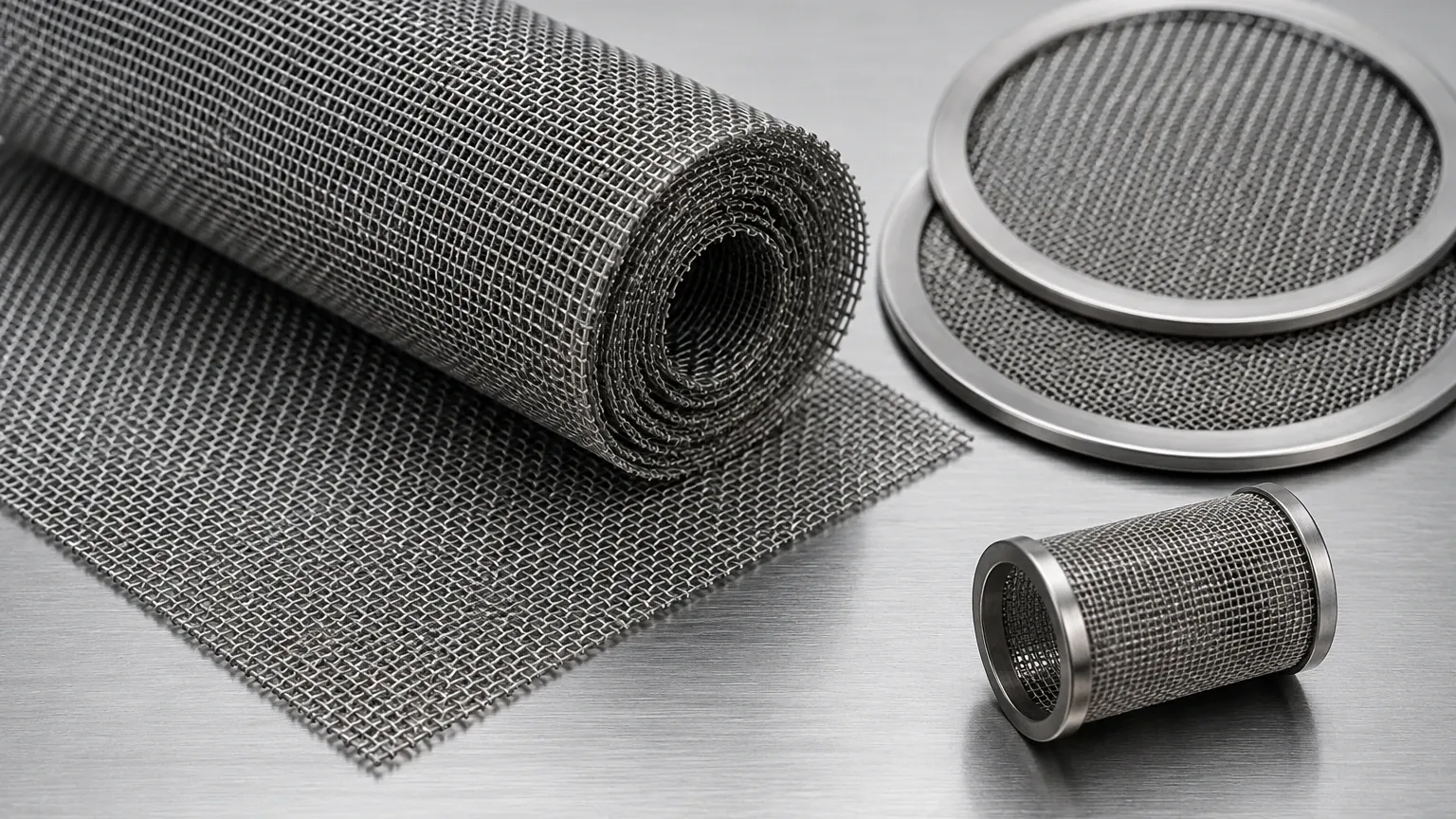
In water treatment and chemical processing, 9 gauge mesh acts as a "trash rack" or pre-filter. It protects sensitive downstream equipment—such as fine Plain, twill and dutch woven wire mesh in SS304/316L — rolls, cut mesh and framed panels. Send mesh count or micron target for a technical quote.—from large debris, rocks, or heavy sediment that could cause mechanical damage.
2. Vibratory Screening
In mining and aggregate processing, screens are subjected to constant vibration and abrasive loads. The thickness of 9 gauge wire provides the wear life necessary to handle tons of material without frequent replacement cycles. The pre-crimped structure ensures that the mesh openings remain accurate throughout the life of the screen.
3. Security and Safety Guarding
Due to its high tensile strength and resistance to cutting, 9 gauge wire is frequently used in industrial safety guards for rotating machinery and high-voltage areas. It provides visibility and ventilation while ensuring personnel safety.
4. Architectural and Structural Infill
In modern industrial architecture, 9 gauge stainless steel mesh is used for balustrades, wall cladding, and security partitions. It offers a clean, industrial aesthetic combined with the permanence of stainless steel.
Procurement and Engineering Considerations
When specifying 9 gauge woven wire for a project, several technical factors must be confirmed to ensure the product meets the application's demands. At Kaifil, we recommend that purchasing teams and engineers evaluate the following criteria before finalizing a custom order:
Dimensional Tolerances
Heavy-duty wire mesh can have slight variances in aperture size due to the crimping and weaving process. Confirm the allowable tolerance for your specific application, especially if the mesh is being used for precise sizing of materials.
Edge Treatment
How the mesh is finished is crucial for both safety and installation. Options include:
* Raw Edges: The wires are simply cut, leaving sharp ends. This is common if the mesh will be welded into a frame.
* Hooked Edges: Used primarily for vibratory screens to allow for tensioning.
* Framed Panels: The mesh is encased in a U-channel or angle iron frame for immediate bolt-on installation.
Environmental Compatibility
Beyond the base alloy (304 or 316L), consider if the mesh will be exposed to extreme temperatures. Stainless steel maintains its structural integrity at high temperatures, but thermal expansion must be accounted for in the mounting design to prevent buckling.
Total Cost of Ownership (TCO)
While 9 gauge wire mesh has a higher initial material cost than thinner gauges, its TCO is often lower in demanding environments. The increased wear life and reduced frequency of replacement result in lower maintenance labor costs and less production downtime. For OEM applications, customizing the mesh to exact specifications can further optimize these costs.
Customization and OEM Solutions
As a professional manufacturer, Kaifil specializes in tailoring filtration solutions to specific industrial needs. 9 gauge woven wire is highly customizable. Whether your project requires specific alloy blends, unique crimp patterns, or precision-cut panels, the engineering team at Kaifil works to ensure the final product aligns with your performance expectations.
When requesting a quote for 9 gauge mesh, providing the following information will help ensure accuracy:
* Material Grade: (e.g., SS304, SS316L, or specialty alloys).
* Mesh Opening Size: The clear distance between wires.
* Sheet or Roll Dimensions: Width and length requirements.
* Quantity: Total square footage or number of pieces.
* Application Details: To help our engineers suggest the best weave and edge finish.
Conclusion
9 gauge woven wire is a cornerstone of heavy industrial screening and filtration. Its combination of mass, strength, and the inherent properties of stainless steel makes it indispensable for protecting equipment, securing facilities, and processing raw materials. By understanding the technical nuances of wire diameter, open area, and material selection, engineers can implement solutions that provide reliable performance over a long service life.
For technical assistance or to discuss a specific project requirement, reviewing professional product options is the first step toward achieving optimized filtration performance. Whether you are designing a new system or replacing existing components, choosing a manufacturer with deep expertise in stainless steel fabrication ensures that your 9 gauge woven wire components will withstand the rigors of your specific industrial environment.
