


Stainless Steel Expanded Metal
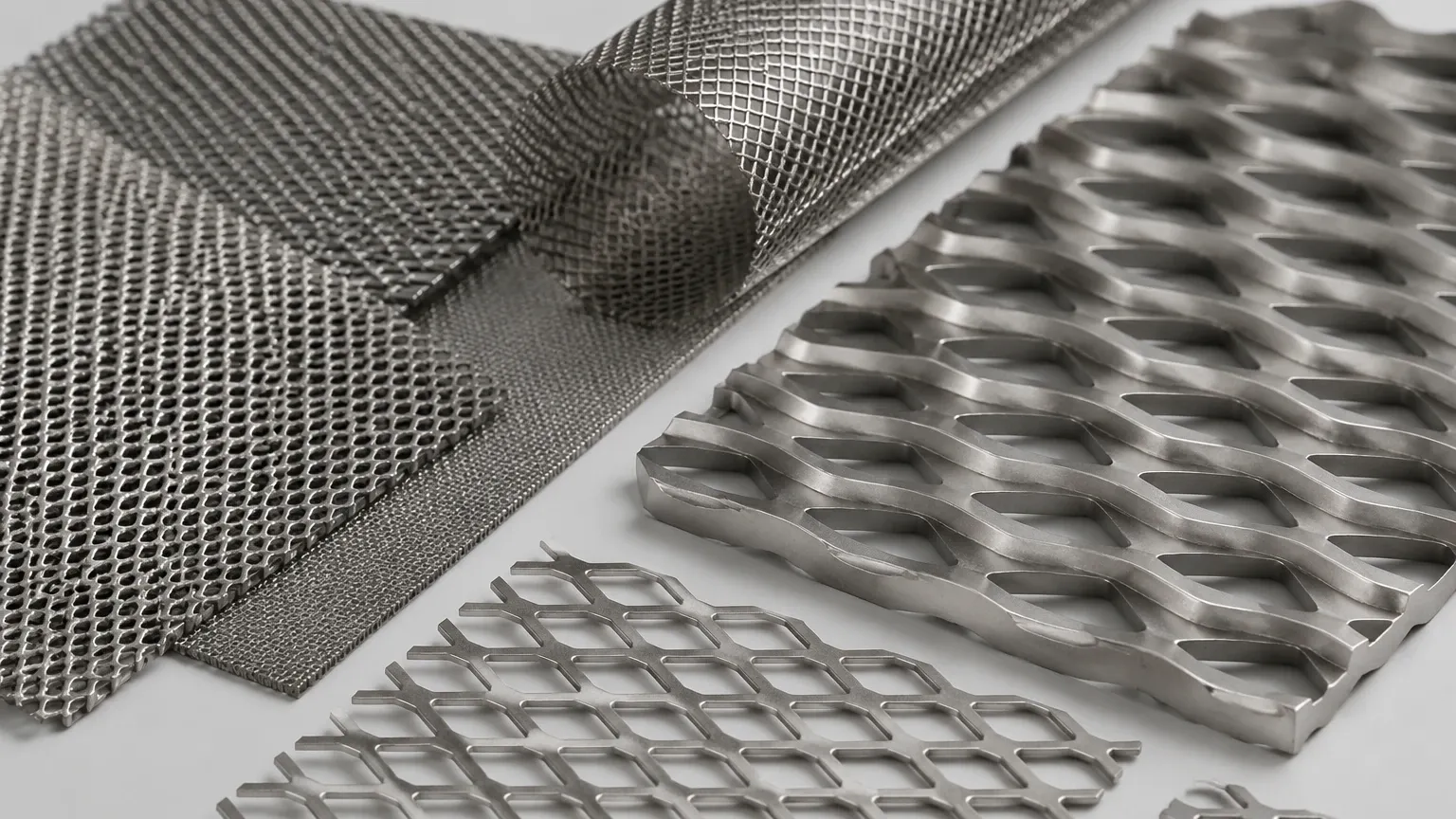
In the landscape of industrial filtration and structural reinforcement, stainless steel expanded metal stands as a critical component. Unlike woven wire mesh or perforated sheets, expanded metal is produced through a unique process of slitting and stretching a single solid sheet of metal. This results in a continuous, jointless material characterized by diamond-shaped openings. For engineers and procurement specialists in the chemical, pharmaceutical, and food processing sectors, understanding the technical nuances of this material is essential for optimizing filtration efficiency and equipment longevity.
At its core, the utility of stainless steel expanded metal stems from its high strength-to-weight ratio and its ability to maintain structural integrity under high-pressure conditions. Because the material is not welded or woven, it does not unravel, making it an ideal choice for demanding industrial environments where mechanical failure is not an option.
The Manufacturing Process and Structural Integrity
The production of expanded metal is a precision engineering feat. A stainless steel sheet is fed through a machine that simultaneously slits and stretches the metal. This mechanical expansion creates the characteristic diamond pattern. One of the primary advantages of this process is that it produces zero waste. Unlike perforated metal, where the "slugs" or holes are punched out and discarded (or recycled), expanded metal utilizes 100% of the raw material.
From an engineering perspective, this process preserves the structural continuity of the metal. The "bonds"—where the strands intersect—are part of the original solid metal sheet, providing inherent rigidity. This makes stainless steel expanded metal significantly stronger than a comparable weight of woven wire mesh, which relies on the friction between wires to maintain its shape.
Key Technical Specifications for Engineers
When specifying Perforated & Expanded Metal for industrial applications, several geometric variables must be defined to ensure the material meets the required flow rates and mechanical loads:
* SWD (Short Way of Design): The distance from the center of one bond to the center of the next bond across the short axis of the diamond.
* LWD (Long Way of Design): The distance from the center of one bond to the center of the next bond across the long axis of the diamond.
* SWO (Short Way of Opening): The actual width of the opening, measured from the inside of the bonds.
* LWO (Long Way of Opening): The actual length of the opening, measured from the inside of the bonds.
* Strand Width: The amount of metal fed into the machine for each stroke of the die.
* Strand Thickness: The thickness of the original metal sheet.
These dimensions directly influence the "Open Area" percentage. In filtration, the open area determines the pressure drop across the filter media and the total throughput capacity. Engineers must balance the need for a high open area (for flow efficiency) with the need for strand thickness (for mechanical durability).
Material Selection: Why Stainless Steel?
While expanded metal can be produced from various alloys, stainless steel expanded metal is the industry standard for corrosive or high-temperature environments. The choice of grade—typically 304, 316, or 316L—is dictated by the chemical composition of the fluid being processed.
Grade 304 Stainless Steel
Grade 304 is the most common choice for general industrial applications. It offers excellent corrosion resistance to most oxidizing acids and is frequently used in food and beverage processing where sanitation is a priority. It provides a cost-effective solution for environments where extreme chemical exposure is not a daily occurrence.
Grade 316 and 316L Stainless Steel
For applications involving chlorides, marine environments, or aggressive chemical solvents, Grade 316 is preferred. The addition of molybdenum enhances its resistance to pitting and crevice corrosion. Grade 316L (low carbon) is specifically utilized in applications requiring extensive welding, as it minimizes carbide precipitation that can lead to intergranular corrosion. In the pharmaceutical and chemical processing industries, 316L is often the baseline requirement for filtration components.
Raised vs. Flattened Expanded Metal
A critical decision in the design phase is whether to use "Standard" (Raised) or "Flattened" expanded metal.
1. Standard (Raised) Expanded Metal: This is the material as it comes off the expansion machine. The strands and bonds are set at a uniform angle to the plane of the sheet. This creates a three-dimensional surface that offers high rigidity and can assist in breaking up fluid flow, which is sometimes desirable in specific mixing or pre-filtration stages.
2. Flattened Expanded Metal: After the expansion process, the sheet is passed through a cold-rolling reducing mill. This flattens the strands and bonds into a single plane. Flattened stainless steel expanded metal is thinner, smoother, and slightly wider than the original raised sheet. In the context of filtration, flattened metal is often preferred because it provides a smooth surface that will not damage delicate secondary filter media, such as fine woven wire mesh or non-woven membranes, when used as a support layer.
Applications in Industrial Filtration
Stainless steel expanded metal serves several vital roles within a filtration system. Its versatility allows it to function as both a primary filter and a secondary support structure.
Support Cages and Cores
In high-pressure hydraulic systems or large-scale chemical reactors, fine filter media (like pleated paper or fine wire mesh) cannot withstand the differential pressure on its own. Expanded metal is rolled into cylinders to form the inner core or outer cage of a filter cartridge. Its rigidity prevents the fine media from collapsing or bursting under the force of the fluid flow.
Pre-Filtration and Coarse Straining
In water treatment and heavy industrial processes, expanded metal acts as a pre-filter to remove large debris before the fluid reaches more sensitive downstream components. The diamond pattern is particularly effective at trapping irregular particles that might slip through a simple perforated screen.
Flame Arrestors and Air Filtration
Due to its ability to dissipate heat and its tortuous path for air, stainless steel expanded metal is frequently used in flame arrestors and high-efficiency air intake systems for industrial machinery. It provides a barrier that is both breathable and structurally sound.
Comparing Perforated & Expanded Metal
Engineers often weigh the pros and cons of Perforated & Expanded Metal when designing filtration housings or strainers. While both serve similar functions, their mechanical properties differ significantly.
* Weight and Cost: Expanded metal is generally lighter and more cost-effective per square foot because the manufacturing process involves stretching rather than removing material.
* Flow Characteristics: Perforated metal offers more precise control over hole size and spacing, which can be critical for specific micron-rated filtration. However, expanded metal provides a more complex flow path which can be advantageous in certain coalescing or impingement applications.
* Structural Strength: Expanded metal has a higher strength-to-weight ratio. The interconnected diamonds act as a truss system, distributing loads more evenly across the sheet than the isolated holes of a perforated plate.
Engineering Considerations for Customization
When sourcing stainless steel expanded metal for OEM applications, several factors beyond basic dimensions should be confirmed with the manufacturer:
1. Tolerances: Standard industrial tolerances for expanded metal are broader than those for machined parts. If the material is being integrated into a precision-machined housing, specifying tighter tolerances on the LWD and SWD is necessary.
2. Edge Configurations: Expanded metal can be supplied with "random sheared" edges (where the diamonds are cut through) or "bond sheared" edges (where the cut happens exactly at the bond). For filtration cartridges, bond shearing is often preferred to prevent sharp "fingers" from protruding and potentially puncturing other components.
3. Surface Treatment: Depending on the application, the metal may require ultrasonic cleaning to remove residual oils from the expansion process, or pickling and passivation to maximize the corrosion resistance of the stainless steel.
Maintenance and Total Cost of Ownership
One of the primary reasons engineers specify stainless steel expanded metal is its durability. In many industrial settings, filters must be cleaned and reused multiple times to maintain cost-efficiency. Stainless steel can withstand aggressive cleaning cycles, including backwashing, steam sterilization (SIP), and chemical cleaning (CIP), without losing its structural integrity.
While the initial cost of stainless steel is higher than carbon steel or plastic alternatives, the total cost of ownership is significantly lower. The resistance to rust, the ability to withstand high temperatures (up to 800°C for certain grades), and the mechanical toughness ensure that the components do not need frequent replacement, reducing downtime in critical production lines.
Conclusion: Making an Informed Selection
Selecting the right stainless steel expanded metal requires a deep understanding of the application's mechanical and chemical demands. Whether it is used as a support core for a high-pressure hydraulic filter or as a protective screen in a chemical processing plant, the material's performance depends on the precise calibration of strand width, opening size, and alloy grade.
By focusing on the technical specifications and the manufacturing advantages of expanded metal—such as its jointless construction and zero-waste production—engineers can design filtration solutions that are both efficient and resilient. For those looking to integrate these components into complex systems, consulting with a manufacturer that understands the rigors of industrial filtration is the final step in ensuring long-term operational success.
