


Expanded Metal Diamond Mesh
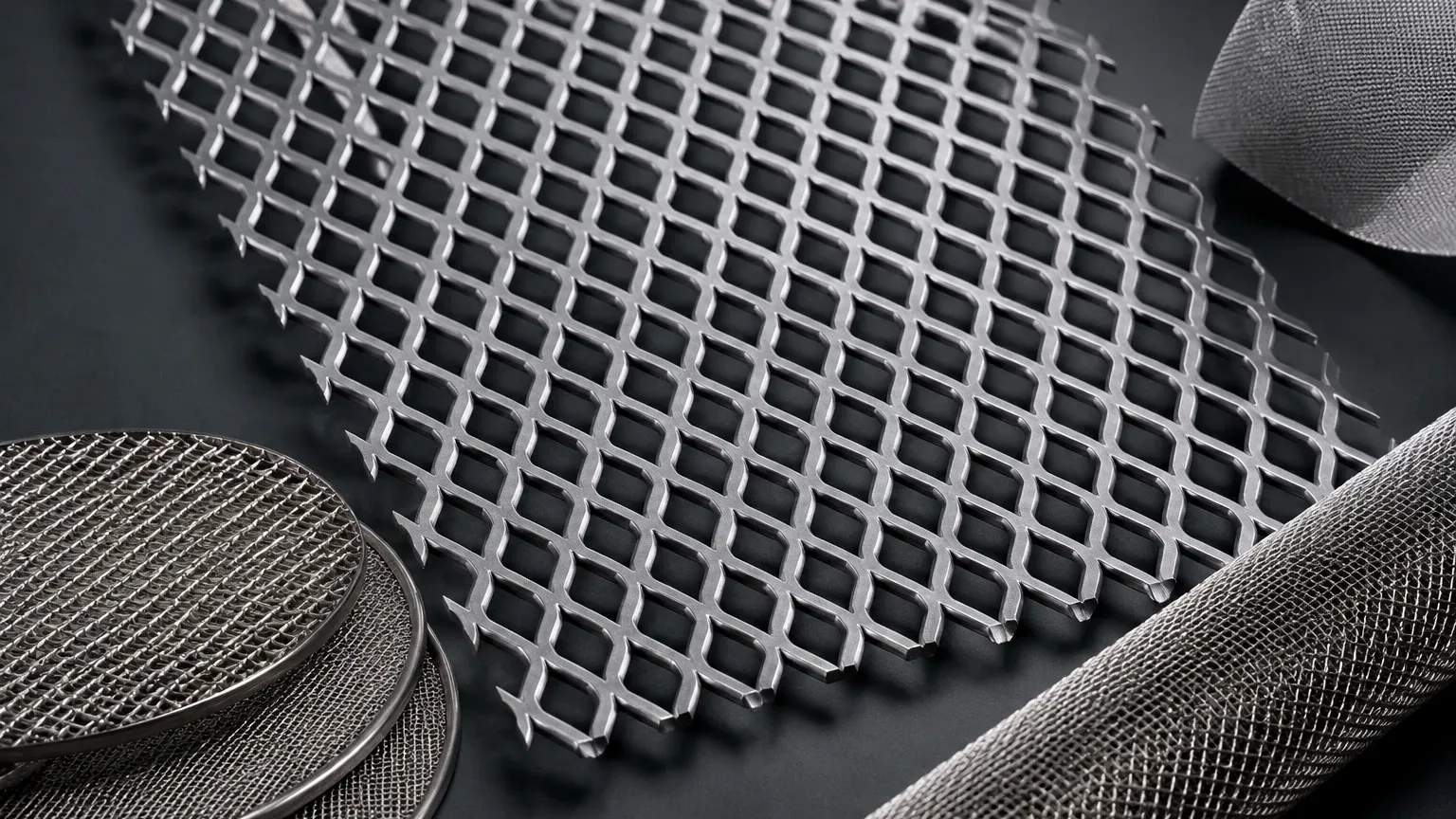
In the landscape of industrial filtration and structural support, expanded metal diamond mesh serves as a foundational component known for its unique combination of strength, permeability, and material efficiency. Unlike perforated metal, which is created by punching holes and removing material, expanded metal is produced through a process of simultaneous slitting and stretching. This manufacturing technique creates a distinctive diamond-shaped pattern that is integral to the sheet, ensuring structural continuity and eliminating the risk of fraying or unraveling.
For engineers and procurement professionals, selecting the correct Perforated & Expanded Metal solution requires a deep understanding of the mechanical properties and fluid dynamics associated with various mesh geometries. As a specialized manufacturer, Kaifil focuses on delivering precision-engineered expanded metal components that meet the rigorous demands of chemical processing, hydraulic systems, and industrial water treatment.
The Manufacturing Process and Structural Integrity
The production of expanded metal diamond mesh begins with a solid metal sheet or coil. A reciprocating knife slits the metal while simultaneously stretching it forward. This process expands the slits into diamond-shaped openings. Because the metal is stretched rather than cut out, there is zero material waste, making it a highly cost-effective alternative to perforated metal, especially when working with expensive alloys like 316L stainless steel.
One of the primary engineering advantages of this process is the preservation of structural integrity. The "bonds" (the points where the strands intersect) are part of the original metal sheet, providing a rigid, three-dimensional structure. This makes expanded metal diamond mesh inherently stronger than woven wire mesh of a similar weight, as it cannot be easily deformed under pressure. In filtration applications, this rigidity is crucial for maintaining the shape of filter cartridges and supporting finer filtration media against high differential pressures.
Key Technical Specifications for Diamond Mesh
When specifying expanded metal diamond mesh for industrial projects, several critical dimensions must be defined to ensure the component performs as expected within a system. Engineers typically use four primary measurements:
1. SWD (Short Way of Diamond): The distance from the center of a bond to the center of the next bond across the short axis of the diamond.
2. LWD (Long Way of Diamond): The distance from the center of a bond to the center of the next bond across the long axis of the diamond.
3. Strand Width: The amount of metal fed into the knives between each stroke, which determines the width of the individual "wires" in the mesh.
4. Strand Thickness: The original thickness of the base metal sheet.
These dimensions collectively determine the Open Area Percentage, a vital metric for filtration and airflow. A higher open area reduces pressure drop across the filter but may compromise the structural support of the mesh. Conversely, a smaller SWD/LWD ratio with wider strands provides maximum reinforcement for heavy-duty applications. At Kaifil, we assist technical teams in calculating these ratios to balance flow efficiency with mechanical durability.
Standard vs. Flattened Expanded Metal
There are two primary forms of expanded metal diamond mesh used in B2B industrial applications: standard (raised) and flattened.
* Standard Expanded Metal: This is the product as it comes off the expanding machine. The strands and bonds are set at a uniform angle to the plane of the sheet. This creates a three-dimensional surface that offers excellent grip and can deflect light or fluid flow. In filtration, the raised edges can act as a pre-filter, capturing larger particles before they reach the primary media.
* Flattened Expanded Metal: To produce this variant, the standard expanded sheet is passed through a cold-roll reducing mill. This process flattens the strands and bonds into a single plane, reducing the overall thickness and creating a smooth, flush surface. Flattened mesh is often preferred when the expanded metal serves as an outer protective cage for a filter cartridge, as the smooth surface prevents damage to the internal filter pleats and facilitates easier cleaning.
Applications in Industrial Filtration Systems
Expanded metal diamond mesh is rarely used as a standalone fine filter; rather, it is the "skeleton" of high-performance filtration systems. Its role is multifaceted across various sectors:
Filter Cartridge Support Cores
In hydraulic and chemical filtration, fine wire mesh or synthetic media often lacks the structural strength to withstand the force of fluid flow. Expanded metal is rolled into cylinders to form the inner core or outer cage of a filter cartridge. It provides the necessary resistance to collapse or bursting while ensuring that the maximum surface area of the filter media remains exposed to the fluid.
Pre-Filtration and Debris Guarding
In water treatment and HVAC systems, larger diamond mesh serves as a primary barrier against coarse debris. It protects sensitive downstream components, such as pumps and fine membranes, from mechanical damage caused by large particulates.
Catalyst Support
In chemical reactors, stainless steel expanded metal provides a stable, heat-resistant platform for catalyst beds. The diamond pattern ensures even distribution of gases or liquids through the catalyst, optimizing the chemical reaction process.
To explore specific configurations for these applications, engineers are encouraged to Review product options and application support to determine the optimal mesh size and material grade.
Material Selection: Stainless Steel and Beyond
The environment in which the expanded metal diamond mesh will operate dictates the material choice. As a manufacturer specializing in stainless steel solutions, Kaifil emphasizes the importance of matching the alloy to the chemical and thermal stresses of the application.
* Stainless Steel 304/304L: The most common choice for general industrial use. It offers good corrosion resistance and is suitable for food and beverage applications where hygiene and durability are paramount.
* Stainless Steel 316/316L: Contains molybdenum, which significantly enhances resistance to chlorides and pitting. This is the standard for marine environments, pharmaceutical manufacturing, and aggressive chemical processing.
* Specialty Alloys: For extreme conditions involving high temperatures or highly acidic environments, materials such as Monel, Inconel, or Titanium can be expanded into diamond mesh patterns.
Choosing the right material is not just about longevity; it is about preventing contamination. In pharmaceutical and food-grade applications, using a lower-grade metal that corrodes can lead to batch contamination and significant financial loss.
Customization and OEM Considerations
One of the primary challenges for engineers is finding a mesh that fits a bespoke housing or meets a specific pressure drop requirement. Off-the-shelf expanded metal often fails to meet the tight tolerances required for precision industrial equipment. Kaifil addresses this through comprehensive OEM capabilities.
Customization options include:
* Variable Diamond Sizes: Adjusting the SWD and LWD to achieve a specific micron-equivalent opening for specialized screening.
* Edge Treatments: Providing mesh with "safe edges" or specific margins to facilitate easier welding and assembly into larger systems.
* Secondary Fabrication: Rolling, shearing, and welding the mesh into finished components such as cones, cylinders, or baskets.
When ordering, it is essential to confirm the orientation of the diamonds. The direction of the LWD (Long Way of Diamond) relative to the length of the sheet can affect how the material bends and how it supports loads. Specifying "LWD parallel to width" or "LWD parallel to length" is a critical detail that prevents installation errors.
Evaluating Quality and Avoiding Common Risks
Not all expanded metal diamond mesh is manufactured to the same standard. In high-pressure or high-purity environments, minor defects can lead to catastrophic system failure. When evaluating a supplier, technical teams should look for the following quality indicators:
1. Burr-Free Edges: The expanding process can leave sharp burrs. For filtration applications, these must be minimized or removed to prevent them from breaking off and entering the fluid stream.
2. Uniformity of Expansion: Inconsistent stretching leads to variations in the diamond size, which creates uneven flow patterns and localized pressure spikes.
Material Traceability: Reliable manufacturers provide Mill Test Reports (MTRs) to verify that the stainless steel used meets the specified chemical composition and mechanical properties.
By focusing on these technical details, Kaifil ensures that every piece of expanded metal diamond mesh contributes to the overall efficiency and safety of the industrial system it inhabits.
Conclusion
Expanded metal diamond mesh is a versatile and indispensable component in the world of industrial filtration and engineering. Its ability to provide high structural strength with minimal material weight makes it a preferred choice for support cores, protective cages, and pre-filtration barriers. By understanding the nuances of SWD/LWD dimensions, the differences between standard and flattened finishes, and the importance of material grade selection, procurement and engineering teams can optimize their systems for both performance and cost-effectiveness. For those seeking tailored solutions, Kaifil provides the technical expertise and manufacturing precision necessary to turn these raw materials into high-performance industrial components.
