


Expanded Metal Designs
In industrial filtration and structural engineering, the selection of appropriate expanded metal designs is a critical factor in determining the efficiency, durability, and cost-effectiveness of a system. Unlike perforated materials, expanded metal is produced by simultaneously slitting and stretching a solid sheet of metal, creating a continuous mesh with no joins or welds. For engineers and procurement teams, understanding the technical nuances of these designs is essential for optimizing fluid dynamics, mechanical support, and material longevity.
At Kaifil, we specialize in the manufacturing of high-precision Perforated & Expanded Metal solutions tailored for demanding industrial environments. This guide examines the engineering parameters, material considerations, and application-specific designs that define high-performance expanded metal components.
Technical Fundamentals of Expanded Metal Geometry
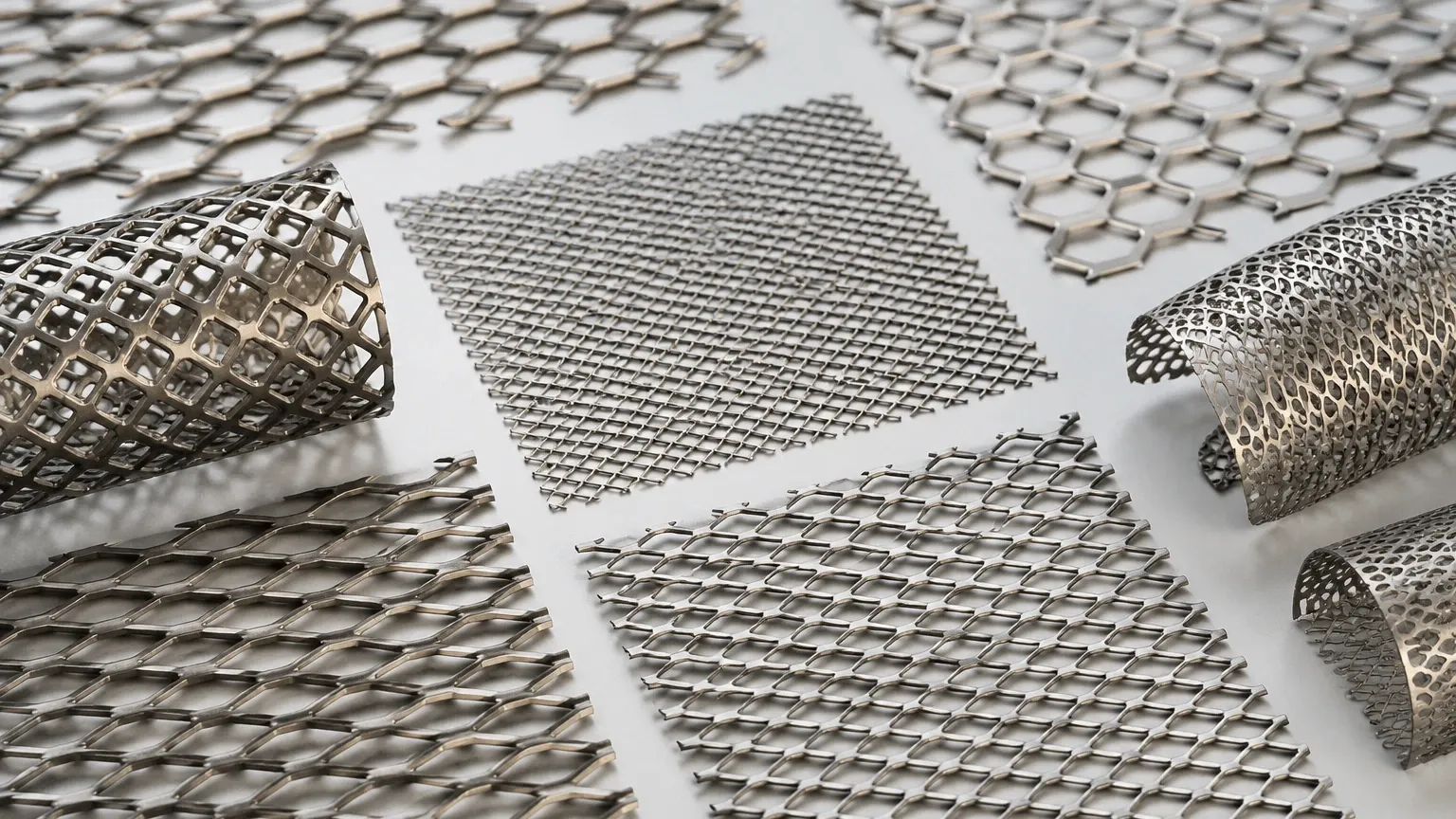
The performance of expanded metal is dictated by its geometric configuration. When a metal sheet is expanded, it forms a series of diamond-shaped openings. These openings are defined by several key measurements that engineers must specify during the design phase:
* SWD (Short Way of Diamond): The distance from the center of one bond to the center of the next bond measured across the short diamond diagonal.
* LWD (Long Way of Diamond): The distance from the center of one bond to the center of the next bond measured across the long diamond diagonal.
* SWO (Short Way of Opening): The clear distance between the inside edges of the diamond across the short diagonal.
* LWO (Long Way of Opening): The clear distance between the inside edges of the diamond across the long diagonal.
* Strand Width: The amount of metal fed into the machine between the slits, which determines the thickness of the "wires" forming the mesh.
* Strand Thickness: The original thickness of the base metal sheet.
By adjusting these variables, manufacturers can create a vast array of expanded metal designs, ranging from fine micromesh for precision filtration to heavy-duty gratings for industrial walkways. The relationship between strand width and thickness directly impacts the weight-to-strength ratio, a primary advantage of expanded metal over solid plate or woven wire mesh.
Standard vs. Flattened Expanded Metal Designs
One of the first decisions in the design process is choosing between standard (raised) and flattened expanded metal.
Standard (Raised) Expanded Metal
In its standard form, the strands and bonds are set at a uniform angle to the plane of the sheet. This creates a three-dimensional surface that provides excellent grip and directional flow control. In filtration applications, raised expanded metal is often used as a pre-filter or a protective outer layer because the angled strands can deflect larger particles while maintaining a high open area. The structural rigidity of raised mesh is also superior, making it ideal for support cages in large filter cartridges.
Flattened Expanded Metal
Flattened expanded metal is produced by passing the standard expanded sheet through a cold-roll reducing mill. This process flattens the strands and bonds into a single plane, reducing the overall thickness of the sheet and creating a smooth, level surface. Flattened designs are preferred when the mesh must be bonded to other layers, such as fine wire mesh or filter paper, as the smooth surface prevents abrasion and ensures a uniform contact area. It is also easier to clean and provides a more predictable pressure drop in fluid systems.
Material Selection for Industrial Filtration
The choice of material is as important as the geometry of the expanded metal designs. In industrial sectors such as chemical processing, pharmaceuticals, and food production, corrosion resistance and thermal stability are non-negotiable.
* Stainless Steel (304 and 316L): This is the industry standard for filtration. Grade 304 offers excellent strength and basic corrosion resistance, while 316L provides superior resistance to chlorides and acidic environments. Stainless steel expanded metal is essential for applications requiring frequent sterilization or exposure to aggressive chemicals.
* Aluminum: Lightweight and naturally resistant to atmospheric corrosion, aluminum expanded metal is often used in HVAC filtration and lightweight structural components.
* Specialty Alloys: For extreme environments, materials like Monel, Inconel, or Titanium may be used. These are typically reserved for high-temperature or highly corrosive chemical reactors where standard stainless steels would fail.
The Role of Perforated & Expanded Metal in Filtration Systems
While both perforated and expanded metals serve as support and filtration media, they offer different performance profiles. Perforated & Expanded Metal components are frequently used together in multi-stage filtration systems.
Expanded metal is particularly valued for its high open area percentage, which can exceed 80% in some designs. This high porosity ensures minimal resistance to flow (low pressure drop) while providing a robust skeleton for finer filter media. In a typical stainless steel filter cartridge, an expanded metal core provides the internal structural integrity required to withstand high differential pressures, while a perforated outer sleeve might provide mechanical protection against impact or handling damage.
Furthermore, the "one-piece" construction of expanded metal means there are no wires to unravel or welds to fail under vibration. This makes it an excellent choice for hydraulic filters and high-velocity gas filtration where mechanical fatigue is a concern.
Engineering Considerations: Open Area and Pressure Drop
For engineers, calculating the open area is vital for predicting the performance of the filtration system. The open area percentage in expanded metal designs is calculated based on the relationship between the strand width and the SWD.
Unlike woven wire mesh, where the open area is fixed by the wire diameter and mesh count, expanded metal allows for precise tuning. By slightly increasing the strand width, a manufacturer can significantly increase the strength of the mesh while only marginally reducing the open area. This flexibility allows for the creation of "custom-strength" filters that do not sacrifice flow capacity.
However, design teams must also account for the "directional" nature of expanded metal. Because the strands are angled (in raised designs), the flow of liquid or gas may be diverted depending on the orientation of the mesh. This can be used strategically to promote turbulence (which can aid in certain chemical reactions) or must be compensated for in high-laminar-flow requirements.
Customization and OEM Capabilities
Every industrial application has unique constraints, from the specific dimensions of a filter housing to the chemical composition of the filtrate. Standard off-the-shelf expanded metal often falls short of these requirements. Custom expanded metal designs allow for:
1. Tailored Dimensions: Precision cutting and shearing to fit specific cartridge diameters or panel frames.
2. Edge Treatments: Providing solid borders or specialized welding margins to facilitate easier integration into larger assemblies.
3. Surface Finishes: Options such as electro-polishing, passivating, or coating to enhance corrosion resistance or meet food-grade hygiene standards.
4. Hybrid Structures: Combining expanded metal with fine wire mesh or non-woven media through sintering or mechanical bonding to create composite filter elements.
At Kaifil, our engineering team works closely with global customers to develop these customized solutions. By controlling the manufacturing process from material selection to the final expansion and flattening stages, we ensure that the resulting components meet the exact filtration accuracy and mechanical durability required by the application.
Evaluating Total Cost of Ownership
When specifying expanded metal designs, it is important to look beyond the initial purchase price. The total cost of ownership (TCO) is influenced by the filter’s lifespan, cleaning requirements, and the energy costs associated with pressure drop.
Expanded metal is often more cost-effective than perforated metal because the manufacturing process generates zero scrap; the material is stretched rather than punched out. Additionally, the inherent strength of the expanded structure often allows for the use of thinner gauge materials without compromising performance, further reducing material costs. In high-demand environments, the durability of a well-designed stainless steel expanded metal component reduces the frequency of replacement cycles, providing significant long-term savings for industrial facilities.
Conclusion
Selecting the right expanded metal design requires a balance of geometric precision, material science, and an understanding of fluid dynamics. Whether used as a primary filtration medium or a structural support core, expanded metal offers a unique combination of high open area and mechanical strength that is difficult to replicate with other materials.
For technical professionals seeking to optimize their filtration processes, confirming the specific SWD, LWD, and strand parameters is the first step toward a high-performance solution. For more information on technical specifications and customization options, engineers can Review product options and application support to ensure their designs meet the rigorous demands of modern industrial operations.
