


Expanded Metal Dimensions
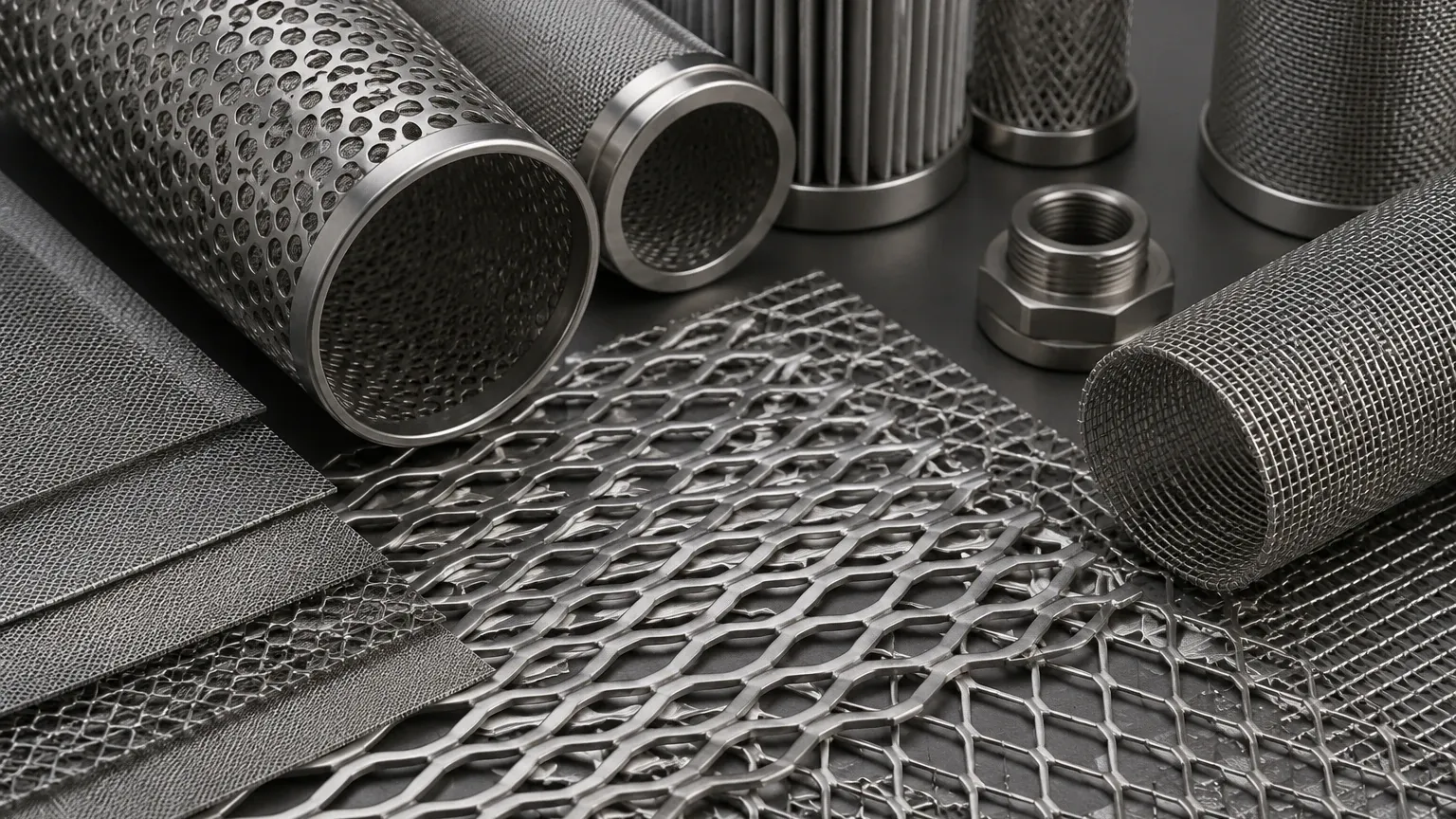
In industrial filtration and structural engineering, the precision of expanded metal dimensions is a fundamental factor that determines both the mechanical integrity and the functional efficiency of a component. Expanded metal is produced by simultaneously slitting and stretching a solid metal sheet, creating a diamond-shaped pattern of openings. Unlike perforated metal, which involves punching out material, expanded metal is formed without waste, resulting in a unique three-dimensional structure or a flattened profile depending on the post-processing steps. For engineers and procurement specialists, understanding the specific terminology and measurement standards for these dimensions is essential for ensuring that the final product meets the rigorous demands of chemical processing, hydraulic systems, and water treatment applications.
Core Dimensional Parameters of Expanded Metal
To accurately specify expanded metal for industrial use, one must master the standard nomenclature used in the industry. The dimensions are typically defined by the geometry of the diamond opening and the characteristics of the metal strands.
SWD and LWD (Design Dimensions)
These are the most common metrics used to describe the size of the diamond pattern.
* Short Way of Design (SWD): This is the distance measured from the center of one bond to the center of the next bond across the short axis of the diamond.
* Long Way of Design (LWD): This is the distance measured from the center of one bond to the center of the next bond across the long axis of the diamond.
It is important to note that SWD and LWD refer to the pitch of the pattern rather than the clear opening. When designing filtration systems, engineers often prioritize the SWD because it dictates the density of the mesh and the overall structural rigidity of the sheet.
SWO and LWO (Opening Dimensions)
For applications where particle retention or fluid flow is the primary concern, the "Way of Opening" measurements are more critical.
* Short Way of Opening (SWO): The clear distance between the inside edges of the strands across the short axis.
* Long Way of Opening (LWO): The clear distance between the inside edges of the strands across the long axis.
These dimensions directly influence the filtration rating of the material. In custom OEM projects, providing the exact SWO is necessary to ensure the mesh captures the intended debris while maintaining the required flow rate.
Strand Width and Thickness Specifications
The physical strength and weight of the expanded metal are determined by the strand dimensions and the original gauge of the base material.
* Strand Width: This refers to the amount of metal between the openings. It is the distance of the metal slit during the expansion process. Increasing the strand width enhances the structural support but reduces the open area percentage.
* Strand Thickness: This is the thickness of the base metal used to produce the expanded sheet. In "standard" or "raised" expanded metal, the strand thickness remains consistent with the original sheet gauge. However, in "flattened" expanded metal, this dimension is altered.
When selecting Perforated & Expanded Metal for high-pressure environments, such as hydraulic filters or industrial strainers, the relationship between strand width and thickness must be carefully calculated to prevent deformation under load.
Flattened vs. Raised Expanded Metal Dimensions
The manufacturing process results in two distinct types of expanded metal, each with different dimensional characteristics and performance profiles.
Raised (Standard) Expanded Metal
As the metal is slit and stretched, the strands are set at an angle to the plane of the sheet. This creates a three-dimensional surface that provides excellent grip and structural reinforcement. The overall thickness of a raised expanded metal sheet is significantly greater than the original material thickness because of this angular orientation. This 3D profile is often utilized in filtration as a support layer for finer wire mesh, as it provides a standoff distance that facilitates better fluid distribution.
Flattened Expanded Metal
To produce flattened expanded metal, the raised sheet is passed through a cold-rolling reducing mill. This process flattens the strands and bonds into a single plane, resulting in a smooth, flat surface.
Flattening has several effects on expanded metal dimensions:
1. Thickness: The overall thickness is reduced, usually to slightly less than the original gauge of the starting material.
2. LWD/SWD: The length of the diamond (LWD) typically increases slightly as the material is elongated during rolling.
3. Open Area: The flattening process can slightly distort the shape of the diamonds, which may marginally alter the percentage of open area.
Flattened expanded metal is preferred in applications where a smooth surface is required to prevent abrasion of adjacent filter media or where the total thickness of a multi-layer filter cartridge must be strictly controlled.
Calculating Open Area and Filtration Efficiency
The open area is perhaps the most critical dimension for filtration engineers. It determines the pressure drop across the filter and the velocity of the fluid passing through the media. Unlike simple perforated patterns, calculating the open area of expanded metal requires accounting for the strand width and the diamond geometry.
A simplified formula for the percentage of open area in expanded metal is:
**Open Area % = (1 – (2 * Strand Width / SWD)) * 100**
*(Note: This formula assumes standard diamond geometry and may vary based on specific manufacturer tooling.)*
In industrial filtration, a higher open area reduces energy consumption by lowering the resistance to flow. However, there is a trade-off: as the open area increases, the structural integrity of the mesh decreases. For applications involving high-viscosity fluids or high flow rates, a balance must be struck between the expanded metal dimensions and the mechanical properties of the alloy used.
Material Selection and Dimensional Stability
The choice of material significantly impacts the precision and stability of expanded metal dimensions. Stainless steel is the industry standard for high-performance filtration due to its corrosion resistance and mechanical strength.
* Stainless Steel 304/304L: Suitable for general industrial applications where cost-effectiveness and basic corrosion resistance are required.
* Stainless Steel 316/316L: The preferred choice for chemical processing and marine environments. The addition of molybdenum provides superior resistance to pitting and chloride-induced stress corrosion cracking.
* Specialty Alloys: For extreme temperatures or highly aggressive chemical environments, materials like Monel, Inconel, or Titanium may be used.
Different materials respond differently to the expansion process. For instance, harder alloys may exhibit more "spring-back" after stretching, which can affect the final SWD and LWD. When working with a manufacturer like Kaifil, it is important to discuss how the material choice will influence the dimensional tolerances of the finished component.
Engineering Considerations for Custom OEM Projects
When specifying expanded metal for custom filtration solutions, engineers must look beyond the basic dimensions and consider how the material will be integrated into the final assembly.
Tolerances
Standard industrial tolerances for expanded metal are generally broader than those for machined parts. Typically, a tolerance of +/- 5% to 10% on the SWD and LWD is common. However, for precision filtration components, tighter tolerances may be required. Specifying "critical dimensions" helps the manufacturer focus quality control efforts where they matter most.
Edge Configurations
How the expanded metal is cut to size affects its dimensions and safety:
* Random Sheared: The cut is made through the diamonds, leaving "sharp" or "open" edges. This is common for internal support structures.
* Bond Sheared: The cut is made along the bonds, resulting in a closed-loop edge. This provides a more finished look and is safer for handling, though it may require specific sheet sizes to align with the pattern pitch.
Sheet Direction
The orientation of the diamonds (SWD vs. LWD) relative to the flow or the structural load is vital. Expanded metal is significantly stronger across the SWD than the LWD. In cylindrical filter cartridges, the LWD is typically oriented around the circumference to allow for easier rolling and forming.
Common Risks and Quality Evaluation
Inconsistent expanded metal dimensions can lead to several failure modes in industrial applications:
1. Bypass: If the diamond openings are larger than specified due to over-stretching, larger particles may pass through the filter.
2. Structural Failure: If the strand width is inconsistent or too thin, the mesh may buckle under pressure.
3. Assembly Issues: Inaccuracies in the overall sheet dimensions or LWD/SWD pitch can make it difficult to weld or fit the mesh into a filter housing or frame.
To mitigate these risks, quality evaluation should include visual inspection for burrs or fractures at the bonds, as well as dimensional verification using calibrated calipers. For high-purity industries like pharmaceuticals, ensuring the material is free from oil and manufacturing residues is as important as the physical dimensions.
Conclusion
Selecting the right expanded metal requires a deep understanding of how various dimensions interact to affect performance. From the initial SWD and LWD design to the final choice between raised or flattened profiles, every measurement plays a role in the efficiency and longevity of the filtration system. By focusing on precise strand specifications and material properties, engineers can develop durable, high-performance solutions for the most demanding industrial environments.
For those seeking technical guidance on material selection or custom fabrication, exploring specialized options in Perforated & Expanded Metal ensures that your project benefits from manufacturing expertise and engineering-driven design. Whether you are designing a new hydraulic system or optimizing a chemical filtration process, confirming the exact dimensional requirements with your manufacturing partner is the first step toward a successful installation.
