


Expanded Metal Dimensions Chart
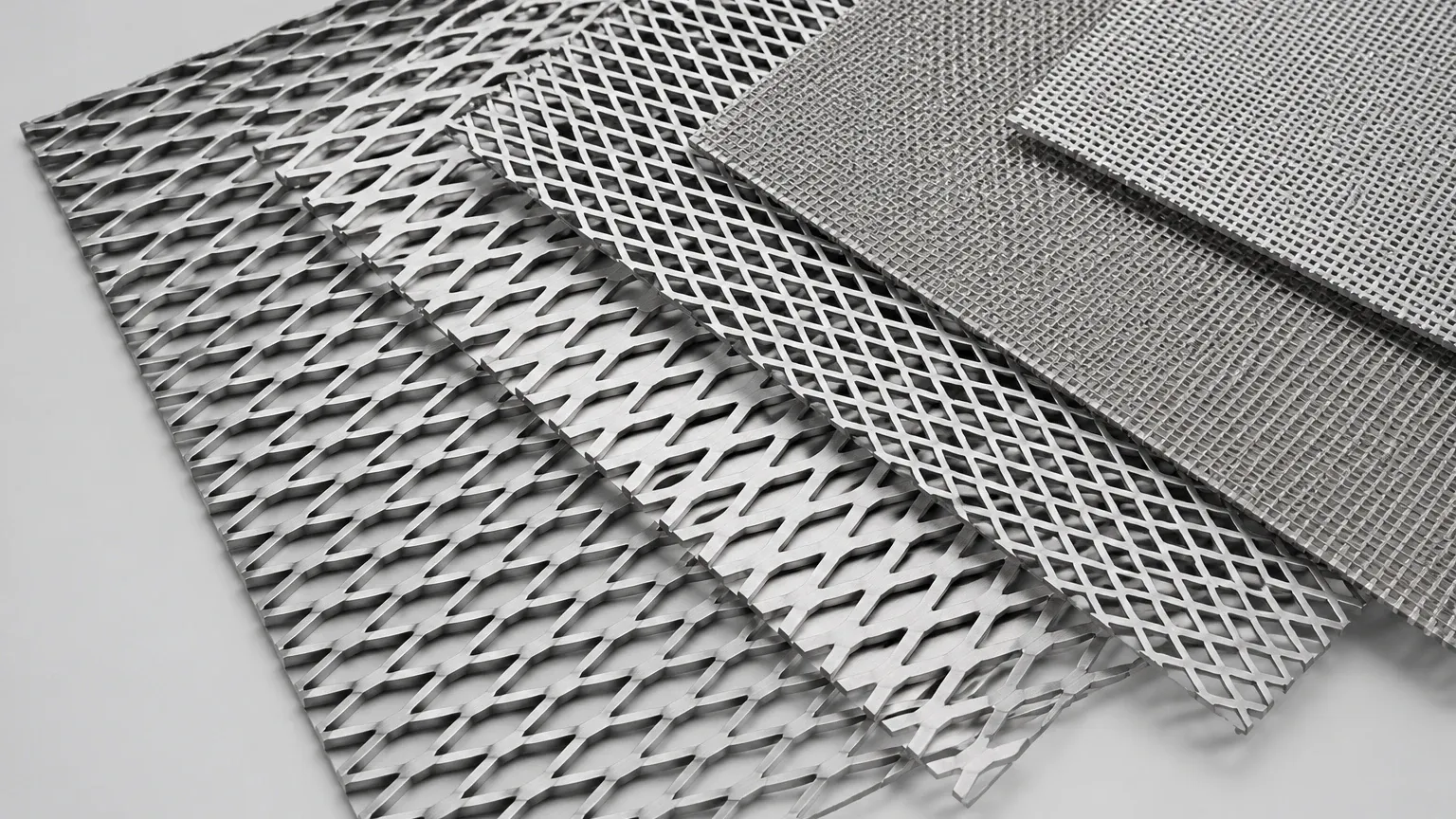
In industrial filtration and structural engineering, selecting the correct material requires a precise understanding of geometric specifications. For technical professionals, an expanded metal dimensions chart serves as a critical reference tool for determining the physical properties of a mesh, including its opening sizes, strand dimensions, and overall thickness. Expanded metal is produced by simultaneously slitting and stretching a solid sheet of metal, creating a diamond-shaped pattern that offers high structural integrity with minimal material waste.
For manufacturers like Kaifil, providing accurate dimensional data is essential for engineers designing filtration housings, support cages, and protective screens. This guide details how to interpret an expanded metal dimensions chart, the engineering variables involved, and the selection criteria necessary for demanding industrial environments.
Understanding Expanded Metal Terminology
To effectively use an expanded metal dimensions chart, one must first master the specific terminology used to describe the diamond pattern. Unlike woven wire mesh, which is defined by mesh count and wire diameter, expanded metal is defined by the geometry of the "bond" and the "strand."
SWD and LWD
* SWD (Short Way of Design): This refers to the distance from a point on one diamond to the same point on the next diamond, measured across the short axis. It is the nominal dimension used to categorize the mesh size.
* LWD (Long Way of Design): This is the distance measured across the long axis of the diamond, from center-to-center of the bonds.
SWO and LWO
* SWO (Short Way of Opening): This is the actual width of the opening, measured from the inside of one strand to the inside of the opposite strand across the short axis.
* LWO (Long Way of Opening): This is the length of the opening, measured from the inside of the bonds across the long axis. This dimension is crucial for determining the maximum particle size that can pass through the mesh when used in filtration.
Strands and Bonds
* Strands: These are the individual metal strips that form the sides of the diamond opening.
* Strand Thickness: The thickness of the original base metal sheet.
* Strand Width: The amount of metal fed into the expanding machine between each slit, which determines the width of the resulting strand.
* Bond: The intersection where two strands meet. The bond is typically twice the width of a single strand.
Standard vs. Flattened Expanded Metal
When reviewing an expanded metal dimensions chart, you will often see two distinct categories: Standard (Raised) and Flattened. The choice between these two significantly impacts the final dimensions and performance of the component.
Standard Expanded Metal
Standard expanded metal, also known as raised expanded metal, comes directly from the expanding machine. The strands and bonds are set at a uniform angle to the plane of the sheet. This creates a three-dimensional surface that provides excellent grip and structural rigidity. In filtration, standard expanded metal is often used as a support layer for finer mesh because the raised edges provide a standoff distance that helps prevent blinding of the primary filter media.
Flattened Expanded Metal
Flattened expanded metal is produced by passing standard expanded metal through a cold-rolling reducing mill. This process flattens the strands and bonds into a single plane, resulting in a smooth, level surface. The flattening process typically increases the LWD slightly while keeping the SWD relatively constant. For engineers, flattened metal is preferred when the filter assembly requires a low profile or when the mesh must be bonded to another flat surface without gaps.
Analyzing an Expanded Metal Dimensions Chart
A comprehensive expanded metal dimensions chart typically lists various "styles" or "designations." These designations are often expressed as a combination of the nominal diamond size and the gauge of the metal. For example, a common industrial designation might be "1/2#13," where 1/2" refers to the nominal SWD and #13 refers to the metal gauge.
Key Data Points in the Chart
1. Style Designation: The industry-standard name for the specific mesh size.
2. Weight per Square Foot: A critical metric for calculating the total weight of a filtration system or structural assembly.
3. Percent Open Area: This is arguably the most important figure for filtration engineers. It determines the flow rate and pressure drop across the mesh.
4. Overall Thickness: In standard expanded metal, the overall thickness is significantly greater than the strand thickness due to the angle of the strands. In flattened metal, the overall thickness is roughly equal to the strand thickness.
| Style Designation | SWD (in) | LWD (in) | Strand Width (in) | Strand Thickness (in) | Open Area (%) |
| :— | :— | :— | :— | :— | :— |
| 1/4" #18 (Standard) | 0.250 | 1.000 | 0.080 | 0.048 | 36% |
| 1/2" #13 (Standard) | 0.500 | 1.200 | 0.096 | 0.092 | 60% |
| 3/4" #9 (Standard) | 0.923 | 2.100 | 0.150 | 0.134 | 68% |
| 1/2" #16 (Flattened) | 0.500 | 1.260 | 0.096 | 0.050 | 62% |
*Note: These values are representative. Actual dimensions may vary based on manufacturing tolerances and material types.*
Material Selection for Industrial Filtration
While an expanded metal dimensions chart provides the geometric framework, the material composition determines the mesh's performance in specific environments. Kaifil specializes in stainless steel solutions, which are preferred in high-performance industrial applications.
Stainless Steel (304 and 316L)
Stainless steel is the industry standard for Perforated & Expanded Metal used in chemical processing, food and beverage, and pharmaceutical industries.
* Grade 304: Offers excellent strength and basic corrosion resistance suitable for many industrial support structures.
* Grade 316L: Contains molybdenum, providing superior resistance to chlorides and pitting. This is essential for filtration systems handling saline solutions or aggressive chemicals.
Carbon Steel and Aluminum
Carbon steel is often used for structural applications where corrosion is not a primary concern or where the component will be coated. Aluminum is selected for lightweight applications or environments where magnetic interference must be minimized, though it lacks the high-temperature durability of stainless steel.
Engineering Considerations for Filtration Support
When using an expanded metal dimensions chart to specify a component for a filtration system, engineers must look beyond the basic diamond size. The interaction between the mesh and the fluid flow is paramount.
Pressure Drop and Flow Velocity
The percentage of open area listed in the chart directly correlates to the pressure drop. A lower open area increases the velocity of the fluid passing through the openings, which can lead to higher turbulence and potential damage to delicate secondary filter layers. Engineers must balance the need for structural support (which usually requires wider strands and less open area) with the need for efficient flow.
Structural Load and Span
In large-scale industrial filters, the expanded metal often acts as the primary structural cage. The LWD should generally run perpendicular to the support members to maximize the load-bearing capacity. The dimensions chart helps engineers calculate the "moment of inertia" for the mesh to ensure it will not deform under the hydraulic pressure of the process fluid.
Fabrication and Weldability
The strand thickness and width influence how the mesh can be integrated into a filter cartridge. Thinner strands may require specialized resistance welding or laser welding to prevent burn-through, whereas heavier gauges can be MIG or TIG welded to end caps and flanges.
Common Risks and Specification Errors
Misinterpreting an expanded metal dimensions chart can lead to significant procurement and engineering failures. One common error is confusing the "Style" with the actual "Opening Size." A 1/2" style does not mean the opening is 1/2 inch; it refers to the center-to-center distance of the diamonds. Always refer to the SWO and LWO columns for actual clearance measurements.
Another risk involves ignoring the orientation of the diamonds. Expanded metal has a distinct "direction of flow" and structural orientation. If the sheet is cut incorrectly relative to the LWD and SWD, the resulting component may lack the necessary rigidity or may not fit correctly into the circular housing of a filter cartridge.
Customization and OEM Capabilities
Standard charts provide a baseline, but many industrial applications require custom dimensions that fall outside of stock specifications. Kaifil provides tailored solutions where strand width, thickness, and diamond geometry are adjusted to meet specific filtration requirements. This is particularly important for OEM manufacturers who need precise tolerances to ensure compatibility with proprietary housing designs.
Customization options include:
* Variable Strand Widths: To adjust the open area for specific flow requirements.
* Specialty Alloys: Utilizing high-nickel alloys for extreme temperature or highly corrosive environments.
* Precision Flattening: Ensuring a specific overall thickness tolerance for multi-layered sintered filter elements.
Conclusion for Technical Procurement
An expanded metal dimensions chart is an indispensable asset for the technical procurement process. By understanding the relationship between SWD, LWD, and open area, engineers can select a mesh that provides the optimal balance of structural support and filtration efficiency. When specifying materials for critical industrial processes, verifying these dimensions against the intended application's pressure, temperature, and chemical exposure is the final step in ensuring long-term operational reliability.
