


Decorative Expanded Metal
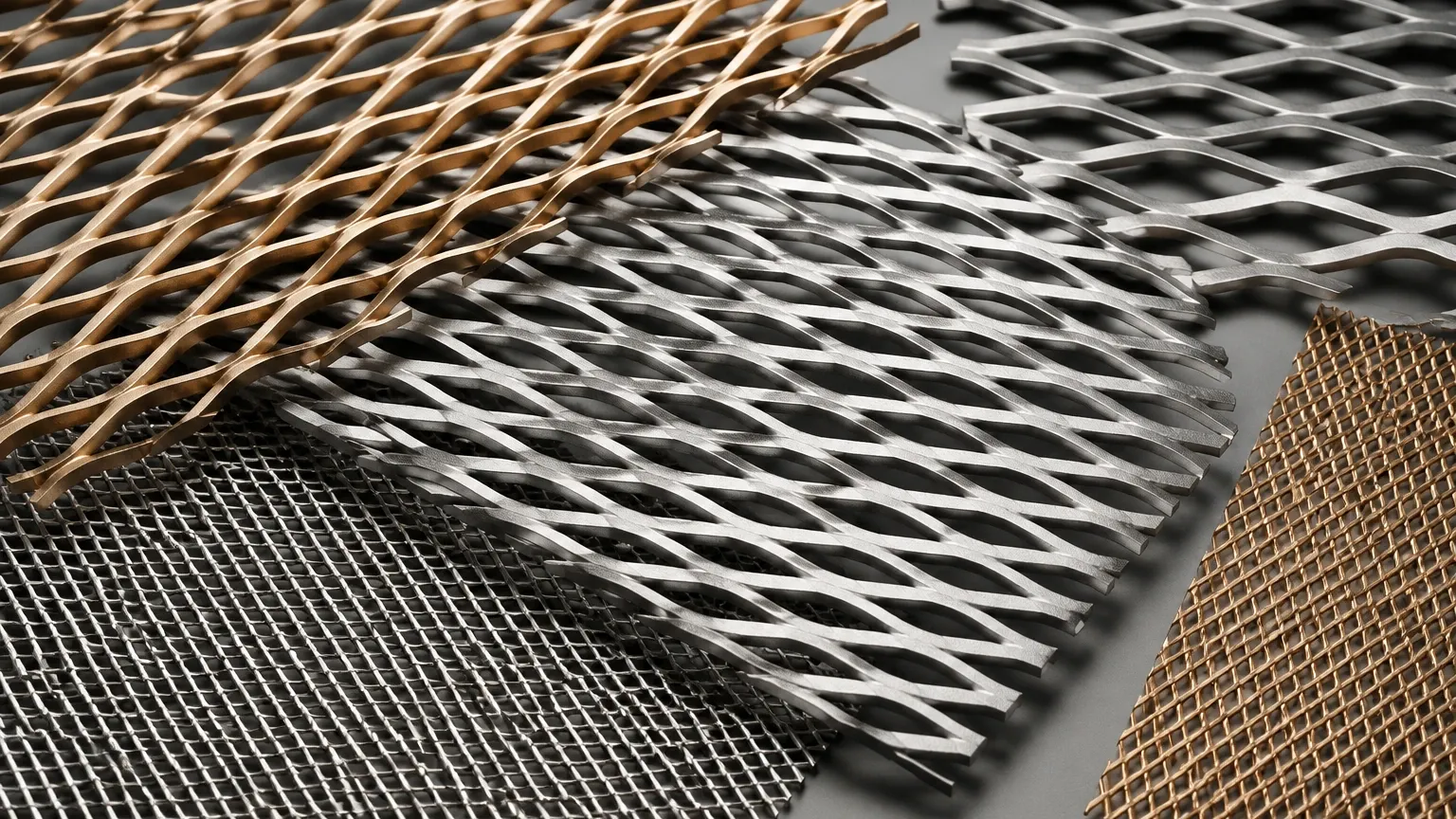
In industrial and architectural engineering, the selection of materials often requires a balance between structural integrity, functional performance, and aesthetic appeal. Decorative expanded metal has emerged as a versatile solution that addresses these needs simultaneously. Unlike traditional perforated sheets, expanded metal is manufactured through a process of shearing and stretching, which creates a continuous mesh without any material waste. This technical guide explores the engineering specifications, material considerations, and application-specific benefits of decorative expanded metal for professional procurement and engineering teams.
Understanding the Manufacturing and Structure of Expanded Metal
The fundamental difference between Perforated & Expanded Metal lies in the production method. While perforated metal is created by punching holes and removing material, expanded metal is produced by a reciprocating knife that slits the metal sheet while simultaneously stretching it. This process creates a series of diamond-shaped openings, although modern manufacturing allows for various decorative patterns including hexagonal, louvre, and custom geometric shapes.
Key Technical Dimensions
When specifying decorative expanded metal for a project, engineers must define several critical dimensions that determine both the look and the mechanical properties of the mesh:
* SWD (Short Way of Diamond): The distance from the center of a bond to the center of the next bond across the short axis of the diamond.
* LWD (Long Way of Diamond): The distance from the center of a bond to the center of the next bond across the long axis of the diamond.
* SWO (Short Way of Opening): The actual width of the opening in the short direction.
* LWO (Long Way of Opening): The actual length of the opening in the long direction.
* Strand Thickness: The thickness of the original base metal sheet.
* Strand Width: The amount of metal fed into the machine between each shearing stroke.
By adjusting these parameters, manufacturers like Kaifil can produce mesh that ranges from nearly transparent, high-open-area screens to dense, heavy-duty structural panels. For decorative applications, the relationship between the strand width and the thickness is particularly important, as it dictates the visual depth and the way light interacts with the surface.
Material Selection for Industrial and Architectural Performance
The choice of material is the most critical factor in ensuring the longevity and reliability of decorative expanded metal, especially in demanding environments such as chemical processing plants or coastal architectural installations.
Stainless Steel (Grades 304 and 316)
As a specialist in stainless steel filtration and metal components, Kaifil emphasizes the use of high-grade stainless steel for decorative mesh. Stainless steel offers superior corrosion resistance and a high strength-to-weight ratio.
* Grade 304: Suitable for most indoor and mild outdoor applications. It provides excellent durability and a clean, professional finish.
* Grade 316: Essential for marine environments or industrial settings where the mesh is exposed to corrosive chemicals or high humidity. The addition of molybdenum provides enhanced resistance to pitting and crevice corrosion.
Aluminum
Aluminum is frequently chosen for decorative expanded metal in architectural facades due to its light weight and excellent corrosion resistance. It is also highly conducive to surface treatments such as anodizing and powder coating, allowing for a wide spectrum of colors and textures that are not easily achievable with other metals.
Carbon Steel and Galvanized Steel
For projects where cost-efficiency is a primary driver and the environment is controlled, carbon steel is a viable option. To prevent oxidation, it is typically hot-dip galvanized or powder-coated. However, in high-performance industrial filtration or precision engineering contexts, stainless steel remains the preferred standard for its predictable lifecycle and minimal maintenance requirements.
Engineering Considerations: Open Area and Structural Integrity
One of the primary reasons engineers specify decorative expanded metal is its "open area" percentage. This value determines how much air, light, or fluid can pass through the mesh. In HVAC systems, sunshading facades, or industrial filtration supports, calculating the precise open area is vital for performance modeling.
Calculating Open Area
The open area in expanded metal is not as straightforward as in perforated metal. Because the strands are often angled (in the "raised" or "standard" state), the effective open area changes depending on the viewing or flow angle. Engineers must consider the "projected open area" versus the "actual open area" to ensure that ventilation or filtration requirements are met without compromising the decorative intent.
Raised vs. Flattened Expanded Metal
* Standard (Raised) Expanded Metal: The strands are set at an angle to the plane of the sheet. This creates a 3D texture that provides excellent anti-slip properties, unique shadowing effects, and high structural rigidity. It is often used in industrial walkways or as a primary filtration support layer.
* Flattened Expanded Metal: After the expansion process, the sheet is passed through a cold rolling mill. This flattens the strands and bonds back into a single plane. Flattened mesh is smoother and thinner, making it ideal for interior partitions, furniture components, and fine-mesh decorative screens where a flush surface is required.
Common Applications of Decorative Expanded Metal
The versatility of decorative expanded metal allows it to transition seamlessly between heavy industrial utility and high-end architectural design.
Architectural Facades and Sunshading
In modern architecture, expanded metal panels are used as secondary skins for buildings. They provide a striking visual identity while serving the functional purpose of sunshading. By selecting a specific LWD and strand width, architects can control the amount of solar heat gain entering a building, significantly reducing cooling costs while maintaining natural light and visibility for occupants.
Industrial Filtration and Support
While often viewed as an aesthetic choice, decorative expanded metal plays a functional role in industrial filtration. It is frequently used as an outer protective cage or an inner support core for stainless steel filter cartridges. In these applications, the decorative pattern is chosen not just for looks, but to provide a specific distribution of pressure across the filter media, preventing collapse under high-flow conditions. The lack of welds in the mesh structure (since it is made from a single sheet) eliminates potential points of failure and contamination.
Interior Design and Safety Guarding
From ceiling panels that hide mechanical services while allowing air circulation to safety guards on industrial machinery, expanded metal provides a robust barrier that does not obstruct sightlines. In B2B environments, such as warehouses or processing facilities, decorative expanded metal is used for security partitioning where both ventilation and visual monitoring are required.
Selection Criteria and Quality Evaluation
When sourcing decorative expanded metal, purchasing teams and engineers should evaluate suppliers based on technical precision and material traceability. A high-quality manufacturer should provide detailed specifications that go beyond simple dimensions.
Precision and Tolerances
In precision metal components, tolerances are tight. Variations in strand width or the pitch of the diamond can lead to alignment issues during installation, especially in large-scale architectural facades. It is essential to confirm that the manufacturer uses advanced CNC expansion equipment to maintain consistency across large production runs.
Surface Finish and Edge Quality
For decorative applications, the quality of the finish is paramount. The expansion process can sometimes leave burrs or sharp edges. For interior use or components that will be handled, deburring and edge-trimming are necessary post-processing steps. Furthermore, if the metal is to be powder-coated, the surface must be free of oils and lubricants used during the expansion process to ensure proper adhesion.
Load-Bearing Capacity
Engineers must verify the load-bearing capacity if the mesh is to be used in horizontal applications, such as flooring or shelving. Unlike solid plate, expanded metal distributes loads across its interconnected strands. Factors such as the direction of the LWD (which should typically run perpendicular to the supports for maximum strength) must be accounted for in the structural design.
Customization and OEM Capabilities
One of the greatest strengths of working with a professional manufacturer like Kaifil is the ability to customize the mesh to specific project requirements. Standard off-the-shelf patterns may not always meet the unique hydraulic or aesthetic needs of a specialized industrial application.
Custom Pattern Development
Beyond the standard diamond, expanded metal can be produced in various decorative shapes. By modifying the tooling (the knife profile), manufacturers can create unique visual effects. This is particularly useful for OEM clients who require a distinct look for their equipment housing or filtration products.
Integration with Other Filtration Components
In many B2B scenarios, decorative expanded metal is just one part of a larger assembly. For example, a stainless steel filter cartridge might require an expanded metal outer guard, a wire mesh middle layer, and a perforated inner core. Choosing a supplier that understands the interplay between these different Perforated & Expanded Metal components ensures better compatibility and simplified supply chain management.
Conclusion: Making an Informed Procurement Decision
Decorative expanded metal represents a sophisticated intersection of engineering and design. Its production process ensures material efficiency and structural integrity, while its varied patterns offer functional benefits in light control, ventilation, and filtration support.
For engineers and purchasing professionals, the key to a successful project lies in precise specification. By understanding the nuances of SWD/LWD dimensions, material grades like 316 stainless steel, and the differences between raised and flattened profiles, teams can select a product that meets both the aesthetic and technical demands of their industry. When evaluating potential partners, prioritize those who offer technical transparency, material certifications, and the ability to provide customized solutions tailored to specific industrial environments. This approach ensures that the decorative expanded metal not only enhances the visual appeal of the project but also contributes to its long-term performance and reliability.
