


Diamond Expanded Metal
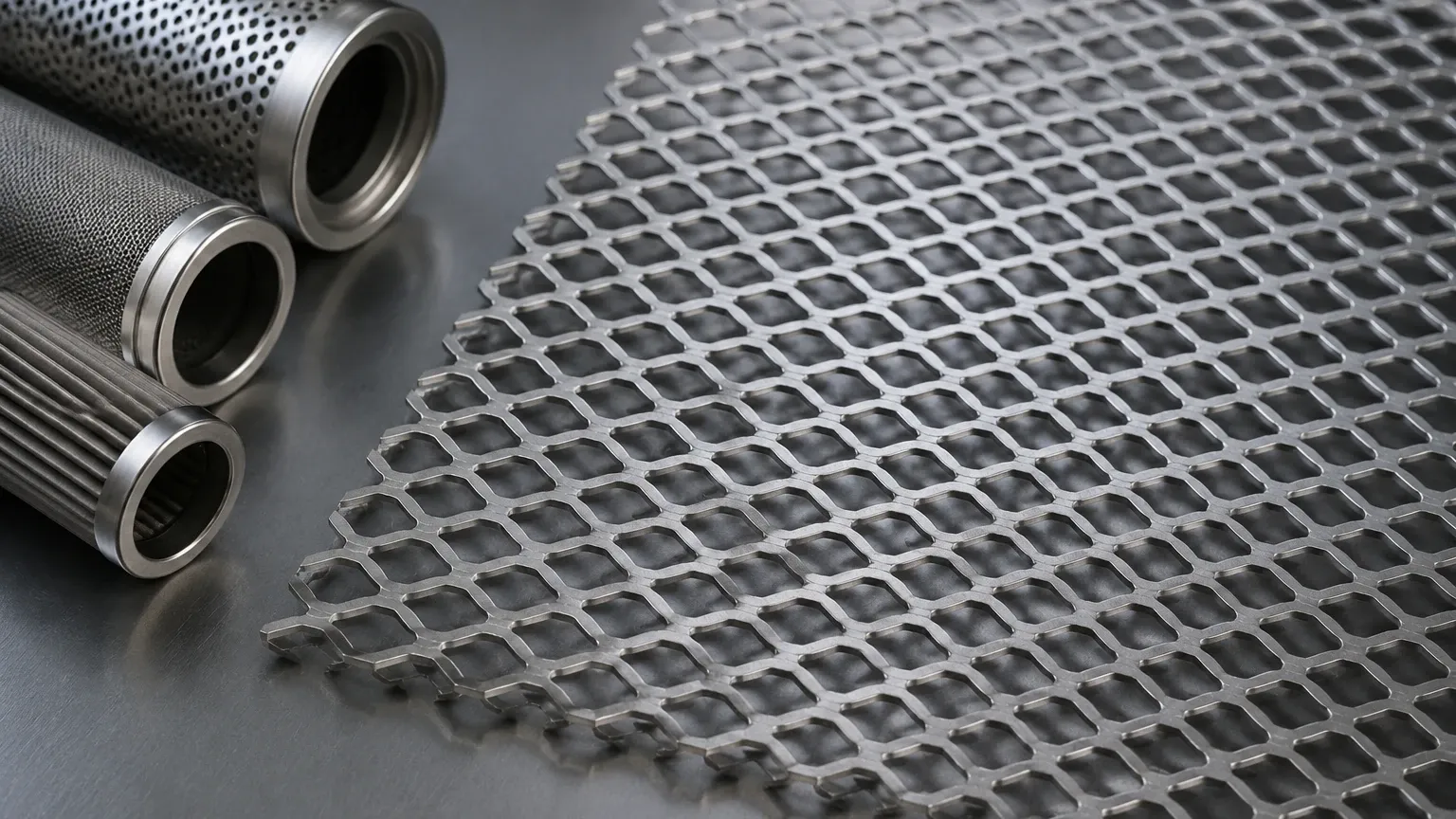
In the landscape of industrial materials, diamond expanded metal stands as a versatile and structurally efficient solution for a wide range of engineering challenges. Unlike perforated metal, which is created by punching holes and removing material, expanded metal is manufactured through a simultaneous slitting and stretching process. This method transforms a solid metal sheet into a continuous mesh with diamond-shaped openings, ensuring that no material is wasted while significantly increasing the strength-to-weight ratio of the final product. For engineers and procurement specialists in sectors such as chemical processing, filtration, and industrial manufacturing, understanding the technical nuances of diamond expanded metal is essential for optimizing system performance and longevity.
As a core component in the Perforated & Expanded Metal category, this material provides critical structural support and filtration capabilities. This guide explores the engineering specifications, material considerations, and application-specific advantages that define the use of diamond expanded metal in modern industrial environments.
Understanding the Geometry and Terminology
The performance of diamond expanded metal is dictated by its geometric configuration. Unlike woven wire mesh, where wires are interlaced, expanded metal is a single, jointless piece of material. This eliminates the risk of fraying or unraveling, a common failure point in high-vibration or high-pressure environments. To specify expanded metal accurately, engineers must utilize four primary measurements:
1. Short Way of Design (SWD): The distance from the center of one bond to the center of the next bond, measured across the short diamond axis.
2. Long Way of Design (LWD): The distance from the center of one bond to the center of the next bond, measured across the long diamond axis.
3. Strand Width: The amount of metal fed into the expanding machine between the slits, which determines the thickness of the "ribs" of the diamond.
4. Strand Thickness: The original thickness of the base metal sheet.
Beyond these dimensions, the material is typically categorized as either "Raised" (Standard) or "Flattened." Raised expanded metal retains the natural angularity resulting from the stretching process, providing a textured surface that offers excellent grip and high rigidity. Flattened expanded metal undergoes an additional cold-rolling process to create a smooth, level surface, which is often preferred for filtration support layers where a uniform profile is required to prevent damage to delicate filter media.
Manufacturing Integrity and Material Selection
The manufacturing process of diamond expanded metal is inherently sustainable and cost-effective because it produces zero scrap. This efficiency is particularly advantageous when working with high-performance alloys where material costs are significant. At Kaifil, the selection of materials is tailored to the specific rigors of the application environment.
Stainless Steel (304, 316, 316L)
Stainless steel is the preferred choice for industrial filtration and chemical processing. Grade 304 offers excellent general corrosion resistance, while Grade 316/316L provides superior protection against chlorides and acidic environments. These materials are essential for pharmaceutical and food-grade applications where hygiene and material stability are paramount.
Carbon Steel
For structural applications where corrosion is less of a concern or where secondary coatings (such as galvanization or powder coating) will be applied, carbon steel offers a high-strength, economical alternative. It is frequently used for safety guards, machine enclosures, and heavy-duty walkways.
Aluminum
Aluminum expanded metal is selected for its high strength-to-weight ratio and natural resistance to atmospheric corrosion. It is widely used in architectural applications, HVAC systems, and aerospace components where weight reduction is a critical design objective.
Performance Characteristics in Industrial Filtration
In the field of precision filtration, diamond expanded metal serves as more than just a barrier. It often acts as the structural backbone for complex filter assemblies. When used as a support layer for fine wire mesh or synthetic media, it must withstand significant differential pressures without deforming.
Structural Rigidity and Pleat Support
In pleated filter cartridges, expanded metal is used as an inner core or outer cage. The diamond geometry provides exceptional hoop strength, preventing the filter media from collapsing under high flow rates. The angular nature of the strands can also help maintain pleat spacing, ensuring that the maximum surface area of the filter media remains exposed to the fluid stream.
Flow Dynamics and Open Area
The "open area" of expanded metal refers to the percentage of the sheet that is comprised of openings versus solid metal. Calculating the open area is critical for engineers to predict pressure drop and flow velocity. Diamond expanded metal typically offers a high percentage of open area, which minimizes resistance to flow while maintaining structural integrity. By adjusting the SWD and LWD, manufacturers can fine-tune the filtration characteristics to meet specific process requirements.
Comparative Analysis: Expanded Metal vs. Perforated Metal
When selecting a metal component for a B2B project, engineers often weigh the pros and cons of expanded metal versus perforated metal. While both serve similar functions, their mechanical properties differ significantly.
* Material Efficiency: Perforated metal involves punching holes, which can result in up to 40-60% material waste. Expanded metal involves no waste, making it more cost-effective, especially for stainless steel and exotic alloys.
* Weight-to-Strength Ratio: Because the strands of expanded metal are oriented at an angle to the plane of the sheet, the material exhibits higher directional strength than a flat perforated sheet of the same weight.
* Flexibility: Expanded metal can be easily formed, curved, or welded into cylindrical shapes for filter housings. The continuous nature of the mesh ensures that stress is distributed evenly across the structure, reducing the likelihood of fatigue cracking at the joints.
Engineering Selection Criteria for Procurement
Selecting the right diamond expanded metal requires a balance of mechanical requirements and cost considerations. Purchasing teams and engineers should confirm the following factors before finalizing a specification:
Load-Bearing Requirements
If the material is intended for use in walkways, platforms, or heavy-duty guards, the load-bearing capacity must be calculated based on the strand width and thickness. Raised expanded metal generally offers higher load resistance than flattened variants because the vertical orientation of the strands acts like a series of structural beams.
Environmental Compatibility
Chemical exposure, temperature fluctuations, and moisture levels dictate the material grade. For example, in marine environments or chemical scrubbing towers, 316L stainless steel is often the minimum requirement to prevent localized pitting and crevice corrosion.
Tolerances and Precision
In precision filtration, even minor deviations in the SWD or LWD can affect the fit of the filter component within its housing. It is vital to work with a manufacturer capable of maintaining tight tolerances and providing consistent strand dimensions across large production runs.
Customization and Technical Support
One of the primary advantages of working with a specialized manufacturer like Kaifil is the ability to customize diamond expanded metal to the exact needs of an application. Standard off-the-shelf sizes rarely meet the specific demands of high-performance industrial systems. Customization options include:
* Custom Aperture Sizes: Tailoring the diamond dimensions to achieve a specific flow rate or particle retention level.
* Edge Configurations: Choosing between "random" edges (where the diamonds are cut through) or "bonded" edges (where the cut follows the bond of the diamonds) to facilitate easier welding and safer handling.
* Surface Treatments: Beyond flattening, materials can undergo pickling and passivation to enhance corrosion resistance, or electropolishing to achieve a burr-free, mirror-like finish required in pharmaceutical applications.
Total Cost of Ownership (TCO) Considerations
While the initial purchase price of diamond expanded metal is often lower than perforated alternatives due to manufacturing efficiency, the total cost of ownership should also account for the product's lifespan. High-quality stainless steel expanded metal may have a higher upfront cost than carbon steel, but its resistance to corrosion and reduced need for replacement make it the more economical choice in the long run, particularly in corrosive industrial environments.
Furthermore, the structural efficiency of expanded metal often allows for the use of thinner gauges than would be required with other materials, leading to savings in both material costs and shipping weights. By integrating expanded metal into the early stages of design, engineers can reduce the overall complexity and weight of industrial equipment.
Conclusion
Diamond expanded metal is a sophisticated engineering material that offers a unique combination of strength, transparency, and economic efficiency. Whether it is used as a protective guard, a decorative architectural element, or a critical support component in a high-pressure filtration system, its performance is rooted in its jointless, slit-and-stretched geometry. For B2B professionals, selecting the correct material grade, diamond size, and surface finish is the key to ensuring that the final product meets the rigorous demands of industrial service.
By partnering with a manufacturer that understands the technical complexities of metal expansion and filtration, engineering teams can secure reliable, high-performance components that optimize their processes and reduce maintenance overhead. For detailed specifications and to explore the full range of available configurations, professionals are encouraged to Review product options and application support to find the ideal solution for their specific project needs.
