


Expanded Metal Enclosure
In industrial engineering and manufacturing, the selection of protective barriers and housing materials is a critical decision that impacts equipment longevity, operator safety, and operational efficiency. An expanded metal enclosure serves as a robust solution for diverse applications, ranging from machinery guards and electrical housing to specialized filtration support structures. Unlike traditional solid sheet metal or woven wire mesh, expanded metal offers a unique combination of structural integrity, ventilation, and cost-effectiveness that is particularly suited for demanding B2B environments.
As a specialized manufacturer of stainless steel filtration solutions, Kaifil understands that the performance of an enclosure depends heavily on the precision of its base material. Whether used in chemical processing, food and beverage production, or pharmaceutical facilities, understanding the technical nuances of Perforated & Expanded Metal is essential for engineers and procurement teams tasked with designing or sourcing industrial enclosures.
Engineering Fundamentals of Expanded Metal
The manufacturing process of expanded metal distinguishes it from other types of industrial mesh. It is produced by simultaneously slitting and stretching a solid sheet of metal—typically stainless steel, carbon steel, or aluminum. This cold-forming process creates a series of diamond-shaped openings, resulting in a continuous, one-piece structure.
One of the primary engineering advantages of expanded metal is that it is produced without any material waste. Unlike perforated metal, where the "slugs" or holes are punched out and discarded (or recycled), expanded metal utilizes the entirety of the original sheet. This efficiency often translates to a more favorable cost-to-strength ratio. Furthermore, because the metal is stretched rather than woven, the strands remain interconnected at the "bonds," providing superior rigidity and maintaining its shape even when cut into irregular configurations for a custom expanded metal enclosure.
From a structural perspective, the orientation of the diamond pattern—referred to as the Long Way of Design (LWD) and Short Way of Design (SWD)—allows engineers to manipulate the load-bearing characteristics of the enclosure. When oriented correctly, the mesh can support significant weight while remaining lightweight enough for easy installation and maintenance.
Material Selection for Industrial Enclosures
The environment in which an expanded metal enclosure will operate dictates the material choice. For industrial applications, three primary alloys dominate the market:
Stainless Steel (304 and 316 Grades)
Stainless steel is the gold standard for enclosures in corrosive or hygienic environments. Grade 304 offers excellent resistance to atmospheric corrosion and is widely used in general industrial machinery guards. However, for chemical processing plants, marine environments, or pharmaceutical cleanrooms, Grade 316 is preferred due to its added molybdenum content, which provides superior resistance to chlorides and acidic solutions. Stainless steel expanded metal is also favored in the food and beverage industry because it can withstand rigorous high-pressure cleaning and sanitization cycles without degrading.
Carbon Steel
For indoor applications where corrosion is not a primary concern, or where the enclosure will be powder-coated or galvanized, carbon steel is a cost-effective alternative. It provides high impact resistance and structural strength, making it ideal for heavy-duty warehouse partitions or protective cages for HVAC units.
Aluminum
Aluminum expanded metal is selected when weight reduction is a priority. While it lacks the extreme tensile strength of stainless steel, its natural oxide layer provides decent corrosion resistance, and its high thermal conductivity makes it an excellent choice for enclosures housing heat-generating electrical components.
Key Technical Specifications: SWD, LWD, and Strand Geometry
When specifying an expanded metal enclosure, engineers must move beyond simple dimensions and focus on the geometry of the mesh. These specifications directly influence airflow, visibility, and the level of protection provided.
1. SWD (Short Way of Design): The distance from the center of one bond to the center of the next bond measured across the short diamond diagonal.
2. LWD (Long Way of Design): The distance from the center of one bond to the center of the next bond measured across the long diamond diagonal.
3. Strand Width and Thickness: The width refers to the amount of metal fed into the machine between slits, while thickness refers to the gauge of the original sheet. These two factors determine the overall "heaviness" and durability of the enclosure.
4. Open Area Percentage: This is perhaps the most critical metric for enclosures requiring ventilation. It is calculated based on the ratio of the openings to the total surface area. For motor guards or electrical cabinets, a high open area is necessary to prevent overheating, whereas a safety guard might require a smaller opening to prevent finger ingress (OSHA compliance).
Functional Applications in Industrial Environments
The versatility of expanded metal allows it to be utilized in several specialized enclosure types across various sectors:
Machinery Guards and Safety Cages
In manufacturing plants, expanded metal enclosures are used to shield operators from moving parts, belts, and pulleys. The diamond pattern allows safety inspectors to visually verify the status of the machine without removing the guard, maintaining a high level of safety while facilitating routine checks.
Electrical and Electronic Housing
Sensitive electrical equipment requires protection from physical impact and unauthorized access, yet it must also dissipate heat. An expanded metal enclosure provides the necessary airflow for passive cooling while acting as a Faraday cage in certain configurations to reduce electromagnetic interference (EMI).
Filtration Support and Protective Shrouds
In the context of industrial filtration, expanded metal often serves as the outer shroud or inner core for filter cartridges. In these applications, the enclosure protects the delicate filter media (such as fine wire mesh or fiber membranes) from high-pressure surges and mechanical damage. Kaifil specializes in integrating these expanded metal components into custom filtration systems to ensure long-term durability in fluid processing.
HVAC and Ventilation Covers
External HVAC units are often subject to debris and vandalism. Expanded metal enclosures provide a rugged barrier that does not significantly restrict the intake or exhaust of air, ensuring the system operates at peak efficiency.
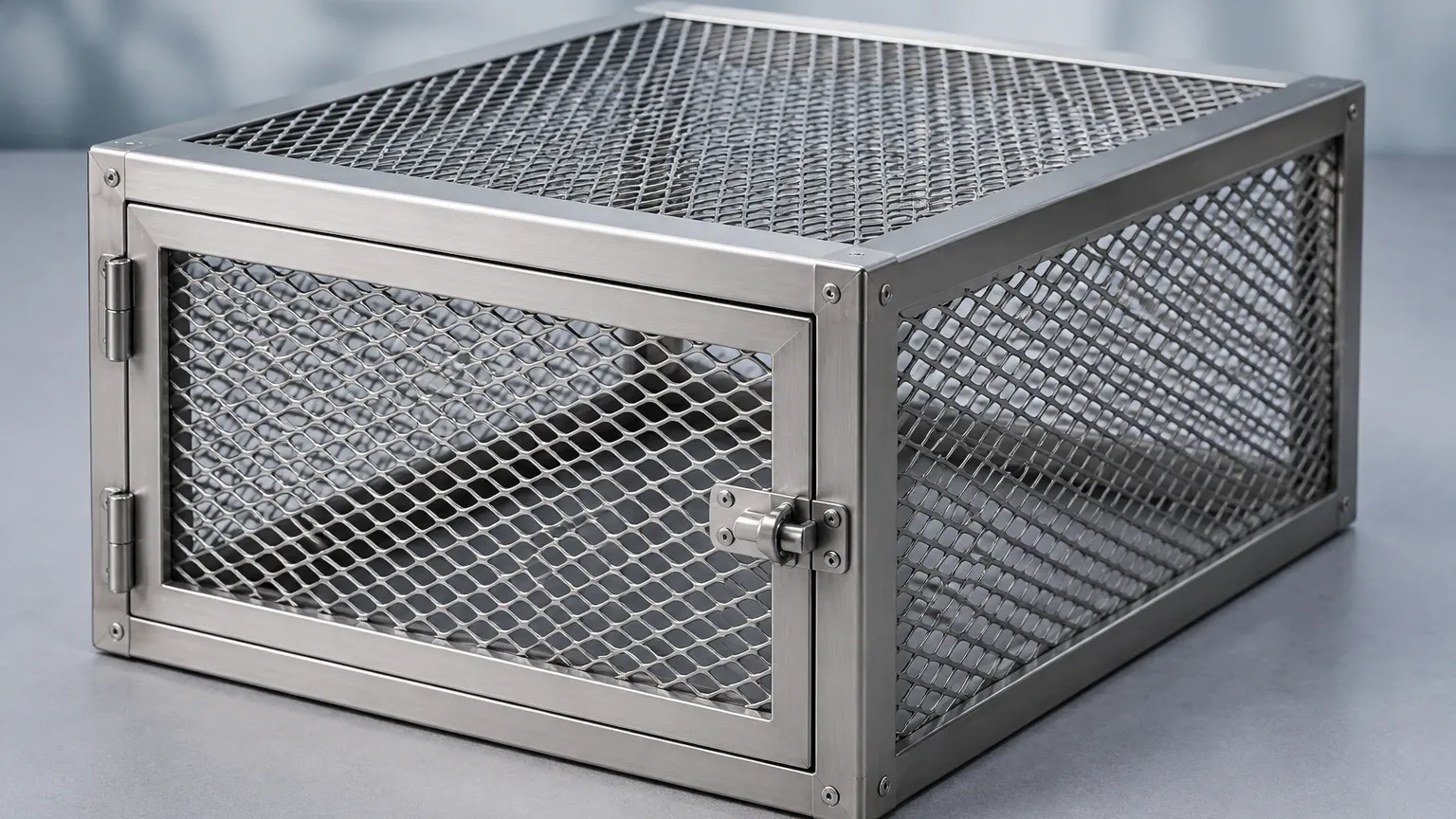
Customization and Fabrication for Specific Filtration Needs
A standard off-the-shelf expanded metal sheet is rarely sufficient for complex industrial needs. Customization is where engineering expertise becomes vital. Fabrication of an expanded metal enclosure involves several specialized processes:
* Flattening vs. Raised Mesh: Standard expanded metal has a "raised" surface where the strands are at an angle to the plane of the sheet. For enclosures where a smooth surface is required—such as those handled frequently by personnel—the mesh can be "flattened" through a cold-rolling process. This reduces the thickness and creates a smooth, level surface.
* Framing and Welding: To ensure structural stability, expanded metal panels are typically welded into frames made of angle iron, U-edging, or tube steel. Proper welding techniques are essential to prevent warping and to ensure the enclosure can withstand vibration in industrial settings.
* Surface Finishes: Beyond material selection, finishes such as electropolishing (for stainless steel), hot-dip galvanizing, or epoxy powder coating can be applied. Electropolishing is particularly important for filtration and pharmaceutical enclosures as it removes surface impurities and creates a mirror-like, easy-to-clean finish.
Evaluating Performance and Total Cost of Ownership
When purchasing or designing an expanded metal enclosure, engineers should look beyond the initial procurement cost and consider the Total Cost of Ownership (TCO). Several factors influence the long-term value of the installation:
Durability and Replacement Cycles
An enclosure made from low-grade carbon steel may be cheaper initially but may require replacement every two years due to corrosion. In contrast, a 316 stainless steel enclosure might last decades in the same environment. Engineers should evaluate the chemical exposure, humidity, and mechanical stress of the application site before finalizing material specs.
Maintenance Requirements
The "cleanability" of the enclosure is a significant factor in sectors like food processing. Expanded metal with a high-quality finish reduces the buildup of contaminants and simplifies the washdown process, reducing labor costs and downtime.
Customization vs. Standard Sizes
While standard sizes are more affordable, a custom-engineered enclosure that fits perfectly into an existing system can prevent leaks, bypasses (in filtration applications), or safety gaps. Investing in precision manufacturing ensures that the enclosure integrates seamlessly with other components, such as pumps, valves, or sensors.
Information to Confirm Before Procurement
To ensure the successful implementation of an expanded metal enclosure, technical professionals should confirm the following details with their manufacturer:
* Load Requirements: Will the enclosure need to support any weight, or is it purely protective?
* Environmental Factors: What chemicals, temperatures, and cleaning agents will the material be exposed to?
* Compliance Standards: Does the enclosure need to meet specific OSHA, FDA, or ISO standards for safety or hygiene?
* Dimensional Tolerances: What are the acceptable variances for the mesh openings and overall frame size?
By addressing these technical considerations early in the design phase, companies can avoid costly retrofits and ensure that their filtration and protection systems operate reliably under demanding conditions.
Conclusion: Selecting the Right Solution
Expanded metal enclosures represent a sophisticated intersection of material science and mechanical design. Their ability to provide strength, ventilation, and visibility makes them indispensable in modern industrial infrastructure. Whether the goal is to protect sensitive machinery, support high-pressure filtration media, or ensure worker safety, the choice of material and mesh geometry is paramount.
As a manufacturer committed to precision and quality, Kaifil provides the technical expertise necessary to develop high-performance filtration and protective components. For engineers seeking reliable, customized solutions that meet specific application requirements, exploring the options available in Perforated & Expanded Metal is the first step toward achieving optimized industrial performance. By focusing on durability, filtration accuracy, and precise manufacturing, Kaifil helps global customers navigate the complexities of industrial filtration and enclosure design.
