


Expanded Metal and Grating
In industrial engineering and facility design, the selection of structural and filtration components requires a rigorous evaluation of material properties, mechanical strength, and environmental compatibility. Among the most versatile materials utilized in these sectors are expanded metal and grating. These components serve critical roles ranging from heavy-duty walkways and safety barriers to precision support structures in complex filtration systems. Understanding the technical nuances between different types of Perforated & Expanded Metal and traditional industrial grating is essential for engineers and procurement teams aiming to optimize performance while managing total cost of ownership.
Understanding the Structural Mechanics of Expanded Metal and Grating
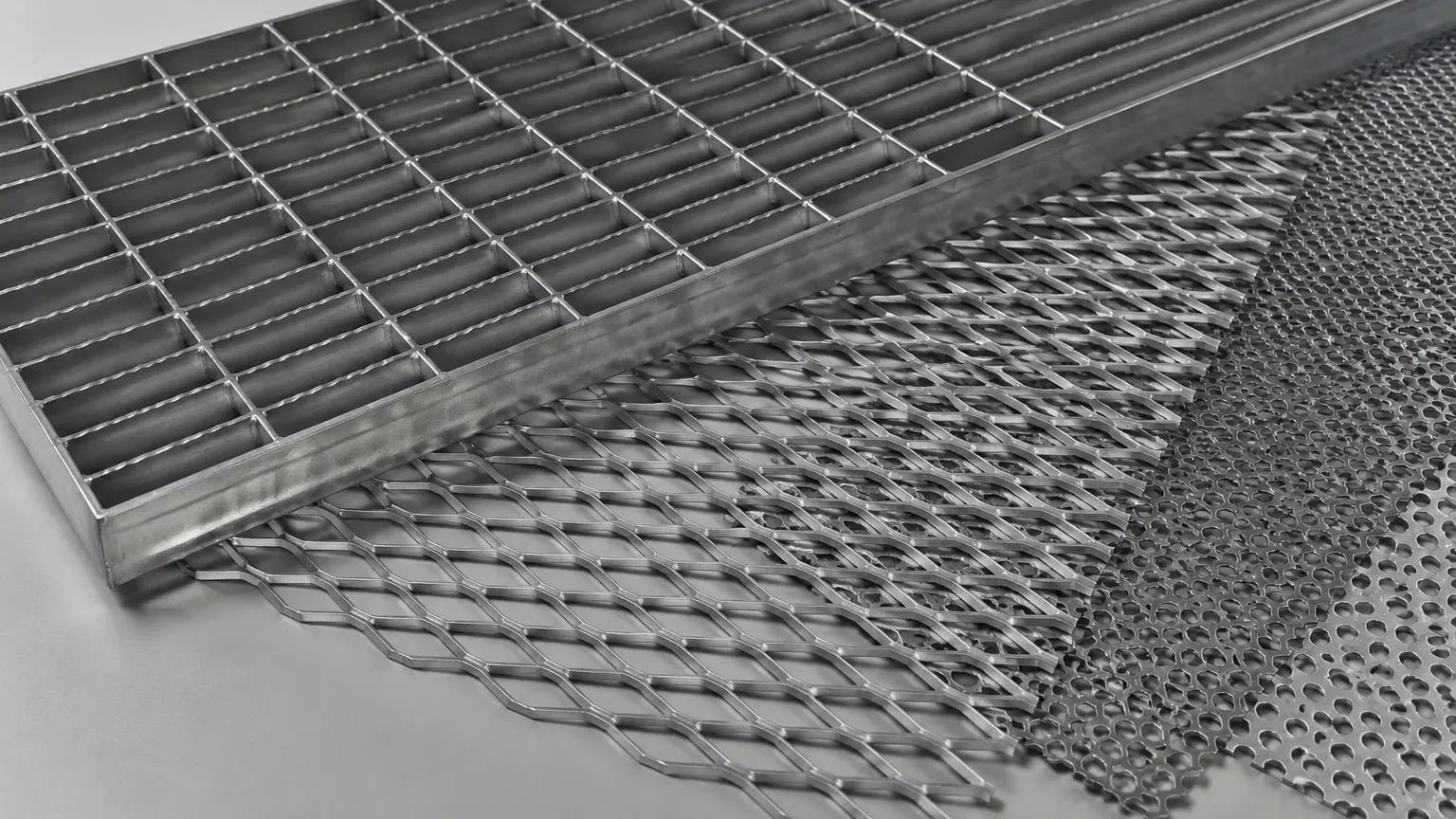
Expanded metal is manufactured through a specialized process of slitting and stretching a solid metal sheet. Unlike perforated metal, which involves punching holes and generating scrap material, the expansion process creates a diamond-shaped pattern without any material loss. This results in a high strength-to-weight ratio, as the "strands" and "bonds" (the intersection of strands) are oriented at an angle to the original plane of the sheet.
Industrial grating, particularly expanded metal grating, differs from standard expanded metal primarily in its gauge and load-bearing capacity. While standard expanded metal is often used for enclosures, filtration supports, or architectural elements, expanded metal and grating designed for industrial use are significantly thicker. These are engineered to support the weight of personnel, machinery, or heavy debris in environments such as chemical plants or water treatment facilities.
From a mechanical perspective, the monolithic nature of expanded metal—where the mesh is part of a single piece of metal—eliminates the risk of joint failure, which can occur in welded or riveted bar gratings. This structural integrity is a primary reason why engineers specify expanded metal and grating for high-vibration environments or applications where long-term durability is paramount.
Material Selection and Chemical Compatibility
In the B2B industrial sector, material selection is dictated by the operating environment. Kaifil specializes in stainless steel solutions, which are preferred in demanding industries such as pharmaceutical, food and beverage, and chemical processing.
Stainless Steel 304 vs. 316L
For most general industrial applications, Grade 304 stainless steel provides excellent corrosion resistance and mechanical strength. However, in environments involving high chloride concentrations or acidic chemical processing, Grade 316L is the industry standard. The addition of molybdenum in 316L enhances its resistance to pitting and crevice corrosion, which is vital when expanded metal and grating are used as support structures for filtration media in aggressive chemical baths.
Specialty Alloys and Surface Treatments
Beyond standard stainless steel, certain applications may require specialty alloys or specific surface finishes. For example, in food and beverage processing, a passivated or electropolished surface is often required to ensure the material is easy to sanitize and free of microscopic contaminants. When evaluating Perforated & Expanded Metal, engineers must confirm that the material grade aligns with the chemical compatibility charts of the fluids or gases being processed.
Performance Metrics: Open Area and Load Capacity
When specifying expanded metal and grating for filtration or ventilation, the "open area" percentage is a critical metric. This value determines the flow rate of liquids or air and the pressure drop across the component.
1. Open Area Calculation: In expanded metal, the open area is determined by the relationship between the Long Way of the Diamond (LWD), the Short Way of the Diamond (SWD), and the strand width. A larger open area reduces resistance to flow but may decrease the structural rigidity of the sheet.
2. Load-Bearing Requirements: For grating applications, engineers must calculate the maximum allowable span between supports. Expanded metal grating is directional; its strength is significantly higher when the LWD is oriented perpendicular to the supports. Failure to account for this orientation during installation can lead to structural sagging or failure.
3. Filtration Accuracy: While expanded metal itself is rarely used for fine filtration (micron-level), it serves as the essential "backbone" or support layer for fine wire mesh filters. It prevents the delicate mesh from collapsing under high hydraulic pressure, ensuring the longevity of the filter cartridge.
Customization and OEM Considerations for Industrial Applications
Standard off-the-shelf components rarely meet the precise requirements of specialized industrial machinery. Customization is a core requirement for OEM (Original Equipment Manufacturer) partners. When sourcing expanded metal and grating, several variables can be tailored to specific application needs:
* Flattened vs. Raised: Standard expanded metal has a "raised" surface where the strands are angled. This provides excellent slip resistance for walkways. However, for filtration applications or where a smooth surface is required to prevent turbulence, the metal can be "flattened" through a cold-rolling process, resulting in a consistent thickness across the entire sheet.
* Pattern Geometry: While the diamond pattern is standard, variations in the SWD and LWD allow for specific aperture sizes tailored to catch specific debris or to match the flow characteristics of a hydraulic system.
* Dimensional Tolerances: Precision metal filter components require tight tolerances to ensure proper fitment within housings. Custom fabrication allows for exact shearing, notching, and forming to meet engineering drawings.
For technical teams, collaborating with a manufacturer like Kaifil ensures that the Perforated & Expanded Metal components are designed with the final assembly in mind, reducing the need for secondary on-site modifications.
Installation, Maintenance, and Total Cost Considerations
The total cost of ownership (TCO) for expanded metal and grating is influenced not just by the initial purchase price, but by installation efficiency and maintenance requirements.
Installation Best Practices
Proper installation involves securing the grating to the support structure using appropriate clips, bolts, or welding techniques. For stainless steel components, it is vital to use stainless steel fasteners to prevent galvanic corrosion. In filtration systems, ensuring a bypass-free seal between the expanded metal support and the filter housing is critical for maintaining system integrity.
Maintenance and Replacement Cycles
One of the primary advantages of stainless steel expanded metal and grating is its low maintenance requirement. Unlike carbon steel, which may require periodic painting or galvanizing to prevent rust, stainless steel maintains its structural properties even in moist or corrosive environments. However, regular inspections are necessary to check for:
* Blinding or Clogging: In filtration applications, the accumulation of solids can restrict flow.
* Mechanical Wear: In high-flow or abrasive environments, the strands may thin over time.
* Structural Integrity: Checking for any signs of deformation or loose fasteners in walkway grating.
Industry-Specific Applications
The versatility of expanded metal and grating allows it to be deployed across a wide range of industrial sectors, each with unique performance demands.
Chemical and Petrochemical Processing
In these environments, expanded metal is often used as internal support for catalyst beds or as protective screens for intake valves. The high heat and corrosive nature of petrochemicals necessitate the use of high-grade stainless steel or nickel alloys.
Food and Beverage Industry
Hygiene is the priority here. Expanded metal is used in drainage systems, drying racks, and as protective guards on processing equipment. The ability to manufacture these components from food-grade stainless steel ensures compliance with safety regulations while providing a durable solution that withstands frequent high-pressure washdowns.
Hydraulic and Water Treatment
In hydraulic systems, expanded metal serves as a protective outer wrap for filter elements, shielding the inner media from large particles and mechanical damage. In water treatment, expanded metal and grating are used in primary screening stages to remove large debris from influent streams, protecting sensitive downstream equipment like pumps and fine membranes.
Critical Questions for Engineering and Procurement
Before finalizing a specification for expanded metal and grating, technical professionals should confirm the following data points with their supplier:
1. What is the exact chemical composition of the environment? This determines if 304, 316L, or a more exotic alloy is required.
2. What is the maximum pressure or load the component will face? This dictates the gauge and the choice between standard expanded metal and heavy-duty grating.
3. Does the application require a specific open area for flow dynamics? This ensures the filtration or ventilation system operates within its designed parameters.
4. Are there specific regulatory standards (e.g., FDA for food, ISO for manufacturing) that must be met?
By addressing these technical considerations early in the design or procurement phase, companies can ensure they select the most efficient and durable filtration and structural solutions. For those seeking specialized configurations, exploring the options available for Perforated & Expanded Metal provides a foundation for high-performance industrial systems.
Conclusion
Expanded metal and grating are more than just structural commodities; they are engineered components vital to the safety, efficiency, and longevity of industrial operations. Whether used as a robust walkway in a chemical plant or a precision support layer in a pharmaceutical filter, the choice of material, pattern, and finish has a direct impact on system performance. By focusing on technical specifications and partnering with experienced manufacturers, engineers can achieve optimized filtration and structural outcomes that stand up to the rigors of modern industry.
