


Fine Expanded Metal
In the landscape of industrial filtration and precision engineering, fine expanded metal represents a specialized category of mesh materials characterized by small aperture sizes and thin strand dimensions. Unlike standard expanded metal used for architectural grilles or heavy-duty walkways, fine expanded metal is engineered for high-precision applications where dimensional stability, specific open area ratios, and mechanical integrity are paramount.
For engineers and procurement professionals, understanding the nuances of this material is essential for optimizing filtration efficiency and ensuring the longevity of industrial components. This guide examines the technical properties, manufacturing considerations, and application-specific advantages of fine expanded metal within the context of modern industrial systems.
Understanding Fine Expanded Metal in Industrial Applications
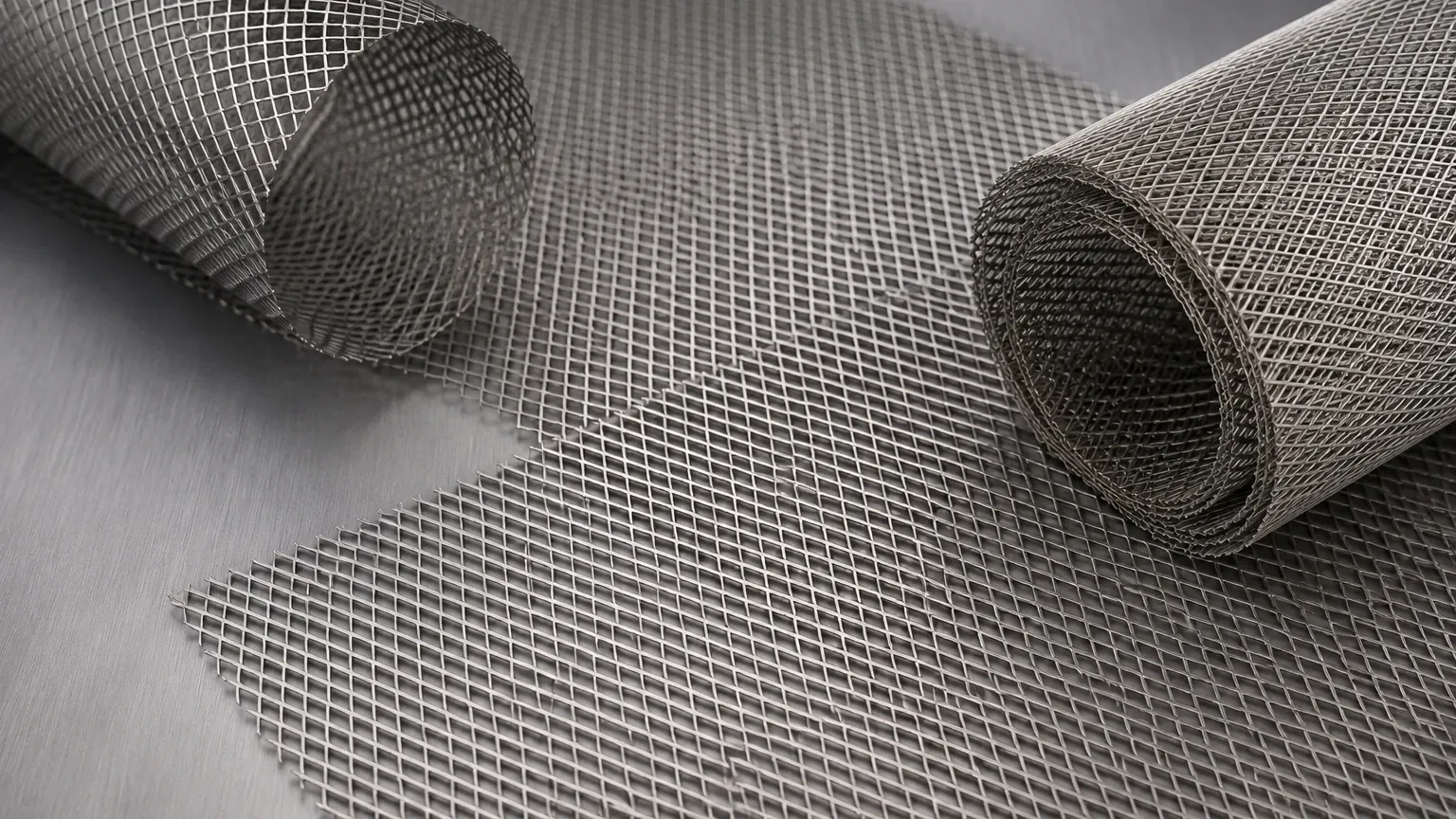
Fine expanded metal is produced through a simultaneous slitting and stretching process that transforms a solid metal sheet into a continuous, non-raveled mesh. The term "fine" typically refers to meshes with a Short Way of Design (SWD) measurement of less than 2mm, though the classification can vary based on the specific industry requirements.
Unlike woven wire mesh, which consists of individual wires interlaced together, fine expanded metal is a single-piece structure. There are no joints, welds, or intersections that can fray or loosen over time. This monolithic construction provides a high strength-to-weight ratio and ensures that the material maintains its shape even under significant mechanical stress or high-pressure flow conditions.
In the context of Perforated & Expanded Metal solutions, the "fine" designation implies a level of precision that rivals chemical etching or micro-perforation, but often at a more competitive price point due to the efficiency of the expansion process, which generates zero material waste.
The Manufacturing Process and Material Engineering
The production of fine expanded metal is a cold-working process. A solid sheet or coil of metal is fed through a machine equipped with precision-ground knives. These knives slit the metal at specific intervals while the machine stretches the material. The result is a diamond-shaped pattern (or other custom geometries) where the "bonds"—the points where the strands meet—remain part of the original solid metal.
Material Selection
For industrial filtration, material selection is the primary determinant of performance. Fine expanded metal can be manufactured from a wide variety of ductile metals:
* Stainless Steel (304, 316, 316L): The industry standard for filtration due to its excellent corrosion resistance and mechanical strength. SS316L is particularly favored in pharmaceutical and chemical processing due to its low carbon content and resistance to pitting.
* Aluminum: Used in lightweight applications, such as aerospace filtration or EMI shielding, where weight reduction is a critical KPI.
* Nickel and Monel: Reserved for highly corrosive environments or high-temperature applications where stainless steel may fail.
* Titanium: Utilized in specialized chemical processing and medical devices where biocompatibility or extreme chemical inertness is required.
Raised vs. Flattened Mesh
Engineers must choose between two primary finishes:
1. Raised (Standard): The mesh comes off the machine with the strands set at an angle to the plane of the sheet. This creates a three-dimensional surface that can enhance turbulence in filtration or provide better grip in mechanical applications.
2. Flattened: The raised mesh is passed through a cold-rolling mill, which flattens the strands back into the same plane as the original sheet. Flattened fine expanded metal is often preferred as a support layer for delicate filter membranes because it provides a smooth surface that reduces the risk of puncturing the media.
Key Technical Specifications for Engineers
When specifying fine expanded metal for a project, several geometric variables must be defined to ensure the material meets performance expectations.
SWD and LWD
* SWD (Short Way of Design): The distance from the center of one bond to the center of the next bond across the short axis of the diamond.
* LWD (Long Way of Design): The distance from the center of one bond to the center of the next bond across the long axis of the diamond.
These dimensions dictate the overall size of the apertures. In fine expanded metal, these measurements are often held to tolerances within microns to ensure consistent filtration accuracy.
Strand Width and Thickness
The strand width is the amount of metal slit by the knives, while the thickness refers to the gauge of the original base material. These two factors, combined with the SWD and LWD, determine the Open Area Percentage. The open area is a critical calculation for engineers as it directly impacts the pressure drop (delta P) across the filter and the flow velocity of the medium.
Structural Integrity and Cold Working
Because the expansion process involves cold-working the metal, the resulting mesh is often harder and stronger than the original base sheet. This increased yield strength is beneficial in high-pressure hydraulic applications where the filter component must resist deformation under pulsating loads.
Role of Fine Expanded Metal in Filtration Systems
In industrial filtration, fine expanded metal rarely acts as the primary filtration stage for sub-micron particles; instead, it serves several critical secondary roles that are vital to the system's total performance.
Support and Pleat Reinforcement
In pleated filter cartridges, the primary filter media (such as fiberglass, polyester, or PTFE) is often too fragile to withstand the pressure of the fluid flow on its own. Fine expanded metal is used as an inner and outer support cage. It maintains the pleat geometry, preventing the pleats from collapsing or "pinching off," which would reduce the effective filtration area and increase the pressure drop.
Pre-filtration and Coarse Particle Removal
Fine expanded metal can serve as a robust pre-filter in multi-stage systems. By capturing larger debris, it protects more expensive, high-efficiency downstream filters from premature clogging. This is common in water treatment and cooling water loops where large organic matter or scale must be removed before the water enters precision processing equipment.
Flow Distribution and Turbulence
The three-dimensional geometry of raised fine expanded metal can be used to manipulate fluid dynamics. In certain chemical reactors or electrochemical cells, the mesh is used to promote controlled turbulence, ensuring that the fluid is evenly distributed across the surface of a catalyst or electrode, thereby improving reaction efficiency.
Comparative Advantages: Expanded Metal vs. Woven Wire Mesh
While both materials are staples in the filtration industry, fine expanded metal offers distinct advantages in specific scenarios:
1. No Interstitial Migration: In woven mesh, individual wires can shift slightly under vibration or pressure, potentially changing the pore size. Fine expanded metal is a rigid, fixed structure where the aperture size remains constant throughout the component's lifecycle.
2. Cost Efficiency: The expansion process increases the surface area of the original sheet without adding weight. For example, one square meter of solid sheet can be expanded into three or four square meters of mesh. This makes it a more cost-effective solution than perforated metal (where the "holes" are punched out as waste) or heavy woven meshes.
3. Edge Stability: When cut to size, fine expanded metal does not unravel. This simplifies the manufacturing process for OEM filter builders, as they do not need to worry about loose wires contaminating the filtered fluid or complicating the welding/seaming process.
Critical Selection Criteria for Procurement and Engineering
To ensure the successful integration of fine expanded metal into an industrial project, the following criteria should be confirmed during the design phase:
Chemical and Thermal Compatibility
Verify that the chosen alloy can withstand the operating environment. For instance, if the filter will be cleaned using caustic chemicals or subjected to high-temperature steam sterilization (SIP) in a pharmaceutical application, SS316L or a high-nickel alloy is required to prevent stress corrosion cracking.
Pressure Drop (Delta P) Requirements
Engineers must balance the need for mechanical strength (thicker strands) with the need for high flow rates (larger open area). A common mistake is over-specifying the thickness, which can lead to an unacceptable pressure drop and increased energy consumption by the system's pumps.
Fabrication Compatibility
Consider how the mesh will be integrated into the final assembly. Fine expanded metal is highly compatible with resistance welding, TIG welding, and mechanical flanging. However, the thickness and strand width must be compatible with the production equipment used by the OEM manufacturer.
Customization and OEM Capabilities
At Kaifil, the focus is on providing tailored filtration solutions that meet the specific demands of diverse industries. Fine expanded metal is rarely a "one-size-fits-all" product. Customization options include:
* Variable Aperture Shapes: While diamond is standard, hexagonal or square-like openings can be engineered to meet specific flow characteristics.
* Precision Slitting: Providing the mesh in exact widths for automated filter production lines, reducing scrap and handling time for the end-user.
* Surface Treatments: Options such as electro-polishing, passivating, or coating can be applied to enhance corrosion resistance or reduce surface friction.
By working closely with an experienced manufacturer, engineers can develop Perforated & Expanded Metal components that are optimized for their specific housing designs and performance targets.
Performance Evaluation and Maintenance
The total cost of ownership (TCO) of a filtration system is heavily influenced by the durability of its components. Fine expanded metal contributes to a lower TCO through its longevity and ease of maintenance.
Cleaning and Reuse
Unlike disposable synthetic media, stainless steel fine expanded metal is often cleanable. Depending on the contaminant, methods such as ultrasonic cleaning, backwashing, or chemical soaking can restore the mesh to near-original performance levels. This is particularly valuable in high-volume industrial processes where frequent filter replacement would be cost-prohibitive.
Monitoring Replacement Cycles
While the metal mesh itself is durable, it should be inspected regularly for signs of erosion or mechanical fatigue, especially in high-velocity gas streams or abrasive slurry applications. A sudden drop in filtration efficiency or an unexplained change in pressure differential often indicates that the support structure or the media it protects has reached the end of its service life.
Conclusion
Fine expanded metal is a sophisticated material that offers a unique combination of structural strength, precision, and economic value. Whether used as a support structure in a high-pressure hydraulic filter or as a specialized component in a chemical reactor, its monolithic design provides reliability that woven materials often cannot match.
For technical professionals, the key to success lies in the precise specification of material grade, open area, and mechanical finish. By understanding these variables and partnering with a manufacturer capable of high-precision customization, industrial operations can achieve optimized filtration performance and improved system reliability.
