


Grill Expanded Metal
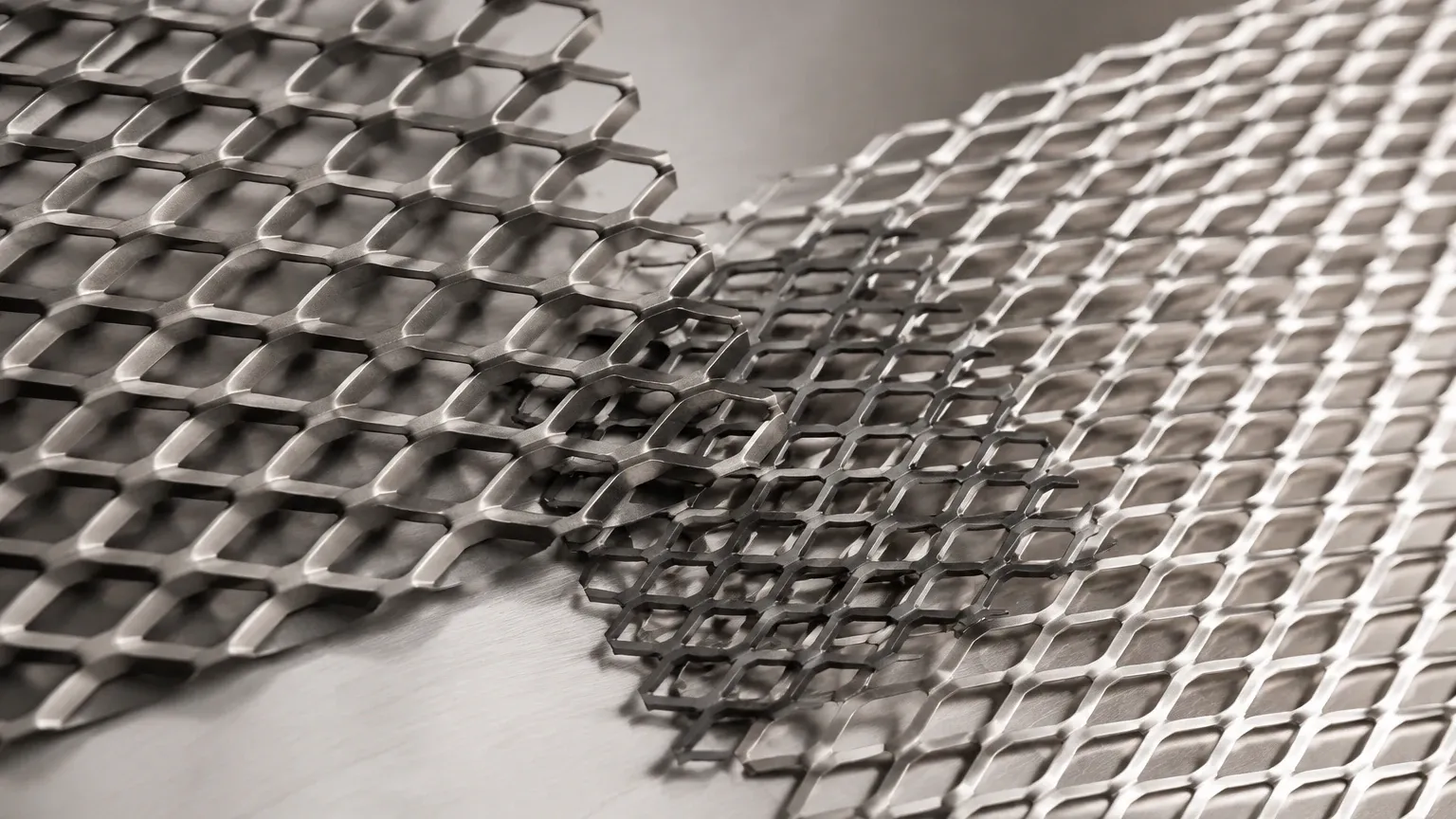
In industrial engineering and manufacturing, the selection of structural and filtration components requires a deep understanding of material properties, mechanical integrity, and application-specific requirements. Grill expanded metal, a specialized form of expanded metal mesh, serves as a critical component in diverse sectors ranging from chemical processing to heavy machinery guarding. Unlike woven wire mesh or perforated sheets, expanded metal is produced through a unique process of slitting and stretching, resulting in a continuous, jointless structure that offers exceptional strength-to-weight ratios.
For engineers and procurement professionals, choosing the right Perforated & Expanded Metal involves evaluating more than just the dimensions of the openings. It requires an analysis of material compatibility, structural load-bearing capacity, and the specific environmental stressors the component will face. This guide provides a technical overview of grill expanded metal, its manufacturing nuances, and the criteria essential for selecting high-performance filtration and protection solutions.
The Manufacturing Process: Slitting and Stretching
Grill expanded metal is manufactured from a single solid sheet of metal, typically stainless steel, carbon steel, or aluminum. The production process involves an expanding machine that simultaneously slits and cold-stretches the metal. This mechanical expansion creates diamond-shaped openings, although hexagonal and square patterns are also achievable through specialized tooling.
One of the primary advantages of this process is that it produces no scrap material. Unlike perforated metal, where the "slugs" are punched out and discarded (or recycled), expanded metal uses the entirety of the base material. This makes it a highly cost-effective solution for large-scale industrial applications. Furthermore, because the metal is stretched rather than woven, the resulting mesh is a single piece of material with no joints or welds that could fail under vibration or thermal cycling.
Standard vs. Flattened Expanded Metal
When specifying grill expanded metal for industrial use, engineers must choose between two primary forms:
1. Standard (Raised) Expanded Metal: In this form, the strands and bonds are set at a uniform angle to the plane of the sheet. This creates a 3D texture that provides excellent grip (for walkways) and high structural rigidity. In filtration, the raised profile can help create turbulence, which may be desirable in certain fluid dynamics applications.
2. Flattened Expanded Metal: This is standard expanded metal that has been cold-rolled through a flattening mill. The process reduces the thickness of the sheet and creates a smooth, flat surface. Flattened mesh is often preferred for safety grills, machine guards, and as a support substrate for finer filter media, as it prevents abrasion and ensures a uniform contact surface.
Technical Terminology and Specifications
To accurately procure grill expanded metal, it is essential to use standardized industry terminology. Miscommunication in specifications can lead to components that do not fit or fail to meet filtration requirements.
* SWD (Short Way of Design): The distance from the center of one bond to the center of the next bond measured across the short diamond diagonal.
* LWD (Long Way of Design): The distance from the center of one bond to the center of the next bond measured across the long diamond diagonal.
* SWO (Short Way of Opening): The actual width of the opening, measured from the inside of the strands.
* LWO (Long Way of Opening): The actual length of the opening, measured from the inside of the strands.
* Strand Width: The amount of metal fed into the machine for each slit.
* Strand Thickness: The thickness of the original base metal sheet.
* Open Area: Calculated as a percentage, this determines the flow rate for air or liquids and the visibility through the mesh.
Material Selection for Demanding Environments
As a specialist in custom stainless steel filtration, Kaifil emphasizes the importance of material grade in the longevity of grill expanded metal. While carbon steel is suitable for dry, non-corrosive environments, most industrial B2B applications require the superior properties of stainless steel.
Stainless Steel 304/304L
This is the most common grade for industrial grills. It offers excellent corrosion resistance and is suitable for most food processing and general industrial environments. It provides a balance of cost and performance for applications that do not involve high concentrations of chlorides.
Stainless Steel 316/316L
For chemical processing, marine environments, or pharmaceutical applications, SS316L is the industry standard. The addition of molybdenum provides enhanced resistance to pitting and crevice corrosion, particularly in environments where the grill expanded metal is exposed to saline solutions or aggressive cleaning agents.
High-Temperature Alloys
In applications involving industrial furnaces or exhaust systems, specialized alloys like Monel or Inconel may be required. These materials maintain their mechanical strength and oxidation resistance at temperatures where standard stainless steel would suffer from scaling or structural failure.
Industrial Applications of Grill Expanded Metal
The versatility of expanded metal allows it to function as both a structural element and a functional filtration component. In many B2B scenarios, it serves multiple roles simultaneously.
1. Filtration Support and Reinforcement
In high-pressure hydraulic systems or large-scale chemical filters, fine wire mesh or pleated paper media lacks the structural integrity to withstand the differential pressure. Grill expanded metal is used as an internal core or an external cage to provide the necessary support. Its rigid structure prevents the filter media from collapsing or deforming under flow surges.
2. Machine Guarding and Personnel Safety
Industrial safety grills must be robust enough to withstand impacts while allowing for visibility and airflow. Expanded metal is ideal for this purpose. Because the mesh is made from a single piece of metal, it cannot be unraveled like woven wire. If a single strand is cut, the rest of the structure remains intact, maintaining the safety barrier.
3. Ventilation and Heat Dissipation
In electronics enclosures and heavy equipment housings, grill expanded metal provides a high open-area percentage for heat dissipation while preventing the ingress of large debris. The angular nature of the strands in raised expanded metal can also be used to deflect light or directional sprays, providing an added layer of protection for internal components.
4. Architectural and Acoustic Panels
Beyond purely functional roles, expanded metal is used in industrial architecture for sunscreens, ceiling panels, and acoustic damping. When used as a grill in acoustic applications, it protects the underlying sound-absorbing material while allowing sound waves to pass through with minimal reflection.
Evaluation Criteria for Engineering and Procurement
When evaluating suppliers for Perforated & Expanded Metal products, technical teams should focus on several key quality indicators to ensure the final product meets the rigors of industrial use.
Dimensional Tolerance
Industrial filtration systems often have tight tolerances for component fitment. It is vital to confirm that the supplier can maintain consistent LWD and SWD measurements across the entire sheet. Variations in expansion can lead to uneven open areas, which affects flow dynamics and filtration efficiency.
Surface Finish and Deburring
The expansion process can leave sharp edges or burrs at the bond points. For applications in the food, beverage, or pharmaceutical industries, these burrs are unacceptable as they can harbor bacteria or contaminate the process stream. High-quality grill expanded metal should undergo secondary processes such as deburring, pickling, or electropolishing to ensure a smooth, clean surface.
Flatness and Camber
For large panels used in safety grills or walkways, the flatness of the sheet is critical for installation. "Camber" refers to the bow in a sheet of expanded metal. Procurement teams should specify the maximum allowable camber to ensure that the panels can be easily welded or bolted into frames without excessive force.
Customization and OEM Solutions
Standard off-the-shelf expanded metal rarely meets the specific needs of complex industrial systems. Customization is often required in terms of material thickness, diamond size, and overall panel dimensions. As a professional manufacturer, Kaifil works with engineering teams to develop bespoke filtration components that integrate seamlessly into existing hardware.
Customization options include:
* Specific Open Area Ratios: Tailoring the mesh to meet exact pressure drop requirements.
* Edge Treatments: Providing solid borders (unexpanded areas) on the edges of the sheet to facilitate easier welding and mounting.
* Forming and Shaping: Supplying expanded metal already rolled into cylinders or bent into specific profiles for filter cartridges.
Total Cost of Ownership Considerations
While the initial purchase price is a factor, the total cost of ownership (TCO) is a more accurate metric for industrial components. Investing in high-quality stainless steel grill expanded metal reduces the frequency of replacement cycles caused by corrosion or mechanical fatigue. In filtration applications, a more rigid support structure can extend the life of expensive primary filter media by preventing mechanical stress and bypass leaks.
Furthermore, the ease of cleaning should be considered. In the food and beverage industry, the ability to thoroughly sanitize a stainless steel grill through CIP (Clean-in-Place) processes reduces downtime and ensures compliance with safety standards.
Technical Confirmation Before Purchase
Before finalizing a purchase order for grill expanded metal, engineers should confirm the following technical details with their manufacturer:
1. Material Certification: Ensure the material meets ASTM or ISO standards for the specified grade (e.g., SS316L).
2. Direction of Expansion: Confirm whether the LWD runs parallel or perpendicular to the length of the sheet, as this affects the structural strength and how the material will be cut.
3. Load Requirements: If the grill is to be used as a load-bearing surface, provide the manufacturer with the expected weight and span to determine the necessary strand thickness and width.
4. Environmental Exposure: Disclose if the material will be exposed to high temperatures, cryogenic conditions, or specific chemical concentrations.
By addressing these factors, purchasing teams can ensure they receive a product that is not only cost-effective but also engineered for the specific demands of their industrial application. Whether used for precision filtration support or robust machine guarding, grill expanded metal remains a cornerstone of modern industrial design due to its durability and versatility.
