


Gi Expanded Metal Mesh
In industrial engineering and filtration design, material selection is dictated by the balance between structural integrity, corrosion resistance, and cost-efficiency. Galvanized Iron (GI) expanded metal mesh represents a versatile solution that addresses these requirements across a broad spectrum of applications. Unlike woven wire mesh or perforated sheets, expanded metal is produced through a unique process of slitting and stretching, resulting in a continuous piece of metal with no joins or welds. When this process is applied to galvanized steel, the resulting product offers enhanced longevity in environments where moisture and oxidation are prevalent.
For engineers and procurement specialists, understanding the technical nuances of gi expanded metal mesh is essential for optimizing filtration systems and structural components. This article provides a technical overview of the material properties, manufacturing specifications, and selection criteria necessary for industrial implementation.
Understanding the Manufacturing Process and Material Composition
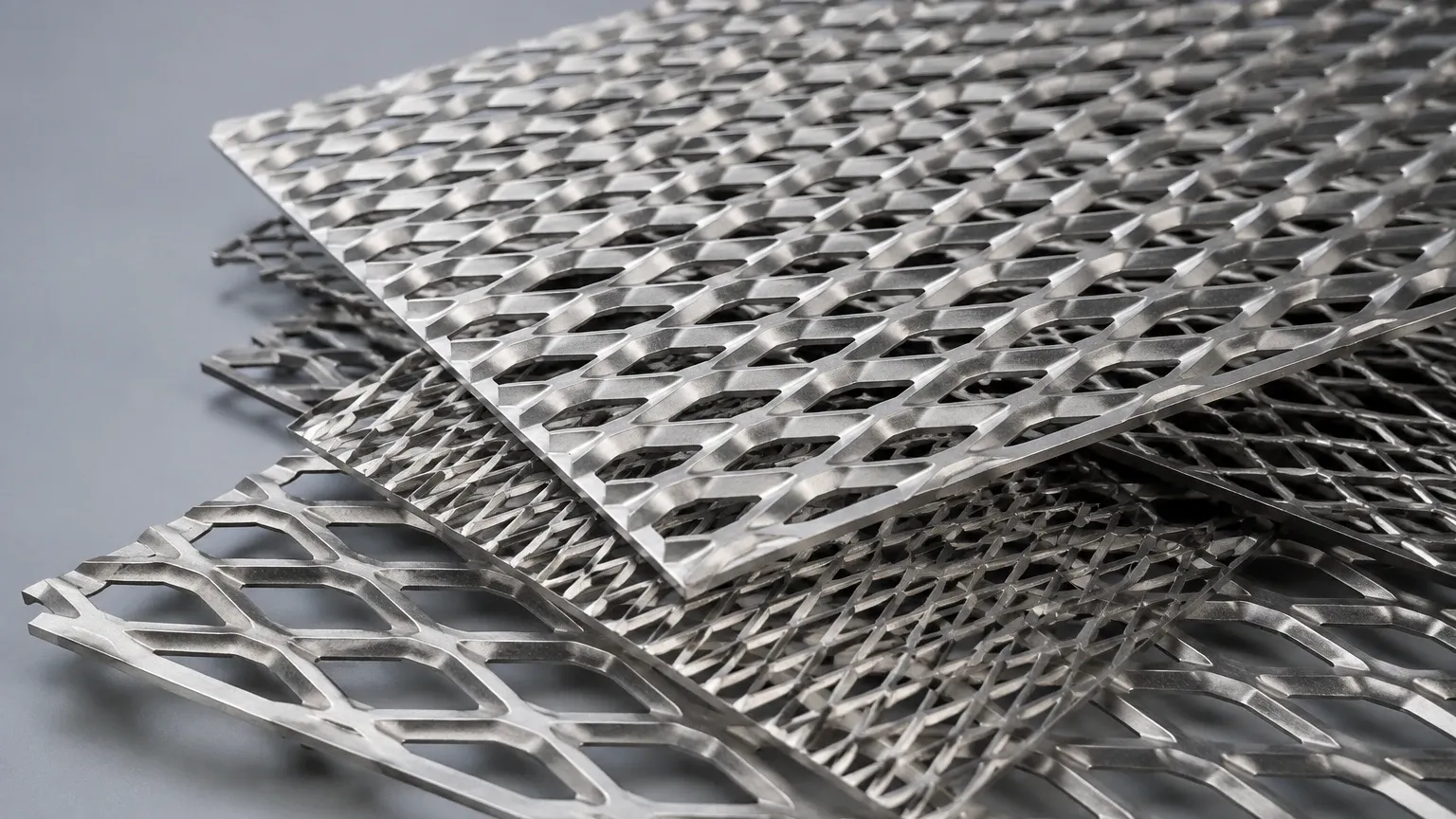
GI expanded metal mesh is typically manufactured from low-carbon steel sheets that have undergone a galvanization process. The term "expanded" refers to the mechanical method where a metal sheet is simultaneously slit and cold-stretched. This process creates diamond-shaped openings, although hexagonal and square patterns are also possible depending on the tooling used.
Because the metal is stretched rather than punched, there is virtually no material waste during production. This makes expanded metal a more sustainable and cost-effective alternative to Perforated & Expanded Metal options that involve removing material to create holes. The resulting mesh is a single, solid piece of material, which ensures excellent strength-to-weight ratios and electrical conductivity.
Galvanization Methods: Hot-Dip vs. Electro-Galvanized
The "GI" designation signifies that the steel has been coated with a layer of zinc to prevent rusting. There are two primary methods used in the production of these meshes:
1. Hot-Dip Galvanizing: The steel is immersed in a bath of molten zinc. This creates a thick, robust coating that metallurgically bonds with the steel. Hot-dip GI mesh is preferred for outdoor applications, heavy-duty industrial filtration, and environments with high humidity or exposure to the elements.
2. Electro-Galvanizing (Zinc Plating): A thinner layer of zinc is applied through an electrolytic process. This results in a smoother, more aesthetically uniform finish. While it offers less corrosion resistance than hot-dip galvanizing, it is often sufficient for indoor industrial equipment, light filtration components, and applications where precise tolerances are required.
Key Technical Specifications for Engineering Selection
When specifying gi expanded metal mesh for a project, engineers must define several critical parameters to ensure the material performs as expected under operational loads and flow conditions. The following terms are standard in the industry:
* SWD (Short Way of Design): The distance from the center of one bond to the center of the next bond measured across the short diamond diagonal.
* LWD (Long Way of Design): The distance from the center of one bond to the center of the next bond measured across the long diamond diagonal.
* SWO (Short Way of Opening): The actual width of the opening measured across the short diagonal.
* LWO (Long Way of Opening): The actual length of the opening measured across the long diagonal.
* Strand Width: The amount of metal fed into the machine between the slits.
* Strand Thickness: The thickness of the original base metal sheet.
These dimensions determine the "open area" percentage of the mesh. In filtration, the open area is a primary factor in calculating pressure drop and flow rate. A higher open area allows for greater throughput but may reduce the structural rigidity of the mesh. Conversely, a smaller open area provides better support for fine filter media but increases resistance to flow.
The Role of GI Expanded Metal in Industrial Filtration
In the context of industrial filtration, GI expanded metal mesh is rarely used as the primary fine-filtration layer. Instead, it serves critical roles in the assembly of complex filter cartridges and systems. Its primary functions include:
1. Structural Support and Reinforcement
In high-pressure hydraulic or air filtration systems, fine stainless steel wire mesh or synthetic media can collapse under the force of the fluid flow. GI expanded metal is used as an inner or outer support core (support tube) to maintain the shape of the filter element. Its rigid structure prevents the pleats of a filter from bunching together, ensuring that the entire surface area of the filter media remains active.
2. Coarse Pre-Filtration
For systems dealing with large debris, such as industrial HVAC units or water intake screens, GI expanded metal acts as a pre-filter. It captures large particulates that would otherwise clog or damage more sensitive downstream filtration components. The zinc coating is particularly valuable here, as these initial stages of filtration are often exposed to raw, untreated fluids.
3. Media Protection
In many industrial environments, filter elements are subject to mechanical impact during installation or cleaning. An outer wrap of expanded metal protects the delicate internal filtration layers from physical damage, extending the service life of the overall component.
Comparing Expanded Metal with Perforated Metal
Engineers often choose between expanded and perforated metal for filtration housing and support. While both fall under the category of Perforated & Expanded Metal, they offer different mechanical advantages.
* Material Integrity: Expanded metal is a continuous piece. If a single strand is cut, the rest of the mesh remains intact. In some perforated designs, the structural integrity depends heavily on the "bridge" between holes.
* Weight: For the same thickness and open area, expanded metal is typically lighter than perforated metal because the stretching process increases the area covered by the original sheet.
* Grip and Surface Area: The raised edges of "standard" (unflattened) expanded metal provide a high surface area, which can be beneficial in certain catalytic or heat-exchange applications, though it may increase turbulence in fluid flow compared to the flat surface of perforated metal.
Evaluation Criteria for B2B Procurement
When sourcing gi expanded metal mesh, purchasing teams should confirm several factors with the manufacturer to ensure the product meets industrial standards:
Flattened vs. Raised Mesh
Expanded metal comes in two forms. Raised (Standard) mesh has strands that are turned at an angle to the plane of the sheet. This provides maximum rigidity. Flattened mesh is passed through a cold-rolling mill after expansion, resulting in a smooth, flat surface. Flattened mesh is often preferred for filter support where a smooth interface with the filter media is required to prevent abrasion.
Coating Thickness and Quality
For GI products, the weight of the zinc coating (often measured in grams per square meter or ounces per square foot) is a key indicator of longevity. Procurement should specify the environment (e.g., C3 or C4 corrosion categories) to ensure the galvanization is sufficient. Furthermore, the mesh should be inspected for "zinc tears" or sharp burrs that could damage secondary filter layers.
Dimensional Tolerances
In precision OEM manufacturing, tolerances for SWD, LWD, and overall sheet flatness are vital. Inconsistent diamond sizes can lead to uneven flow distribution in a filter cartridge, potentially causing premature failure of the media.
Maintenance, Durability, and Total Cost of Ownership
One of the primary reasons for selecting GI expanded metal over untreated carbon steel is the reduction in maintenance costs. The sacrificial zinc layer protects the underlying steel from corrosion, which is particularly important in "wet" filtration cycles or wash-down environments.
However, it is important to note that GI mesh has limitations. In highly acidic or alkaline environments, the zinc coating can strip away rapidly. In such cases, engineers should consider upgrading to stainless steel filtration components. For standard industrial applications, however, GI expanded metal provides an excellent balance of performance and cost, often lasting several filter replacement cycles before the support structure itself needs to be decommissioned.
Customization and OEM Capabilities
Industrial filtration requirements are rarely one-size-fits-all. Manufacturers like Kaifil provide customized solutions where the gi expanded metal mesh is tailored to specific dimensions, mesh patterns, and material grades. Customization options often include:
* Custom Slitting: Providing the mesh in specific widths to fit automated filter assembly lines.
* Cylindrical Forming: Pre-rolling the mesh into tubes for use as filter cores.
* Specialized Coatings: Adding powder coating or additional treatments over the galvanization for extra chemical resistance.
By working closely with a manufacturer that understands both the mechanical properties of expanded metal and the complexities of industrial filtration, engineers can ensure that their systems operate at peak efficiency with minimal downtime.
Conclusion
GI expanded metal mesh is a fundamental component in the industrial landscape, offering a unique combination of strength, permeability, and corrosion resistance. Whether used as a protective outer wrap, a structural support core, or a coarse pre-filter, its role in maintaining the efficiency of filtration systems is indispensable. By carefully evaluating the galvanization method, diamond dimensions, and physical configuration (flattened vs. raised), technical professionals can select the optimal mesh to meet their specific application demands while controlling costs.
