


Gi Expanded Metal
In the landscape of industrial filtration and structural engineering, material selection is dictated by the balance between mechanical performance, environmental resistance, and cost-efficiency. Galvanized Iron (GI) expanded metal represents a critical solution for engineers and procurement teams seeking durable, high-strength components for filtration support, safety guarding, and architectural applications. Unlike traditional woven wire mesh or perforated sheets, gi expanded metal is manufactured through a unique process that maximizes material integrity while minimizing waste.
As a specialized manufacturer, Kaifil provides precision-engineered Perforated & Expanded Metal solutions tailored to the rigorous demands of chemical processing, hydraulic systems, and industrial filtration. Understanding the technical nuances of GI expanded metal—from its metallurgical properties to its structural geometry—is essential for optimizing system performance and extending the service life of filtration components.
The Manufacturing Process of GI Expanded Metal
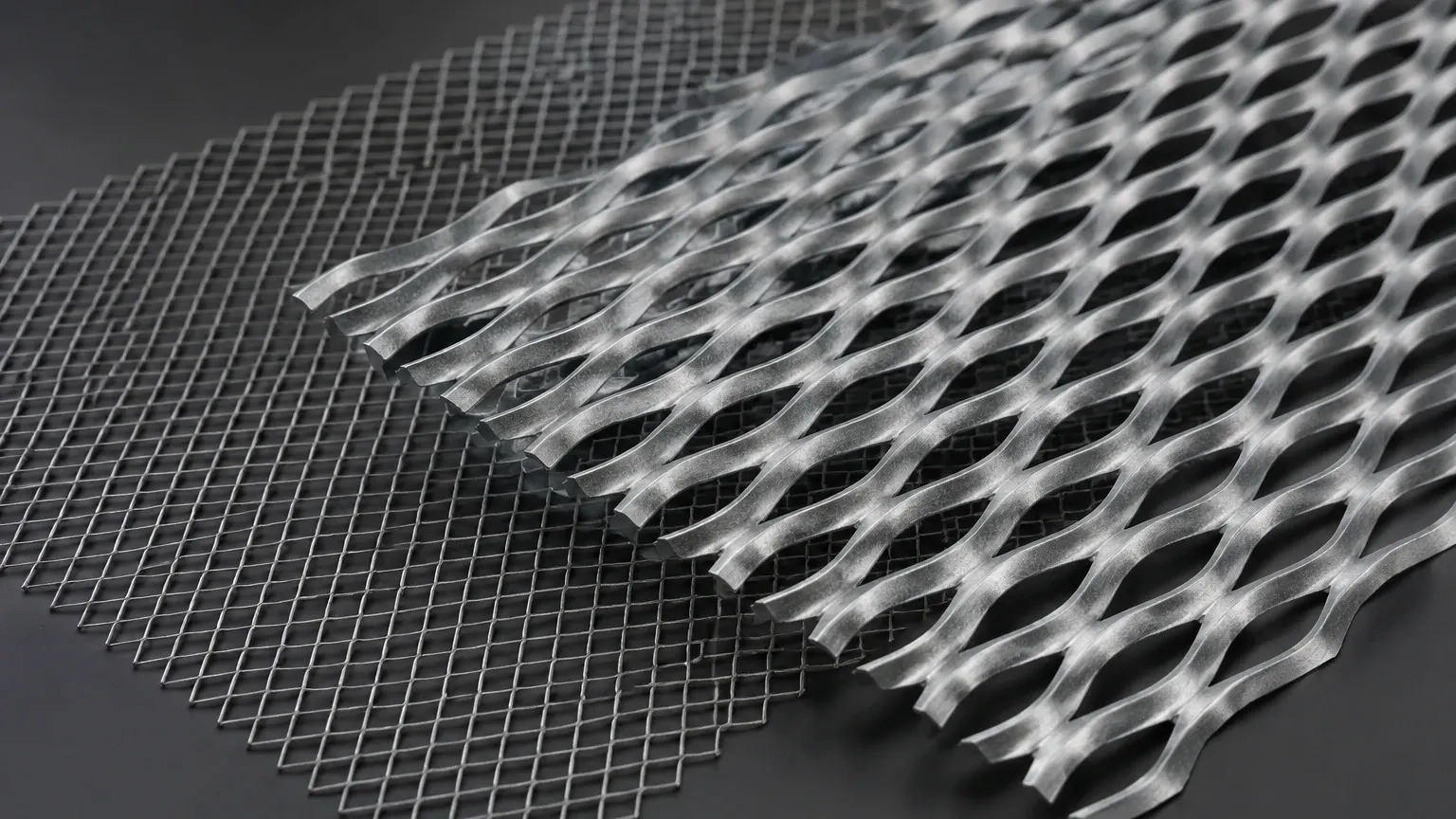
The production of expanded metal is a cold-forming process that distinguishes it from other metal fabrication methods. The process begins with a solid sheet of galvanized steel or iron, which is simultaneously slit and stretched by a set of reciprocating blades. This action creates a series of diamond-shaped openings while maintaining the continuity of the metal.
Slitting and Stretching
Because the metal is stretched rather than punched, there is virtually no scrap material produced during manufacturing. This makes expanded metal more cost-effective than perforated metal, where the "slugs" or punched-out circles represent wasted material and energy. In the context of gi expanded metal, the base material is typically a low-carbon steel sheet that has undergone a galvanization process prior to or after expansion.
Standard vs. Flattened Expanded Metal
Engineers must specify whether the application requires "Standard" (raised) or "Flattened" expanded metal:
1. Standard Expanded Metal: This is the product as it comes off the expansion machine. The strands and bonds are set at a uniform angle to the plane of the sheet. This provides extra strength and rigidity, as well as a slip-resistant surface. In filtration, the raised profile can create turbulence, which may be desirable in certain fluid dynamics scenarios.
2. Flattened Expanded Metal: The standard expanded metal is passed through a cold-roll reducing mill. This flattens the strands and bonds into a single plane, resulting in a smooth, flat surface. Flattened GI expanded metal is often preferred when the material serves as a support layer for delicate filter media, such as fine wire mesh or synthetic membranes, to prevent abrasion or puncturing.
Technical Specifications and Geometry
To accurately specify gi expanded metal for an industrial project, technical professionals must use standardized terminology. The geometry of the diamond opening determines the flow rate, pressure drop, and structural load capacity.
* SWD (Short Way of Design): The distance from the center of one bond to the center of the next bond measured across the short diamond diagonal.
* LWD (Long Way of Design): The distance from the center of one bond to the center of the next bond measured across the long diamond diagonal.
* SWO (Short Way of Opening): The clear distance between the inside edges of the diamond across the short diagonal.
* LWO (Long Way of Opening): The clear distance between the inside edges of the diamond across the long diagonal.
* Strand Thickness: The thickness of the base metal used to produce the sheet.
* Strand Width: The amount of metal fed into the machine for each slit-and-stretch cycle.
By adjusting these parameters, Kaifil can customize the percentage of open area to meet specific filtration requirements. For instance, a higher open area reduces pressure drop in hydraulic filters, while a smaller opening size provides better mechanical support for filter cartridges.
The Importance of the Galvanized Coating
The "GI" in gi expanded metal refers to the galvanization process, which is the application of a protective zinc coating to steel or iron. This coating is the primary defense against corrosion, which is a frequent challenge in industrial environments involving moisture, chemicals, or outdoor exposure.
Hot-Dip Galvanizing vs. Electro-Galvanizing
There are two primary methods for producing galvanized expanded metal, each offering different levels of protection:
* Hot-Dip Galvanizing: The expanded metal sheet is submerged in a bath of molten zinc. This creates a thick, robust metallurgical bond between the zinc and the steel. Hot-dip galvanizing is preferred for harsh industrial environments because it covers the edges created during the slitting process, ensuring no bare steel is exposed to the elements.
* Electro-Galvanizing (Zinc Plating): A thinner layer of zinc is applied through an electrolytic process. While this provides a smoother finish and better dimensional tolerances, it offers less corrosion resistance than hot-dip galvanizing. It is typically used for indoor applications or components that will be further coated or painted.
For filtration applications, the zinc coating provides cathodic protection. If the coating is scratched, the surrounding zinc will corrode preferentially to the underlying steel, maintaining the structural integrity of the filter cage or support tube.
Applications in Industrial Filtration and Beyond
While gi expanded metal is used in construction and security, its role in industrial filtration is where technical precision is most critical. It serves as the backbone for many complex filtration systems.
Filter Media Support and Caging
In high-pressure hydraulic systems or heavy-duty air intake filters, the primary filter media (such as fiberglass or paper) lacks the structural strength to withstand the differential pressure. GI expanded metal is rolled into cylinders to form internal support cores or external cages. The diamond pattern provides a high strength-to-weight ratio, ensuring the filter does not collapse under load while allowing maximum fluid throughput.
Pre-Filtration and Debris Shielding
In water treatment and HVAC systems, expanded metal acts as a primary barrier against large particulates. Its rigid structure allows it to capture debris like leaves, scale, or stones before they reach the finer, more expensive filtration stages. The use of Perforated & Expanded Metal in these roles significantly reduces the maintenance frequency of the entire system.
Safety Guarding and Ventilation
Beyond filtration, GI expanded metal is used for machine guards and ventilation panels. In chemical processing plants, it allows for airflow and heat dissipation while preventing personnel from coming into contact with moving parts or hot surfaces. The galvanized coating ensures these guards remain functional even in humid or corrosive atmospheres.
Comparing GI Expanded Metal with Other Materials
When designing a filtration component, engineers often weigh the benefits of GI expanded metal against stainless steel or aluminum alternatives.
| Feature | GI Expanded Metal | Stainless Steel (304/316) | Aluminum |
| :— | :— | :— | :— |
| Corrosion Resistance | Moderate to High (Zinc-dependent) | Excellent | High (Natural Oxide) |
| Cost | Low to Moderate | High | Moderate |
| Strength | High | Very High | Moderate |
| Weight | Moderate | High | Low |
| Weldability | Good (Requires zinc removal) | Excellent | Specialized |
Gi expanded metal is often the "middle ground" solution. It provides significantly better corrosion resistance than plain carbon steel at a fraction of the cost of stainless steel. For large-scale industrial projects where hundreds of filter units are required, the cost savings of using galvanized materials can be substantial without compromising the required 5-to-10-year service life in non-acidic environments.
Engineering Considerations for Selection
Selecting the right gi expanded metal requires a thorough analysis of the operating environment and mechanical stresses. Engineers should confirm the following data points before procurement:
1. Chemical Compatibility: While zinc is excellent for resisting moisture and alkaline conditions, it can react poorly with strong acids or certain sulfur compounds. In such cases, a move to stainless steel may be necessary.
2. Load Requirements: If the expanded metal is used as a walkway or a high-pressure support core, the LWD should be oriented perpendicular to the direction of the load to maximize structural rigidity.
3. Percentage of Open Area: This is calculated based on the strand width and the diamond dimensions. A higher open area reduces the "clean" pressure drop across the filter but reduces the mechanical strength of the sheet.
4. Edge Conditions: Expanded metal can be supplied with "random sheared" edges (where the diamonds are cut mid-pattern) or "bond sheared" edges (where the cut follows the solid bond). Bond shearing is safer for handling and provides a cleaner edge for welding into frames.
Quality Assurance and Customization at Kaifil
At Kaifil, we recognize that industrial filtration components must meet exacting tolerances. Our manufacturing process for gi expanded metal emphasizes consistency in strand width and diamond uniformity. This precision ensures that when the metal is rolled into filter cartridges, the seam alignment is perfect, and the filtration performance is predictable.
We offer extensive customization options, including specific zinc coating thicknesses to meet ASTM standards and custom diamond sizes for unique flow requirements. By integrating our expertise in Perforated & Expanded Metal with our broader capabilities in stainless steel filtration, we provide engineers with the technical support needed to select the most cost-effective and durable materials for their specific applications.
In summary, gi expanded metal is an indispensable material in the B2B industrial sector. Its combination of structural strength, economical production, and corrosion resistance through galvanization makes it a preferred choice for filtration support and industrial protection. By understanding the geometric specifications and material properties, purchasing teams and engineers can ensure they are implementing solutions that optimize both performance and total cost of ownership.
