


Galvanized Expanded Metal Sheet
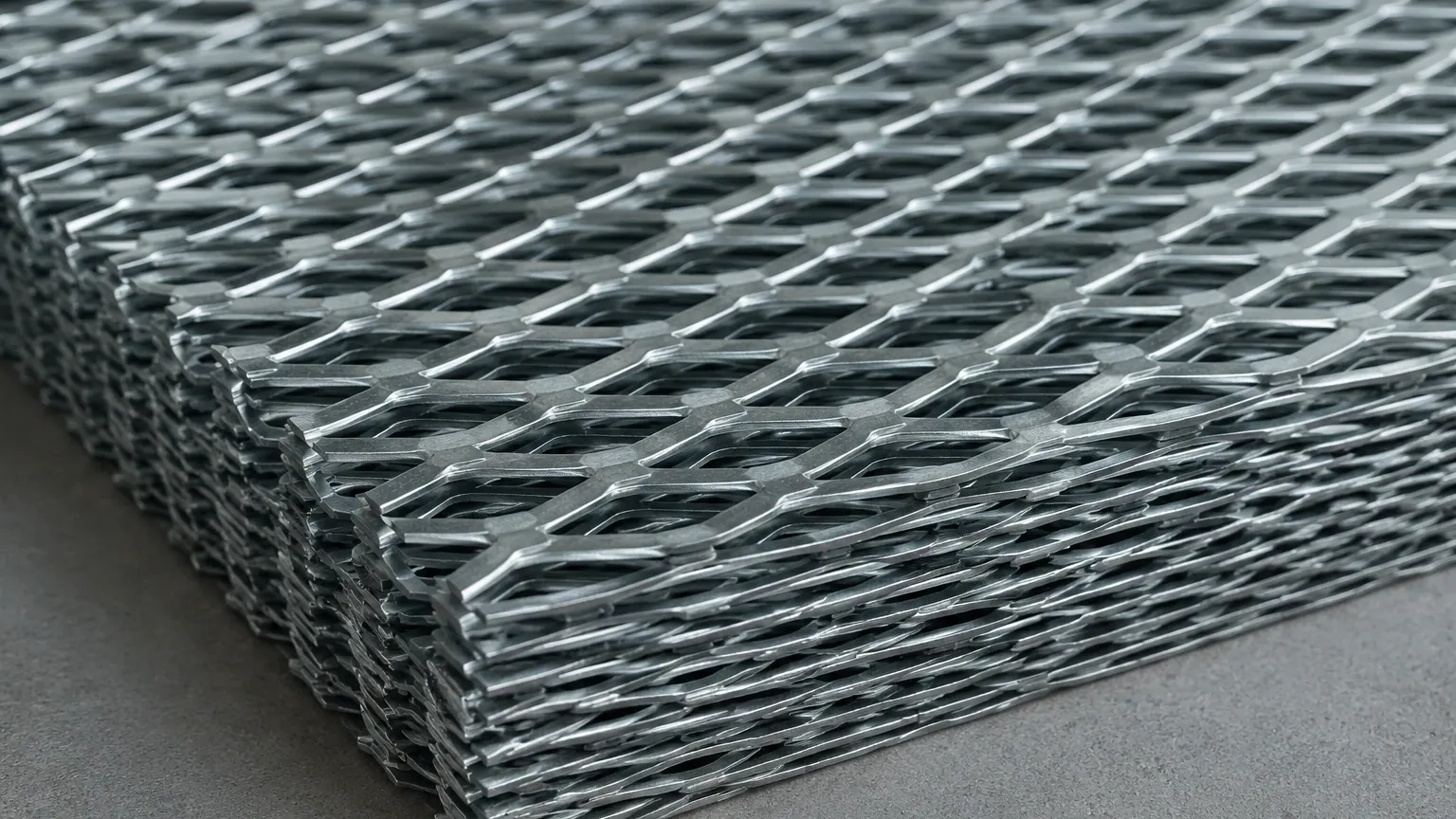
In industrial filtration and structural engineering, the selection of base materials determines the longevity and efficiency of the entire system. The galvanized expanded metal sheet is a versatile component widely utilized for its unique combination of structural rigidity, open area for fluid flow, and enhanced corrosion resistance. Unlike traditional woven wire mesh, expanded metal is manufactured through a process of slitting and stretching a solid metal sheet, creating a seamless, one-piece structure that maintains its integrity even under significant mechanical stress.
For engineers and procurement specialists, understanding the technical nuances of galvanized expanded metal is essential for optimizing filtration performance and minimizing the total cost of ownership. This guide explores the engineering specifications, manufacturing processes, and application considerations for utilizing Perforated & Expanded Metal in demanding industrial environments.
Understanding the Manufacturing and Structure of Expanded Metal
The production of an expanded metal sheet is an exercise in material efficiency. A solid sheet of metal—typically carbon steel—is fed through a machine that simultaneously slits and stretches the material. This process expands the sheet into a diamond-shaped pattern without any loss of material, making it a cost-effective alternative to perforated metals where waste is generated during the punching process.
The Geometry of the Mesh
In technical documentation, expanded metal is defined by several key geometric parameters:
* SWD (Short Way of Design): The distance from the center of one bond to the center of the next bond across the short diamond diagonal.
* LWD (Long Way of Design): The distance across the long diamond diagonal.
* Strand Width: The amount of metal fed into the dies for each stroke.
* Strand Thickness: The thickness of the base metal sheet.
There are two primary forms of expanded metal: standard (raised) and flattened. Standard expanded metal features strands that are turned at an angle to the plane of the sheet, providing maximum strength and a high strength-to-weight ratio. Flattened expanded metal undergoes an additional cold-rolling process to create a smooth, level surface, which is often preferred in applications where the filter media (such as fine wire mesh or synthetic fabric) must sit flush against the support structure to prevent abrasion.
The Role of Galvanization in Industrial Durability
While carbon steel provides excellent mechanical strength, it is highly susceptible to oxidation in industrial environments. To mitigate this, a galvanized expanded metal sheet receives a protective zinc coating. This coating serves as a sacrificial anode, protecting the underlying steel from moisture, chemicals, and atmospheric corrosion.
Hot-Dip Galvanizing vs. Electro-Galvanizing
For industrial filtration applications, the method of galvanization is a critical selection factor:
1. Hot-Dip Galvanizing (HDG): The expanded metal is submerged in a bath of molten zinc. This creates a thick, multi-layered coating of zinc-iron alloys that are metallurgically bonded to the steel. HDG is preferred for outdoor use, hydraulic systems, and water treatment applications where the mesh is exposed to constant moisture or abrasive particles.
2. Electro-Galvanizing: A thinner layer of zinc is applied via an electrolytic process. While this provides a smoother finish and better dimensional tolerances, the corrosion resistance is significantly lower than hot-dip galvanizing. It is generally reserved for indoor applications or as a temporary protective measure during transport and storage.
In the context of Perforated & Expanded Metal, hot-dip galvanization ensures that the edges created during the slitting process are fully encapsulated, preventing "edge creep" corrosion that can lead to structural failure in high-pressure filtration systems.
Engineering Specifications for Filtration Applications
In filtration, the galvanized expanded metal sheet primarily serves as a support substrate or a primary coarse filter. Engineers must balance the need for structural support with the requirement for low pressure drop.
Mechanical Strength and Pressure Resistance
In high-viscosity fluid filtration or high-pressure hydraulic systems, the filter media can collapse if not properly supported. Expanded metal provides superior rigidity compared to woven mesh. The interconnected strands distribute mechanical loads evenly across the sheet. When designing a filter cartridge, the LWD should typically be oriented perpendicular to the flow or the direction of the greatest stress to maximize the structural integrity of the component.
Open Area and Flow Dynamics
The "open area" percentage determines how much the mesh restricts flow. A higher open area reduces the pressure drop across the filter but may compromise the support provided to the primary filter media. In many industrial designs, an open area of 60% to 80% is targeted for support baskets. Because the strands of standard expanded metal are angled, they can also act as baffles, influencing the turbulence and distribution of the fluid as it enters the filtration chamber.
Comparing Perforated & Expanded Metal for Industrial Use
When selecting between perforated metal and galvanized expanded metal sheet, engineers must evaluate the specific trade-offs regarding weight, cost, and functionality.
| Feature | Expanded Metal | Perforated Metal |
| :— | :— | :— |
| Material Waste | Minimal (stretched, not punched) | Significant (slugs are punched out) |
| Strength-to-Weight | Very High | Moderate |
| Surface Profile | Raised or Flattened | Always Flat |
| Pattern Variety | Mostly Diamond | Round, Square, Slotted, Hexagonal |
| Cost (Large Scale) | Generally Lower | Generally Higher |
Expanded metal is often the preferred choice for heavy-duty support baskets and outer guards for industrial filter cartridges. However, perforated metal is chosen when specific hole geometries (such as precise circular openings) are required for particle size exclusion or when a perfectly smooth surface is mandatory for cleaning and sterilization in pharmaceutical or food and beverage applications.
Selection Criteria: Optimizing Performance and Cost
To ensure the selected galvanized expanded metal sheet meets the demands of a specific application, purchasing teams and engineers should confirm the following technical details with the manufacturer:
1. Base Material Grade: While standard carbon steel is common, specific environments may require high-strength low-alloy (HSLA) steels before galvanization.
2. Coating Thickness: Specify the required zinc coating weight (e.g., G60, G90) based on the expected atmospheric or chemical exposure.
3. Dimensional Tolerances: Expanded metal can have slight variations in SWD and LWD due to the stretching process. Confirming tolerances is vital for components that must fit precisely into CNC-machined housings.
4. Flattening Requirements: If the expanded metal is used as an internal support for a pleated filter, flattening is necessary to prevent the sharp edges of the strands from piercing the filter media during pressure fluctuations.
By focusing on these parameters, facilities can avoid premature component failure. For example, in water treatment facilities, using a hot-dip galvanized expanded metal sheet as a pre-filter screen can significantly extend the life of downstream fine filters by removing large debris while resisting the corrosive effects of chlorinated water.
Maintenance and Replacement Cycles
In industrial filtration, the galvanized expanded metal sheet is often considered a long-term component, but it is not permanent. Its service life is dictated by the rate of zinc consumption and the mechanical fatigue caused by pressure cycling.
* Inspection: Regular visual inspections should look for signs of "white rust" (zinc carbonate) or red rust (iron oxide). Red rust indicates that the sacrificial zinc layer has been depleted and the structural integrity of the steel is at risk.
* Cleaning: Unlike stainless steel, galvanized surfaces should not be cleaned with harsh acids or strong alkaline solutions, as these will strip the zinc coating. Neutral pH cleaners or manual debris removal are recommended.
* Replacement: If the mesh shows signs of deformation, thinning strands, or widespread corrosion, it should be replaced. In many OEM applications, the expanded metal support is integrated into a disposable or cleanable cartridge, and the replacement cycle is tied to the performance of the primary filter media.
Customization and OEM Capabilities
For specialized industrial equipment, off-the-shelf expanded metal may not suffice. Manufacturers like Kaifil provide customized solutions tailored to specific filtration challenges. This includes custom diamond sizes to match specific flow rates, specialized sheet dimensions to reduce assembly waste, and integrated manufacturing where the expanded metal is formed into cylinders or cones and welded to end caps.
Customization also extends to the material selection. While galvanized steel is excellent for cost-effective corrosion resistance, certain applications in the chemical or pharmaceutical sectors may require transitioning to stainless steel expanded metal. Understanding the compatibility of the fluid with the zinc coating is paramount; for instance, galvanized steel should generally be avoided in highly acidic environments or applications involving food-grade products where zinc leaching could occur.
Conclusion
The galvanized expanded metal sheet remains a cornerstone of industrial filtration and structural support due to its economic efficiency and mechanical robustness. By selecting the appropriate mesh geometry, galvanization method, and surface finish, engineers can ensure their systems operate with maximum reliability and minimal maintenance. Whether used as a protective guard, a support basket, or a primary screen, Perforated & Expanded Metal components provide the necessary foundation for high-performance industrial filtration solutions.
