


Galvanised Expanded Metal
In industrial engineering and filtration design, material selection is dictated by the balance between structural integrity, environmental resistance, and cost-efficiency. Galvanised expanded metal represents a versatile solution that addresses these requirements through a unique manufacturing process and protective metallurgical coating. Unlike traditional woven wire mesh or perforated sheets, expanded metal is produced by simultaneously slitting and stretching a single sheet of metal, creating a continuous, jointless mesh with high strength-to-weight ratios.
For engineers and procurement teams sourcing components for demanding environments—such as chemical processing, water treatment, or heavy machinery—understanding the technical nuances of galvanised expanded metal is essential. This guide examines the manufacturing standards, performance characteristics, and selection criteria necessary for integrating these components into industrial systems.
The Manufacturing Process and Material Integrity
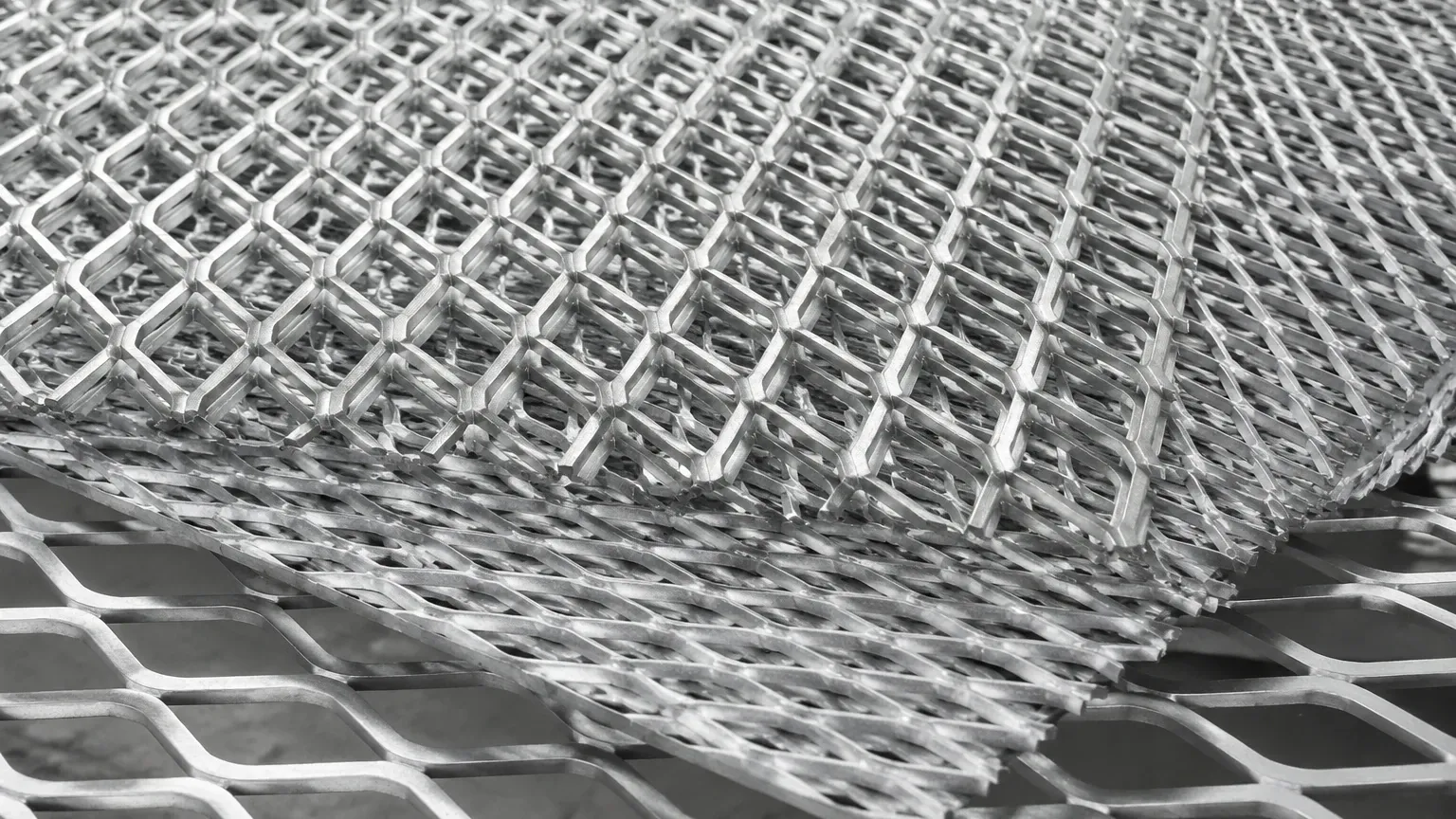
The production of expanded metal is inherently efficient. A solid metal sheet is fed through an expanding machine where a reciprocating knife slits and stretches the material in a single motion. This process creates diamond-shaped openings without any material waste, as no metal is punched out. This continuity of the material ensures that the resulting mesh retains the inherent strength of the original steel sheet.
When the base material is carbon steel, it requires a protective layer to prevent oxidation. This is where the galvanization process becomes critical. In industrial applications, two primary methods are utilized:
1. Pre-galvanized Steel: The steel sheet is galvanized at the mill before the expanding process. While cost-effective, the slitting and stretching process exposes the raw steel edges of the strands. These exposed edges are susceptible to corrosion in high-moisture or chemical environments.
2. Hot-Dip Galvanized (After Expansion): The expanded metal sheet is immersed in a molten zinc bath after the mechanical stretching is complete. This ensures that every strand, joint, and edge is fully encapsulated in a zinc-iron alloy. For B2B applications involving filtration or outdoor structural support, hot-dip galvanization (HDG) is the preferred standard due to its superior cathodic protection and thickness of the protective layer.
Technical Specifications: SWD, LWD, and Strand Geometry
To specify Perforated & Expanded Metal accurately, engineers must utilize standardized terminology to define the mesh geometry. These dimensions directly impact the filtration efficiency and mechanical load capacity of the component.
* SWD (Short Way of Design): The distance from the center of one bond to the center of the next bond measured across the short diamond diagonal.
* LWD (Long Way of Design): The distance from the center of one bond to the center of the next bond measured across the long diamond diagonal.
* Strand Width: The amount of metal fed into the machine between the slits.
* Strand Thickness: The thickness of the original base metal sheet.
* Opening Size: The clear space between strands, often critical for determining the size of particles a filter will retain or the volume of airflow permitted.
In its "standard" or "raised" form, the strands are set at a sharp angle to the plane of the sheet. This creates a three-dimensional surface that provides excellent anti-slip properties and high rigidity. However, for many filtration applications, the material is "flattened." Flattened expanded metal is passed through a cold-rolling mill, which reduces the thickness and levels the strands into a single plane, making it ideal for use as a support substrate for finer filter media.
Perforated & Expanded Metal: Comparative Analysis for Filtration
When designing filtration systems, engineers often choose between perforated metal and expanded metal. While both fall under the category of Perforated & Expanded Metal, their performance profiles differ significantly.
Material Efficiency and Cost
Perforated metal is created by punching holes into a sheet, which can result in up to 40% or 50% material waste depending on the open area required. Expanded metal, by contrast, involves no waste. For large-scale industrial projects, this makes galvanised expanded metal a more sustainable and often more economical choice for the same surface area coverage.
Structural Strength
Expanded metal is a single piece of material; there are no welds or joints to fail. The "truss-like" configuration of the strands distributes loads more effectively than perforated sheets of the same weight. In hydraulic filtration or high-pressure gas applications, expanded metal serves as a robust outer cage or inner core, protecting delicate pleated filter elements from collapsing under pressure differentials.
Open Area and Flow Dynamics
Perforated metal allows for very precise control over hole size and spacing. However, expanded metal offers a higher percentage of open area for the same weight of material. This is a critical factor in reducing pressure drop across a filtration assembly, thereby increasing the energy efficiency of the overall system.
The Role of Galvanised Expanded Metal in Industrial Filtration
Galvanised expanded metal is frequently used as a support structure or a primary coarse filter in various industrial sectors. Its application is particularly prevalent in environments where stainless steel might be cost-prohibitive but where raw carbon steel would fail prematurely.
HVAC and Air Filtration
In industrial HVAC systems, galvanised expanded metal acts as a pre-filter or a face mesh for high-efficiency particulate air (HEPA) filters. The zinc coating prevents the mesh from rusting due to condensation or humidity in the air stream, ensuring that the filter media remains clean and the structural integrity of the filter frame is maintained.
Hydraulic and Fluid Power
In hydraulic reservoirs, expanded metal cylinders are used as suction strainers. They prevent large contaminants from entering the pump. The galvanised finish is compatible with many mineral-based hydraulic oils, providing a durable and low-cost alternative to stainless steel in non-corrosive fluid environments.
Wastewater and Water Treatment
For coarse screening in water treatment plants, heavy-duty galvanised expanded metal can withstand the weight of debris while resisting the corrosive effects of constant water exposure. The hot-dip galvanizing process is especially effective here, as the zinc layer provides sacrificial protection; even if the mesh is scratched by abrasive debris, the surrounding zinc will corrode first, protecting the underlying steel.
Engineering Selection Criteria: What to Confirm Before Purchase
When sourcing galvanised expanded metal for a specific project, procurement teams and engineers should verify several factors to ensure long-term performance and compatibility.
1. Coating Thickness and Standard Compliance
Specify the required zinc coating thickness. For industrial-grade protection, adherence to standards such as ASTM A123 (for hot-dip galvanizing) is often required. This ensures the coating is thick enough to withstand the intended environment's corrosivity category (C1 to C5).
2. Flattened vs. Raised Mesh
Determine if the application requires a flat surface. Flattened mesh is easier to clean and better for supporting thin membranes, whereas raised mesh provides more rigidity and better grip if the material is also used for walkways or maintenance platforms near the filtration units.
3. Dimensional Tolerances
Industrial filtration components often require tight tolerances to fit into housings or to be welded into larger assemblies. Confirm the manufacturer's ability to maintain precise SWD and LWD dimensions, as well as the overall sheet flatness.
4. Edge Conditions
Expanded metal can have sharp edges (bonds) where the diamonds are cut. For components that will be handled frequently by maintenance staff or that will come into contact with sensitive filter fabrics, deburring or edge-trimming should be specified to prevent injury or media damage.
Maintenance, Replacement, and Total Cost of Ownership
The total cost of ownership (TCO) for galvanised expanded metal is generally lower than that of untreated steel or plastic alternatives. While the initial cost of galvanizing adds a premium over raw steel, the extension of the replacement cycle significantly offsets this. In most indoor industrial environments, hot-dip galvanised steel can last 20 to 50 years without significant maintenance.
In filtration applications, the primary maintenance concern is blinding or fouling of the mesh. Because expanded metal has a complex geometry, cleaning methods such as backwashing or ultrasonic cleaning must be evaluated. If the mesh is used as a support for a disposable filter element, the galvanised structure itself can often be reused through multiple element changes, provided the zinc layer remains intact.
Customization and OEM Solutions
At Kaifil, we recognize that standard off-the-shelf expanded metal does not always meet the rigorous demands of specialized industrial filtration. Customization is often necessary to optimize performance. This includes selecting specific strand widths to achieve a target open area percentage or adjusting the diamond size to match the flow characteristics of a particular fluid.
Our manufacturing capabilities allow for the production of precision metal filter components that integrate seamlessly into complex systems. Whether you require specific material grades, specialized galvanizing thicknesses, or custom-cut shapes for OEM applications, we provide the technical expertise to ensure your filtration solutions are both reliable and cost-effective.
For more information on material specifications and to explore our range of solutions, review product options and application support to find the ideal configuration for your industrial requirements.
