


Grainger Expanded Metal
In the landscape of industrial procurement, expanded metal serves as a fundamental component for structural support, safety guarding, and, most critically, industrial filtration. Many procurement officers and maintenance engineers often begin their search with general distributors, looking for options like grainger expanded metal to meet immediate facility needs. However, when the application shifts from simple architectural infill to high-precision industrial filtration, the technical requirements become significantly more complex.
Understanding the nuances of Perforated & Expanded Metal is essential for ensuring the longevity of filtration systems, especially in demanding environments such as chemical processing, pharmaceutical manufacturing, and food production. This guide examines the technical specifications, material considerations, and engineering trade-offs involved in selecting expanded metal for industrial applications.
Understanding the Geometry of Expanded Metal
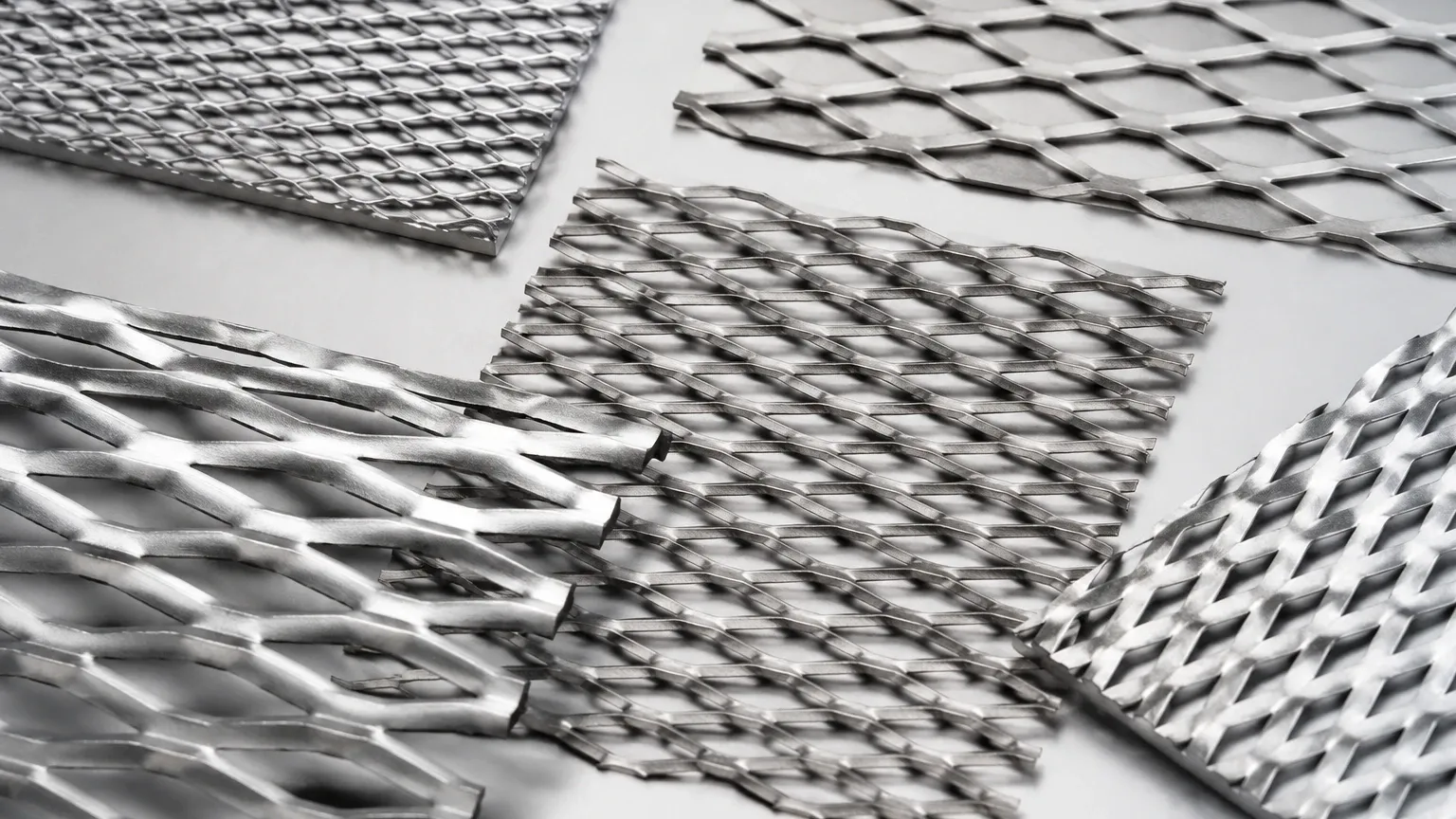
Expanded metal is manufactured by simultaneously slitting and stretching a solid metal sheet. Unlike perforated metal, which involves punching holes and generating scrap material, the expansion process is nearly waste-free and creates a unique diamond-shaped pattern. This geometry provides an inherent strength-to-weight ratio that is superior to solid plate or woven wire in many structural contexts.
When evaluating expanded metal for filtration or support, engineers must define several key dimensions:
* SWD (Short Way of Design): The distance from the center of one bond to the center of the next bond across the short axis of the diamond.
* LWD (Long Way of Design): The distance across the long axis of the diamond.
* Strand Width: The amount of metal fed into the machine between slits.
* Strand Thickness: The thickness of the original base metal.
* Open Area: The percentage of the total sheet area that allows for the passage of air, light, or fluids. This is the most critical metric for filtration applications, as it directly impacts flow rates and pressure drop.
While standard catalog items like grainger expanded metal are typically categorized by these basic dimensions for general construction, industrial filtration requires tighter tolerances. In a filtration assembly, even a slight deviation in strand thickness can affect the fit-up within a filter housing or the support provided to a delicate inner wire mesh layer.
Standard vs. Flattened Expanded Metal
There are two primary forms of expanded metal used in industrial settings: raised (standard) and flattened. Choosing between them depends entirely on the mechanical requirements of the application.
Raised Expanded Metal
Raised expanded metal is the product as it comes off the expansion press. The strands and bonds are set at a uniform angle to the plane of the sheet. This creates a three-dimensional surface that offers excellent grip and high rigidity. In filtration, raised expanded metal is often used as a primary coarse filter or a heavy-duty debris guard where turbulence is acceptable or even desired to break up flow patterns.
Flattened Expanded Metal
Flattened expanded metal is produced by passing the standard expanded sheet through a cold-roll reducing mill. This process flattens the strands and bonds into a single plane, reducing the overall thickness and creating a smooth, flush surface. For engineers designing multi-layer filter cartridges, flattened expanded metal is often the preferred choice. It provides a smooth support surface that prevents the abrasion or puncturing of fine wire mesh layers under high-pressure hydraulic or gas flows.
Material Selection for Corrosive Environments
In the sectors Kaifil serves—such as chemical and water treatment—the choice of material is as important as the mesh geometry. While carbon steel expanded metal is common for general industrial shelving or safety partitions, it is rarely suitable for high-performance filtration due to oxidation risks.
1. Stainless Steel 304: The industry standard for general corrosion resistance. It is widely used in food and beverage applications where frequent wash-downs are required.
2. Stainless Steel 316/316L: Contains molybdenum, which provides superior resistance to chlorides and pitting. This is the mandatory choice for pharmaceutical and marine filtration systems.
3. Specialty Alloys: For extreme temperatures or highly acidic environments, materials like Monel, Inconel, or Titanium may be required.
When sourcing through a broad distributor, technical teams should verify the specific heat numbers and material certifications. Direct manufacturers often provide more rigorous traceability, which is vital for compliance in regulated industries.
The Role of Expanded Metal in Filtration Systems
Expanded metal is rarely used in isolation within a high-precision filtration system. Instead, it functions as a critical component in a larger assembly. Its primary roles include:
Outer Protective Cages
In many stainless steel filter cartridges, the expanded metal serves as an outer cage. This protects the internal filter media from mechanical damage during installation, removal, and cleaning. It must be robust enough to withstand impact while maintaining a high open area to ensure it does not restrict the flow of the process fluid.
Internal Support Cores
For filters operating under high differential pressure, the internal core must resist collapsing. Expanded metal, when rolled into a cylinder and welded, provides exceptional hoop strength. Engineers must calculate the collapse pressure based on the strand thickness and the specific alloy's yield strength to ensure the filter does not fail during a pressure surge.
Pleat Support
In pleated filter designs, expanded metal can be used as a "spacer" or support layer between pleats. This prevents the pleats from pinching shut under flow, ensuring that the entire surface area of the filter media remains active. This application requires precision-flattened metal to avoid snagging the media.
Evaluating Total Cost of Ownership: Distribution vs. Custom Manufacturing
When a project requires expanded metal, the initial instinct is often to check availability for grainger expanded metal or similar stockists. For small-scale maintenance or prototype development, this is a valid approach. However, for OEM production and large-scale industrial projects, several factors can influence the total cost of ownership (TCO).
Customization and Precision
Standard stock items are manufactured to general commercial tolerances. In contrast, a specialized manufacturer can customize the LWD and SWD to match the specific flow requirements of a proprietary filtration system. Customizing the strand width can also optimize the weight of the component without sacrificing structural integrity, leading to lower shipping costs and easier handling.
Secondary Operations
Buying raw sheets from a distributor often necessitates additional processing. Industrial filters require the metal to be sheared to precise sizes, rolled into cylinders, and TIG or plasma welded. Sourcing from a manufacturer that integrates these processes—from expansion to final component assembly—reduces the risk of logistical delays and ensures that the final product meets the required filtration accuracy.
Material Traceability
For the pharmaceutical and food industries, material traceability is non-negotiable. Direct manufacturers provide comprehensive MTRs (Material Test Reports) that track the metal back to the original melt. This level of documentation is often more difficult to secure through multi-tier distribution channels.
Engineering Considerations Before Purchase
Before finalizing a specification for Perforated & Expanded Metal, engineering teams should confirm the following technical parameters:
* Flow Direction: In raised expanded metal, the angle of the strands can influence the direction of the fluid flow. This can be used to direct flow toward or away from certain parts of a housing.
* Edge Treatment: Expanded metal naturally has "sharp" edges where the diamonds are cut. For filters that will be handled frequently by operators, specify whether the edges should be bonded (cut through the bonds) or random (cut through the strands), or if a U-edging or frame is required for safety.
* Cleaning Compatibility: If the filter is intended for reuse, the expanded metal must be able to withstand ultrasonic cleaning or backpulsing. Stainless steel 316L is typically preferred for these cycles due to its durability.
* Pressure Drop Calculations: Ensure the open area of the selected mesh does not create an unacceptable parasitic pressure loss across the system. This is particularly important in hydraulic applications where energy efficiency is a priority.
Conclusion
Whether you are replacing an existing component or designing a new industrial filtration system, selecting the right expanded metal requires a balance of mechanical strength, chemical compatibility, and hydraulic performance. While general-purpose options like grainger expanded metal serve a vital role in the MRO (Maintenance, Repair, and Operations) market, specialized industrial applications benefit from the precision and engineering support of a dedicated manufacturer. By focusing on the specific needs of the application—from the alloy grade to the flattening process—engineers can ensure their filtration systems operate at peak efficiency with minimal downtime.
