


Expanded Metal Hs Code
In the global procurement of industrial filtration and structural components, technical accuracy extends beyond material specifications and tolerances; it encompasses the regulatory frameworks that govern international trade. For engineers and procurement managers sourcing specialized metal mesh, understanding the expanded metal hs code is essential for ensuring supply chain compliance, calculating total landed costs, and avoiding costly customs delays.
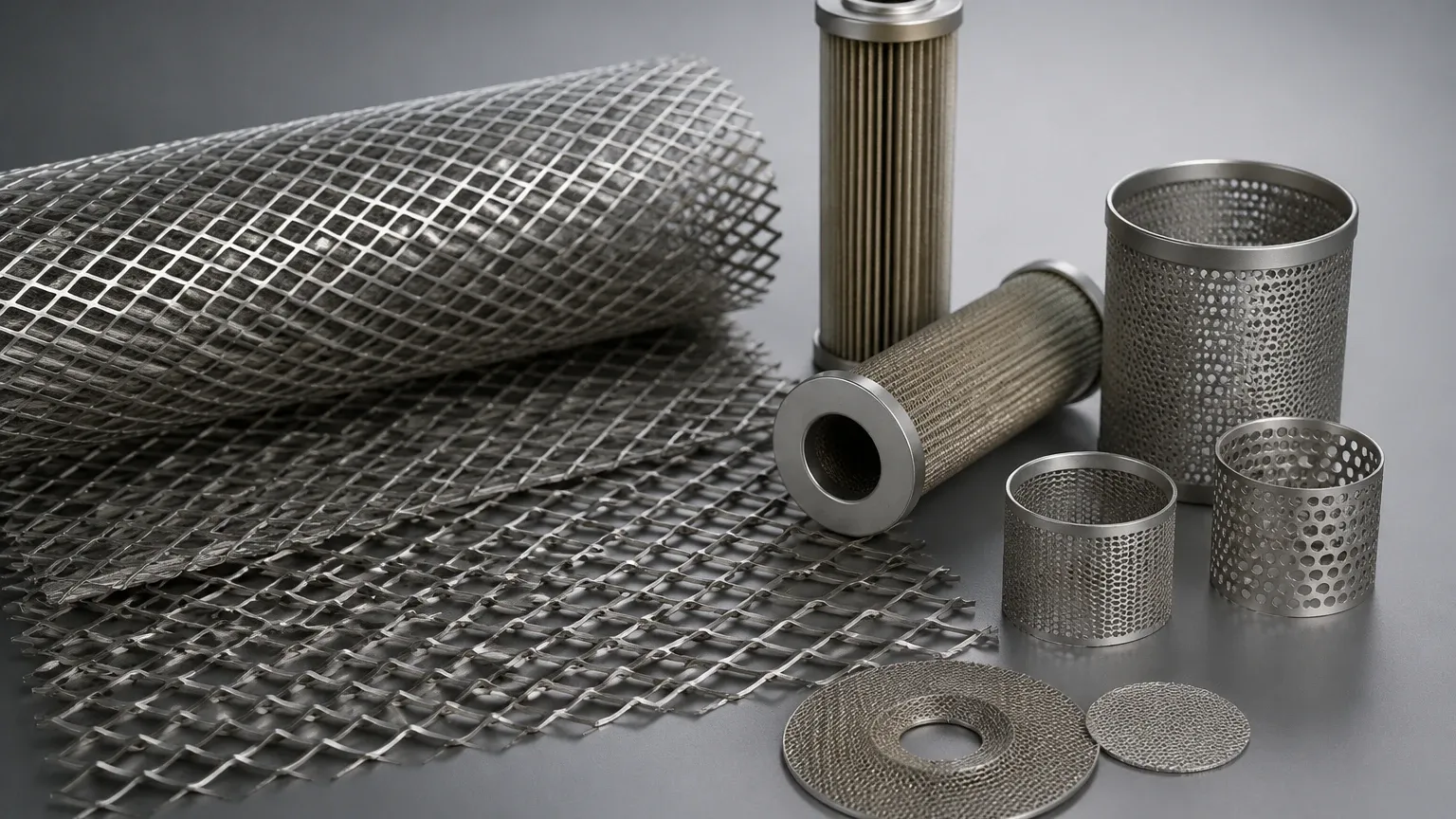
Expanded metal is a versatile material produced by simultaneously slitting and stretching a metal sheet, resulting in a diamond-shaped pattern of openings. Unlike perforated metal, which involves punching out material, the expansion process creates no waste and results in a structural integrity that is highly valued in filtration support, architectural cladding, and industrial safety applications. However, the classification of these products under the Harmonized System (HS) requires a nuanced understanding of metallurgical properties and the intended use of the component.
Understanding the Harmonized System for Metal Mesh Products
The Harmonized System is an internationally standardized nomenclature for the description, classification, and coding of goods. Developed and maintained by the World Customs Organization (WCO), the HS code is a six-digit identifier used by more than 200 countries to apply tariffs and collect trade statistics. While the first six digits are globally consistent, individual nations often append additional digits (forming an HTS or CN code) to further categorize products for specific domestic regulations.
For industrial buyers, the correct application of the expanded metal hs code is the foundation of a transparent import process. Misclassification can lead to the application of incorrect duty rates, the triggering of anti-dumping investigations, or the seizure of goods by customs authorities. When sourcing Perforated & Expanded Metal for high-performance filtration systems, technical professionals must align their engineering documentation with these trade classifications to ensure seamless delivery.
Primary HS Codes for Expanded Metal
The classification of expanded metal depends primarily on the base material used in the manufacturing process. The Harmonized System organizes products by material composition before considering the form or function.
Iron and Steel (Chapter 73)
Most industrial expanded metal is manufactured from carbon steel or stainless steel due to their mechanical strength and corrosion resistance. These products typically fall under Chapter 73: "Articles of iron or steel."
* HS Code 7314.50: This is the specific subheading for "Expanded metal." It covers expanded metal made of iron or steel, regardless of whether it is supplied in sheets, coils, or cut-to-size pieces. This code is applicable to standard (raised) and flattened expanded metal used in general industrial applications.
Aluminum (Chapter 76)
Aluminum expanded metal is frequently selected for aerospace, marine, and lightweight filtration applications where weight reduction and oxidation resistance are critical.
* HS Code 7616.91: This code applies to "Cloth, grill, netting and fencing, of aluminum wire." However, depending on the specific customs jurisdiction and the manufacturing method (sheet vs. wire), aluminum expanded metal may also be classified under 7616.99 ("Other articles of aluminum").
Other Non-Ferrous Metals
For specialized filtration in aggressive chemical environments, materials such as copper, nickel, or titanium may be used. These follow their respective chapters (Chapter 74 for copper, Chapter 75 for nickel) and are generally classified under the "Other articles" subheadings of those chapters unless they are integrated into a finished machine part.
Engineering Specifications Influencing Classification
While the base material is the primary driver for the expanded metal hs code, the degree of processing and the final configuration of the product can shift the classification. Engineers should be aware of how the following technical factors influence customs declarations:
1. Material State: Standard vs. Flattened
Standard expanded metal (also known as raised expanded metal) features strands that are turned at an angle to the plane of the sheet. Flattened expanded metal is produced by passing the standard sheet through a cold-roll reducing mill, which levels the strands and creates a smooth surface. While both generally remain under 7314.50, the additional processing must be documented in the technical data sheet to justify the valuation and material description.
2. Further Fabrication and "Parts" Classification
One of the most common points of confusion in industrial procurement is the transition from a raw material to a finished component. If expanded metal is cut, rolled, and welded into a specific shape, such as a filter cartridge support core or a cylindrical strainer, it may no longer be classified under 7314.50.
Instead, it may be classified as a part of a specific machine. For example, if the expanded metal is a dedicated component of a liquid filtration system, it might fall under HS Code 8421.99 ("Parts of filtering or purifying machinery and apparatus for liquids or gases"). This distinction is critical because "parts" often carry different duty rates than "raw materials."
Technical Evaluation Criteria for Industrial Purchasing
When selecting Perforated & Expanded Metal for industrial applications, engineers must balance filtration performance with structural requirements. The following criteria are essential for technical evaluation:
* LWD and SWD: The Long Way of Diamond (LWD) and Short Way of Diamond (SWD) define the mesh size. These dimensions, along with strand width and thickness, determine the open area percentage, which directly impacts flow rate and pressure drop in filtration systems.
* Strand Geometry: The angle of the strands in raised expanded metal can provide directional flow characteristics or mechanical grip, whereas flattened metal is preferred when a low-profile, non-abrasive surface is required.
* Material Certification: For B2B transactions, particularly in the pharmaceutical and food and beverage industries, Mill Test Reports (MTRs) are mandatory. These reports confirm the chemical composition (e.g., Grade 316L stainless steel) and mechanical properties, providing the factual basis for the HS code declaration.
Common Risks in Incorrect HS Code Declaration
Inaccurate classification of expanded metal can lead to significant financial and operational risks for both the manufacturer and the importer.
Anti-Dumping and Countervailing Duties (ADD/CVD)
Many countries impose high protective duties on specific steel and aluminum products from certain regions to prevent market dumping. If expanded metal is incorrectly classified under a general steel code rather than the specific expanded metal hs code, it may inadvertently trigger an ADD/CVD investigation, leading to unforeseen costs that can exceed the value of the goods themselves.
Customs Audits and Penalties
Customs agencies perform retrospective audits on import records. If a pattern of misclassification is discovered, the importer may be liable for back-dated duties, interest, and administrative penalties. Providing clear technical drawings and material specifications to the customs broker is the best way to mitigate this risk.
Supply Chain Delays
Discrepancies between the shipping documents (Commercial Invoice, Packing List) and the physical characteristics of the metal mesh can lead to "Red Channel" inspections. These physical examinations can delay shipments by days or weeks, disrupting production schedules in time-sensitive industries like chemical processing or hydraulic equipment manufacturing.
Customization and OEM Considerations at Kaifil
At Kaifil, we recognize that industrial filtration often requires bespoke solutions that do not fit into standard commodity categories. Our manufacturing capabilities allow for the production of custom stainless steel expanded metal components designed to meet precise filtration accuracies and mechanical loads.
When working with an OEM partner, the documentation process is as important as the manufacturing process. We provide detailed technical specifications that support the correct expanded metal hs code classification. This includes:
* Precise Material Grade Documentation: Ensuring that high-alloy steels are correctly identified to prevent classification errors.
* Dimensional Accuracy: Providing LWD, SWD, and strand thickness measurements that match the physical product.
* Processing Details: Clearly stating whether the product is supplied as raw mesh, flattened sheet, or a fabricated filter component.
By integrating engineering expertise with a thorough understanding of industrial trade requirements, Kaifil helps purchasing teams achieve efficient and compliant procurement. Whether you are sourcing support grids for large-scale water treatment or precision components for chemical reactors, our focus on quality and durability ensures that your filtration solutions perform reliably in the most demanding environments.
Conclusion: Best Practices for Procurement Teams
To optimize the procurement of expanded metal, technical and purchasing departments should collaborate on the following steps:
1. Define the Material and Form: Clearly specify the alloy and whether the metal is raised, flattened, or fabricated into a part.
2. Verify the HS Code with Experts: Consult with customs brokers or trade compliance officers to confirm the 6-digit and 10-digit codes based on the destination country.
3. Request Comprehensive Documentation: Ensure the manufacturer provides MTRs and technical drawings that align with the customs declaration.
4. Evaluate Total Cost: Factor in duties, taxes, and potential ADD/CVD when comparing quotes from international suppliers.
By following these guidelines, engineers can ensure that their choice of Perforated & Expanded Metal meets both the technical demands of the application and the regulatory demands of the global market.
