


Expanded Metal Hatch Pattern Autocad
In industrial design and engineering, the transition from a conceptual drawing to a physical component requires meticulous attention to detail. For engineers working with filtration systems, architectural cladding, or structural gratings, representing materials accurately in CAD software is a fundamental step. Specifically, when designing with expanded metal, the use of an accurate expanded metal hatch pattern autocad is more than a visual preference—it is a critical communication tool between the design engineer and the manufacturer.
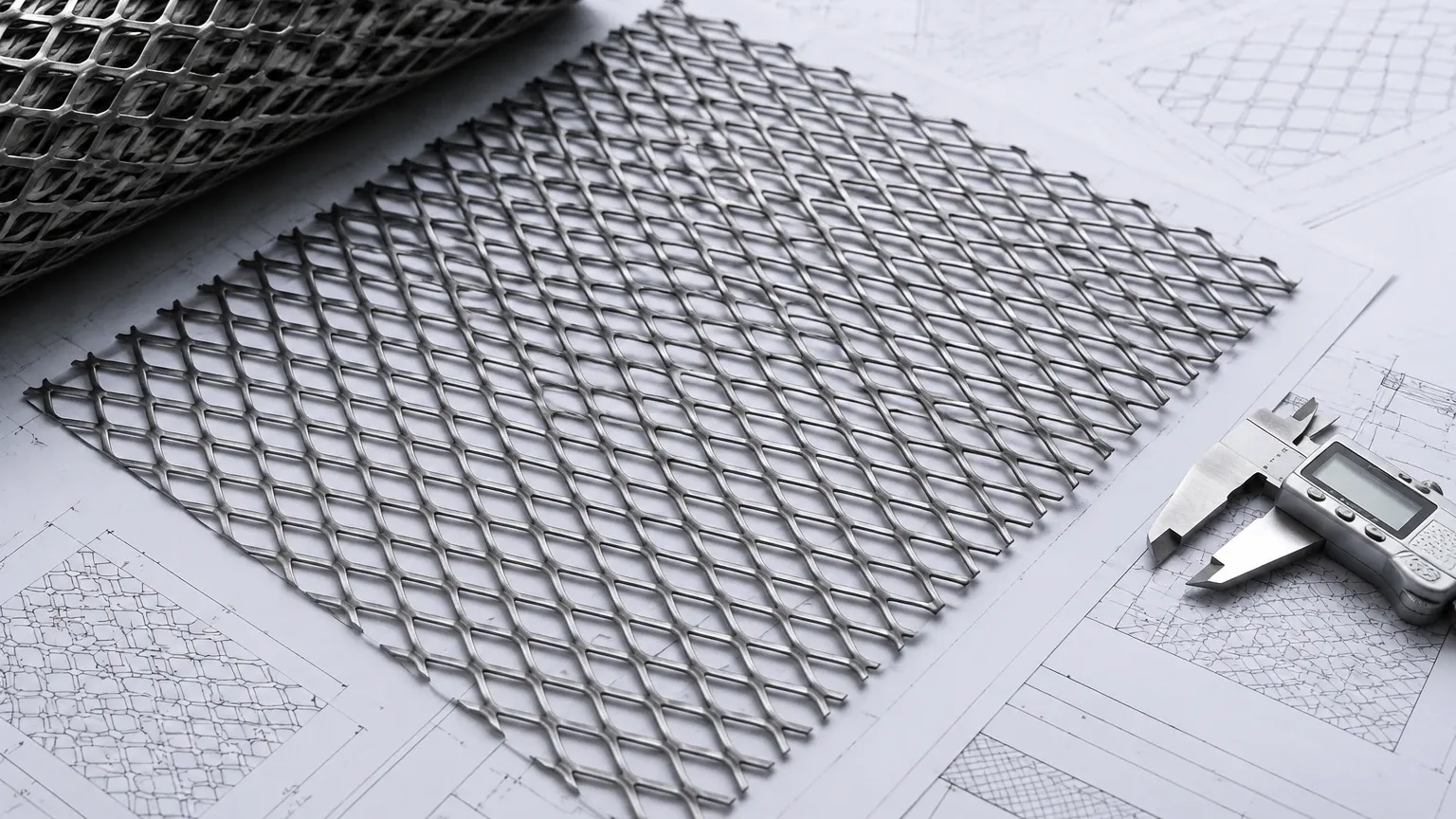
Expanded metal is a unique material created by shearing and stretching a metal sheet simultaneously, resulting in a diamond-shaped pattern of openings. Unlike perforated metal, which involves punching holes and generating scrap, expanded metal is produced with minimal waste. However, its three-dimensional nature and specific geometric parameters make it challenging to represent in a two-dimensional CAD environment. This article explores the technical nuances of expanded metal representation, engineering considerations for its application, and how to bridge the gap between AutoCAD designs and high-performance manufacturing.
Understanding the Geometry of Expanded Metal for CAD
Before implementing an expanded metal hatch pattern autocad, an engineer must understand the physical dimensions that define the material. Unlike simple circular perforations, expanded metal is defined by four primary measurements: the Long Way of Design (LWD), the Short Way of Design (SWD), the strand width, and the strand thickness.
1. Long Way of Design (LWD): This is the distance from the center of one joint to the center of the next joint across the long axis of the diamond.
2. Short Way of Design (SWD): This is the distance from the center of one joint to the center of the next joint across the short axis of the diamond.
3. Strand Width: The amount of metal between the openings, which determines the overall strength and open area of the mesh.
4. Strand Thickness: The gauge or thickness of the original base metal sheet.
When creating or selecting a hatch pattern in AutoCAD, these dimensions must be scaled correctly. A common mistake in industrial drafting is using a generic "honeycomb" or "diamond" hatch that does not reflect the actual LWD and SWD of the specified product. For filtration applications, where the open area directly impacts flow rates and pressure drops, an inaccurate representation can lead to significant discrepancies between the theoretical model and the manufactured part.
Implementing Expanded Metal Hatch Patterns in AutoCAD
AutoCAD provides several methods for representing expanded metal. While the software includes standard patterns like 'ANSI37' or 'HONEY', these often fail to capture the specific proportions of industrial expanded metal. For professional engineering drawings, designers typically utilize one of the following three approaches:
Custom .PAT Files
For high-precision projects, engineers often use custom pattern files (.pat). These files contain the mathematical instructions for AutoCAD to draw repeating lines that mimic the exact SWD and LWD of the material. By utilizing a custom pattern, the designer ensures that the visual density of the mesh on the drawing matches the physical density of the Perforated & Expanded Metal used in production.
SuperHatch and Image Overlays
In cases where the 3D texture of the expanded metal is important for aesthetic or preliminary design reviews, the 'SuperHatch' tool (available in AutoCAD Express Tools) allows designers to use an image or a block as a hatch pattern. While visually effective, this method is less common for technical fabrication drawings where line-based vectors are preferred for clarity and file size management.
Scaling and Rotation Adjustments
If a standard diamond hatch is used, it must be meticulously scaled. For example, if the LWD is 2.0 inches and the SWD is 1.0 inch, the hatch must be adjusted to reflect a 2:1 ratio. Furthermore, the orientation of the diamonds—whether they run parallel or perpendicular to the frame—is a critical engineering decision that must be clearly indicated in the CAD layout to ensure structural integrity and proper fluid dynamics.
Engineering Considerations for Filtration and Industrial Use
When an engineer specifies an expanded metal hatch pattern autocad, they are often designing a component meant for rigorous industrial environments. At Kaifil, we recognize that the choice of expanded metal is driven by performance requirements such as filtration accuracy, structural support, and resistance to corrosion.
Open Area and Flow Dynamics
The percentage of open area is the most critical factor for filtration and ventilation. It is calculated based on the relationship between the strand width and the diamond dimensions. In AutoCAD, the hatch density serves as a visual proxy for this open area. Engineers must verify that the specified pattern provides the necessary throughput for the intended application, whether it is for a hydraulic oil filter or a chemical processing screen.
Structural Rigidity vs. Flexibility
Expanded metal is inherently directional. It possesses greater rigidity along the LWD than the SWD. In CAD drawings, the orientation of the hatch pattern should reflect how the material will be installed. If the expanded metal is intended to support a filter medium (acting as a support core), the orientation must align with the mechanical stresses the cartridge will face during operation.
Flattened vs. Raised Expanded Metal
CAD designs must also specify whether the material is "raised" (as it comes off the machine) or "flattened" (passed through a cold-roll reducing mill). Raised expanded metal provides a textured surface and better grip, but flattened expanded metal offers a smooth surface that is often preferred for precision filtration layers to prevent damage to delicate membranes or fine wire meshes.
Material Selection and Environmental Compatibility
While the AutoCAD hatch pattern defines the geometry, the material specification defines the longevity of the component. For industrial filtration, stainless steel is the industry standard due to its exceptional resistance to oxidation and chemical attack.
* Stainless Steel 304: Suitable for general-purpose applications, providing good corrosion resistance and formability.
* Stainless Steel 316/316L: The preferred choice for marine environments, pharmaceutical processing, and food and beverage applications due to its superior resistance to chlorides and organic acids.
* Specialty Alloys: For high-temperature or highly corrosive chemical environments, materials like Monel or Inconel may be required.
When designing the CAD model, engineers should note the material grade alongside the hatch pattern. This ensures that the purchasing team and the manufacturer, such as Kaifil, can provide a solution that meets the specific chemical and thermal demands of the application.
Common Risks and Technical Pitfalls in CAD Representation
Relying solely on a visual expanded metal hatch pattern autocad without accompanying technical specifications can lead to several risks during the procurement and manufacturing phases:
1. Mismatched Tolerances: CAD software is mathematically perfect, but manufacturing involves tolerances. An engineer might design a frame that perfectly fits a hatch pattern, only to find that the physical expanded metal has a slight variance in diamond size due to the stretching process. It is essential to confirm manufacturing tolerances with the supplier early in the design phase.
2. Moire Effects and Visual Errors: In complex assemblies, overlapping hatch patterns can create moire patterns that make drawings difficult to read. Using layers and transparency settings in AutoCAD can help manage visual clarity without sacrificing technical detail.
3. Ignoring the "Bond": The bond is the point where the strands intersect. In some CAD representations, the bond is simplified as a single point, but in reality, it has a specific width and height. For high-precision filtration, the size of the bond can affect the total thickness of the filter element, impacting the fit within a housing.
Information Confirmation Before Manufacturing
Before moving from a CAD drawing to a purchase order, engineers and purchasing professionals should confirm several key details with their filtration partner. At Kaifil, we recommend a final review of the following parameters:
* Exact Mesh Dimensions: Confirm the LWD, SWD, and strand dimensions rather than relying on the CAD hatch scale.
* Edge Conditions: Specify whether the edges should be "random sheared" (open diamonds) or "bond sheared" (closed diamonds). This affects both safety (sharp edges) and how the component will be welded or framed.
* Surface Treatment: Determine if the part requires degreasing, pickling, passivating, or electropolishing, especially for food-grade or pharmaceutical applications.
* Quantity and Customization: For OEM applications, discuss how the expanded metal will be integrated into larger assemblies, such as filter cartridges or strainers.
By providing a detailed CAD drawing that utilizes a correct expanded metal hatch pattern autocad and pairing it with a comprehensive material specification, engineers can ensure that the final product delivered by Kaifil meets the highest standards of performance and reliability.
Conclusion
Precision in design is the foundation of excellence in manufacturing. While an expanded metal hatch pattern autocad may seem like a minor detail in a large-scale project, it represents the critical geometric and functional properties of the material. For industries that depend on precise filtration and durable components, such as chemical processing, water treatment, and aerospace, the ability to accurately model and specify Perforated & Expanded Metal is indispensable.
Kaifil remains committed to supporting engineers through every stage of the process—from initial CAD consultation to the delivery of custom-manufactured stainless steel filtration solutions. By understanding the technical requirements of expanded metal and utilizing CAD tools effectively, design teams can optimize their filtration systems for efficiency, durability, and cost-effectiveness.
