


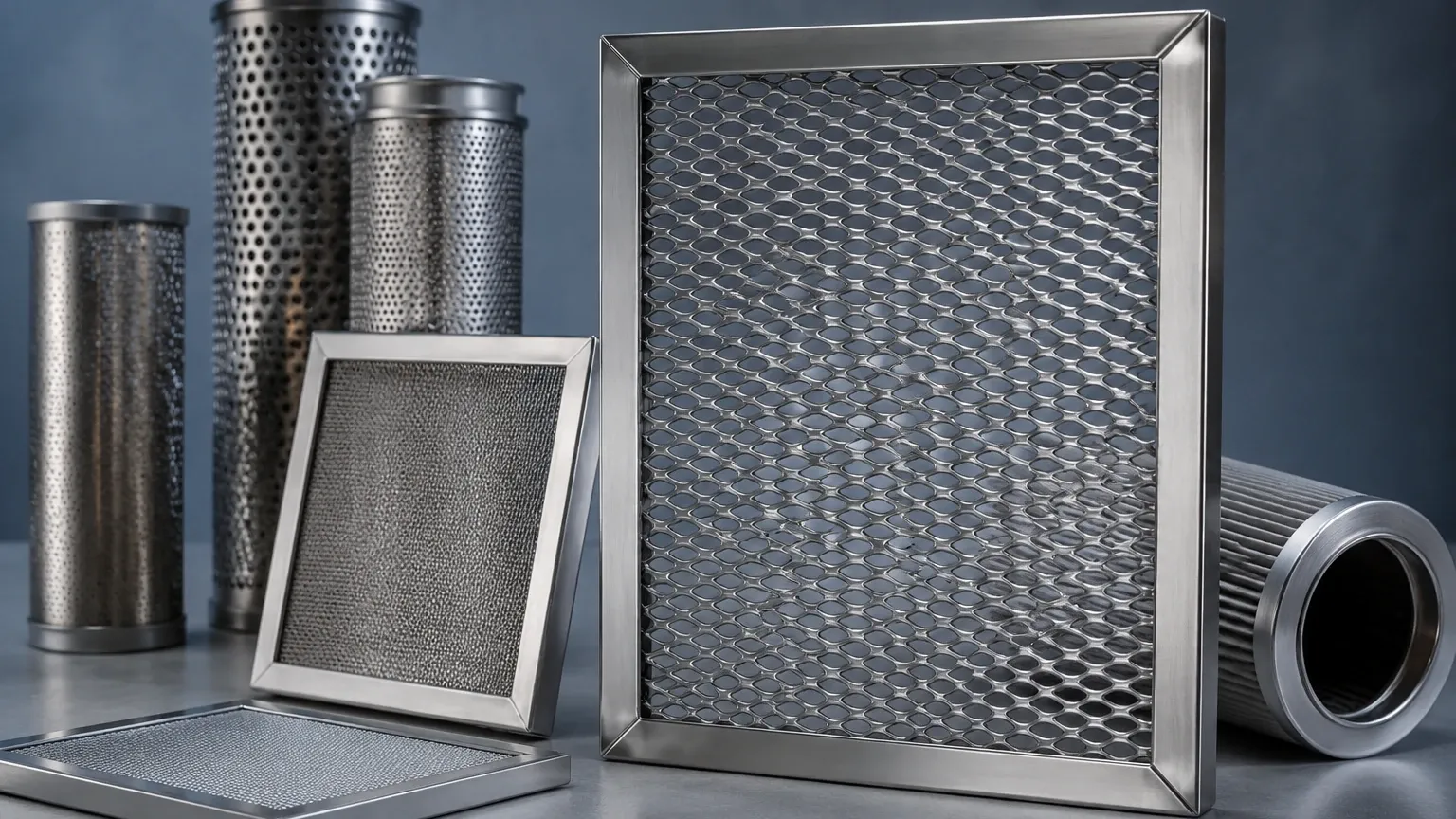
Expanded Metal in Frame
In industrial engineering and filtration, the structural integrity of a filter medium is as critical as its micron rating. Expanded metal, a versatile material created by simultaneously slitting and stretching a solid metal sheet, offers a unique combination of open area and mechanical strength. However, for most industrial applications—ranging from coarse filtration to protective screening—the raw mesh requires a secondary support structure. Integrating expanded metal in frame components transforms a flexible mesh into a rigid, installable, and durable industrial unit.
For engineers and procurement professionals, understanding the technical nuances of how expanded metal interacts with its frame is essential for ensuring long-term performance in demanding environments like chemical processing, water treatment, and hydraulic systems. This guide explores the engineering considerations, material selection, and fabrication techniques required to optimize Perforated & Expanded Metal solutions for industrial use.
Understanding Expanded Metal Geometry and Fabrication
Before addressing the framing process, it is necessary to define the characteristics of the expanded metal itself. Unlike woven wire mesh, expanded metal is a single-piece construction without joins or welds. This eliminates the risk of unraveling and provides a high strength-to-weight ratio.
Key Geometric Parameters
When specifying expanded metal for a framed assembly, engineers must define several critical dimensions:
* Long Way of Design (LWD): The distance from the center of one joint to the center of the next joint across the long diamond dimension.
* Short Way of Design (SWD): The distance across the short diamond dimension.
* Strand Width: The amount of metal fed into the expanding machine between the slits.
* Strand Thickness: The gauge of the original base material.
* Open Area Percentage: Calculated based on the relationship between the strand width and the diamond size, this determines the flow rate and pressure drop in filtration applications.
Raised vs. Flattened Expanded Metal
Expanded metal is produced in two primary forms. Raised expanded metal (or standard) features strands that are turned at an angle to the plane of the sheet, providing a directional flow and high rigidity. Flattened expanded metal is processed through a cold-rolling mill, which levels the strands and bonds to create a smooth, flat surface. For most expanded metal in frame applications, flattened metal is preferred when a flush fit against the frame is required or when the component acts as a support for a finer filter cloth.
The Role of Framing in Industrial Filtration and Structural Support
Raw expanded metal sheets often have sharp, jagged edges (known as "bonds" or "knuckles") resulting from the slitting process. Framing serves three primary industrial purposes:
1. Safety and Handling: Encasing the edges prevents injury to personnel during installation and maintenance.
2. Structural Rigidity: While expanded metal is strong, it can bow under high pressure or heavy loads. A frame provides the necessary perimeter support to maintain the mesh's flatness and prevent bypass in filtration systems.
3. Mounting and Sealing: A frame allows the component to be bolted, slid into tracks, or welded into a larger housing. In liquid filtration, the frame often serves as the sealing surface for gaskets to ensure that 100% of the fluid passes through the mesh.
In heavy-duty applications, such as intake screens for water treatment or support baskets for centrifugal filters, the frame must be engineered to withstand the same corrosive and mechanical stresses as the mesh itself.
Material Selection for Corrosive and High-Temperature Environments
Material compatibility is the most frequent cause of premature failure in industrial filtration. At Kaifil, we emphasize the use of high-performance alloys to ensure the longevity of both the mesh and the frame.
Stainless Steel (304 and 316L)
Stainless steel is the industry standard for most B2B filtration needs.
* Grade 304: Suitable for general industrial use where high-temperature resistance and basic corrosion protection are required.
* Grade 316L: The "L" denotes low carbon, which is crucial for framed assemblies that require extensive welding. 316L offers superior resistance to chlorides and acids, making it the preferred choice for pharmaceutical and chemical processing applications.
Specialty Alloys
For environments involving extreme heat or highly aggressive chemicals, frames and mesh can be fabricated from Monel, Inconel, or Hastelloy. It is vital that the frame and the expanded metal are made from the same or compatible alloys to prevent galvanic corrosion, which occurs when two dissimilar metals are in electrical contact in the presence of an electrolyte.
Engineering Specifications: LWD, SWD, and Strand Width
When designing an expanded metal in frame component, the orientation of the diamonds relative to the frame is a critical engineering decision. The "Long Way of Design" (LWD) can be oriented either parallel or perpendicular to the long side of the frame.
* Parallel Orientation: Generally offers better structural spanning capabilities if the frame is long and narrow.
* Perpendicular Orientation: May be chosen to optimize flow characteristics if the fluid or gas is hitting the screen at a specific angle.
Strand width and thickness also dictate the "blind area" of the filter. In high-velocity systems, a thicker strand might cause turbulence or increased backpressure. Conversely, strands that are too thin may vibrate or fatigue under pulsed flow conditions. Engineers should request a flow-rate analysis or pressure-drop calculation when selecting these parameters for custom filtration solutions.
Integration Methods: Welding and Securing Expanded Metal in Frames
There are several methods to secure expanded metal within a frame, each suited to different industrial requirements:
U-Channel Framing
A U-shaped profile is wrapped around the edge of the expanded metal. The mesh is inserted into the channel and then spot-welded or stitch-welded. This is the most common method for creating removable filter panels. It provides a clean edge and high perimeter strength.
Angle Iron Framing
The expanded metal is laid onto the leg of an L-shaped angle iron and welded in place. This method is often used for heavy-duty floor gratings or large-scale industrial strainers where the frame must also support significant weight.
Flat Bar Sandwich
The expanded metal is sandwiched between two flat bars and bolted or welded together. This is an excellent solution for high-vibration environments where a single weld point might be prone to stress cracking.
Welding Considerations
Precision welding is required to avoid "burn-through" on thin-gauge expanded metal. TIG (Tungsten Inert Gas) welding is typically preferred for stainless steel assemblies because it provides a clean, high-strength bead with minimal heat-affected zones, preserving the corrosion resistance of the material.
Performance Evaluation: Pressure Drop and Structural Integrity
An expanded metal in frame assembly must be evaluated as a single unit. In filtration, the "effective filtration area" is the total open area of the mesh minus the area obscured by the frame and the welds.
Pressure Drop (ΔP)
If the frame is too thick or the attachment method reduces the open area significantly, the pressure drop across the filter will increase. This can lead to higher energy consumption for pumps and fans. Engineers should aim for a design that maximizes the open area while maintaining the structural integrity required to withstand the maximum system pressure (including potential pressure spikes during start-up).
Load-Bearing Capacity
In applications like catalyst bed supports or heavy-duty strainers, the expanded metal must support the weight of the filter media or the accumulated debris. The frame acts as the primary load-transfer mechanism to the vessel walls. Finite Element Analysis (FEA) is often used in the design phase to ensure that the mesh will not undergo permanent deformation under peak load.
Sourcing and Customization: Collaborative Engineering with Kaifil
Choosing the right filtration component involves more than just selecting a part number from a catalog. Customization is often necessary to meet specific flow rates, spatial constraints, and chemical compatibility requirements.
When sourcing expanded metal in frame solutions, engineers should confirm the following with their manufacturer:
* Tolerances: What are the allowable deviations in frame dimensions and mesh flatness?
* Surface Finish: Does the application require electropolishing (common in food/pharma) or simple pickling and passivation?
* Certification: Is material traceability (MTRs) provided to ensure the alloy grade meets the specification?
* Replacement Cycles: Based on the abrasive or corrosive nature of the fluid, what is the expected lifespan of the assembly?
Kaifil specializes in providing these technical insights, working closely with global customers to develop Perforated & Expanded Metal components that are tailored to demanding industrial environments. By controlling the manufacturing process from material selection to final frame integration, we ensure that every component delivers reliable, cost-effective performance.
Conclusion
The integration of expanded metal in frame structures is a foundational element of industrial filtration and mechanical screening. By carefully considering material grades, diamond geometry, and framing techniques, engineering teams can specify components that offer the perfect balance of filtration efficiency and structural durability. Whether you are designing a new chemical processing line or replacing worn-out hydraulic filters, focusing on the technical synergy between the mesh and its frame will result in lower maintenance costs and optimized system performance.
