


Jual Expanded Metal Mesh
In the landscape of industrial filtration and structural support, expanded metal mesh serves as a foundational component known for its versatility, strength, and cost-effectiveness. For procurement officers and engineers searching for "jual expanded metal mesh," the focus typically shifts from simple availability to technical precision and material reliability. Understanding the nuances of how these materials are manufactured, specified, and applied is essential for ensuring the longevity of industrial systems, particularly in demanding environments like chemical processing, food production, and hydraulic filtration.
Kaifil, as a specialist in custom stainless steel filtration solutions, recognizes that the selection of expanded metal is rarely a standalone decision. It is often integrated into complex filter assemblies or used as a robust outer cage for delicate filter media. This article provides a technical deep dive into the engineering considerations behind expanded metal mesh to assist professionals in making informed purchasing decisions.
Understanding the Manufacturing Process and Structural Advantages
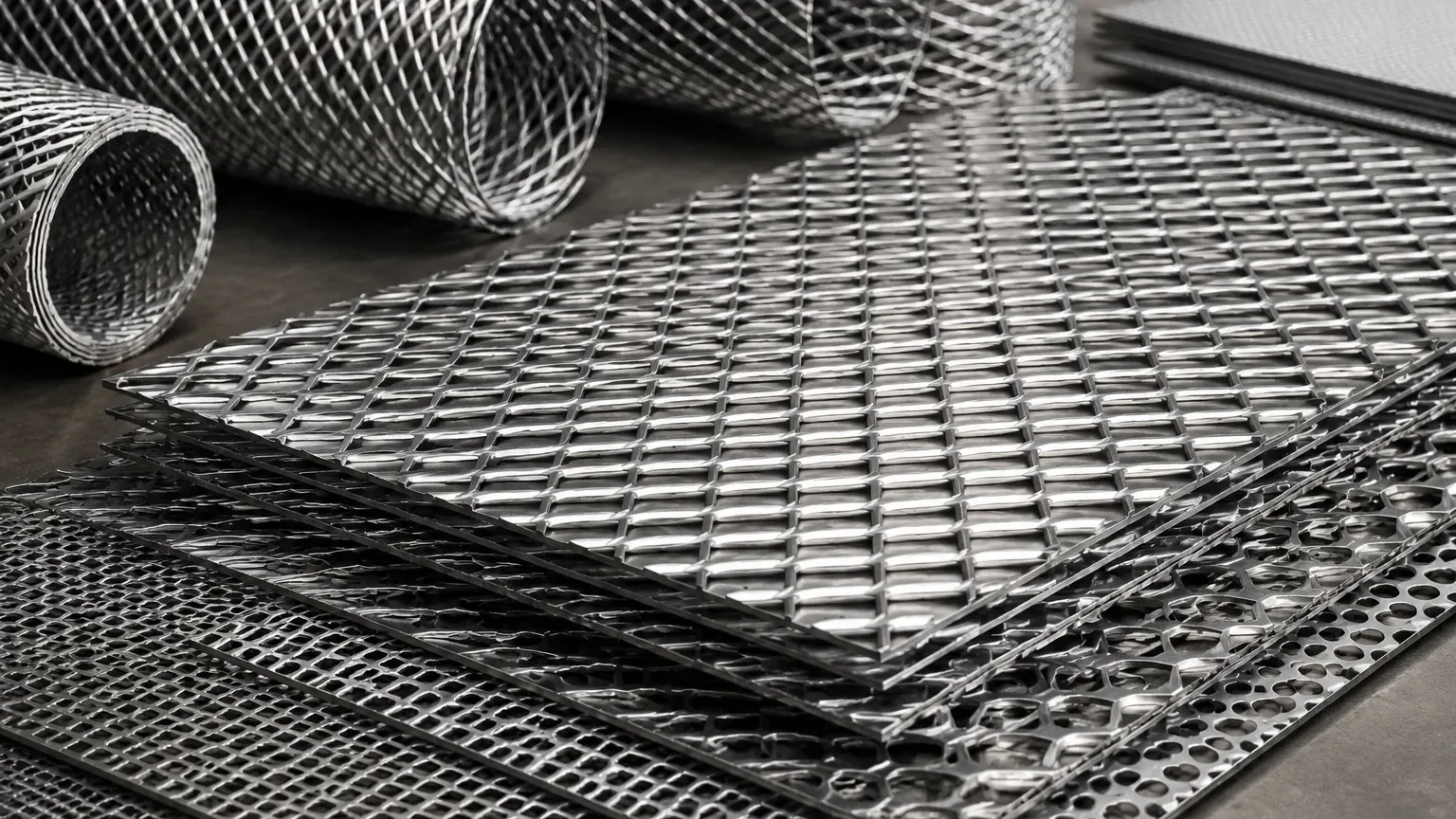
Expanded metal is produced through a unique process of simultaneous slitting and stretching. Unlike perforated metal, which involves punching holes out of a sheet and creating scrap material, the expansion process creates a diamond-shaped pattern without any material loss. This makes it an inherently sustainable and cost-effective choice for large-scale industrial applications.
From an engineering perspective, the structural integrity of expanded metal is one of its most significant benefits. Because the mesh is formed from a single piece of metal, there are no welds or joints that can fail under mechanical stress. The strands and bonds (the intersections of the strands) are set at a uniform angle to the plane of the sheet. This configuration provides excellent directional strength and allows the material to maintain its shape even after being cut into custom dimensions.
When evaluating Perforated & Expanded Metal options, it is important to distinguish between "raised" and "flattened" expanded metal. Raised expanded metal retains the natural angularity of the expansion process, providing a high-friction surface and maximum rigidity. Flattened expanded metal undergoes an additional cold-rolling process to create a smooth, level surface, which is often preferred in applications where the mesh must be bonded to other layers or where a low-profile finish is required for safety.
Technical Specifications: LWD, SWD, and Strand Geometry
To accurately communicate requirements to a manufacturer or supplier, engineers must use standardized terminology. The geometry of the diamond opening is the primary factor determining the mesh's performance in filtration and support roles.
* LWD (Long Way of Diamond): This refers to the distance from the center of one bond to the center of the next bond across the long axis of the diamond.
* SWD (Short Way of Diamond): This is the distance across the short axis of the diamond.
* Strand Width: The amount of metal fed into the machine between the slits, which determines the thickness of the individual "wires" in the mesh.
* Strand Thickness: The original thickness of the base metal sheet.
For filtration applications, the SWD and LWD determine the "open area" percentage. A higher open area allows for greater flow rates and lower pressure drops, which is critical in hydraulic and water treatment systems. Conversely, a smaller opening provides better support for fine wire cloth or synthetic filter media, preventing the media from bulging or tearing under high-pressure conditions.
Material Selection for Demanding Environments
When searching for "jual expanded metal mesh" for industrial use, material grade is the most critical factor in determining the component's lifespan. While carbon steel expanded metal is common in construction, industrial filtration almost exclusively demands stainless steel or specialized alloys due to their resistance to corrosion and temperature extremes.
Stainless Steel 304 vs. 316L
Stainless steel 304 is the standard choice for general industrial applications. It offers good corrosion resistance and mechanical properties. However, in chemical processing or marine environments, Grade 316L is the preferred specification. The addition of molybdenum in 316L provides superior resistance to pitting and crevice corrosion, particularly in the presence of chlorides. For the pharmaceutical and food and beverage industries, 316L is also favored for its high level of hygiene and ease of sterilization.
Specialized Alloys
In high-temperature or highly acidic environments, standard stainless steels may not suffice. Manufacturers like Kaifil can work with specialized materials to ensure that the expanded metal mesh can withstand the specific chemical profile of the process fluid. This includes considerations for pH levels, the presence of abrasive particulates, and the thermal cycling frequency of the operation.
Applications Across Chemical and Food Processing Industries
Expanded metal mesh is rarely used in isolation within the B2B sector; it is typically a component of a larger filtration or separation system. Its applications are diverse, spanning several critical industries.
Filtration Support and Pleat Spacing
In many liquid and gas filtration systems, expanded metal serves as the support structure for finer mesh layers. In pleated filter cartridges, expanded metal can be used as an inner core or outer wrap. Its rigidity ensures that the pleats remain uniformly spaced and do not collapse under the force of the incoming fluid. This maintenance of pleat geometry is essential for maximizing the effective filtration area and extending the service life of the cartridge.
Centrifuges and De-watering
In the food and beverage industry, particularly in sugar processing or juice extraction, expanded metal is used in centrifuge baskets. The high strength-to-weight ratio allows the mesh to withstand the centrifugal forces while allowing the liquid phase to pass through the diamond openings efficiently.
Protective Grilles and Safety Components
Beyond filtration, expanded metal is used to create protective cages for industrial equipment. These cages allow for ventilation and visibility while preventing personnel from coming into contact with moving parts or high-temperature surfaces. Because the material is difficult to cut without specialized tools, it also provides a high level of security for sensitive industrial zones.
Customization and OEM Capabilities for Precision Engineering
One of the primary reasons engineers seek specialized suppliers for "jual expanded metal mesh" is the need for customization. Standard off-the-shelf mesh rarely meets the exacting tolerances required for high-performance industrial machinery.
Customization options include:
* Custom Dimensions: Precision shearing and cutting to fit specific filter housings or frames.
* Edge Treatment: Welding or framing the edges of the expanded metal to eliminate sharp burrs and improve structural stability during installation.
* Surface Finishing: Electropolishing or passivating stainless steel components to enhance corrosion resistance and ensure a burr-free surface, which is critical in pharmaceutical applications.
* Forming and Shaping: Rolling the mesh into cylinders or cones to serve as the structural backbone of custom filter cartridges.
Kaifil’s OEM capabilities allow for the development of filtration components that are tailored to the specific flow dynamics and pressure requirements of a client's system. By collaborating during the design phase, engineers can optimize the mesh pattern to balance mechanical strength with filtration efficiency.
Evaluating Total Cost of Ownership and Procurement Factors
When sourcing expanded metal mesh, the initial purchase price is only one component of the total cost of ownership (TCO). Procurement teams must also consider the durability, maintenance requirements, and replacement cycles of the material.
Durability and Replacement Cycles
Low-quality expanded metal may suffer from "strand thinning" or uneven expansion, leading to premature failure in high-vibration or high-pressure environments. Investing in high-quality stainless steel mesh from a reputable manufacturer reduces the frequency of downtime for filter replacement. In many industrial processes, the cost of an hour of lost production far exceeds the cost of a premium filtration component.
Maintenance and Cleaning
Expanded metal is generally easier to clean than woven wire mesh because the diamond intersections are solid rather than overlapping. This reduces the risk of "media migration" or the trapping of particulates in the joints of the mesh. For systems that utilize Clean-in-Place (CIP) protocols, the smooth transitions of flattened expanded metal are particularly advantageous.
Supplier Reliability
For B2B buyers, the reliability of the supplier is paramount. This includes the ability to provide material certifications (MTRs), adhere to strict quality control standards, and meet delivery timelines. When searching for "jual expanded metal mesh," confirming that the supplier has experience in your specific industry—whether it be hydraulic systems or chemical refining—is a vital step in the vetting process.
Conclusion
Expanded metal mesh is a versatile and indispensable material in the world of industrial filtration. Its unique manufacturing process offers structural and economic advantages that make it a preferred choice for support structures, protective grilles, and coarse filtration media. By understanding the technical specifications, material properties, and customization possibilities, engineering and purchasing teams can ensure they select a product that enhances the efficiency and reliability of their operations.
Whether you are designing a new filtration system or seeking a more durable replacement for existing components, focusing on precision-engineered Perforated & Expanded Metal ensures that your infrastructure remains robust under the most demanding conditions. For those navigating the complexities of industrial procurement, partnering with a manufacturer that offers deep technical expertise and custom OEM capabilities is the most effective way to achieve long-term performance goals.
