


Jendela Expanded Metal
In industrial architecture and facility management, the selection of window and opening treatments requires a balance between security, ventilation, and structural longevity. The term "jendela expanded metal" refers to the application of expanded metal mesh within window frames or as protective screens. Unlike standard woven wire or perforated sheets, expanded metal offers a unique structural integrity derived from its manufacturing process, making it a preferred choice for high-traffic industrial environments, warehouses, and processing plants.
As a specialized manufacturer of precision metal components, Kaifil provides high-performance Perforated & Expanded Metal solutions designed to meet the rigorous demands of industrial filtration and structural applications. Understanding the technical nuances of expanded metal is essential for engineers and procurement teams looking to optimize facility safety and airflow.
Understanding the Manufacturing and Structure of Expanded Metal
Expanded metal is produced through a simultaneous slitting and stretching process. A solid sheet of metal—typically stainless steel, carbon steel, or aluminum—is fed into a machine where a series of knives cut and expand the material into a diamond-shaped pattern. Because the metal is stretched rather than punched, there is zero material waste, which contributes to the cost-effectiveness of the product compared to perforated metal.
For "jendela" or window applications, this process creates a continuous piece of metal without joins or welds. This lack of weak points ensures that the mesh remains structurally sound even under physical impact. The resulting strands and bonds (the intersections of the diamonds) are set at a uniform angle to the plane of the sheet. This angular orientation provides a three-dimensional depth that can be utilized for directional light control and privacy without sacrificing airflow.
Technical Specifications for Engineering Design
When specifying expanded metal for industrial windows, engineers must evaluate several key geometric and material properties to ensure the product meets the application's performance requirements.
1. SWD and LWD Dimensions
* SWD (Short Way of Diamond): The distance from the center of one bond to the center of the next bond measured across the short diamond diagonal.
* LWD (Long Way of Diamond): The distance from the center of one bond to the center of the next bond measured across the long diamond diagonal.
These dimensions dictate the size of the aperture. For security-focused jendela expanded metal, a smaller SWD is often preferred to prevent the passage of small objects or tools.
2. Strand Width and Thickness
* Strand Thickness: The thickness of the original base metal sheet.
* Strand Width: The amount of metal fed into the knives for each slit.
The combination of thickness and width determines the overall strength and weight of the mesh. In industrial filtration and protective screening, increasing the strand width enhances the rigidity of the panel, which is critical for windows exposed to high-pressure environments or potential mechanical impact.
3. Open Area Percentage
The open area is the ratio of the openings to the total area of the sheet. This is a critical calculation for engineers designing ventilation systems or windows for machine rooms. A higher open area allows for maximum airflow and heat dissipation but may reduce the level of security or physical protection. Kaifil’s manufacturing capabilities allow for precise control over these ratios to balance visibility and protection.
Material Selection: The Case for Stainless Steel
While expanded metal can be produced from various alloys, stainless steel (specifically Grades 304 and 316) is the standard for industrial applications. The choice of material directly impacts the lifecycle cost and maintenance requirements of the window screens.
* Grade 304 Stainless Steel: Suitable for most general industrial environments. It provides excellent corrosion resistance and high strength-to-weight ratios. It is commonly used in warehouse windows and internal factory partitions.
* Grade 316 Stainless Steel: Recommended for chemical processing plants, marine environments, or facilities where the mesh will be exposed to corrosive cleaning agents. The addition of molybdenum in Grade 316 enhances resistance to pitting and crevice corrosion, ensuring the jendela expanded metal remains structurally sound in aggressive atmospheres.
Using stainless steel also eliminates the need for frequent painting or coating, which is a significant advantage in food and beverage or pharmaceutical facilities where particulate contamination from flaking paint must be avoided.
Key Benefits of Jendela Expanded Metal in Industrial Settings
Integrating expanded metal into window designs offers several functional advantages over traditional glass or standard wire mesh.
Enhanced Security and Anti-Intrusion
The diamond-patterned mesh is exceptionally difficult to cut with standard hand tools. Because the mesh is expanded from a single sheet, it cannot be unraveled like woven wire. This makes it an ideal choice for "jendela" applications in remote utility buildings, storage facilities, and high-security zones within a plant.
Optimized Ventilation and Light Diffusion
Industrial facilities often require constant airflow to prevent the buildup of heat or fumes. Expanded metal allows for natural ventilation while acting as a barrier against debris and pests. Furthermore, the angled strands of the mesh can act as a louver, diffusing direct sunlight to reduce glare on machinery and control the internal temperature of the workspace.
Durability and Impact Resistance
In environments where heavy machinery or pressurized equipment is operated, windows are susceptible to impact. Expanded metal panels act as a sacrificial or primary shield, absorbing energy and protecting the internal environment. Its high strength-to-weight ratio ensures that even large window spans can be protected without adding excessive weight to the building’s structural frame.
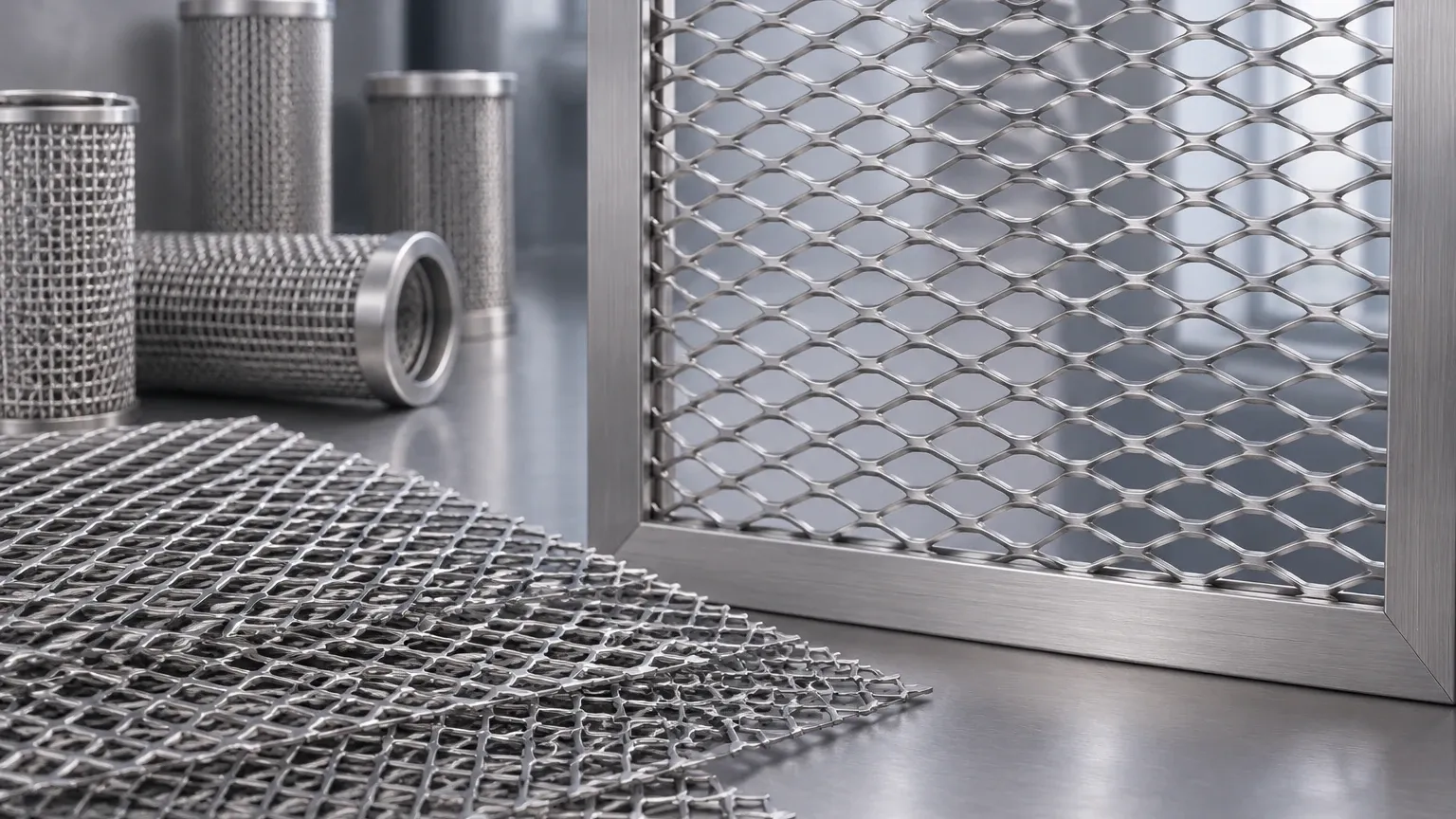
Comparing Perforated & Expanded Metal for Windows
Engineers often choose between perforated metal and expanded metal for window screens. While both serve similar purposes, their performance characteristics differ:
* Structural Integrity: Expanded metal is generally more rigid per pound than perforated metal because the strands are oriented at an angle, providing inherent truss-like strength.
* Waste and Cost: Perforated metal production involves punching holes, which creates scrap material. Expanded metal production involves no waste, often making it more cost-effective for large-scale industrial projects.
* Aesthetics and Visibility: Perforated metal offers a wider variety of hole shapes (round, square, slotted), which may be preferred for architectural consistency. However, expanded metal provides a unique "one-way" visibility effect depending on the angle of the strands, which can be useful for privacy in sensitive areas.
Kaifil specializes in both Perforated & Expanded Metal, allowing us to provide the specific solution that aligns with your engineering constraints and budget.
Installation and Maintenance Considerations
To maximize the lifespan of jendela expanded metal, proper installation and maintenance protocols must be followed.
Framing and Attachment
Expanded metal panels should be securely welded or mechanically fastened into a perimeter frame (typically angle iron or U-edging). This prevents the sharp edges of the mesh from being exposed and ensures the panel can withstand wind loads or physical pressure. For stainless steel applications, it is vital to use stainless steel fasteners or welding rods to prevent galvanic corrosion.
Surface Treatment
While stainless steel is naturally resistant to corrosion, certain applications may benefit from additional surface treatments:
* Pickling and Passivation: Removes surface contaminants and restores the chromium oxide layer, essential after welding.
* Electropolishing: Provides a smooth, mirror-like finish that reduces surface roughness, making it harder for contaminants or bacteria to adhere—a requirement in pharmaceutical and food processing windows.
Cleaning Cycles
In industrial environments, dust and particulate matter can accumulate in the diamond apertures. Periodic cleaning with pressurized water or mild detergents is usually sufficient to maintain both the aesthetic and functional properties of the mesh. The open structure of expanded metal makes it easier to clean than complex multi-layered filters or fine woven meshes.
Factors to Confirm Before Procurement
Before placing an order for jendela expanded metal, procurement teams and engineers should confirm the following technical details with the manufacturer:
1. Flattened vs. Raised: Expanded metal can be supplied in its "raised" (standard) state or "flattened" (passed through a cold rolling mill). Raised mesh offers more strength and better louver-like properties, while flattened mesh provides a smooth, flush surface.
2. Dimensional Tolerances: Ensure the panels are cut to the exact specifications of the window frames to avoid on-site adjustments, which can compromise the material's protective coating or structural integrity.
3. Load Requirements: If the mesh is intended to serve as a safety barrier for personnel (e.g., in high-elevation windows), the load-bearing capacity must be calculated based on the strand thickness and bond strength.
4. Compliance Standards: Verify that the material meets relevant industrial standards (such as ASTM or ISO) for chemical composition and mechanical properties.
Conclusion
Jendela expanded metal represents a robust, efficient, and versatile solution for industrial window and screening needs. By leveraging the unique structural properties of expanded metal, facilities can achieve superior security and ventilation while minimizing long-term maintenance costs. As a professional manufacturer, Kaifil is committed to delivering high-quality metal filtration and structural components tailored to the specific needs of our global partners. Whether your application requires high-grade stainless steel for chemical resistance or specific aperture sizes for precision airflow, our engineering team is ready to support your project requirements.
