


Jejaring Expanded Metal
In the realm of industrial filtration and structural support, the choice of media significantly influences the efficiency, durability, and cost-effectiveness of a system. One of the most versatile materials utilized across these sectors is expanded metal mesh, often referred to in technical procurement as jejaring expanded metal. Unlike traditional woven wire or perforated sheets, expanded metal offers a unique combination of structural integrity and open-area precision that makes it indispensable for demanding industrial applications.
At Kaifil, we specialize in the engineering and manufacturing of high-performance filtration components. Understanding the nuances of expanded metal—from its manufacturing process to its mechanical properties—is essential for engineers and purchasing teams tasked with optimizing filtration performance in chemical processing, hydraulic systems, and water treatment facilities.
The Manufacturing Process and Structural Integrity
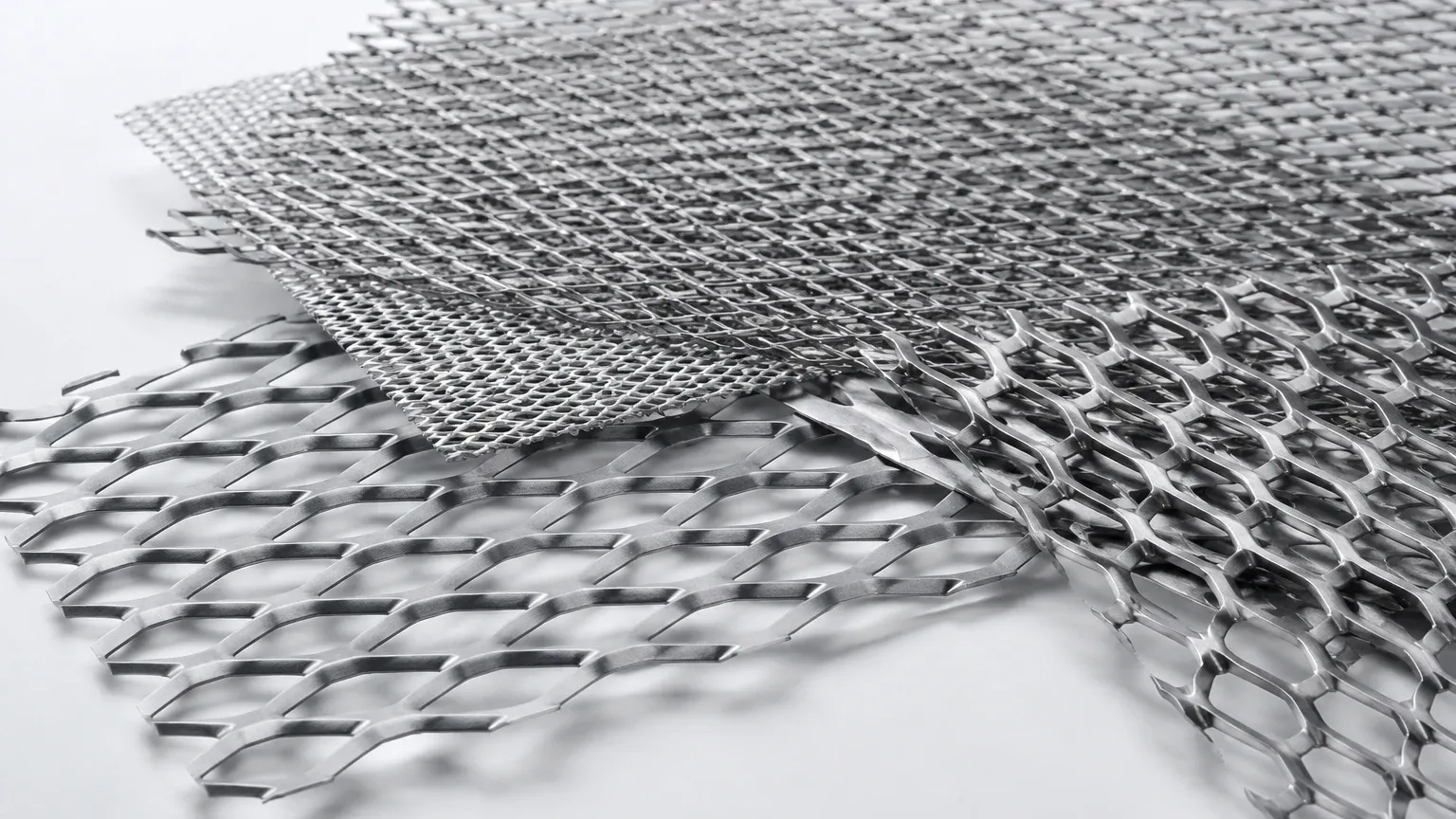
Jejaring expanded metal is produced through a precise process of simultaneous slitting and stretching. A solid sheet of metal, typically stainless steel or carbon steel, is fed through a machine equipped with specialized knives. As the knives strike the metal, they create uniform slits while the machine pulls the material apart, expanding the slits into diamond-shaped openings.
This process is fundamentally different from perforated metal production. While perforated metal involves punching out material (creating scrap), expanded metal is formed without any loss of material. This makes it an inherently more sustainable and often more cost-effective option for large-scale industrial projects.
Because the resulting mesh is composed of a single piece of metal without joins or welds, it possesses a high strength-to-weight ratio. The strands and bonds (where the strands intersect) are set at a uniform angle to the plane of the sheet. This configuration provides inherent directional strength, allowing the mesh to withstand significant mechanical stress and vibration without deforming or unraveling, a critical requirement for high-pressure filtration environments.
Technical Specifications: Navigating the Terminology
When specifying Perforated & Expanded Metal for an industrial application, engineers must be familiar with the standardized terminology used to define the geometry of the mesh. These dimensions dictate the filtration accuracy and the flow dynamics of the system.
* SWD (Short Way of Design): The distance from the center of one bond to the center of the next bond measured across the short diamond diagonal.
* LWD (Long Way of Design): The distance from the center of one bond to the center of the next bond measured across the long diamond diagonal.
* Strand Width: The amount of metal fed into the machine for each stroke of the knives.
* Strand Thickness: The original thickness of the base metal sheet.
* Opening Size: The clear space between the strands, which determines the size of particles that can pass through the mesh.
There are two primary forms of expanded metal: Standard (Raised) and Flattened. Standard expanded metal has a textured surface where the strands are tilted. This creates a three-dimensional profile that can enhance turbulence in fluid flow or provide better grip in structural applications. Flattened expanded metal is cold-rolled after the expansion process, resulting in a smooth, flat surface. In filtration, flattened mesh is often preferred when the component needs to be layered with other media or when a uniform thickness is required for housing compatibility.
Material Selection for Industrial Filtration
The performance of jejaring expanded metal is heavily dependent on the alloy selected. For the majority of Kaifil’s industrial clients, stainless steel is the material of choice due to its resistance to corrosion, temperature extremes, and chemical degradation.
1. 304 Stainless Steel: The most common grade, offering excellent corrosion resistance in a wide range of atmospheric and water treatment applications. It is suitable for food and beverage processing where hygiene and durability are paramount.
2. 316/316L Stainless Steel: Contains molybdenum, which provides superior resistance to chlorides and pitting. This is the standard for chemical processing, pharmaceutical manufacturing, and marine environments where the filtration system is exposed to aggressive media.
3. Specialty Alloys: For extreme environments involving high temperatures or highly acidic/alkaline fluids, materials such as Monel, Inconel, or Duplex stainless steel may be utilized to ensure the longevity of the filter component.
Applications of Expanded Metal in Filtration Systems
Jejaring expanded metal serves several critical roles within an industrial filtration assembly. It is rarely used as a standalone fine filter but is essential as a support or pre-filtration layer.
Media Support and Reinforcement
In many high-pressure hydraulic or gas filtration systems, the primary filtration media (such as fine wire mesh or fiber felt) lacks the structural rigidity to withstand the differential pressure. Expanded metal is used as an internal or external support core. Its rigid diamond structure prevents the finer media from collapsing or pleating unevenly under load, ensuring consistent filtration performance across the entire surface area.
Coarse Filtration and Pre-Filtering
For applications involving large particulate matter, such as water intake screens or industrial cooling systems, expanded metal acts as an effective coarse strainer. It captures large debris—such as stones, vegetation, or metal shavings—protecting downstream fine filters and sensitive equipment like pumps and valves from damage.
Flow Diffusion and Turbulence Control
In chemical reactors and fluid processing units, expanded metal can be used to diffuse the flow of liquids or gases. The angled strands of standard expanded metal can break up laminar flow, creating controlled turbulence that can be beneficial for heat exchange or mixing processes within a filtration housing.
Comparing Perforated and Expanded Metal
Engineers often weigh the pros and cons of perforated metal versus jejaring expanded metal. While both fall under the broader category of Perforated & Expanded Metal, their performance characteristics differ:
* Weight and Economy: Expanded metal is generally lighter and more economical because it is stretched rather than punched. You get more surface area from the same weight of raw material.
* Strength: Because it is a continuous piece of metal, expanded metal often has a higher strength-to-weight ratio than perforated metal of the same thickness.
* Open Area: Expanded metal can achieve very high percentages of open area (up to 80% or more), which is often difficult to achieve with perforated metal without compromising the structural integrity of the sheet. This high open area translates to lower pressure drops across the filter.
* Aesthetics and Surface: Perforated metal offers more variety in hole shapes (round, square, hexagonal) and provides a smoother surface without the need for additional flattening processes.
Engineering Considerations for Selection
When selecting jejaring expanded metal for a project, several engineering factors must be evaluated to ensure the component meets the application's requirements:
Pressure Drop (ΔP)
The open area of the mesh directly impacts the pressure drop. A higher open area reduces resistance to flow, which lowers energy consumption for pumps and compressors. However, increasing the open area often means using thinner strands, which can reduce the mechanical strength. Engineers must find the optimal balance between flow efficiency and structural durability.
Filtration Accuracy
While expanded metal is not intended for micron-rated filtration, the LWD and SWD must be precisely calculated to ensure the mesh captures the targeted particle size in coarse applications. For custom OEM projects, Kaifil can adjust the expansion ratio to meet specific aperture requirements.
Chemical and Thermal Compatibility
The operating environment dictates the material grade. Beyond just the fluid being filtered, engineers must consider cleaning agents (such as CIP chemicals in food processing) and the maximum operating temperature, which can affect the tensile strength and corrosion resistance of the metal.
Total Cost of Ownership
While the initial purchase price is important, the total cost of ownership includes the lifespan of the component and the maintenance requirements. Stainless steel expanded metal, though more expensive than carbon steel, often provides a lower total cost due to its extended service life and reduced need for replacement in corrosive environments.
Customization and OEM Capabilities
At Kaifil, we understand that standard off-the-shelf solutions are often insufficient for complex industrial systems. We provide comprehensive customization for jejaring expanded metal components, including:
* Custom Dimensions: Tailoring the SWD, LWD, and strand dimensions to specific filtration targets.
* Material Sourcing: Utilizing high-grade alloys to meet stringent industry standards (FDA, 3A, etc.).
* Fabrication: Beyond providing the mesh, we offer value-added services such as cutting, rolling, welding, and forming the expanded metal into finished filter cartridges or support cages.
* Surface Finishing: Options such as electropolishing or passivating to enhance corrosion resistance and ensure a burr-free finish, which is vital for pharmaceutical and food-grade applications.
Maintenance and Replacement Cycles
To maintain the efficiency of a filtration system, regular inspection of the expanded metal components is necessary. While these parts are designed for durability, they are subject to wear over time, especially in abrasive environments.
Signs that a replacement is needed include visible deformation of the diamond pattern, thinning of the strands due to erosion, or persistent clogging that cannot be removed through standard cleaning protocols. In systems where the expanded metal serves as a support for finer media, any compromise in the structural integrity of the expanded layer can lead to the catastrophic failure of the entire filter element.
Conclusion
Jejaring expanded metal is a foundational component in the world of industrial filtration. Its unique manufacturing process results in a material that is strong, efficient, and versatile. By carefully selecting the right material, mesh geometry, and finish, engineers can significantly improve the performance and reliability of their filtration systems.
Whether you are designing a new chemical processing line or looking to optimize the support structures in your hydraulic filters, understanding the technical properties of Perforated & Expanded Metal is the first step toward achieving superior results. Kaifil remains committed to providing the technical expertise and manufacturing precision required to meet these demanding industrial needs.
