


Kuldipsingh Expanded Metal
In the landscape of industrial construction and specialized filtration, the selection of materials often dictates the longevity and efficiency of a project. For professionals sourcing materials in the Caribbean and South American markets, Kuldipsingh expanded metal represents a significant segment of the hardware and industrial supply chain. As a versatile material used in everything from architectural facades to heavy-duty industrial walkways, expanded metal is a staple of modern engineering.
However, for engineers and procurement teams focused on high-precision applications—specifically within the realms of chemical processing, water treatment, and hydraulic systems—understanding the technical nuances of Perforated & Expanded Metal is essential. While general-purpose expanded metal serves broad structural needs, specialized filtration components require a deeper analysis of material grades, tolerances, and geometric configurations. This guide explores the technical foundations of expanded metal, its role in filtration, and the critical evaluation criteria for industrial buyers.
Understanding the Role of Expanded Metal in Industrial Infrastructure
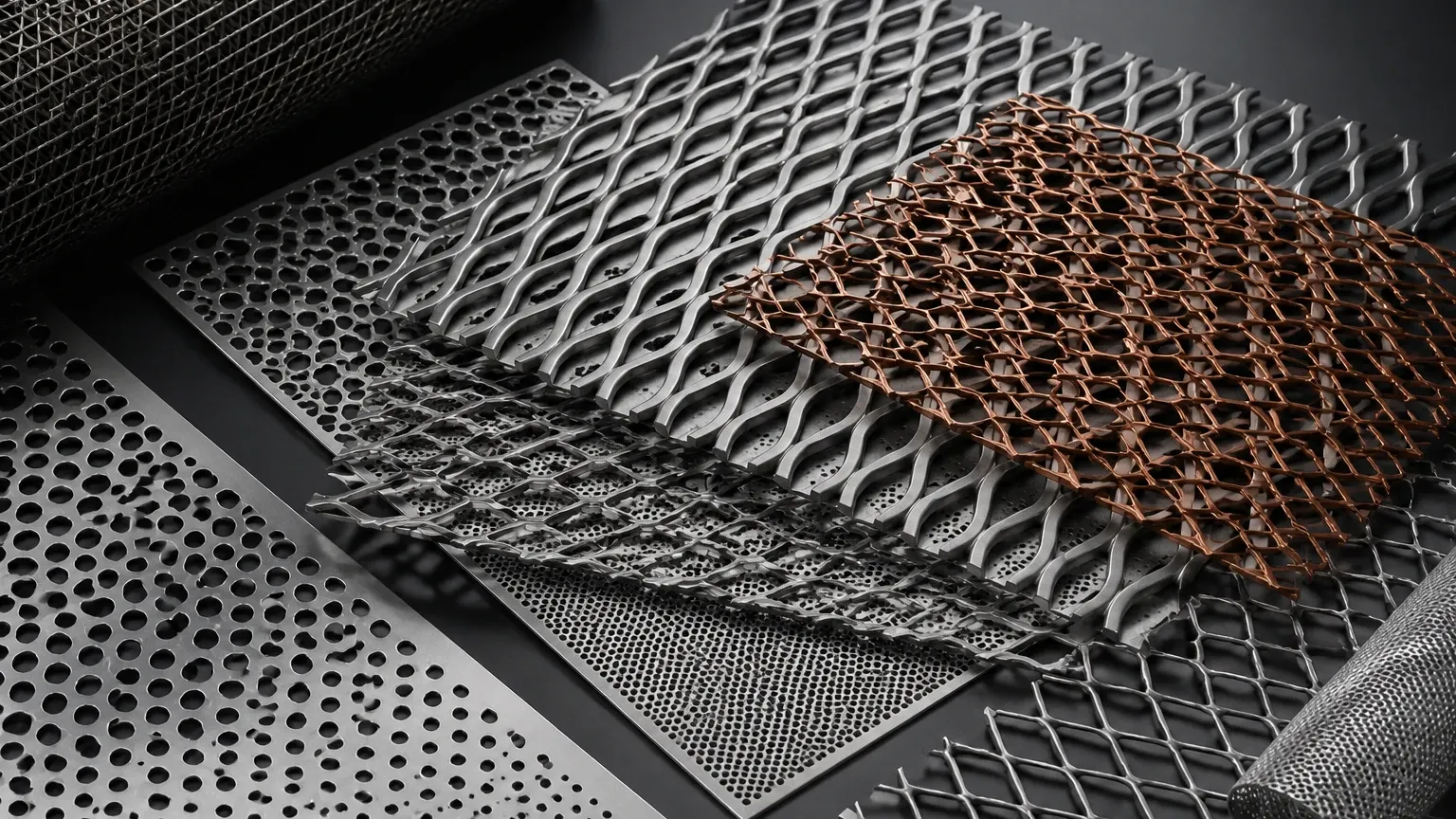
Expanded metal is produced by simultaneously slitting and stretching a solid sheet of metal. This process creates a diamond-shaped pattern of openings, resulting in a one-piece construction that is stronger, lighter, and more rigid than the original sheet. Unlike woven wire mesh, expanded metal does not unravel, and unlike perforated metal, the manufacturing process generates virtually no waste, making it a cost-effective solution for large-scale industrial projects.
In the context of regional suppliers like Kuldipsingh, expanded metal is often categorized by its structural utility. It is frequently utilized for safety gratings, security fencing, and reinforcing concrete. However, from an engineering perspective, the "expansion" process also creates a unique three-dimensional profile. The strands and bonds (the intersections of the strands) are set at a uniform angle to the plane of the sheet. This provides extra strength and allows for the controlled passage of air, light, and liquids, which is why it is a fundamental component in industrial filtration assemblies.
Technical Specifications: LWD, SWD, and Material Geometry
When specifying kuldipsingh expanded metal or similar industrial products, engineers must use precise terminology to ensure the material meets the application's mechanical requirements. The geometry of expanded metal is defined by four primary measurements:
1. Long Way of Design (LWD): The distance from a point on one diamond to the corresponding point on the next diamond, measured across the long axis.
2. Short Way of Design (SWD): The distance measured across the short axis of the diamond.
3. Strand Width: The amount of metal fed into the machine for each stroke of the die.
4. Strand Thickness: The thickness of the original base metal sheet.
These dimensions determine the "open area" percentage, which is a critical factor in filtration and fluid dynamics. A higher open area allows for greater flow rates and lower pressure drops, while a smaller open area provides better particle retention and structural support.
Furthermore, buyers must choose between Raised (Standard) and Flattened expanded metal. Raised expanded metal retains the angled profile created during the expansion process, providing maximum rigidity and a slip-resistant surface. Flattened expanded metal is passed through a cold-rolling mill after expansion, resulting in a smooth, flat surface. In filtration applications, flattened metal is often preferred when the expanded sheet serves as a support layer for a fine wire mesh, as it prevents the mesh from being damaged by sharp edges.
Applications of Perforated & Expanded Metal in Filtration Systems
In industrial filtration, the role of Perforated & Expanded Metal extends far beyond simple screening. It is frequently used as a structural backbone for complex filter cartridges. Because filtration media (such as fine stainless steel mesh or fiber felt) often lacks the mechanical strength to withstand high-pressure differentials, expanded metal provides the necessary internal or external support.
Support Cores and Cages
In hydraulic and oil filtration, expanded metal tubes serve as the inner core of the filter element. The diamond pattern allows for a high flow of fluid while preventing the filter media from collapsing under pressure. Similarly, external cages made of expanded metal protect the delicate filter media from mechanical damage during installation and operation.
Pre-Filtration and Coarse Screening
In water treatment and HVAC systems, expanded metal acts as a primary barrier against large debris. Its rigid structure allows it to withstand the impact of heavy particles without deforming. In these scenarios, the choice of material—typically stainless steel for its corrosion resistance—is paramount to prevent the introduction of rust into the system.
Flame Arrestors and Heat Dissipation
The high surface-area-to-volume ratio of expanded metal makes it an excellent medium for heat dissipation and flame arrestors. In chemical processing plants, layers of expanded metal can be used to quench flames by absorbing and dissipating heat rapidly, preventing explosions in volatile environments.
Material Selection: Balancing Durability and Chemical Resistance
One of the most critical decisions for engineers sourcing kuldipsingh expanded metal is the choice of alloy. While carbon steel is sufficient for general construction and dry environments, industrial filtration often demands higher-performance materials.
* Stainless Steel (304 and 316L): This is the industry standard for filtration. Grade 304 offers excellent strength and basic corrosion resistance. Grade 316L, containing molybdenum, is essential for applications involving salt water, chlorides, or acidic chemicals, such as those found in pharmaceutical and food processing.
* Aluminum: Lightweight and naturally resistant to atmospheric corrosion, aluminum expanded metal is often used in air filtration and architectural applications where weight is a primary concern.
* Galvanized Steel: For outdoor structural use, galvanized steel provides a cost-effective barrier against rust, though it is generally avoided in high-purity filtration processes due to the risk of zinc leaching.
For engineers, the total cost of ownership (TCO) should guide the material choice. While stainless steel has a higher upfront cost than carbon steel, its resistance to corrosion and ease of cleaning (via backwashing or ultrasonic cleaning) significantly extends the replacement cycle, reducing long-term operational expenses.
Evaluating Quality Standards for Industrial Procurement
When procuring expanded metal for critical systems, relying on general hardware specifications may not be sufficient. Professional manufacturers and suppliers adhere to strict tolerances to ensure consistency across production batches. Key quality indicators include:
* Levelness: The sheet must be free from significant camber or waviness, which can interfere with welding and assembly into filter housings.
* Edge Quality: For filtration components, burr-free edges are essential to prevent damage to fine mesh layers and to ensure the safety of personnel during maintenance.
* Dimensional Accuracy: Variations in LWD or SWD can alter the open area percentage, leading to inconsistent flow rates across different filter units.
Before finalizing a purchase, procurement teams should confirm the manufacturer’s ability to provide material certifications (MTRs) that verify the chemical composition and mechanical properties of the metal. This is especially important in regulated industries like food and beverage or pharmaceutical manufacturing, where material traceability is a legal requirement.
Customization and Engineering Support for Filtration Projects
While standard sizes of kuldipsingh expanded metal are readily available for general use, many industrial applications require customized solutions. Customization can involve specific diamond sizes, non-standard sheet dimensions, or specialized post-processing treatments such as pickling, passivating, or electropolishing to enhance corrosion resistance.
Working with a manufacturer that specializes in Perforated & Expanded Metal allows engineers to optimize the filtration component for their specific operating conditions. This includes determining the ideal balance between structural integrity and permeability. For instance, in high-viscosity fluid filtration, a specific strand width may be required to prevent the metal from vibrating and causing fatigue failure over time.
Key Questions for Engineers to Consider:
1. What is the maximum differential pressure the component must withstand? This dictates the required strand thickness and material grade.
2. What is the chemical composition of the process fluid? This determines whether SS304, SS316L, or a more exotic alloy is necessary.
3. Will the filter be cleaned and reused? If so, the material must be able to withstand the cleaning method (e.g., high-pressure steam or chemical solvents).
4. Are there specific weight constraints? This may lead to the selection of aluminum or a higher-strength, thinner-gauge stainless steel.
Conclusion
Whether you are sourcing kuldipsingh expanded metal for a regional construction project or designing a complex industrial filtration system, understanding the technical attributes of the material is the first step toward a successful outcome. Expanded metal offers a unique combination of strength, transparency, and cost-efficiency that few other materials can match. By focusing on precise geometric specifications, appropriate material selection, and rigorous quality standards, engineers can ensure that their filtration solutions perform reliably in even the most demanding environments.
For those requiring high-precision components, moving beyond general-purpose hardware to specialized industrial-grade expanded metal is essential for maintaining system integrity and optimizing filtration performance. By partnering with experts in metal fabrication, purchasing teams can secure components that meet the exact rigors of their industrial applications, ensuring long-term durability and operational success.
