


Kawat Expanded Metal Mesh
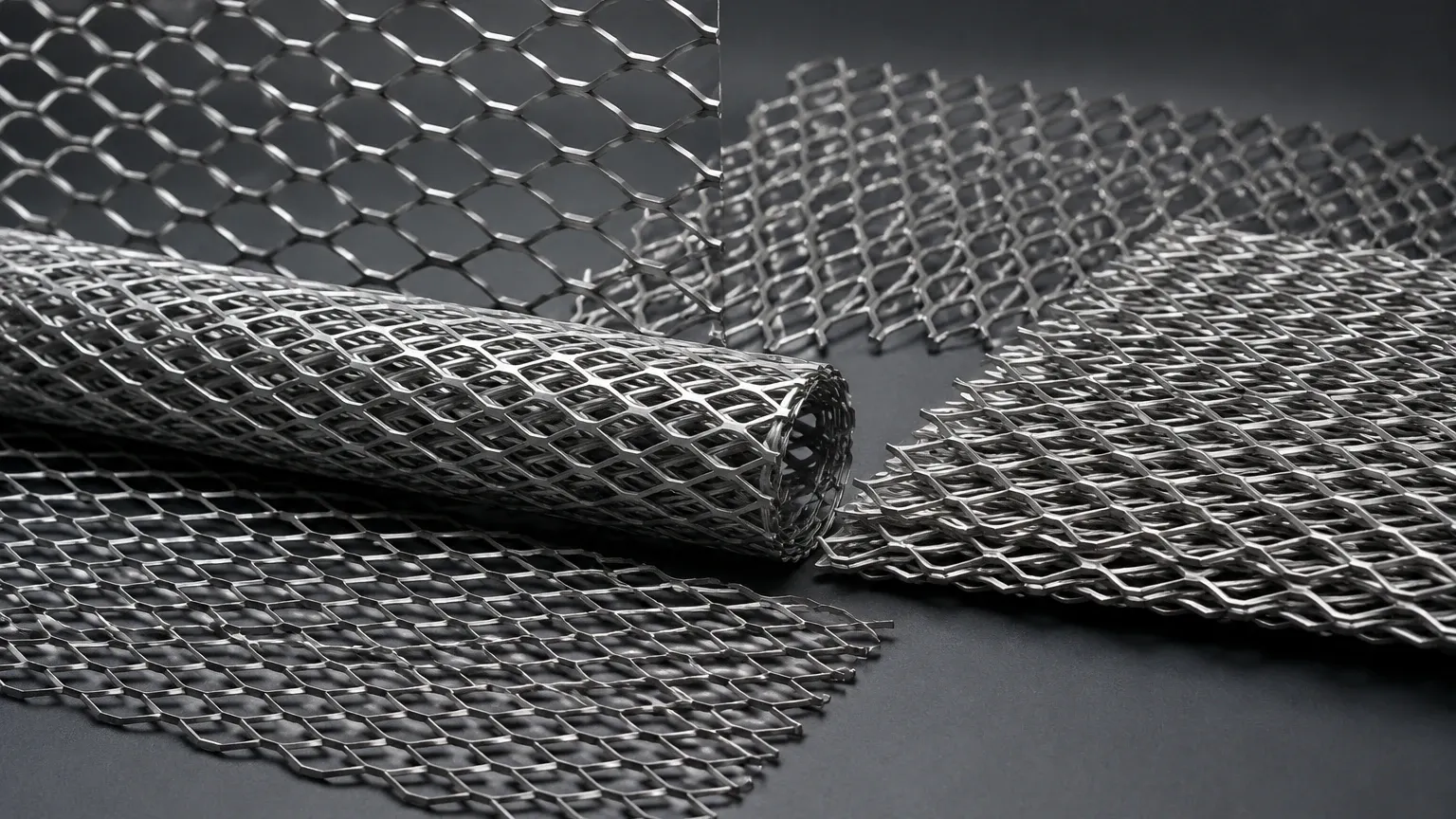
In industrial filtration and structural engineering, the selection of support materials and primary filter media is critical to the longevity and efficiency of a system. Kawat expanded metal mesh, a term often used to describe expanded metal sheets or coils in specific regional markets, represents a versatile solution for applications requiring high strength-to-weight ratios and precise open areas. Unlike woven wire mesh or perforated sheets, expanded metal is produced through a unique slitting and stretching process that creates a rigid, one-piece structure without joins or welds.
For engineers and procurement specialists, understanding the technical nuances of this material is essential for optimizing performance in chemical processing, water treatment, and hydraulic systems. This guide examines the manufacturing principles, engineering specifications, and selection criteria for Perforated & Expanded Metal components within industrial environments.
Manufacturing Principles of Expanded Metal Mesh
The production of kawat expanded metal mesh differs significantly from other metal processing techniques. It begins with a solid sheet or coil of metal—most commonly stainless steel, aluminum, or carbon steel. The material is fed through a machine equipped with a specialized knife that simultaneously slits and stretches the metal.
As the knife moves in a reciprocating pattern, it creates a series of diamond-shaped openings. Because the metal is stretched rather than punched, there is virtually no material waste during production. This makes expanded metal a cost-effective alternative to perforated metal in many scenarios. The resulting mesh is a single, continuous piece of material, which ensures that the strands do not unravel under mechanical stress.
From an engineering perspective, the manufacturing process results in two distinct forms:
1. Standard (Raised) Expanded Metal: The strands are set at a sharp angle to the plane of the sheet, providing a textured surface and high rigidity. This is often used for structural support and filtration stages where turbulence or high surface area is beneficial.
2. Flattened Expanded Metal: The raised mesh is passed through a cold-rolling mill, which flattens the strands into the same plane as the original sheet. This creates a smooth surface, which is often preferred for applications where the mesh must interface closely with delicate filter media or where a specific thickness tolerance is required.
Key Engineering Specifications for Selection
When specifying kawat expanded metal mesh for industrial filtration or structural components, engineers must define several critical dimensions that dictate the material’s performance. Standard terminology used in the industry includes:
* SWD (Short Way of Design): The distance from the center of one bond to the center of the next bond measured across the short diamond diagonal.
* LWD (Long Way of Design): The distance measured across the long diamond diagonal.
* Strand Width: The amount of metal fed into the machine between the slits, which determines the thickness of the individual diamond legs.
* Strand Thickness: The gauge of the original base metal sheet.
* Open Area Percentage: This is perhaps the most critical metric for filtration applications. It determines the flow rate and pressure drop across the mesh. Calculating the open area involves analyzing the relationship between the strand width and the diamond dimensions.
Choosing the correct SWD and LWD is not merely about aesthetics; it directly influences the mechanical strength and the size of particles the mesh can retain or support. In filtration systems, expanded metal often serves as a "support cage" for finer wire mesh or synthetic membranes, where its rigidity prevents the finer media from collapsing under high differential pressure.
Material Selection for Demanding Environments
The performance of kawat expanded metal mesh is heavily dependent on the alloy selected. In the B2B industrial sector, material compatibility with the processed fluid or gas is paramount.
Stainless Steel (304 and 316L)
Stainless steel is the industry standard for filtration due to its excellent corrosion resistance and thermal stability. Grade 304 is suitable for general industrial use, while Grade 316L is preferred for pharmaceutical, food and beverage, and marine applications where resistance to chlorides and acidic environments is required. Stainless steel expanded metal maintains its structural integrity at high temperatures, making it ideal for hot gas filtration or chemical reactors.
Aluminum and Specialized Alloys
For applications where weight reduction is a priority, such as in aerospace or portable filtration units, aluminum expanded metal offers a high strength-to-weight ratio. In highly corrosive chemical processing, more exotic materials like Monel, Inconel, or Titanium may be used to manufacture expanded metal components, though these are typically reserved for specialized OEM requirements.
The Role of Expanded Metal in Industrial Filtration
In the context of professional filtration solutions, kawat expanded metal mesh rarely acts alone. It is usually a component of a multi-stage filtration system or a structural element within a filter cartridge.
Support and Pleat Spacing
In pleated filter cartridges, expanded metal is often used as an outer wrap or an inner core. Its rigidity ensures that the pleats of the primary filter media (such as fiberglass or polyester) remain evenly spaced and do not "blind" or bunch together when fluid flow increases. This maintains the effective filtration area and extends the service life of the cartridge.
Coarse Pre-Filtration
In water treatment or HVAC systems, expanded metal can serve as a primary coarse filter to remove large debris before the fluid reaches more sensitive downstream components. The diamond geometry is particularly effective at capturing irregular solids while maintaining a high flow rate.
Flame and Spark Arrestors
The high surface area of expanded metal makes it an excellent heat sink. In industrial exhaust systems, layers of kawat expanded metal mesh are used as flame arrestors or spark traps, cooling gases rapidly and preventing the passage of ignited particles.
Evaluating Total Cost of Ownership (TCO)
When procurement teams evaluate kawat expanded metal mesh, the initial purchase price is only one factor. A technical assessment should include the total cost of ownership, which encompasses durability, maintenance, and replacement cycles.
1. Durability under Pressure: Unlike woven mesh, which may experience wire migration or shifting under high-pressure pulses, expanded metal is a fixed structure. This reduces the risk of bypass and mechanical failure, leading to fewer unscheduled shutdowns.
2. Cleanability: Flattened expanded metal is relatively easy to clean via backwashing or ultrasonic cleaning, especially when manufactured from high-quality stainless steel. This allows for multiple reuse cycles in certain industrial processes.
3. Customization and OEM Integration: Working with a manufacturer that provides customized Perforated & Expanded Metal solutions allows for precise integration into existing equipment. Custom dimensions, edge treatments (such as U-edging for safety and fit), and specific material certifications (e.g., FDA compliance for food contact) reduce installation time and ensure regulatory compliance.
Common Risks and Quality Confirmation
To ensure the reliability of kawat expanded metal mesh in critical applications, engineers should confirm several quality benchmarks before finalizing a purchase:
* Burr Removal: The expansion process can leave sharp edges. For filtration applications, it is essential to specify whether the mesh needs to be deburred or tumbled to prevent damage to primary filter media or injury to personnel during maintenance.
* Flatness Tolerances: If the mesh is to be used in a precision-engineered housing, standard mill flatness may not be sufficient. Specifying leveled or extra-flat tolerances is necessary for seamless assembly.
* Material Certification: Always request Mill Test Reports (MTRs) to verify the chemical composition of the alloy, ensuring it meets the required standards (ASTM, DIN, etc.) for corrosion resistance.
* Weldability: If the mesh is to be welded into a frame or cylinder, the manufacturer should provide guidance on the best welding techniques (TIG, Spot, or Resistance welding) to avoid compromising the structural integrity of the bonds.
Conclusion
Kawat expanded metal mesh is a fundamental component in the toolkit of modern industrial engineering. Its unique combination of structural rigidity, open-area precision, and material efficiency makes it indispensable for support, protection, and filtration. By focusing on technical specifications such as SWD/LWD, material grade, and the distinction between raised and flattened forms, technical professionals can select the optimal mesh for their specific application requirements.
Whether used as a robust support core in a high-pressure hydraulic filter or as a protective screen in a chemical reactor, the quality of the expanded metal directly impacts the reliability of the entire system. Partnering with a manufacturer that understands these engineering nuances and offers customized OEM capabilities is the most effective way to ensure long-term performance and cost-efficiency in demanding industrial environments.
