


Lowes Expanded Metal
In the procurement process for industrial components, engineers and purchasing managers often encounter a wide range of sourcing options. While general retail searches for terms like "lowes expanded metal" are common for quick-fix maintenance or non-critical structural applications, industrial-grade filtration and precision engineering demand a more rigorous set of specifications. For sectors such as chemical processing, pharmaceuticals, and food production, the difference between a general-purpose metal sheet and a precision-engineered component can significantly impact operational efficiency and equipment longevity.
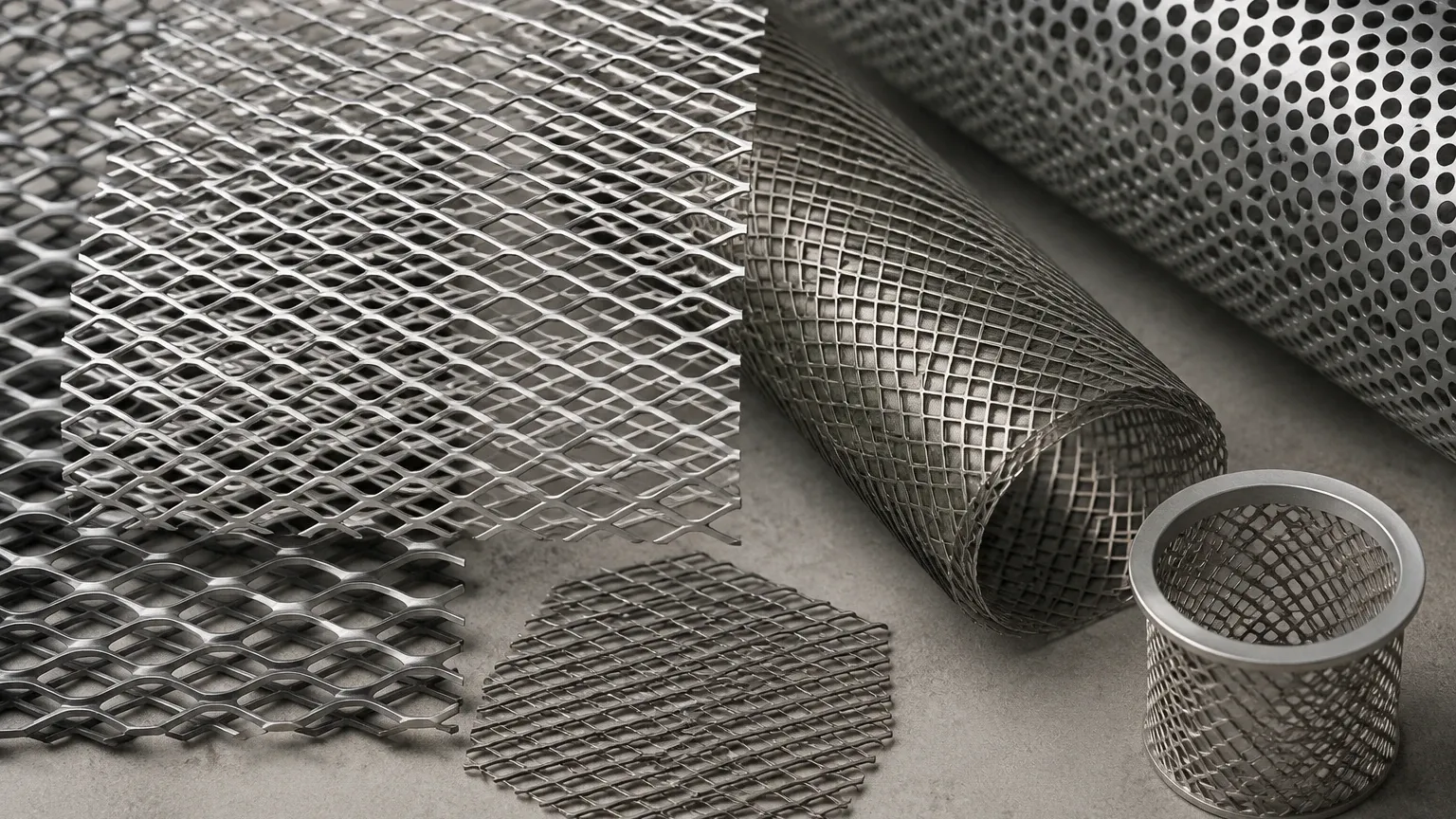
Expanded metal is a versatile material created by simultaneously slitting and stretching a solid metal sheet. This process results in a diamond-shaped pattern that provides structural integrity while allowing for the passage of air, liquid, or light. However, the requirements for a high-performance filtration system or a heavy-duty hydraulic support structure far exceed the standard tolerances found in retail-grade hardware. Understanding these differences is essential for technical professionals tasked with optimizing industrial processes.
Understanding Expanded Metal Specifications: Retail vs. Industrial Grade
When evaluating options like lowes expanded metal, it is important to recognize that retail products are typically manufactured for general utility, such as fencing, shelving, or basic architectural accents. In contrast, industrial-grade Perforated & Expanded Metal is produced under strict quality control protocols to meet specific engineering tolerances.
Material Composition and Traceability
Retail-grade expanded metal is often limited to carbon steel or basic aluminum alloys. For B2B applications, material selection is critical. Industrial manufacturers like Kaifil specialize in stainless steel (304, 316, and 316L) and other corrosion-resistant alloys. In industrial environments, particularly those involving corrosive chemicals or high temperatures, the exact grade of stainless steel must be verified with material test reports (MTRs). This traceability ensures that the metal will not degrade prematurely, preventing system contamination and unplanned downtime.
Dimensional Precision
In precision filtration, the dimensions of the diamond opening—referred to as the Short Way of the Design (SWD) and the Long Way of the Design (LWD)—must be consistent across the entire sheet. Retail products often exhibit variations in strand width and opening size that are acceptable for a garden gate but catastrophic for a filter support structure. Industrial-grade expanded metal maintains tight tolerances, ensuring that the open area percentage remains constant, which is vital for calculating flow rates and pressure drops in hydraulic and water treatment systems.
Key Evaluation Criteria for Industrial Filtration Applications
Engineers must look beyond the surface appearance of expanded metal to determine its suitability for industrial use. The following criteria are essential when selecting components for demanding environments:
Open Area and Flow Dynamics
The open area percentage determines how much fluid or gas can pass through the metal. In filtration, expanded metal often serves as a support layer for finer wire mesh. If the open area is inconsistent or too low, it creates excessive backpressure, forcing the pump to work harder and increasing energy consumption. Conversely, if the structural strands are too thin, the metal may collapse under the pressure of the process flow.
Structural Integrity and Load Bearing
Unlike perforated metal, which is made by punching holes and removing material, expanded metal is stretched, which actually increases its strength-to-weight ratio. However, the orientation of the diamonds matters. The "bond" where the strands intersect provides the primary structural strength. Engineers must confirm whether the application requires "Raised" (standard) expanded metal, which has a textured surface, or "Flattened" expanded metal, which has been cold-rolled to create a smooth, level surface. Flattened metal is often preferred in filtration to prevent the sharp edges of the strands from damaging delicate filter media.
Surface Finish and Cleanability
In the food and beverage or pharmaceutical industries, surface finish is a non-negotiable requirement. Retail-grade metal may have burrs, oil residues from the manufacturing process, or irregular surfaces that can harbor bacteria. Industrial-grade stainless steel expanded metal can be electropolished or passivated to meet sanitary standards, ensuring that the component is easy to clean and resistant to pitting corrosion.
Common Risks of Using General-Purpose Metal in Industrial Systems
While the immediate availability of products like lowes expanded metal may seem attractive for urgent repairs, the long-term risks often outweigh the initial convenience. Purchasing teams must consider the total cost of ownership rather than just the purchase price.
1. Contamination Risks: General-purpose carbon steel can rust quickly when exposed to moisture or chemicals. In a filtration system, rust particles can break off and contaminate the downstream product, leading to rejected batches and potential legal liabilities in regulated industries.
2. Mechanical Failure: If the metal is not rated for the specific pressure or temperature of an industrial process, it can suffer from fatigue. A failure in a support structure can lead to the collapse of the entire filter cartridge, causing a bypass of unfiltered material into sensitive machinery.
3. Lack of Customization: Industrial applications rarely fit a "one size fits all" model. Retail outlets offer limited sheet sizes and diamond patterns. B2B manufacturers provide customized solutions where the SWD, LWD, and strand thickness are tailored to the specific viscosity and flow rate of the medium being filtered.
Engineering Considerations for Custom Perforated & Expanded Metal
For engineers designing custom filtration solutions, the selection of Perforated & Expanded Metal involves several technical decisions. Kaifil’s expertise in this area allows for the development of components that serve as the backbone of high-performance filter cartridges.
Integration with Other Media
In many industrial filters, expanded metal is used as an inner or outer support core. It protects the primary filter media—such as pleated wire mesh or fiber felt—from the stresses of high-pressure differentials. The choice between perforated metal (with round or square holes) and expanded metal (with diamond openings) often depends on the required rigidity and the specific flow characteristics of the application.
Edge Treatments and Welding
Industrial-grade components must be easy to integrate into larger assemblies. This requires precise shearing and edge treatments to ensure that the metal can be welded or mechanically fastened without compromising its structural integrity. Custom manufacturing allows for "solid borders" or specific margins where the expansion process is halted, providing a flat surface for seam welding in cylindrical filter cartridges.
Selecting the Right Material for Demanding Environments
The environment in which the metal will operate dictates the material choice. While lowes expanded metal might suffice for a dry, indoor storage rack, industrial environments are rarely so forgiving.
* Chemical Processing: Requires high-grade stainless steel or specialty alloys to resist aggressive acids and bases. The corrosion allowance must be calculated to ensure a reliable service life.
* Food and Beverage: Demands 304 or 316 stainless steel with specific Ra (roughness average) values to prevent food particles from sticking and to facilitate CIP (Clean-In-Place) cycles.
* Hydraulic Systems: Focuses on pressure resistance. The expanded metal must support the filter media against sudden pressure spikes without deforming.
* Water Treatment: Requires resistance to chlorine and other disinfecting agents, making 316L stainless steel a common choice due to its low carbon content and resistance to intergranular corrosion.
Total Cost of Ownership: Why Precision Manufacturing Matters
In a B2B context, the procurement of filtration components should be viewed through the lens of the total cost of ownership (TCO). A lower-cost, retail-grade metal may save money upfront, but the costs associated with frequent replacements, system downtime, and potential product contamination are significantly higher.
By partnering with a professional manufacturer like Kaifil, companies gain access to engineering support that helps optimize the filter design from the outset. This includes selecting the optimal mesh size for the specific particulate matter, ensuring material compatibility with the process fluid, and designing for a replacement cycle that aligns with scheduled maintenance intervals. Precision-manufactured expanded metal provides the durability required to withstand backwashing, ultrasonic cleaning, and other rigorous maintenance procedures, extending the functional life of the filter.
Conclusion: Making Informed Purchasing Decisions
When searching for "lowes expanded metal," it is vital to distinguish between a commodity product and an engineered industrial component. For technical professionals in the chemical, pharmaceutical, and industrial sectors, the priority is always safety, reliability, and performance.
While retail options serve a purpose in the consumer market, they lack the material certifications, dimensional tolerances, and customization options necessary for sophisticated industrial filtration. By focusing on high-quality Perforated & Expanded Metal, engineers can ensure that their systems operate at peak efficiency, protecting both their equipment and the quality of their final product. Before making a final selection, always confirm the material grade, the exact opening dimensions, and the manufacturer's ability to provide technical documentation that supports the specific requirements of your application.
