


Light Gauge Expanded Metal
In the landscape of industrial filtration and component manufacturing, light gauge expanded metal represents a critical category of material that balances structural integrity with high permeability. Unlike perforated metal, which is created by punching holes and removing material, expanded metal is produced through a simultaneous slitting and stretching process. This manufacturing method ensures that no material is lost, resulting in a cost-effective and structurally continuous mesh that is ideal for demanding B2B applications. For engineers and procurement specialists, understanding the nuances of light gauge expanded metal is essential for optimizing the performance of filtration systems, protective enclosures, and structural supports.
Defining Light Gauge Expanded Metal in Industrial Contexts
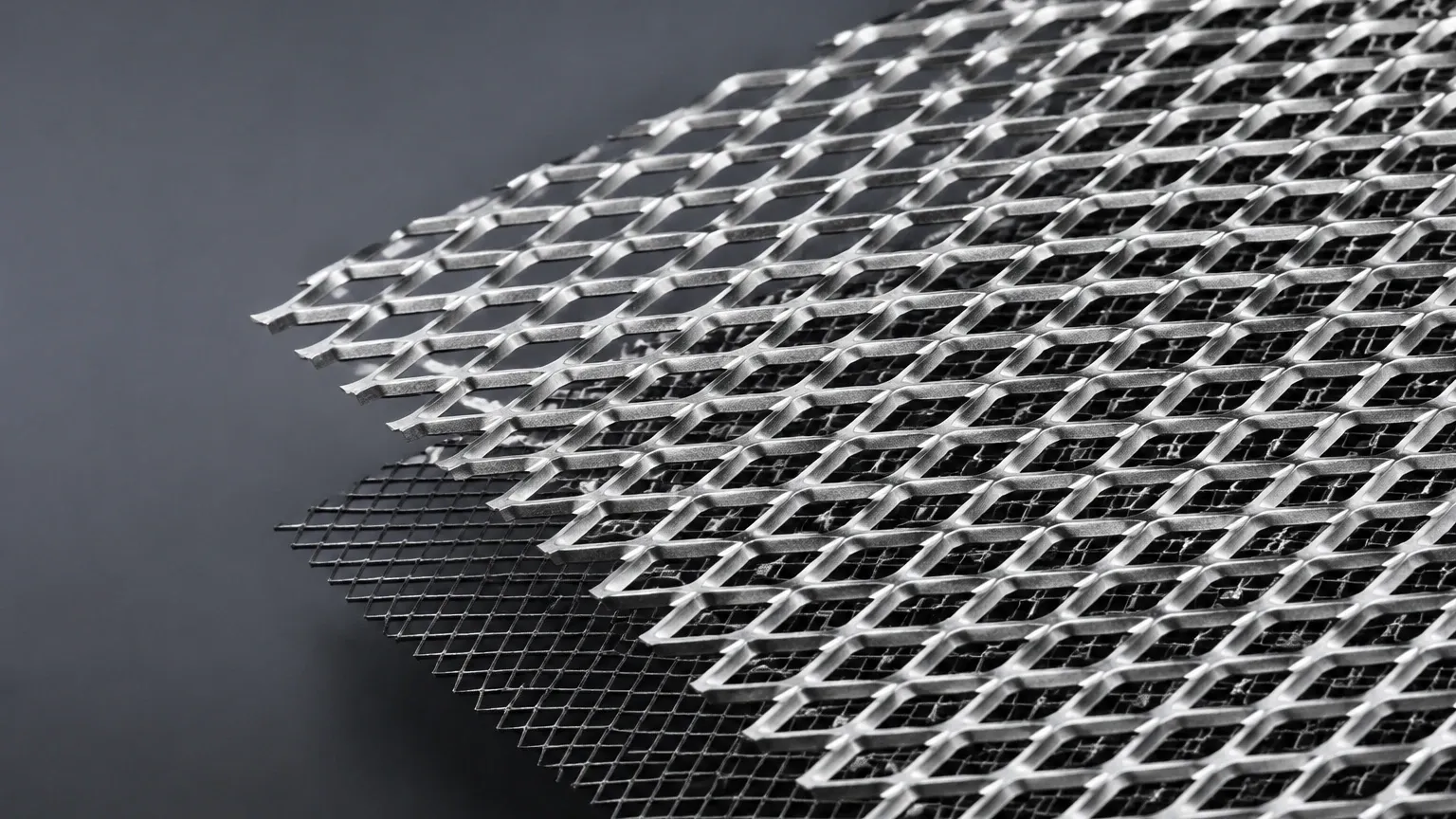
Expanded metal is classified by its gauge, which refers to the thickness of the original metal sheet before processing. "Light gauge" typically refers to materials with a thickness ranging from 0.010 inches to approximately 0.050 inches, though specific industry standards may vary depending on the application. The process involves a machine that slits the metal sheet and then pulls it apart, creating a pattern of diamond-shaped openings.
Because the strands and bonds are set at a uniform angle to the plane of the sheet, the resulting Perforated & Expanded Metal structure possesses inherent rigidity. This three-dimensional quality is a significant advantage in filtration, as it provides more surface area and mechanical interlocking capabilities than a flat perforated sheet. For manufacturers like Kaifil, precision in the expansion process is paramount to ensuring that the light gauge expanded metal maintains consistent opening sizes and structural uniformity across large production runs.
Key Geometric Parameters for Filtration Engineering
When specifying light gauge expanded metal for industrial use, engineers must navigate several geometric variables that dictate the material's performance. These parameters influence flow rates, pressure drops, and the mechanical strength of the final component.
SWD and LWD
Two of the most critical measurements are the Short Way of Diamond (SWD) and the Long Way of Diamond (LWD). The SWD is the distance from the center of one bond to the center of the next bond measured across the short axis of the diamond. The LWD is the equivalent measurement across the long axis. These dimensions determine the overall size of the openings and are fundamental to calculating the open area percentage.
Strand Width and Thickness
The strand width refers to the amount of metal between the openings, while the strand thickness is the thickness of the original base material. In light gauge applications, these dimensions are often minimized to maximize the open area, which is vital for reducing resistance in fluid or gas filtration systems. However, reducing these dimensions too far can compromise the tensile strength of the mesh.
Open Area Percentage
The open area is the ratio of the area of the openings to the total area of the sheet. For high-flow applications, such as air intake filters or hydraulic return lines, a high open area is preferred. Light gauge expanded metal can achieve open areas exceeding 70%, providing exceptional flow characteristics while maintaining enough structural body to support finer filter media.
Material Selection and Corrosion Resistance
In industrial environments, particularly in the chemical, pharmaceutical, and food and beverage sectors, the choice of material is as important as the geometry of the mesh. Light gauge expanded metal can be fabricated from a variety of alloys, each offering distinct advantages.
* Stainless Steel (304 and 316L): These are the most common materials for industrial filtration. Grade 304 offers excellent strength and basic corrosion resistance, while Grade 316L provides superior resistance to chlorides and acidic environments, making it the standard for pharmaceutical and marine applications.
* Aluminum: Often selected for its high strength-to-weight ratio and natural resistance to atmospheric corrosion. It is frequently used in HVAC filtration and lightweight aerospace components.
* Carbon Steel: A cost-effective option for applications where corrosion is not a primary concern or where the material will be coated or galvanized after expansion.
* Specialty Alloys: For extreme environments, materials such as Monel, Inconel, or Titanium can be expanded to meet specific thermal or chemical requirements.
Applications of Light Gauge Expanded Metal in Filtration Systems
Light gauge expanded metal serves multiple roles within a filtration assembly. Its versatility allows it to function as a primary filter, a support structure, or a protective outer layer.
Media Support and Pleat Spacing
In pleated filter cartridges, the filter media (such as wire mesh or synthetic fabric) requires mechanical support to prevent collapse under high differential pressure. Light gauge expanded metal is often used as an inner core or an outer wrap. Its diamond pattern provides multiple contact points for the media, ensuring uniform pleat spacing and preventing "blind-offs" where the media folds over itself and restricts flow.
Pre-Filtration and Debris Shielding
For systems handling large volumes of fluid, expanded metal acts as an effective pre-filter. It captures larger particulates before they reach the more delicate and expensive secondary filter stages. This extends the service life of the entire system and reduces maintenance costs. In hydraulic systems, expanded metal cages protect sensitive valves and pumps from metal shavings or other coarse contaminants.
Flame and Spark Arrestors
The high surface area of light gauge expanded metal makes it an excellent heat sink. In gas filtration or exhaust systems, it can be used to dissipate heat and arrest sparks or flames, providing a critical safety function in volatile industrial environments.
Comparing Expanded Metal and Perforated Metal for Light Duty Use
Engineers often weigh the benefits of expanded metal against perforated metal. While both fall under the broader category of Perforated & Expanded Metal, their mechanical properties and manufacturing economics differ significantly.
1. Material Utilization: Expanded metal is more sustainable and cost-effective because the process involves no scrap. Perforated metal can result in up to 40% material waste, which is a significant factor when using expensive alloys like 316L stainless steel.
2. Structural Strength: Because the strands of expanded metal are not broken but rather turned at an angle, the material often exhibits a higher strength-to-weight ratio than perforated metal of the same gauge. The three-dimensional "truss-like" structure adds rigidity that flat perforated sheets lack.
3. Flow Dynamics: The angled strands of expanded metal can create controlled turbulence, which may be beneficial in certain mixing or heat exchange applications, whereas perforated metal provides a more linear flow path.
Customization and Selection Criteria
Choosing the right light gauge expanded metal requires a balance of technical requirements and economic considerations. When consulting with a manufacturer like Kaifil, several factors should be confirmed to ensure the product meets the intended application.
* Flattened vs. Raised: Standard expanded metal has "raised" strands that sit at an angle. For applications requiring a smooth surface, the material can be passed through a cold-roll reducing mill to flatten it. Flattened light gauge expanded metal is often used when the mesh must be bonded to a thin membrane or when a low-profile component is required.
* Tolerances: In precision engineering, tolerances for SWD, LWD, and overall sheet flatness are critical. Light gauge materials are more susceptible to warping during the expansion process, so specifying tight tolerances is necessary for components that must fit into precise housings.
* Edge Conditions: Expanded metal can be supplied with "random shears" (open diamonds at the edges) or "bond shears" (closed diamonds). For safety and ease of handling in manual assembly processes, closed bonds are often preferred, though they may increase production costs.
Quality Control and Performance Expectations
In B2B procurement, the reliability of the component is tied to the quality control processes of the manufacturer. For light gauge expanded metal, quality checks should include verification of material chemistry (MTRs), precision measurement of diamond dimensions, and inspection for burrs or sharp edges that could damage delicate filter media.
Performance expectations should be established based on the total cost of ownership. While a lighter gauge may reduce initial material costs, it must be robust enough to withstand the cleaning cycles—such as backwashing or ultrasonic cleaning—common in industrial filtration. A well-engineered expanded metal component should maintain its shape and filtration integrity throughout its intended service life.
Conclusion
Light gauge expanded metal is an indispensable material for modern industrial filtration and engineering. Its unique combination of material efficiency, structural rigidity, and high open area makes it a superior choice for supporting media, protecting components, and managing flow. By carefully selecting the appropriate alloy, diamond geometry, and finish, engineers can significantly enhance the efficiency and durability of their filtration systems.
For organizations seeking high-performance, customized filtration components, partnering with a manufacturer that understands the technical complexities of metal expansion is vital. To explore specific configurations and technical data for your next project, Review product options and application support to ensure your filtration solutions meet the highest industrial standards.
