


Expanded Metal Net
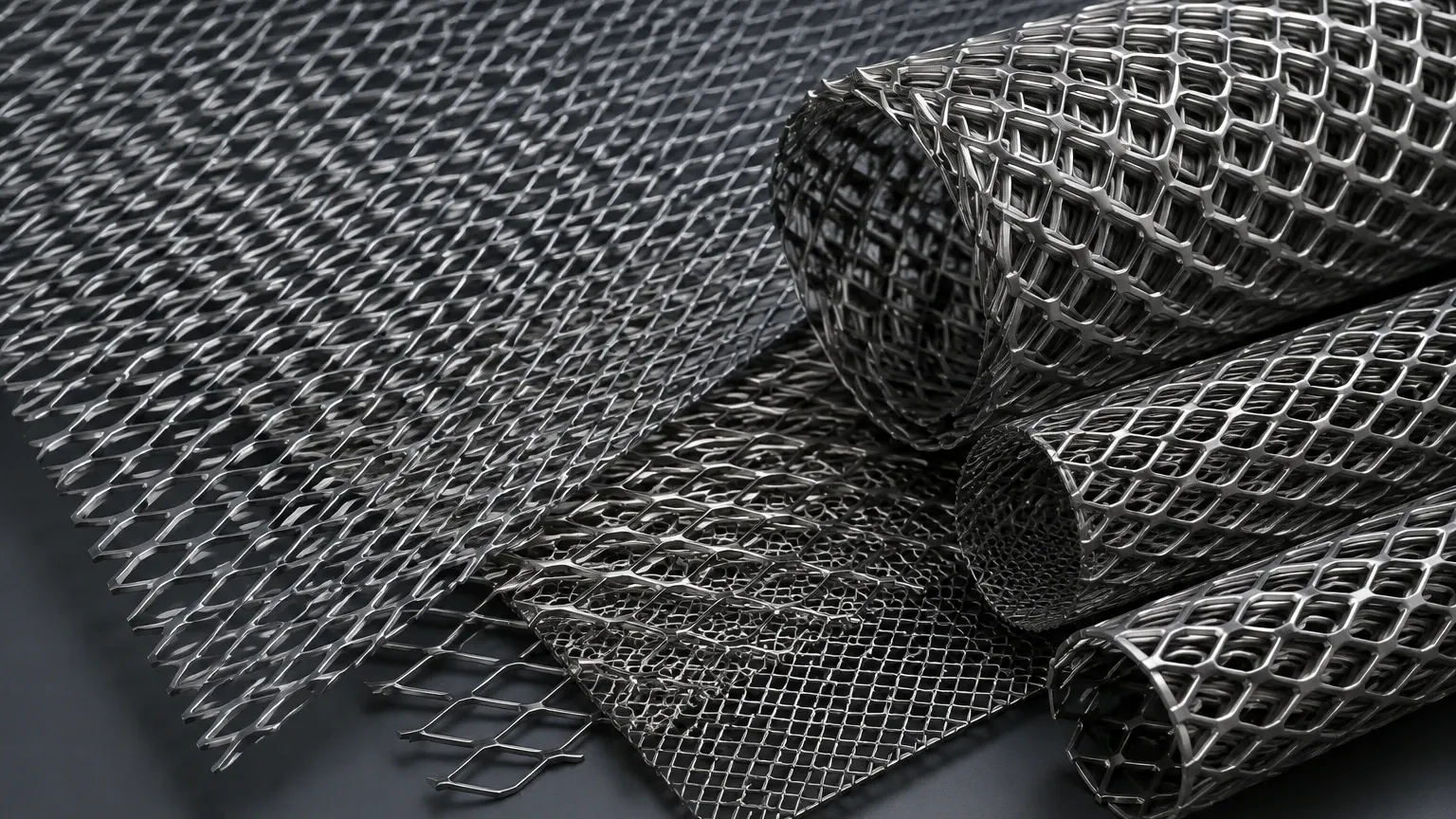
In the landscape of industrial filtration and structural support, the expanded metal net serves as a fundamental component for engineers seeking a balance between structural integrity and open-area efficiency. Unlike traditional woven wire mesh or perforated sheets, expanded metal is produced through a unique process of simultaneous slitting and stretching. This manufacturing method results in a continuous piece of metal with diamond-shaped openings, offering distinct mechanical advantages in demanding environments such as chemical processing, hydraulic systems, and water treatment.
For technical professionals and procurement teams, understanding the nuances of expanded metal net—from its geometric properties to its performance under pressure—is essential for optimizing filtration systems and ensuring long-term durability. This guide examines the technical specifications, material considerations, and engineering criteria necessary for selecting the right expanded metal solutions.
Understanding the Fundamentals of Expanded Metal Net
The production of an expanded metal net is a precision engineering process. A solid sheet or coil of metal is fed through an expanding machine, where a set of knives slits and stretches the material in a single motion. This process creates the characteristic diamond pattern without any loss of material, making it a highly cost-effective alternative to perforated metal, where the "slugs" or punched-out circles are treated as scrap.
There are two primary forms of expanded metal net used in industrial applications:
1. Raised (Standard) Expanded Metal: In this form, the strands and bonds (the intersections of the strands) are set at a uniform angle to the plane of the sheet. This creates a three-edged surface that provides maximum strength and rigidity. The raised profile is often preferred for applications requiring high mechanical grip or specific flow turbulence.
2. Flattened Expanded Metal: This is produced by passing the standard expanded metal through a cold-roll reducing mill. The process flattens the strands and bonds into a single plane, resulting in a smooth, flat surface. Flattened expanded metal is typically used when the net must be bonded to other media, such as fine wire mesh, or when a low-profile component is required for tight housing clearances.
Key Technical Specifications and Terminology
To specify an expanded metal net accurately, engineers must use standardized terminology that defines the geometry and performance characteristics of the mesh. The following parameters are critical when evaluating Perforated & Expanded Metal for industrial use:
* SWD (Short Way of Design): The distance from the center of one bond to the center of the next bond measured across the short diamond diagonal.
* LWD (Long Way of Design): The distance from the center of one bond to the center of the next bond measured across the long diamond diagonal.
* SWO (Short Way of Opening): The actual width of the opening, measured from the inside of one bond to the inside of the opposite bond.
* LWO (Long Way of Opening): The actual length of the opening, measured from the inside of one bond to the inside of the opposite bond.
* Strand Width: The amount of metal fed into the machine between the knives for each stroke.
* Strand Thickness: The thickness of the original base metal sheet.
By manipulating these variables, manufacturers can customize the open area percentage and the weight-to-strength ratio of the expanded metal net. For filtration applications, the open area is a decisive factor in calculating pressure drop and flow velocity across the filter element.
Material Selection for Industrial Environments
Material compatibility is the cornerstone of filter longevity. Because expanded metal nets are often exposed to corrosive fluids, high temperatures, and mechanical stress, the choice of alloy is paramount. Kaifil specializes in stainless steel solutions, which are the industry standard for high-performance filtration.
Stainless Steel 304 and 304L
As the most common grade, SS304 provides excellent corrosion resistance in a wide range of atmospheric and hydraulic environments. It is suitable for food and beverage applications and general industrial filtration where extreme chemical resistance is not required.
Stainless Steel 316 and 316L
For more aggressive environments, such as chemical processing or marine applications, SS316 is the preferred choice. The addition of molybdenum enhances resistance to pitting and crevice corrosion, particularly in chloride-rich environments. The "L" (low carbon) versions are utilized when welding is required, as they prevent carbide precipitation and maintain corrosion resistance at the weld joints.
Specialized Alloys
In specific high-temperature or highly acidic environments, other materials such as Monel, Inconel, or Titanium may be used. These alloys are selected based on their specific thermal expansion coefficients and chemical stability, ensuring the expanded metal net maintains its structural form under extreme operating conditions.
Applications in Filtration and Industrial Systems
While expanded metal net is used in many sectors, its role in industrial filtration is particularly specialized. It rarely acts as the primary filtration medium for fine particulates; instead, it serves as a critical support or protective component.
Support for Pleated Filter Media
In high-pressure hydraulic or gas filtration, the primary filter media (such as fine wire mesh or fiberglass) lacks the structural strength to withstand the differential pressure. An expanded metal net is often used as an inner or outer support core. It maintains the shape of the pleats and prevents the media from collapsing or migrating downstream.
Pre-Filtration and Trash Screens
In water treatment and intake systems, larger expanded metal nets act as pre-filters. They capture large debris, protecting more sensitive downstream components like pumps and fine membrane filters. The diamond pattern is effective at catching irregular shapes that might pass through a simple bar screen.
Protective Cages and Housings
For industrial filter cartridges, expanded metal provides a rugged outer cage. This protects the delicate internal filtration layers during handling, installation, and cleaning cycles. The high strength-to-weight ratio of the expanded metal net ensures the cartridge remains lightweight while offering significant impact resistance.
Evaluating Quality and Performance Criteria
When sourcing expanded metal net for technical applications, several quality benchmarks must be confirmed to ensure the component performs as expected within a larger system.
Structural Integrity and Bond Strength
The "bonds" where the strands intersect are the strongest points of the expanded metal net. Unlike woven mesh, where wires can shift or fray, the expanded metal is a single, solid piece of material. Engineers should verify that the expansion process has not introduced micro-fractures in the bonds, which could lead to structural failure under vibration or pressure pulses.
Edge Finish and Safety
In the standard expanded metal net, the edges are often sharp due to the slitting process. For many B2B applications, especially those involving manual maintenance, specify whether the edges should be "random sheared" (leaving open diamonds) or "bond sheared" (sheared through the bonds to leave a closed edge). Furthermore, deburring or electrochemical polishing may be necessary to ensure no metal slivers contaminate the fluid stream.
Dimensional Tolerances
Precision in the LWD and SWD is critical when the expanded metal net must fit into a machined housing or be welded to a flange. Standard commercial tolerances may not be sufficient for high-precision filtration components. It is vital to confirm the manufacturer’s ability to hold tight tolerances on both the sheet dimensions and the diamond pattern consistency.
Engineering Considerations Before Procurement
Before finalizing a specification for an expanded metal net, purchasing teams and engineers should address several practical questions to avoid costly design revisions or premature filter failure.
1. What is the required flow rate? The open area of the expanded metal net directly impacts the flow. If the strand width is too large, the resulting restriction may cause an unacceptable pressure drop.
2. Will the net be subjected to cleaning? If the filter is intended for reuse (e.g., backwashing or ultrasonic cleaning), the expanded metal must be robust enough to withstand these processes without deforming. Stainless steel is typically the best choice for cleanable systems.
3. How will the component be joined? If the net is to be rolled into a cylinder and welded, flattened expanded metal is often easier to work with. Spot welding or TIG welding must be performed by experienced technicians to avoid burning through the thin strands.
4. Is customization necessary? Off-the-shelf expanded metal often fails to meet the specific LWD/SWD requirements of specialized industrial equipment. Working with a manufacturer like Kaifil allows for customized strand widths and opening sizes tailored to the exact mechanical loads of the application.
Total Cost of Ownership and Value
While the initial purchase price is always a factor, the total cost of ownership (TCO) for an expanded metal net is influenced by its durability and the protection it affords to more expensive system components. A high-quality stainless steel expanded metal net reduces the frequency of replacement cycles and prevents catastrophic failure of the primary filtration media. By selecting the correct material and geometry at the outset, engineers can ensure that their filtration systems operate at peak efficiency with minimal downtime.
In summary, the expanded metal net is a versatile and indispensable tool in the industrial filtration sector. Its unique manufacturing process provides a rigid, high-strength, and cost-effective solution for support and protection. By focusing on material grade, geometric precision, and application-specific requirements, technical professionals can successfully integrate expanded metal into their most demanding projects.
