


Expanded Metal Nz
In the realm of industrial filtration and structural engineering, the selection of materials often dictates the longevity and efficiency of a system. For engineers and procurement specialists sourcing expanded metal nz, understanding the technical nuances of this material is essential. Expanded metal is a versatile product created by simultaneously slitting and stretching a single sheet of metal—typically stainless steel—to create a diamond-shaped mesh pattern. Unlike woven wire or perforated sheets, expanded metal is a single-piece construction that offers unique mechanical properties, making it a preferred choice for heavy-duty filtration, support structures, and protective enclosures.
At Kaifil, we specialize in high-performance Perforated & Expanded Metal solutions designed to meet the rigorous demands of industrial sectors. Whether you are designing a hydraulic filter support or a large-scale water treatment screen, the geometric and material specifications of expanded metal play a critical role in performance. This guide explores the engineering considerations, material selections, and application-specific benefits of expanded metal within the industrial landscape.
The Manufacturing Process and Structural Integrity
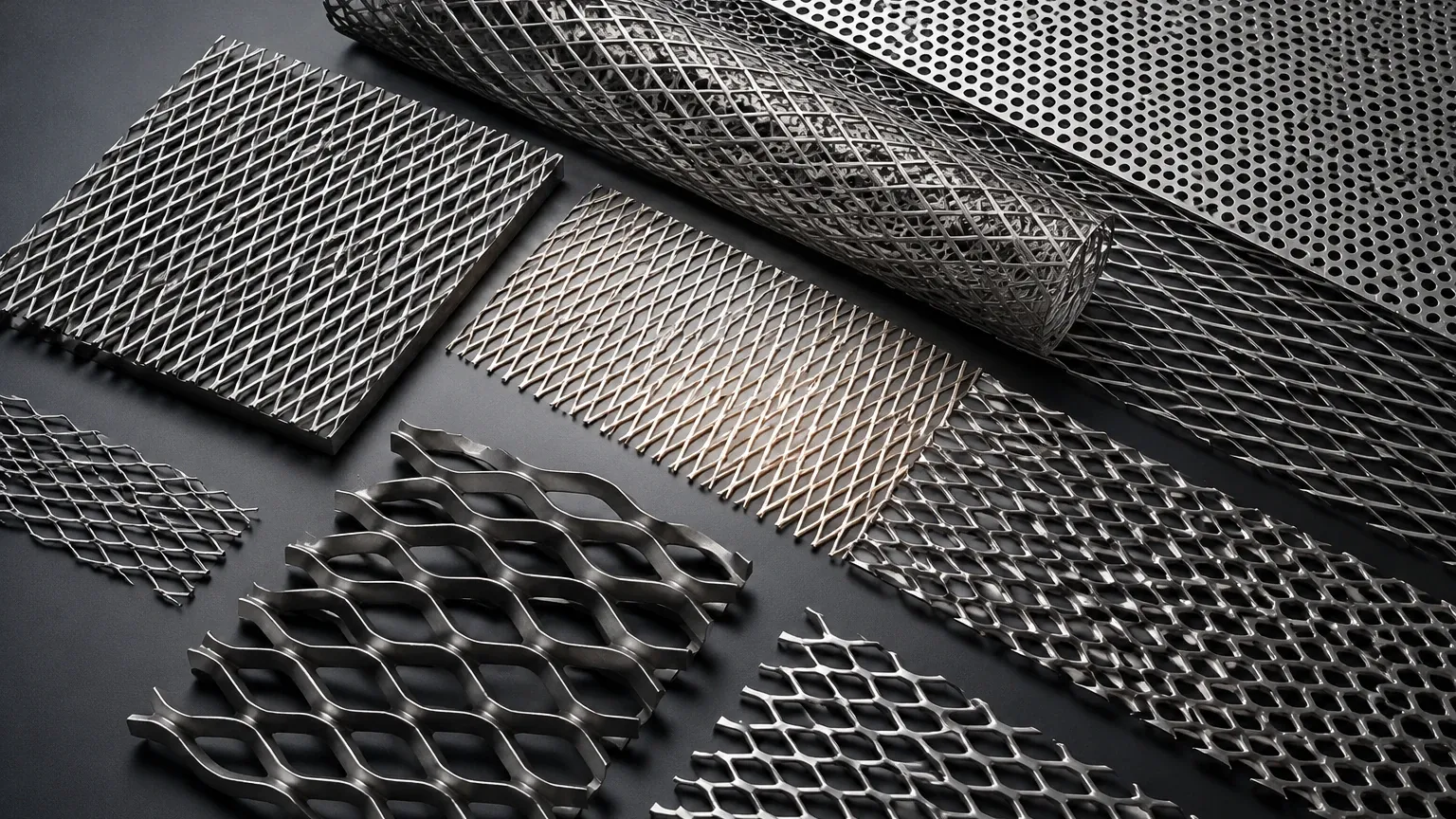
The production of expanded metal is a precision process that differentiates it from other mesh types. A solid sheet of metal is fed through a machine equipped with a reciprocating knife that slits the metal at regular intervals. As the knife cuts, it also stretches the material, expanding the slits into uniform diamond-shaped openings.
Because the material is stretched rather than punched, there is zero waste in the manufacturing process. This makes expanded metal an inherently cost-effective solution compared to perforated metal, where the "slugs" or punched-out circles are discarded. Furthermore, because the mesh is formed from a single piece of metal, there are no welds or joints that can fail under mechanical stress. This continuity of material provides an exceptional strength-to-weight ratio, allowing the mesh to distribute loads evenly across the surface.
For industrial applications in New Zealand, where seismic considerations and heavy industrial vibrations are common, the structural integrity of a single-piece mesh is a significant advantage. It maintains its shape even when cut into complex forms, which is vital for custom filter cartridges and machine guards.
Technical Specifications: SWD, LWD, and Open Area
When specifying expanded metal nz for technical projects, engineers must move beyond basic dimensions and focus on the geometry of the diamond opening. The performance of the mesh in a filtration or airflow context is determined by four primary measurements:
1. SWD (Short Way of Design): The distance from the center of one bond to the center of the next bond measured across the short diamond diagonal.
2. LWD (Long Way of Design): The distance from the center of one bond to the center of the next bond measured across the long diamond diagonal.
3. Strand Width: The amount of metal fed into the machine between the slits.
4. Strand Thickness: The thickness of the original base metal sheet.
These variables directly influence the Open Area Percentage. In filtration, the open area determines the flow rate and the pressure drop across the medium. A higher open area allows for greater throughput but may reduce the structural rigidity of the mesh. Conversely, a smaller open area provides a more robust support structure for fine filter membranes but increases resistance to flow. Calculating the precise balance between these factors is a core component of filter design, ensuring that the expanded metal provides sufficient support without compromising the efficiency of the primary filtration layer.
Standard vs. Flattened Expanded Metal
There are two primary finishes available for expanded metal, each serving distinct industrial purposes:
Standard (Raised) Expanded Metal
Standard expanded metal comes off the machine with the strands and bonds set at a sharp angle to the plane of the sheet. This creates a three-dimensional surface with high slip resistance and extreme rigidity. In filtration, raised expanded metal is often used as a primary screen for large debris or as a protective outer cage for filter elements that may be subject to physical impact. The angled strands can also assist in breaking up fluid flow, which is sometimes desirable in specific chemical processing applications.
Flattened Expanded Metal
Flattened expanded metal is produced by passing the standard expanded sheet through a cold-rolling reducing mill. This process flattens the strands and bonds into the same plane as the original sheet surface. The result is a smooth, flat mesh that is slightly thinner and longer than the original raised version. Flattened expanded metal is ideal for applications where a smooth surface is required to prevent damage to delicate filter media, such as high-efficiency particulate air (HEPA) filters or fine stainless steel wire mesh. It is also easier to clean and provides a consistent thickness for precision assembly.
Material Selection for Corrosive Environments
The industrial environment in New Zealand often involves exposure to high humidity, coastal salt air, and aggressive chemicals. Consequently, material selection is the most critical factor in determining the service life of expanded metal nz. While carbon steel and aluminum are available, stainless steel remains the gold standard for industrial filtration.
* Grade 304 Stainless Steel: Suitable for general industrial use, providing excellent corrosion resistance and formability. It is widely used in food processing and water treatment where chemical exposure is moderate.
* Grade 316/316L Stainless Steel: Contains molybdenum, which significantly enhances resistance to pitting and crevice corrosion in chloride-rich environments. This is the preferred choice for marine applications, pharmaceutical manufacturing, and aggressive chemical processing.
* Specialty Alloys: For extreme temperatures or highly acidic environments, alloys like Monel or Hastelloy can be used to manufacture expanded metal components, ensuring reliability where standard steels would fail.
At Kaifil, we emphasize the use of high-quality stainless steel to ensure that our filtration components maintain their integrity over thousands of cycles, reducing the total cost of ownership for our clients.
Applications in Industrial Filtration and Beyond
Expanded metal serves a dual role in many systems: it acts as both a functional filter and a structural support. Its applications are diverse across several key industries:
Chemical and Petrochemical Processing
In these sectors, expanded metal is used as a support medium for catalysts and as a reinforcement layer in multi-stage filtration systems. Its ability to withstand high temperatures and resist chemical degradation makes it indispensable for separating solids from corrosive liquids.
Food and Beverage Industry
Hygiene is paramount in food production. Stainless steel expanded metal provides a durable, easy-to-sanitize surface for sifting, drying, and filtering. Flattened expanded metal is particularly useful here, as it lacks the crevices where organic material could become trapped and lead to bacterial growth.
Hydraulic and Fuel Systems
High-pressure hydraulic systems require filters that can withstand significant burst pressures. Expanded metal cylinders are used as the core support for pleated paper or fine wire mesh elements. The rigidity of the expanded metal prevents the filter media from collapsing under the force of the fluid flow.
Water Treatment and Desalination
Large-scale water intake systems use expanded metal screens to prevent debris, aquatic life, and large particulates from entering the treatment plant. The durability of Grade 316 stainless steel is essential in these applications, particularly in desalination plants where salt concentration is high.
Engineering Considerations: Pressure Drop and Burst Strength
When integrating expanded metal into a filtration system, engineers must account for the mechanical stresses involved. Burst strength is a critical metric, especially in high-pressure liquid filtration. The one-piece construction of expanded metal provides superior hoop strength compared to welded meshes.
Furthermore, the pressure drop (ΔP) must be minimized to maintain system efficiency. The geometry of the expanded metal—specifically the angle of the strands in raised versions—can influence turbulence. In some cases, this turbulence is beneficial for mixing, but in most filtration scenarios, a laminar flow is preferred to reduce energy consumption. By selecting the appropriate LWD and SWD, engineers can optimize the flow path to meet specific process requirements.
Customization and OEM Solutions
Every industrial application has unique constraints, from spatial limitations to specific filtration accuracies. Stock expanded metal nz products may not always meet these requirements. This is where custom manufacturing becomes a strategic advantage.
Kaifil provides comprehensive OEM capabilities, allowing for the customization of:
* Mesh Dimensions: Tailoring the SWD and LWD to achieve specific open area percentages.
* Material Thickness: Adjusting the gauge of the metal to meet structural load requirements.
* Forming and Fabrication: Supplying expanded metal in the form of cylinders, cones, or flat discs ready for immediate integration into filter assemblies.
* Surface Treatments: Including electropolishing or passivating to further enhance corrosion resistance and surface smoothness.
By working closely with an experienced manufacturer, engineering teams can ensure that the expanded metal components are optimized for both performance and manufacturability.
Total Cost of Ownership and Replacement Cycles
While the initial cost of stainless steel expanded metal may be higher than alternative materials, the total cost of ownership is often lower. The durability of the material reduces the frequency of replacement cycles and minimizes downtime caused by component failure. In many industrial processes, the cost of a single hour of unplanned downtime far exceeds the price of a high-quality filter element.
When evaluating expanded metal nz, it is important to consider the ease of maintenance. Stainless steel expanded metal is highly resistant to fouling and can often be cleaned using backwashing, ultrasonic cleaning, or chemical baths, extending its functional life significantly compared to disposable filter media.
Conclusion: Selecting the Right Partner
Choosing the right expanded metal solution requires a deep understanding of material science, fluid dynamics, and mechanical engineering. For professionals in New Zealand and globally, the priority is finding a partner who can provide technical expertise alongside high-quality manufacturing.
Whether you require a standard flattened mesh for a protective screen or a custom-engineered support for a high-pressure hydraulic filter, the quality of the Perforated & Expanded Metal you select will define the success of your project. By focusing on precise specifications, material integrity, and application-specific design, you can achieve filtration performance that is both efficient and exceptionally durable.
At Kaifil, we are committed to supporting engineers and purchasing teams with the technical data and customized solutions needed to solve complex filtration challenges. Contact our engineering team to discuss your specific requirements for expanded metal and discover how our manufacturing expertise can optimize your industrial processes.
