


Niles Expanded Metal
In industrial engineering and metal fabrication, expanded metal serves as a versatile material for structural support, safety screening, and precision filtration. Among the industry standards often cited by procurement teams and engineers is niles expanded metal, a term frequently associated with high-quality expanded metal products used across diverse sectors. Understanding the technical nuances of expanded metal—ranging from its manufacturing process to its specific performance characteristics—is essential for selecting the right material for demanding B2B applications.
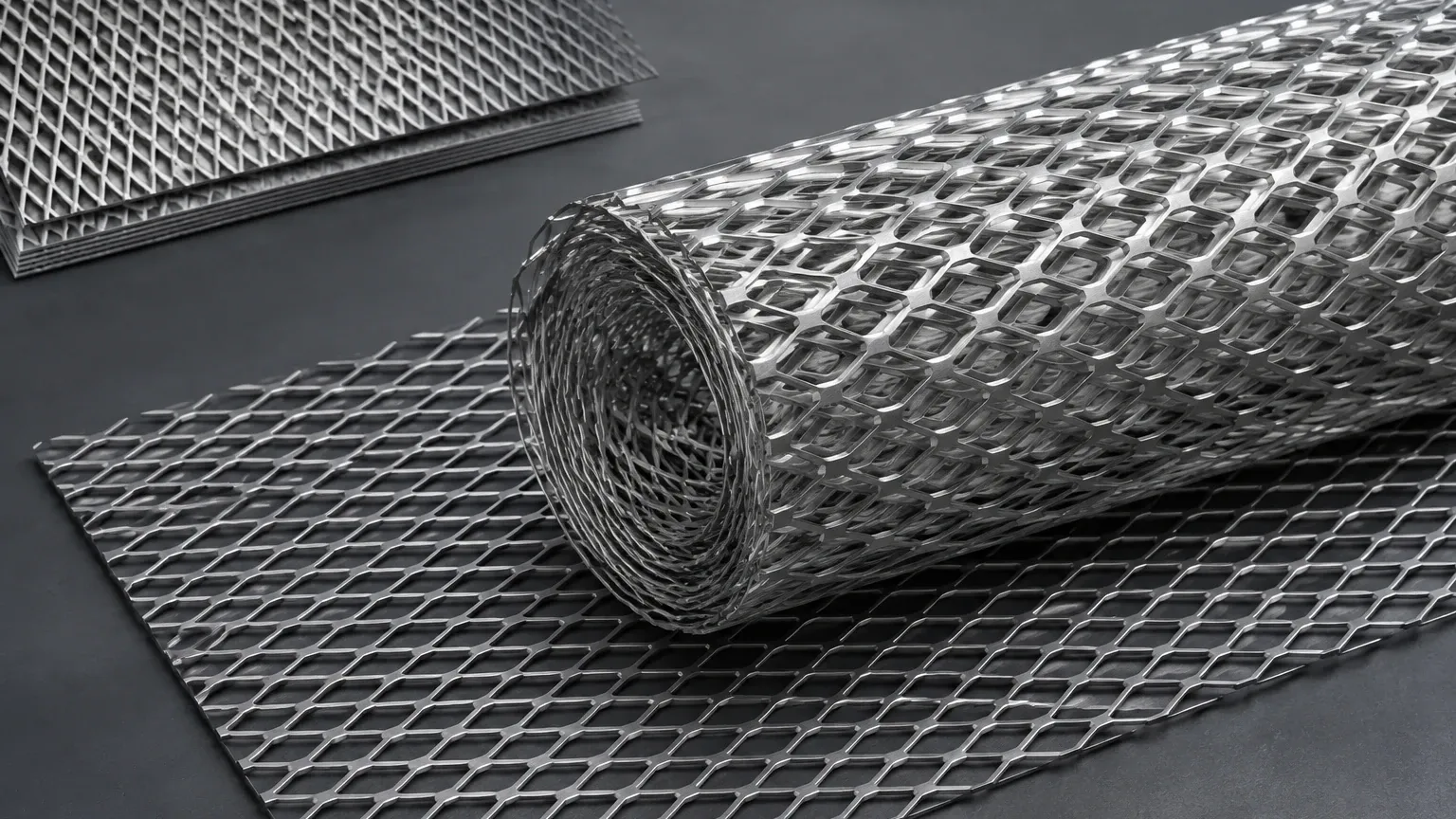
Expanded metal is unique because it is produced from a single solid sheet of metal that is simultaneously slit and stretched. Unlike perforated metal, which involves punching holes and generating scrap material, the expansion process creates a diamond-shaped pattern without any waste. This results in a high strength-to-weight ratio, making it an efficient choice for industrial filtration cores, architectural panels, and safety walkways.
The Engineering Principles of Expanded Metal Manufacturing
The production of expanded metal is a precision mechanical process. A metal sheet or coil is fed through a machine equipped with a reciprocating knife. As the knife shears the metal, it also stretches it. The geometry of the knife and the length of the stroke determine the size and shape of the resulting diamond openings.
Because the material is stretched rather than cut out, the strands and bonds (the intersections of the strands) are set at a uniform angle to the plane of the sheet. This creates a three-dimensional texture that provides inherent structural rigidity. For engineers, this directional strength is a critical consideration; expanded metal is significantly stronger when tension is applied across the width of the sheet rather than the length.
When evaluating Perforated & Expanded Metal for industrial use, it is important to distinguish between "Standard" (or raised) and "Flattened" expanded metal. Standard expanded metal retains the angular profile of the strands, which provides excellent grip and airflow turbulence. Flattened expanded metal undergoes an additional cold-rolling process, resulting in a smooth, flat surface similar to a perforated sheet but maintaining the jointless integrity of the expanded structure.
Technical Specifications and Terminology
To accurately specify expanded metal for a project, engineers must use standardized terminology. These metrics define the performance limits of the material in filtration and structural applications:
* SWD (Short Way of Design): The distance from the center of one bond to the center of the next bond measured across the short diamond diagonal.
* LWD (Long Way of Design): The distance from the center of one bond to the center of the next bond measured across the long diamond diagonal.
* SWO (Short Way of Opening): The actual width of the opening, excluding the strand width.
* LWO (Long Way of Opening): The actual length of the opening, excluding the strand width.
* Strand Thickness: The thickness of the base metal used to produce the sheet.
* Strand Width: The amount of metal fed into the knives for each stroke.
When sourcing products comparable to niles expanded metal, these dimensions dictate the percentage of open area, which directly impacts flow rates and pressure drop in filtration systems. For instance, a larger LWD/SWD ratio typically results in a higher open area percentage, which is ideal for high-flow liquid filtration but may offer less mechanical support for fine filter media.
Material Selection for Industrial Environments
The durability of an expanded metal component depends heavily on the base alloy. While carbon steel is common for general industrial use, specialized environments require corrosion-resistant materials.
Stainless Steel (304 and 316L)
In chemical processing, pharmaceutical manufacturing, and food production, stainless steel is the preferred choice. Grade 304 provides excellent general corrosion resistance, while Grade 316L contains molybdenum, offering superior protection against chlorides and pitting. For filtration applications, stainless steel expanded metal ensures that no metallic contaminants are introduced into the process stream.
Aluminum
Aluminum expanded metal is prized for its lightweight properties and natural resistance to atmospheric corrosion. It is frequently used in HVAC filtration and aerospace components where weight reduction is a primary engineering goal.
Specialty Alloys
For high-temperature applications or highly acidic environments, manufacturers may utilize Monel, Inconel, or titanium. These materials maintain their structural integrity under thermal stress and aggressive chemical exposure, though they require specialized manufacturing expertise to expand without fracturing the strands.
Comparing Perforated and Expanded Metal in Filtration
Engineers often weigh the pros and cons of perforated metal versus expanded metal. While both fall under the category of Perforated & Expanded Metal, their performance profiles differ significantly.
Perforated Metal Advantages:
* Offers a wider variety of hole shapes (round, square, slotted).
* Provides a perfectly smooth surface without the need for secondary flattening.
* Allows for precise margins (unperforated edges) which can simplify welding and assembly.
Expanded Metal Advantages:
* Cost Efficiency: Since no material is lost during production, expanded metal is generally more cost-effective per square foot than perforated metal, especially when using expensive alloys like stainless steel or titanium.
* Strength-to-Weight Ratio: The interconnected bonds of expanded metal act as a truss, distributing loads more effectively than a perforated sheet of the same weight.
* Flow Characteristics: The angular strands of standard expanded metal can be used to direct flow or create controlled turbulence, which can be beneficial in certain heat exchange or mixing applications.
In many industrial filter cartridges, expanded metal is used as the outer protection sleeve or the inner support core. Its ability to withstand high collapse pressures makes it an ideal reinforcement for pleated paper or wire mesh media.
Applications of Expanded Metal in Industrial Systems
Beyond basic filtration, the utility of products like niles expanded metal extends into various critical industrial functions:
1. Filter Media Support: In hydraulic and fuel filtration, expanded metal provides a rigid skeleton for delicate mesh layers. This prevents the media from deforming under high-pressure pulses.
2. Machine Guarding: The high visibility and airflow of expanded metal make it ideal for safety guards around rotating equipment, allowing for inspection without compromising operator safety.
3. Catalyst Supports: In petrochemical reactors, expanded metal grids hold catalyst pellets in place while allowing gas or liquid reactants to pass through with minimal resistance.
4. Acoustic Damping: When layered with specialized insulation, expanded metal panels help dissipate industrial noise in engine rooms and manufacturing floors.
5. EMI/RFI Shielding: Micro-expanded metals (very small diamond patterns) are used to shield sensitive electronic components from electromagnetic interference.
Procurement and Quality Evaluation Criteria
When purchasing expanded metal for B2B projects, technical buyers should look beyond the basic dimensions. Quality assurance in expanded metal manufacturing involves several critical checkpoints:
Flatness and Camber
Standard expanded metal naturally has some "camber" or bow due to the stretching process. If the material is to be used in automated assembly lines or precision filter housings, specifying "leveling" is necessary to ensure the sheets lie flat. Buyers should confirm the allowable tolerance for flatness before placing an order.
Edge Conditions
Expanded metal can be supplied with "random sheared" edges or "bond sheared" edges. Random shearing results in sharp, jagged points where diamonds are cut mid-strand. Bond shearing cuts through the intersection, providing a cleaner edge. For filtration components that require manual handling or welding, bond shearing or U-edging (adding a metal frame) is often required to prevent injury and ensure a secure weld.
Surface Finish
In food and pharmaceutical applications, the surface must be free of lubricants and burrs. Degreasing and electropolishing are common secondary treatments that ensure the expanded metal meets sanitary standards. For carbon steel variants, hot-dip galvanizing or powder coating is essential to prevent oxidation.
Total Cost of Ownership and Customization
While the initial purchase price of expanded metal is often lower than other metal mesh options, the total cost of ownership (TCO) includes factors like installation labor, replacement frequency, and maintenance. Choosing a high-grade stainless steel expanded metal for a corrosive environment may have a higher upfront cost but significantly reduces the TCO by extending the service life of the filter or structural component.
Customization is a hallmark of professional manufacturing in this sector. Whether it is a specific diamond size to match a particular flow rate or a custom-cut shape for a unique filter housing, working with a manufacturer that understands the engineering requirements of Perforated & Expanded Metal is vital.
Engineers should confirm that their supplier can provide material certifications (MTRs) to verify the chemistry and physical properties of the alloy. Furthermore, for critical filtration applications, asking for pressure drop data or structural load calculations can help prevent premature failure in the field.
Conclusion
Expanded metal remains a cornerstone of industrial design due to its efficiency, strength, and versatility. Whether you are specifying niles expanded metal for an architectural project or seeking a custom stainless steel support core for a chemical filter, understanding the technical parameters—from SWD/LWD to material grades and edge conditions—is the key to a successful implementation. By focusing on precision manufacturing and material integrity, B2B organizations can ensure their filtration and structural systems perform reliably in the most demanding industrial environments.
