


Number 13 Expanded Metal
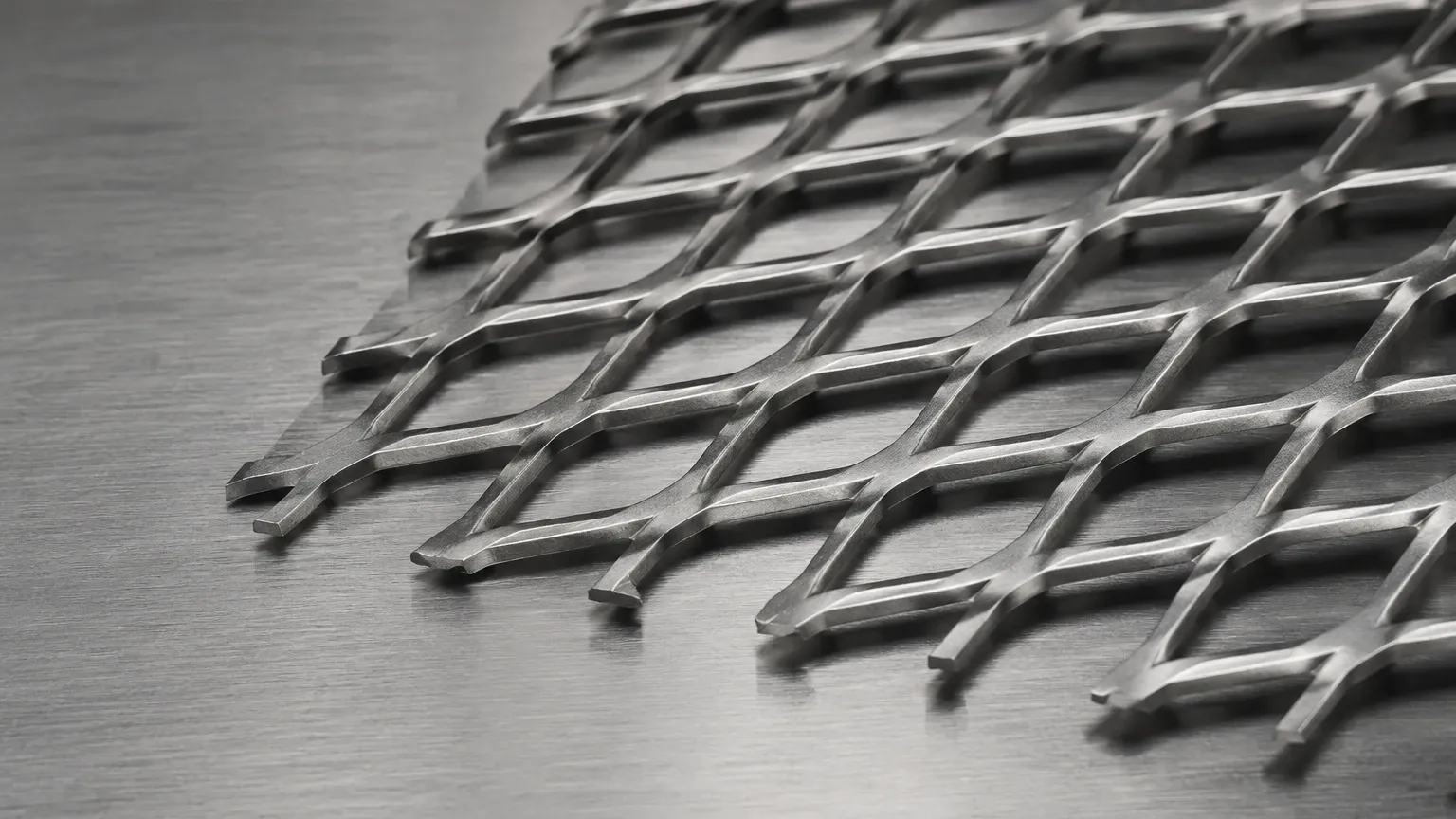
In the landscape of industrial materials, specifically within the realm of filtration and structural support, the designation of "Number 13" expanded metal represents a critical specification for engineers and procurement specialists. Expanded metal is produced by simultaneously slitting and stretching a solid sheet of metal, creating a continuous mesh of diamond-shaped openings without the waste associated with punching or perforating. When an application calls for number 13 expanded metal, it specifically refers to the gauge of the base material—approximately 0.090 inches thick for carbon steel—which offers a specific balance of mechanical strength, weight, and open area.
For manufacturers like Kaifil, providing high-performance Perforated & Expanded Metal involves understanding the nuances of these designations to ensure the final component meets the rigorous demands of chemical processing, hydraulic systems, and industrial filtration. This guide examines the technical specifications, manufacturing variations, and engineering considerations essential for selecting and implementing number 13 expanded metal in professional environments.
Technical Specifications of Number 13 Expanded Metal
The term "Number 13" is rooted in the U.S. Standard Gauge system. In the context of expanded metal, this gauge indicates the thickness of the metal sheet before it undergoes the expansion process. While the nominal thickness of 13-gauge carbon steel is 0.0897 inches (often rounded to 0.090 inches), the final dimensions of the expanded product depend on whether the material is left in its "raised" state or processed further into a "flattened" state.
Dimensional Terminology
To accurately specify number 13 expanded metal, engineers must be familiar with the following metrics:
* SWD (Short Way of Design): The distance from the center of one bond to the center of the next bond across the short axis of the diamond.
* LWD (Long Way of Design): The distance from the center of one bond to the center of the next bond across the long axis of the diamond.
* SWO (Short Way of Opening): The actual width of the opening, measured from the inside of the bonds.
* LWO (Long Way of Opening): The actual length of the opening, measured from the inside of the bonds.
* Strand Width: The amount of metal fed into the expanding machine between each slit.
* Strand Thickness: The gauge of the base metal (in this case, Number 13).
Common configurations for number 13 expanded metal include 1/2" #13 and 3/4" #13. In a 1/2" #13 configuration, the SWD is approximately 0.500 inches, while the 3/4" #13 configuration features an SWD of roughly 0.923 inches. The choice between these depends on the required filtration accuracy and the structural load the mesh must support.
Manufacturing Variations: Raised vs. Flattened
One of the most significant decisions during the procurement of Perforated & Expanded Metal is whether the application requires a raised or flattened profile. Each offers distinct mechanical advantages.
Raised (Standard) Expanded Metal
In its standard form, expanded metal comes off the machine with the strands and bonds set at a sharp angle to the plane of the sheet. This creates a three-dimensional surface that provides exceptional rigidity and a high strength-to-weight ratio. For industrial filtration, raised number 13 expanded metal is often used as a protective outer cage or a primary coarse filter where the angular strands can help break up large debris or provide grip for secondary filter media.
Flattened Expanded Metal
Flattened expanded metal is produced by passing the standard expanded sheet through a cold-roll reducing mill. This process levels the strands and bonds into a single plane, resulting in a smooth, flat surface. The flattening process slightly increases the overall dimensions of the diamond and reduces the thickness of the strands. Flattened number 13 expanded metal is the preferred choice for internal support cores in stainless steel filter cartridges. The smooth surface prevents abrasion against delicate fine wire mesh layers, ensuring the integrity of the filtration system under high-pressure cycles.
Material Selection for Corrosive Environments
While the "Number 13" designation is standard across various metals, the choice of alloy is paramount for longevity and performance. Kaifil specializes in stainless steel solutions, which are frequently required in the pharmaceutical, food and beverage, and chemical sectors.
1. Carbon Steel: Economical and strong, but requires coating (galvanizing or painting) to prevent oxidation. It is suitable for hydraulic oils and non-corrosive industrial fluids.
2. Stainless Steel 304: Offers excellent corrosion resistance and is the standard for most industrial applications. It maintains structural integrity at higher temperatures than carbon steel.
3. Stainless Steel 316/316L: The preferred choice for marine environments, high-chloride applications, and pharmaceutical processing. The addition of molybdenum provides superior resistance to pitting and crevice corrosion.
4. Aluminum: Lightweight and naturally corrosion-resistant, though it lacks the mechanical strength of number 13 steel or stainless steel options.
The Role of Number 13 Expanded Metal in Filtration
In industrial filtration, expanded metal rarely acts as the sole filtration medium for fine particulates. Instead, it serves as a critical structural component within a multi-layered filter assembly.
Support for Fine Wire Mesh
Fine stainless steel wire mesh, capable of filtering down to several microns, lacks the inherent stiffness to withstand high differential pressures. Number 13 expanded metal provides a robust skeleton. By placing a layer of expanded metal on the downstream side of the mesh, the system can handle significant flow rates without the mesh deforming or bursting.
Pre-Filtration and Debris Shielding
In large-scale water treatment or chemical processing, number 13 expanded metal acts as a pre-filter. The diamond openings are sized to capture large contaminants—such as scale, wood chips, or plastic fragments—before they reach more expensive, fine-tuned filtration stages. This extends the service life of the entire system and reduces maintenance frequency.
Flow Distribution
The geometry of expanded metal naturally creates turbulence in the fluid stream. While engineers often seek laminar flow, controlled turbulence at the face of a filter can prevent the rapid buildup of a "filter cake," allowing the system to maintain a lower pressure drop for a longer duration.
Engineering Considerations: Open Area and Pressure Drop
When integrating number 13 expanded metal into a system, the percentage of open area is a vital calculation. This metric determines the flow capacity and the potential pressure drop across the component.
For example, a standard 3/4" #13 raised metal sheet typically offers an open area of approximately 75% to 80%. If the same material is flattened, the open area may slightly decrease as the strands are widened during the rolling process. Engineers must balance the need for a high open area (to minimize energy costs associated with pumping) against the need for structural thickness (to prevent mechanical failure).
Calculating Flow Resistance
In hydraulic and high-viscosity fluid applications, the thickness of the number 13 gauge (0.090") introduces a measurable resistance. Kaifil’s engineering team works with clients to evaluate the "tortuosity" of the flow path—how much the fluid must change direction as it passes through the diamond mesh. Accurate modeling at the design phase prevents the common pitfall of undersizing a filter, which leads to premature clogging and system downtime.
Customization and OEM Integration
Standard off-the-shelf expanded metal sheets often do not meet the precise tolerances required for high-end industrial machinery. Customization is where the value of a specialized manufacturer becomes apparent.
* Specific Dimensions: Beyond standard 4×8 sheets, number 13 expanded metal can be precision-cut into discs, cylinders, or custom shapes to fit specific filter housings.
* Cylindrical Forming: For filter cartridges, the expanded metal must be rolled into a perfect cylinder and welded. This requires expertise in maintaining the diamond pattern alignment at the seam to ensure uniform strength.
* Edge Treatments: To facilitate safe handling and easy installation, expanded metal can be supplied with "bond edges" (closed diamonds) or "random shear" (open diamonds), depending on the mounting requirements.
Quality Assurance and Procurement Risks
When sourcing number 13 expanded metal, purchasing teams must be vigilant regarding material quality and manufacturing precision. Common risks include:
* Burrs and Sharp Edges: Low-quality expansion processes can leave excessive burrs. In a filtration context, these burrs can break off and enter the downstream flow, contaminating the very fluid the system is meant to clean.
* Gauge Inconsistency: Variations in the base metal thickness can lead to weak points in the mesh, particularly under high-pressure pulses in hydraulic applications.
* Material Certification: For food, beverage, and pharmaceutical sectors, ensuring the stainless steel is true to its grade (e.g., 316L) is essential for regulatory compliance.
Kaifil addresses these concerns through rigorous quality control, ensuring that every batch of Perforated & Expanded Metal meets the specified mechanical and chemical properties.
Conclusion
Number 13 expanded metal is a foundational material in industrial engineering, offering a unique combination of 0.090-inch thickness and versatile diamond configurations. Whether used as a rigid support for fine filtration media or as a standalone protective component, its performance is dictated by the precision of its manufacture and the suitability of its alloy.
For engineers and procurement professionals, the key to a successful implementation lies in confirming the specific requirements for open area, surface finish (raised vs. flattened), and environmental resistance. By partnering with a manufacturer that understands the technical demands of filtration, organizations can ensure their systems operate with maximum efficiency and minimal total cost of ownership.
